
#HerClimateStory: Orientation Workshop for 12 Female Journalist on Climate Change Reporting
The Center for Media Research – Nepal (CMR–Nepal), with support from Oslo Metropolitan University (OsloMet), Norway launched the #HerClimateStory Climate Change Reporting Fellowship 2025 with an orientation workshop in Kathmandu.
The fellowship began with 12 women journalists from across Nepal participating in a four-day residential orientation workshop in Kathmandu (December 26–29, 2025). Eight of the fellows came from provinces outside the Kathmandu Valley, ensuring regional diversity.
The workshop brought together nine climate experts and senior journalists as well as three mentors creating a collaborative learning space that combined science, policy and storytelling.
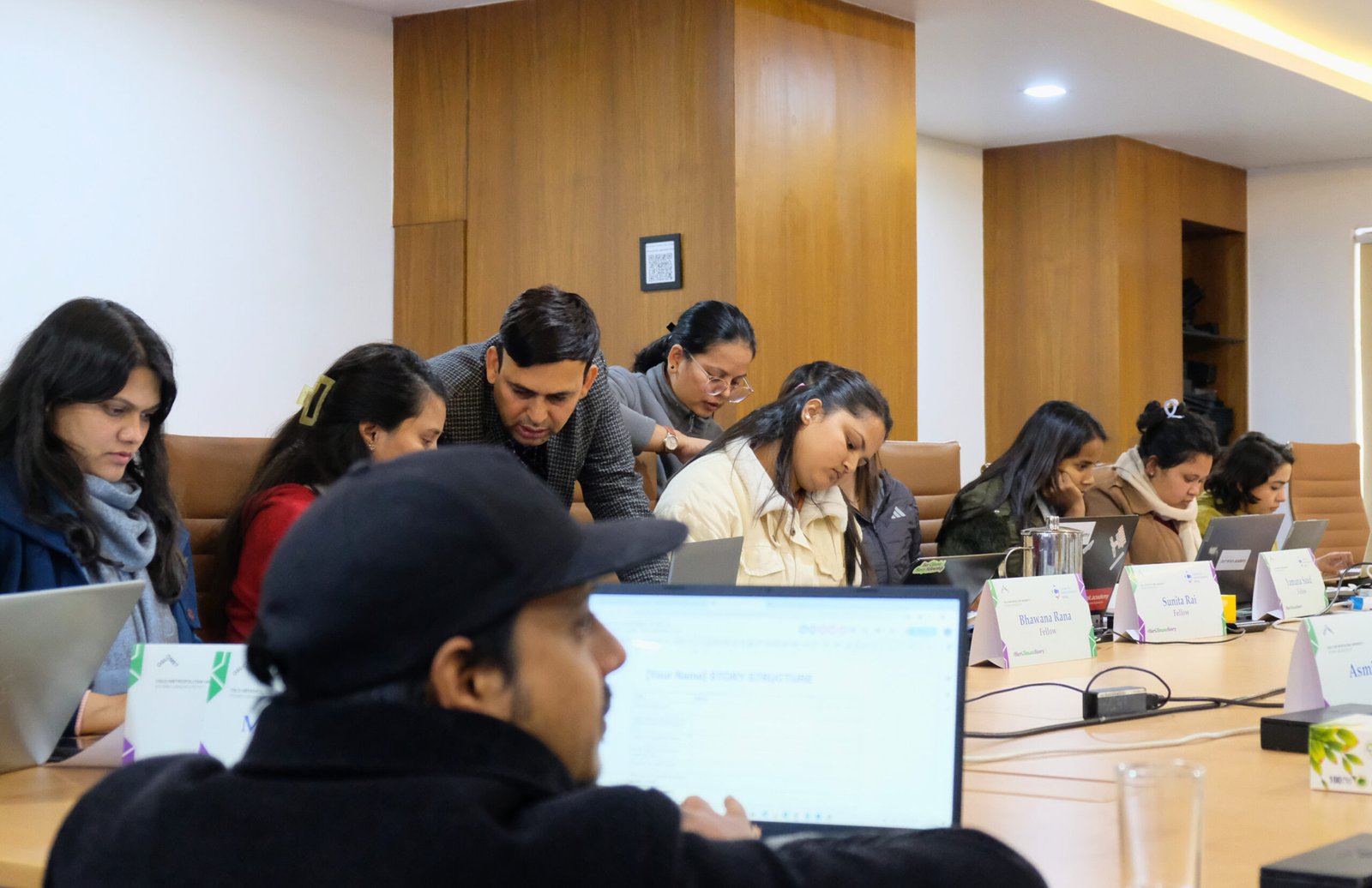
The #HerClimateStory fellowship was designed to enhance capacity of women journalists to report on climate change issues as Nepal stands in the frontline of the global climate crisis witnessing melting Himalayan glaciers to climate-induced disasters in the plains.
The #HerClimateStory fellowship is designed with a clear objective: to strengthen the presence, skills and leadership of women journalists in environment and climate reporting in Nepal. Over the course of one month, fellows are expected to produce and publish at least one climate- or environment-related story, participate in national-level discussions on misinformation, and engage in peer learning and reflection.
Orientation Workshop: Learning from Experts
The fellowship began with a virtual session on December 23 where the fellows presented their story ideas and got to know each-other.
The in-person orientation workshop was structured to bridge the gap between climate science, public policy, and journalistic practice. Sessions combined expert lectures with interactive discussions and newsroom-style mentoring.
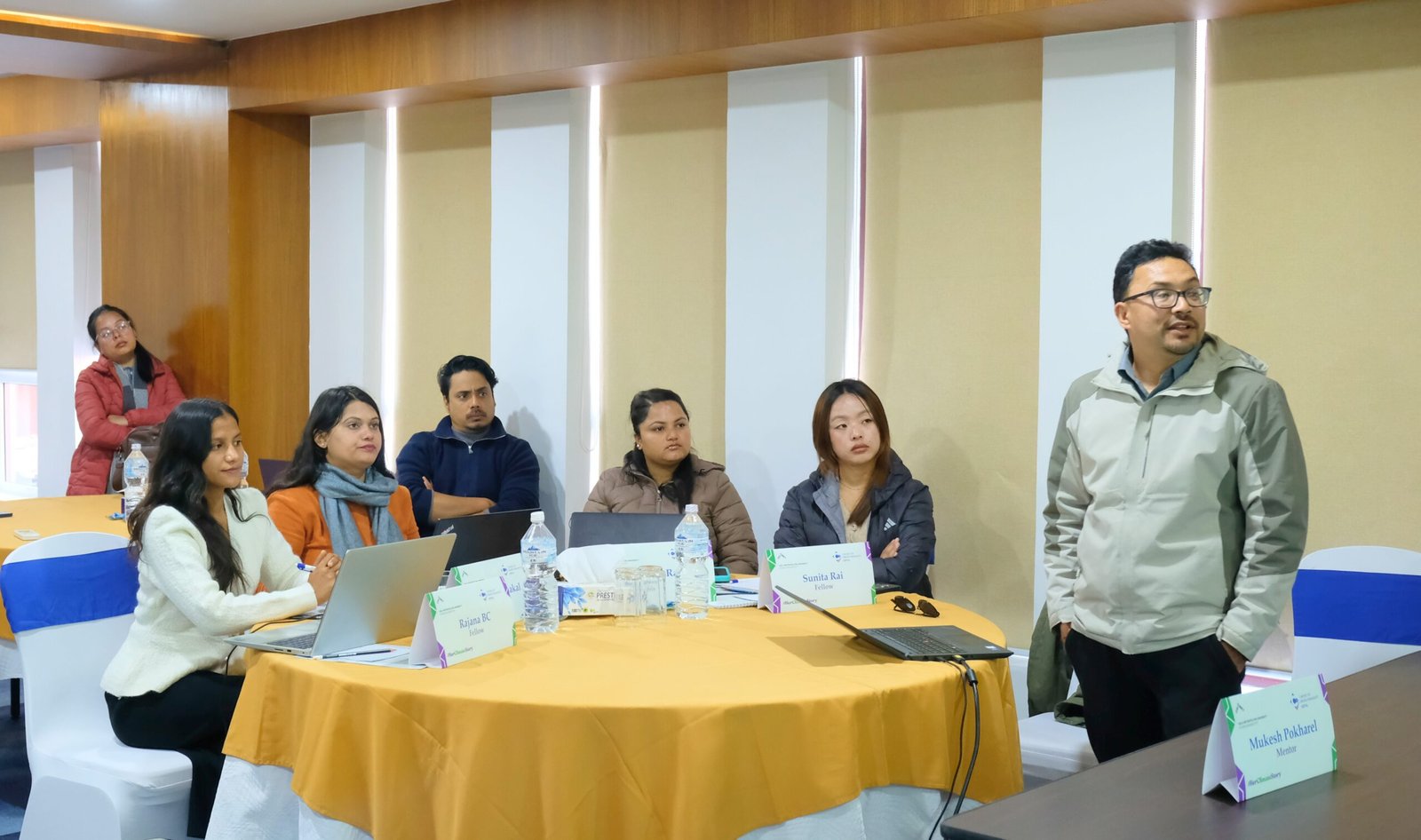
The introductory first day began with project head Chetana Kunwar explaining the fellowship and organizers’ expectations and CMR-Nepal’s Executive Director Tilak Pathak introducting the organization and its works. Then, the fellows introduced themselves, their pitched stories and their expecations from the fellowship. The mentors – Kunwar, climate journalist Mukesh Pokharel and data journalist Arun Karki – discussing each fellow’s story in length.
Climate governance and disaster risk were central themes on the second day of the workshop. Mr. Sushil Kumar Shrestha, Senior Divisional Engineer at the National Disaster Risk Reduction and Management Authority, unpacked Nepal’s disaster risk framework and the role of early warning systems in a changing climate.
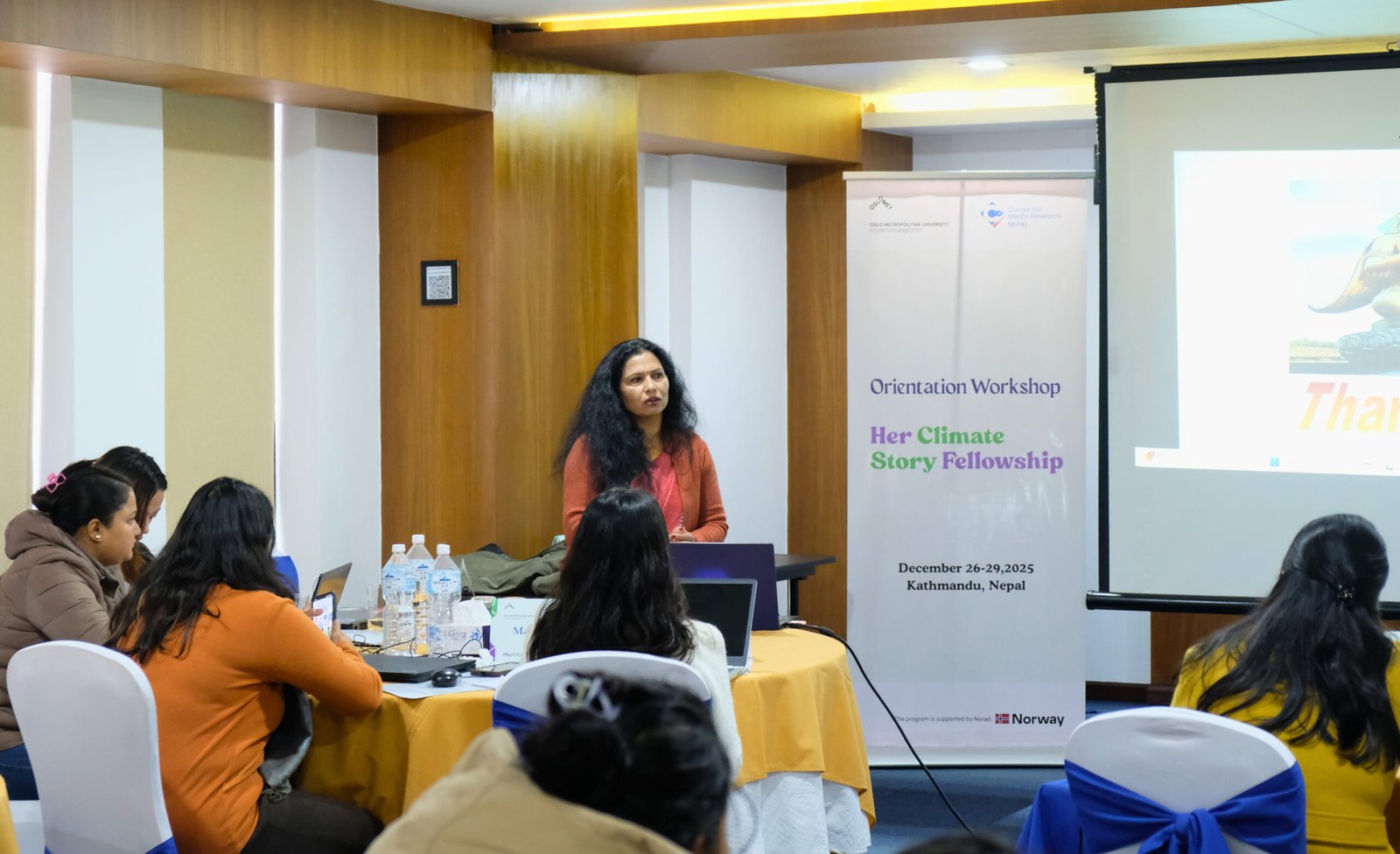
This was followed by a policy-focused session by Ms. Madhu Ghimire, Undersecretary at the Ministry of Forest and Environment, who discussed Nepal’s climate commitments, adaptation priorities, and the challenges of implementation at provincial and local levels .
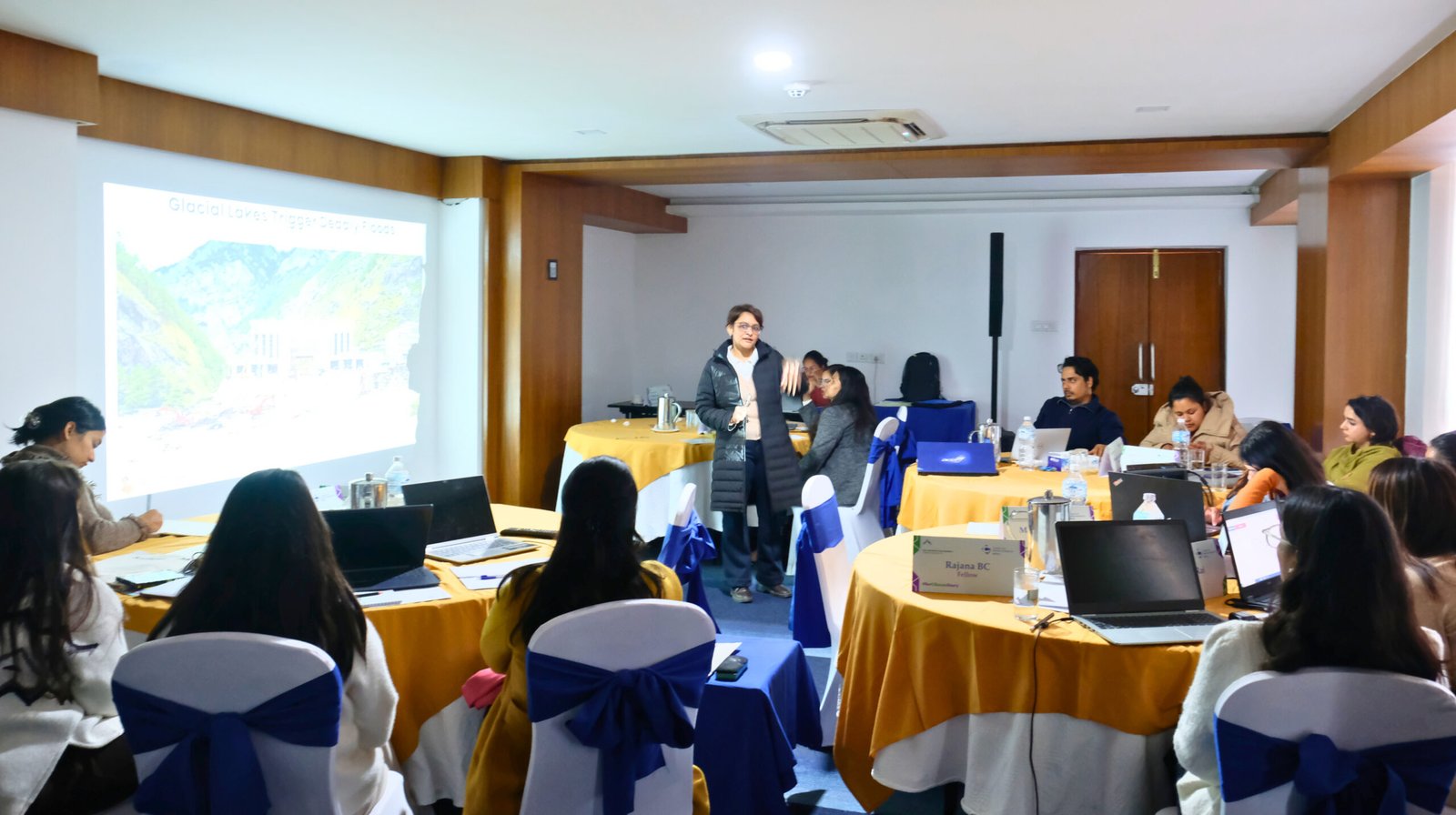
Journalistic practice was equally emphasized. Ms. Indira Aryal, climate and environment journalist at The Rising Nepal daily, led an in-depth session on climate reporting—highlighting ethical challenges, sourcing scientific data, and translating complex climate information into accessible public narratives. Fellows then worked closely with mentors during newsroom sessions, refining story ideas and angles.
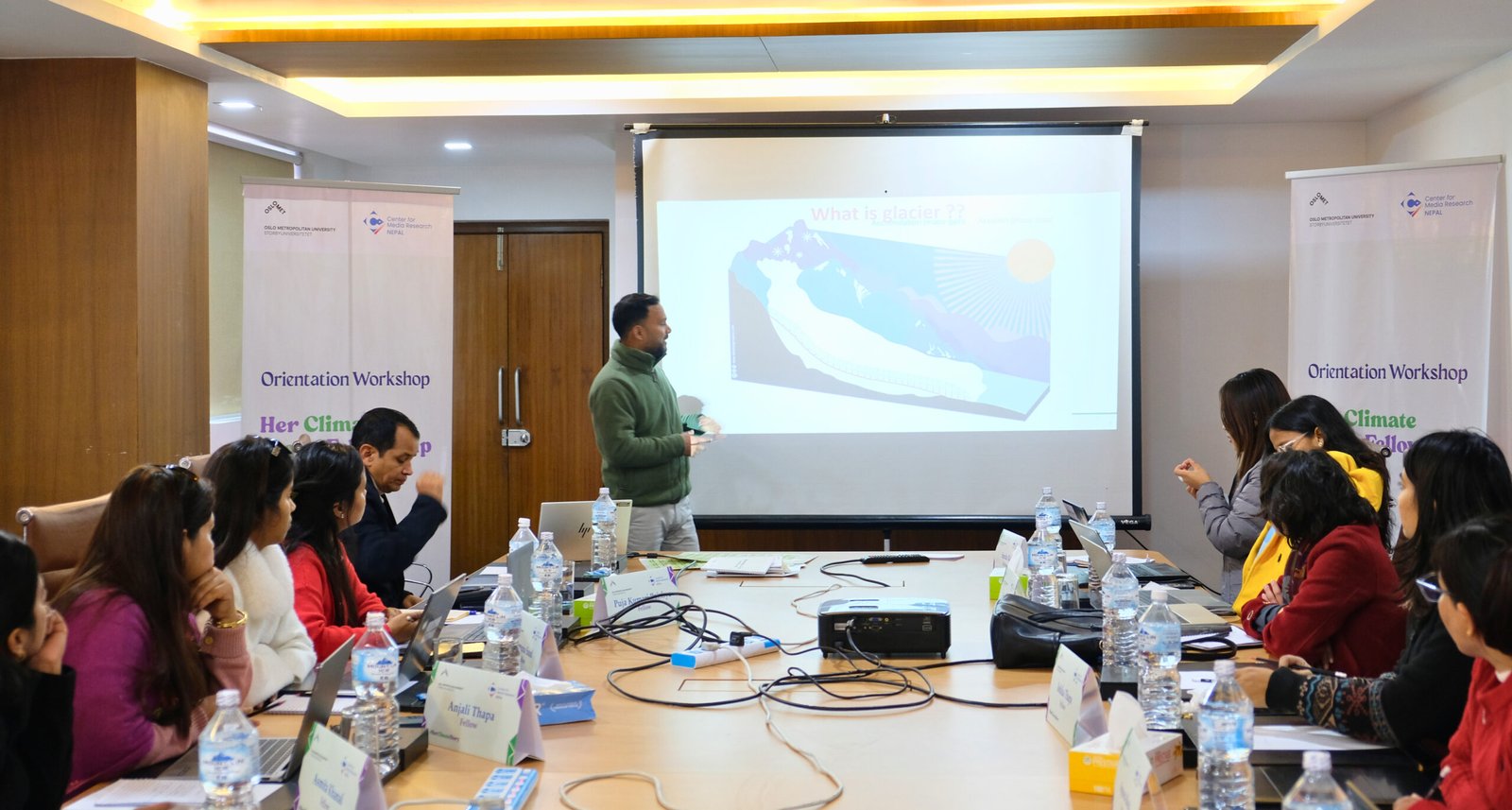
On the third day, the focus shifted to climate science and sectoral impacts. Dr. Mohan Chand, Associate Professor at Kathmandu University and a glaciology expert, provided a compelling overview of climate change and its impact on Nepal’s Himalayan region, emphasizing glacier retreat, glacial lake outburst floods (GLOFs), and data gaps in mountain research.
This was complemented by insights from Mr. Sushil Chandra Acharya, Joint Secretary at the Ministry of Energy, Water Resources and Irrigation, who discussed climate stress on water and energy systems.
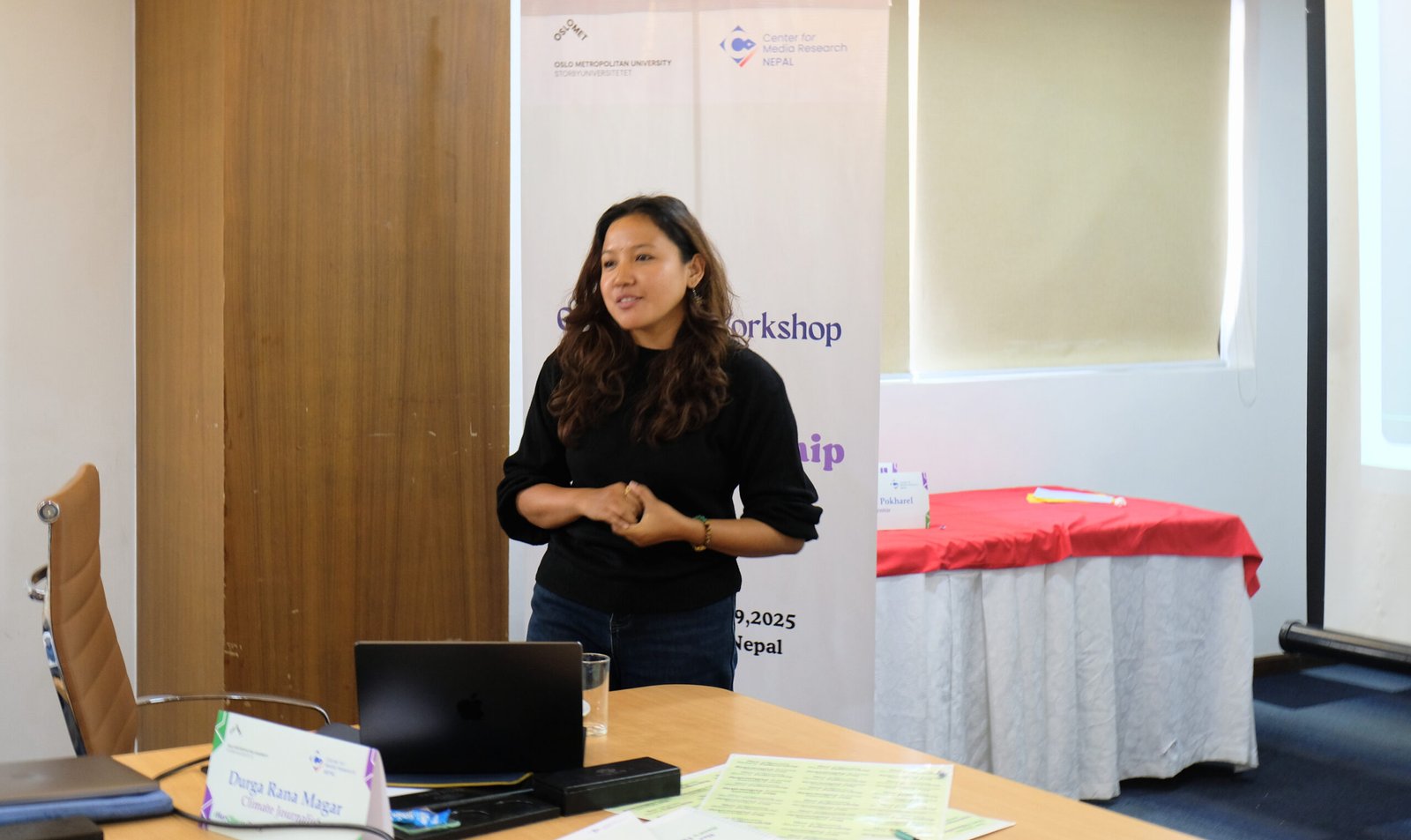
The day also featured experience-sharing from Ms. Durga Rana Magar, climate journalist and EJN Fellow 2025, who reflected on reporting from COP processes and navigating global climate negotiations as a Nepali journalist .
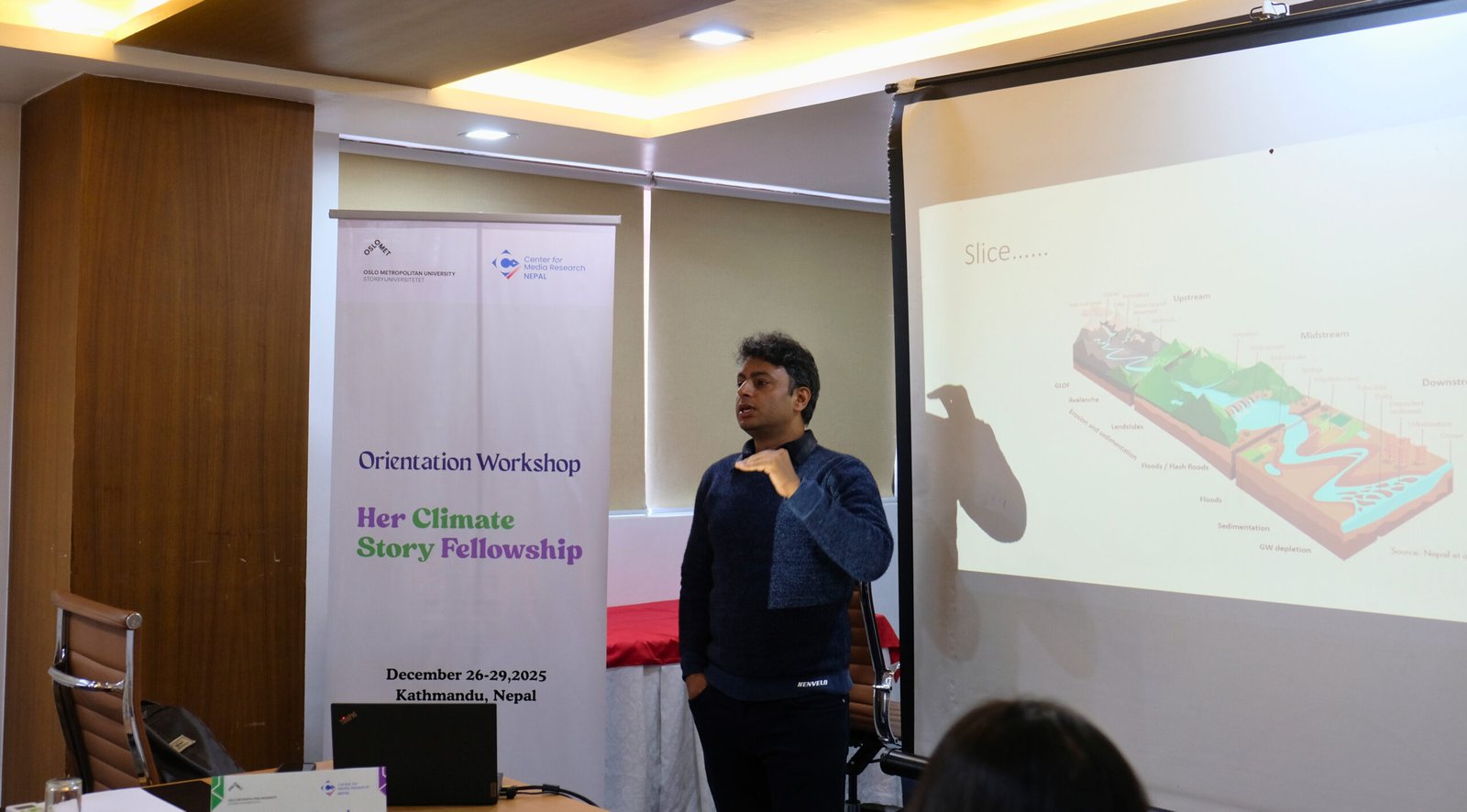
The final day brought together climate reporting and science once again. Mr. Ramesh Bhusal, Climate and Environment Journalist and South Asia Coordinator at the Earth Journalism Network, spoke on investigative climate journalism, cross-border environmental stories, and the importance of regional collaboration.
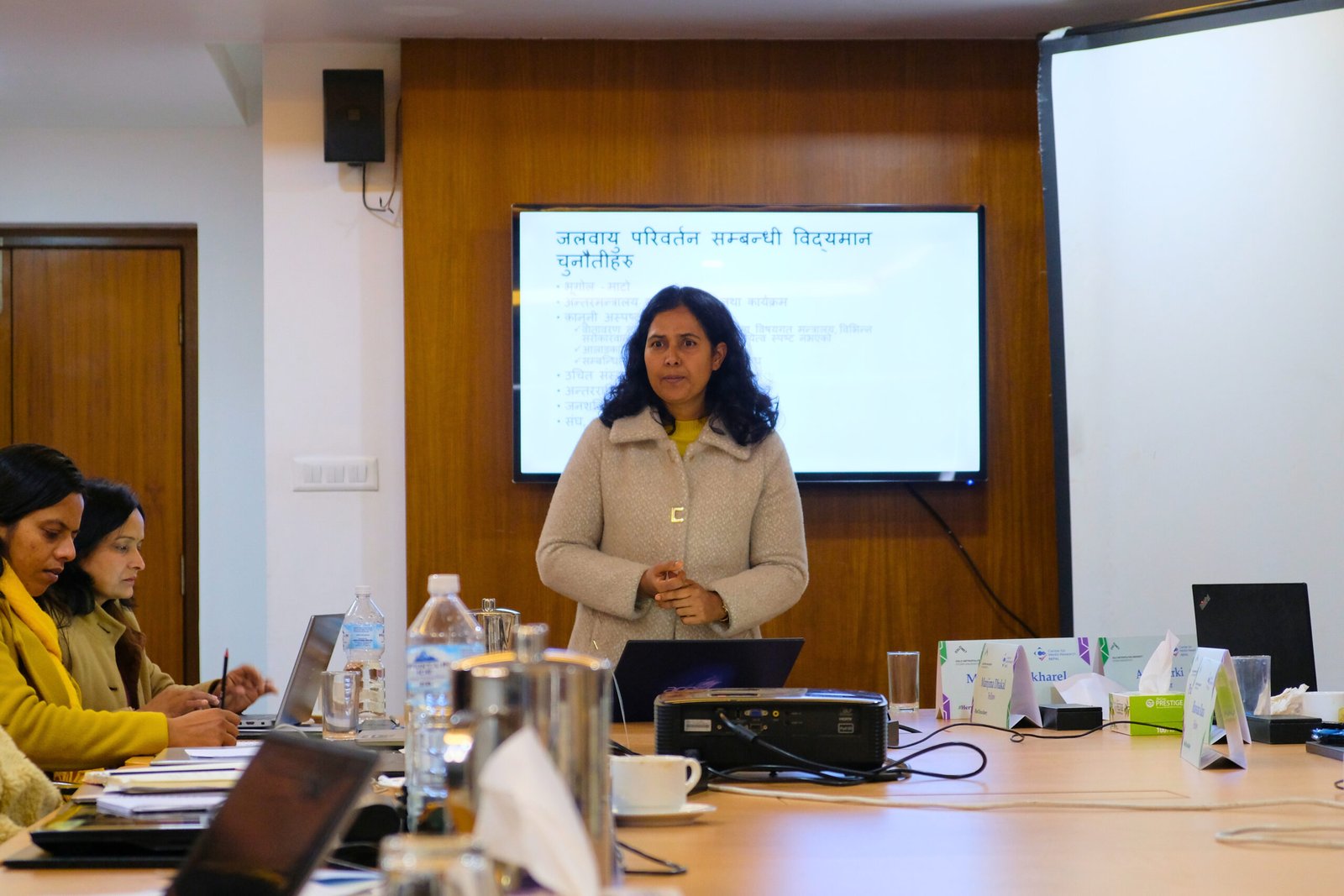
Expert inputs from government were further strengthened by Ms. Januka Pandit, Joint Secretary and Climate Change Focal Person at the Ministry of Agriculture and Livestock Development, who highlighted climate impacts on food systems and farmers’ livelihoods.
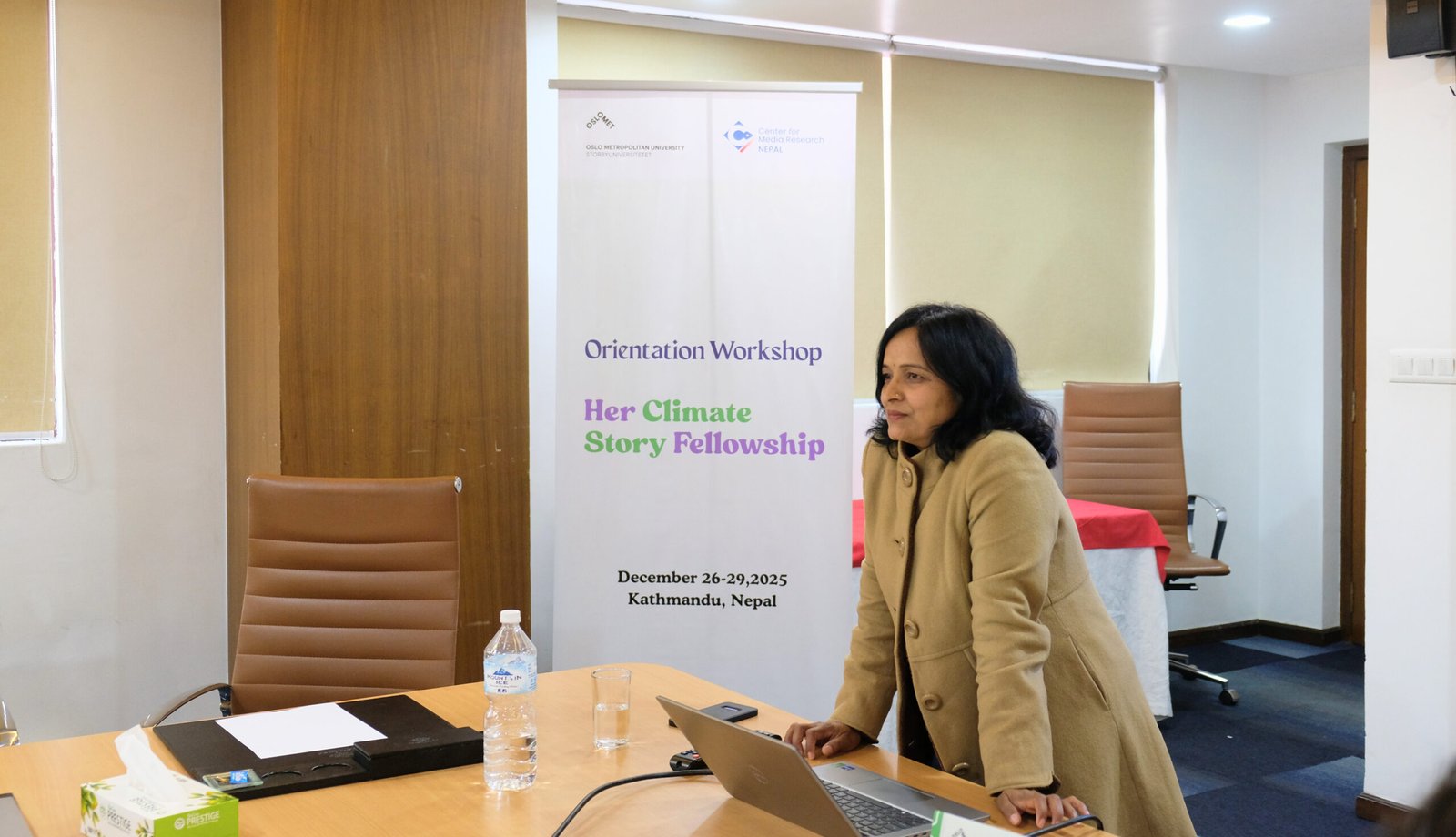
The final expert session was led Ms. Indira Kandel, Senior Meteorologist at the Department of Hydrology and Meteorology, focusing on weather data, forecasting, and how journalists can responsibly report on extreme weather events .
Throughout the workshop, fellows worked intensively with mentors Kunwar, Karki and Pokharel, transforming ideas into story pitches and draft outlines. These newsroom sessions emphasized editorial rigor, field-based reporting, and ethical storytelling especially when covering climate-affected communities.
The #HerClimateStory fellowship is more than a training program. It is an investment in long-term, inclusive climate journalism in Nepal. As these fellows return to their newsrooms and communities, their reporting will help amplify local climate realities, challenge misinformation, and ensure that women’s perspectives are central to Nepal’s climate discourse.
CMR–Nepal remains committed to nurturing this network of women climate journalists and to building a more informed, equitable, and resilient public sphere around climate change in Nepal.
Meet the #HerClimateStory Fellows 2025
The open call for application for the fellowships was answered by 86 women journalists of Nepal, who all pitched two story ideas. A three-member selection committee led by Ms. Indira Aryal selected the following fellows based on their story ideas.
Anjali Thapa (RSS, Bagmati Province) brings thirteen years of reporting experience at the national news agency, with a strong focus on women, marginalized communities, natural resources, community forestry, and climate change.
Apsara Bista (NepalPress.com, Karnali Province) is a Surkhet-based journalist covering politics and social issues across Karnali, one of Nepal’s most climate-vulnerable regions.
Asmita Khanal (Public 4K TV, Gandaki Province) is a multimedia journalist from Tanahun with experience in television and online reporting, specializing in field-based storytelling.
Bhagirathi Pandit (Freelancer, Bagmati Province) is an investigative journalist with eight years of experience across radio, television, and digital media, and a strong portfolio in climate, health, and education reporting.
Bhawana Rana (NepalViews.com, Karnali Province) is a journalist and producer focusing on climate change, disaster risk reduction, governance, and youth issues.
Ishika Thapa (Kalam Weekly, Bagmati Province) works as a reporter and social media associate, covering politics, local governance, feminism, youth, and climate narratives.
Manjima Dhakal (The Rising Nepal, Bagmati Province) has fourteen years of reporting experience and covers social issues, education, environment, gender, and human rights for the state-owned English daily.
Pooja Kumari Baishya (Freelancer, Lumbini Province) is a Nepalgunj-based journalist, researcher, and activist whose work spans SRHR, elections, misinformation, and women’s empowerment.
Ranjana B.K. (Kantipur, Sudurpaschim Province) reports on political, social, and economic issues while pursuing formal studies in journalism.
Sunita Neupane (Freelancer, Kathmandu Valley) is a feature journalist and Reporter-in-Residence at Global Press Journal, covering civil liberties, health, environment, and women’s and children’s rights.
Sunita Rai (Radio Nepal, Koshi Province) is a senior radio journalist and station manager with leadership experience in the Federation of Nepali Journalists, Ilam.
Yamuna Saud (Sudurpatra.com, Sudurpaschim Province) is an emerging journalist from Kailali, combining academic training with local radio and digital reporting experience.