Media and Information Literacy in Nepal: CMR-Nepal’s Approach to Spread MIL to Youths

Media and Information Literacy (MIL) has become increasingly crucial in Nepal, especially in the face of technological advancements and the widespread use of mobile devices and social media. Individuals are inundated with a massive amount of information, leaving very little time for evaluation and discernment. This constant influx of information, known as the infodemic, overwhelms people on a daily basis.

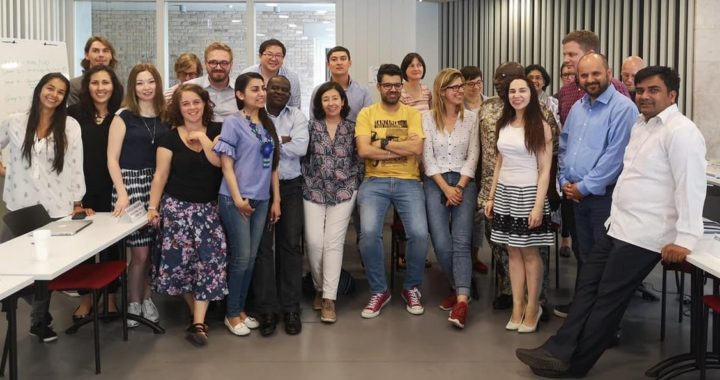
Participating teachers in the ToT on Media and Information Literacy in Janakpur, Madhesh province in June 2023.

In this context, MIL skills are of utmost importance. The ability to access, understand, evaluate, critically analyze, and select information is critical. Unfortunately, media and information literacy is not widely spread in Nepal.

MIL workshop for teachers in Butwal of Lumbini Province in June 2023.

It is not included in our school or university curricula, and awareness campaigns are lacking, leaving a large number of people vulnerable. This situation has given rise to misinformation and information manipulation, which, if left unchecked, can create information chaos and negatively impact our democracy, democratic procedures, and institutions in the long run.

To address this issue, the Center for Media Research – Nepal (CMR-Nepal) has launched several initiatives. One such initiative is the pilot program to spread MIL among youths, which was launched in 2023. The pilot program includes the following activities in its first year:

  1. Training 70 teachers across Nepal in MIL knowledge and skills.
  2. Providing microgrants to trained teachers to organize awareness and skills workshops for 20-40 students in their respective schools.
  3. Publication of resource materials, including a resource book for trainers, a handbook for youth, and a training manual for teachers.
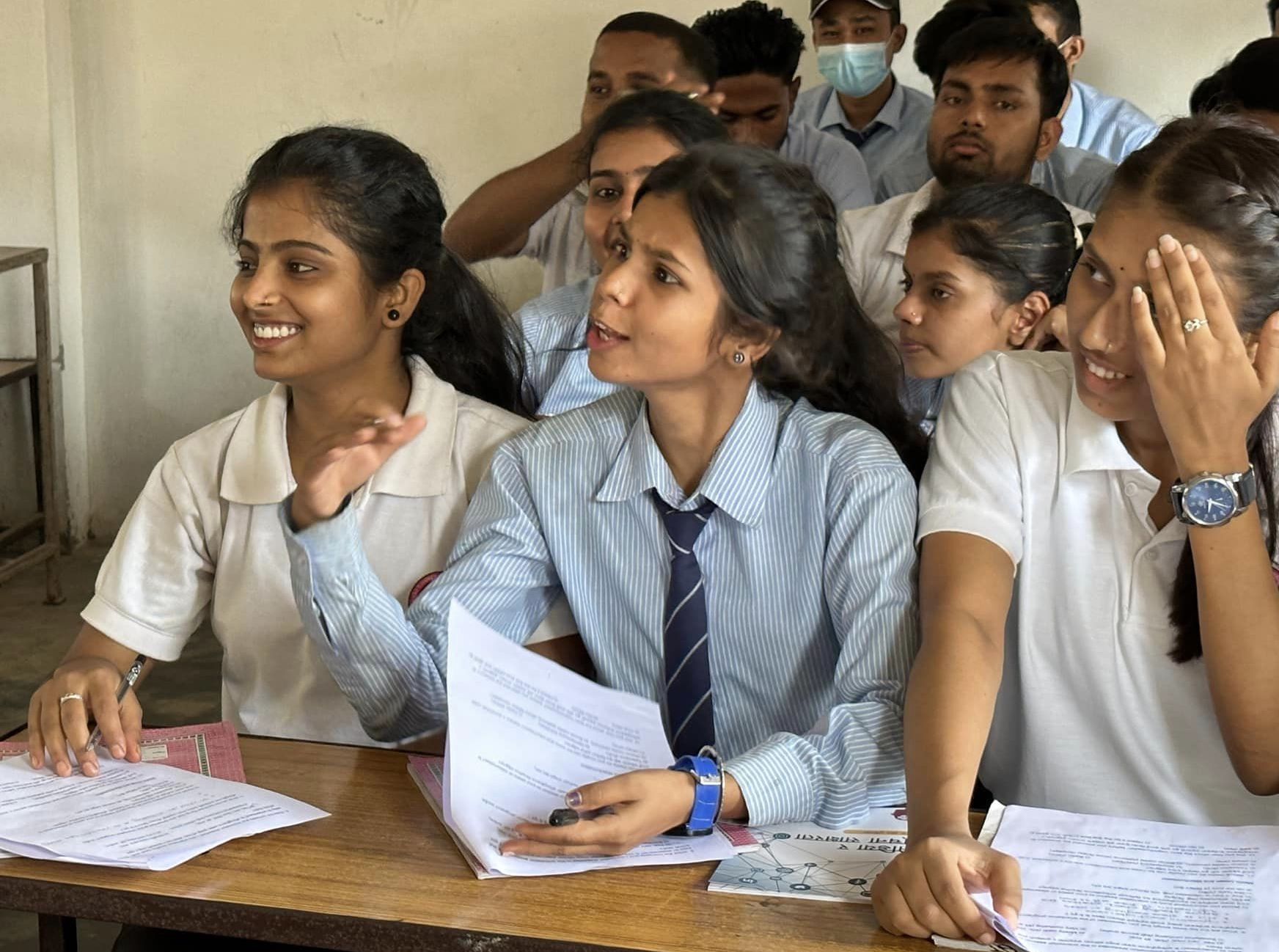
A student workshop organized by Ms. Sangita Thakur, who was trained by CMR-Nepal, in Janaki College of Management in June 2023.

The philosophy behind this project is to empower teachers. Not only will they continue to spread MIL knowledge and skills to their students beyond the project period, but they will also serve as a focal point in each school, facilitating easy access for their students.

Our MIL pilot program is funded through various projects, including those supported by The Asia Foundation, The Open Society Foundation, and the Tactical Tech.

In June 2023, we published a resource book for trainers and conducted two Training of Trainers sessions for 16 teachers, with eight teachers in each of the Madhesh and Lumbini provinces. Three of these teachers have already organized workshops with their students, yielding results that have increased our confidence in the effectiveness and impact of our approach.

We have plans to organize more training of teachers and award microgrants to them to organize student workshops at their schools in coming months.

Our resource books and handbook is freely available to all interested in media and information literacy.

We have so far organized MIL TOT Workshop for Teachers in following provinces:

  1. Madhesh, Lumbini, Koshi, Gandaki, Karnali and Sudurpaschim

Interventions to Combat Misinformation in Nepal’s 2022 Elections

Background and Political Context

According to the 2021 census, 38 percent of households in Nepal have internet connections, while 52 percent of the population are internet users [1].

A large number of citizens use the internet via mobile phones. There are many citizens who don’t use browsers to access the internet but use social media. Facebook, YouTube, and TikTok are popular social media in Nepal. The number of people using social media is higher than those who watch TV (31 percent), listen to radio (26 percent), and read newspapers (four percent) for news [2], and they are more likely to be affected by misinformation.

Nine out of every 10 internet users encounter misinformation, and 98 percent of Nepal’s internet users are concerned about the flow of misinformation and its impact on society [3].

Due to the lack of information literacy, limited access to news media, and political instability seen in recent decades, there is a high likelihood of information manipulation in Nepal. Policies drafted by the government to regulate social media, citing the spread of misinformation and other negative trends, do not show respect for freedom of speech, internet freedom, and basic civil rights [4].

Information Manipulation in Nepal

Nepal had experienced information manipulation and its adverse effects even before social media became popular. In 2000, a misinformation about comment on Nepal by an Indian actor led to ethnic violence across the country and the death of some citizens. Around 2009, when misinformation about child kidnappers spread, innocent people were injured and killed in mob beatings in various locations [5].

Although a lot of misinformation spread during the 2001 Royal Massacre or the 2015 Gorkha Earthquake, it was more extensively seen during the 2017 elections. After the start of the COVID pandemic in 2020, misinformation increased dramatically, and due to the increasing use of misinformation during elections worldwide, it was anticipated that information manipulation could influence elections in Nepal as well.

In a 2021 CMR-Nepal survey, 92 percent of respondents reported seeing misinformation on the internet, and 98 percent believed that misinformation could be a problem for Nepali society and politics [6]. Experts were also concerned about the possibility of information manipulation during elections, and even more so about the potential involvement of foreign actors, especially neighboring countries [7].

Election Commission’s Intervention

In the Social Media Usage Policy [8] issued in 2020, Nepal’s Election Commission identified information manipulation as a challenge and put forward the concept of developing necessary policies, strategies, and programs against it, as well as collaborating with technology companies.

The Commission conducted orientations to enhance the capacity of election officers and its staff regarding misinformation. During the 2022 election, the Election Code of Conduct included provisions related to misinformation and propaganda, as well as policies regarding misinformation and hate speech.

The Commission established a monitoring unit, including the cyber bureaus of Nepal Police and Nepali Army, to monitor misinformation and hate speech transmitted through online media. Additionally, for public awareness, the Commission collaborated with some telecomm companies to provide information about misinformation in mobile ringtones.

In 2022, the Election Commission attempted to expand relationships with platforms like Facebook, TikTok, and Twitter to reduce the number and impact of misinformation that could spread on social media during elections. Stating that information manipulation on social media during elections would be the biggest challenge, the Commission made its first attempt to establish contact with major technology companies. Among them, Meta, the company of Facebook and Instagram, collaborated with the Commission, while TikTok and Twitter opened direct communication channels regarding harmful election-related misinformation [9].

Facebook announced on September 7, 2022, that Nepal’s data would be available in its Ad Library. In this library, data regarding political or other advertisements from Nepal on Facebook and Instagram can be viewed for up to seven years. Before the election, the Meta company held various meetings and discussions in Nepal, as well as separate programs to inform the Election Commission, representatives of political parties, and journalists about Meta’s election-related efforts and available tools.

Civil Society Programs Against Information Manipulation

Among the notable interventions from the civil society during Nepal’s 2022 election, the work done by the Center for Media Research — Nepal (CMR-Nepal) and Nepal Fact Check can be considered as examples. When Nepal held elections in 2017, CMR-Nepal published an flyer [10] to inform citizens and media about misinformation, as well as conducted general monitoring of information manipulation during the election.

The monitoring showed that there were extensive attempts to manipulate information on online media and social media for the benefit by political actors during the election. Since then, CMR-Nepal has been continuously monitoring information manipulation, and it started Nepal Fact Check in 2020 in collaboration with the popular blog MySansar to fight viral misinformation [11].

Before the 2022 election, with the support of the International Republican Institute (IRI), the organization held discussions with stakeholders about information manipulation and its impacts in all seven provinces of Nepal. The discussions concluded that there is a lot of information manipulation during elections, and such manipulation can affect democracy itself, so it needs to be addressed in a timely manner.

IRI’s support in placing monitors in all seven provinces of the country to monitor information manipulation during the election, and the training provided to them on fact-checking, developed Nepal Fact Check’s capacity to monitor misinformation across the country during the election, report potential harmful content to social media, and conduct fact-checks [12].

Additionally, Nepal Fact Check was able to reach millions of citizens by helping influential TikTok users create videos to spread awareness about misinformation, and even produced a song against misinformation in collaboration with a popular folk singer, which has been viewed more than three hundred thousand times on YouTube.

The National Democratic Institute (NDI), on the other hand, helped PANOS South Asia’s fact-checking effort called South Asia Check to monitor misinformation and hate speech targeting social media pages of women in politics for a year before the election. NDI provided support to develop the necessary skills and methods for this.

Similarly, it supported the Purple Foundation to study online hate speech against women in politics. According to NDI, the study, based on a survey of 492 people across the country, 80 interviews, and 42 discussions, is the first on this subject in Nepal.

IFES had been working with various NGOs since June 2020 to empower youth across Nepal to fight misinformation. Under this program, they trained 34 youths, who subsequently conducted 23 webinars, successfully passing on that learning to more than 500 youths. Based on complaints, the Nepal Press Council suspended seven online news portals on charges of violating the Election Code of Conduct. IFES had also provided media literacy training to 7,200 youths across the country.

Nepal’s Lessons on Combating Misinformation During Elections

A Whole-Society Response is Necessary

During Nepal’s 2022 general election, there was no evidence of information manipulation significantly influencing the election results or incite violence. There was more discussion about misinformation and other information manipulation in newspaper materials or public discussions than before. One factor in such increased discussion was the collaboration of the Election Commission and civil society with platforms. Such collaborations included proactive and reactive communication programs, from spreading public awareness and educating authorities to fact-checking and reporting.

Both Governmental and Non-governmental Efforts are Necessary

Efforts made only by the government or only by the non-governmental sector may not be effective in mitigating information manipulation. It is effective to have as many types of programs as possible against information manipulation, along with both proactive and reactive communication. The government can effectively work on policy development and implementation, collaboration with platforms, increasing public awareness, and monitoring, while the private sector can work on increasing public awareness, collaborating with and reporting to social media platforms, fact-checking, and studying potential impact assessment.

The Role of Platforms is Important

Meta company’s positive presence was evident in Nepal’s 2022 election. Meta not only showed its activity through discussions and meetings before the election but also provided training to stakeholders. In such training, Meta showcased its features and provided information about policies on Facebook. This increased access to their data. Additionally, by establishing direct contact points for the Election Commission and civil society, it accelerated the process of identifying misinformation in a timely manner and taking necessary action. TikTok and Twitter also established direct communication channels and committed to taking timely action regarding harmful information.

(English translation of the case study published in “सूचना चलखेलको मुकाबिला: निर्वाचन र त्यसको सेरोफेरोका लागि स्रोतपुस्तिका” published by NDI, IRI and Standford Internet Observatory in 2022. Download Nepali version here.)

References

[1] National Statistics Office (n.d.). National Population and Housing Census 2021. https://censusnepal.cbs.gov.np/results

[2] Dixit, Kunda (2022). Nepal’s interface with information. Nepali Times, 2022 May 28.

[3] Acharya, Ujjwal (2022). Nepal Social Media Users Survey 2021. Center for Media Research — Nepal.

[4] Digital Rights Nepal (n.d.). https://digitalrightsnepal.org/?page_id=1008

[5] Acharya, Ujjwal (2023). Nepal: Promoting digital literacy with scarce resources, in Worthington, Jane (eds.) Managing the Misinformation Effect : The State of Fact-Checking in Asia. International Federation of Journalists.

[6] Acharya, Ujjwal (2022). Nepal Social Media Users Survey 2021. Center for Media Research — Nepal.

[7] Shrestha, Umesh (2022). Misinformation During Election (in Nepali). Kantipur Daily, 2022 December 23.

[8] Election Commission of Nepal (2021). Policy on the use of social media in Electoral Management, 2077. https://election.gov.np/source/Resources%20Other/05_ECN_Social_Media_Policy_English_20210622_v1.pdf

[9] Ojha, Anup (2022). Election Commission joins hands with social media giants to rein in misinformation. The Kathmandu Post, 2022 October 15. https://kathmandupost.com/politics/2022/10/15/election-commission-joins-hands-with-social-media-giants-to-rein-in-misinformation

[10] CMR — Nepal (2017). What is misinformation? https://research.butmedia.org/fake-news-disinformation-misinformation/

[11] CMR — Nepal (2020). NepalFactCheck launched to fight fake news and disinformation. https://research.butmedia.org/nepal-fact-check-launched-to-fight-fake-news-and-disinformation/

[12] CMR — Nepal (2022). Roundtables on misinformation and its impact on democracy held in 7 provinces. https://research.butmedia.org/roundtables-on-misinformation-its-impact-on-democracy-in-all-7-provinces/

My tryst with the virus: Photojournalist Bikash Karki

On March 24, 2020, a few days after the first coronavirus case was detected, Nepal went into lockdown. Only a day before, I had initiated a discussion at Annapurna Post, where I was the photo editor, on how to continue working in case of lockdown.

I was concerned because photojournalism as profession demands work in field. I had more responsibilities as I was also leading the photojournalists’ union – the Photojournalists’ Club, an associate union of IFJ-affiliated Federation of Nepali Journalists (FNJ). The club issued a 10-point guideline based on the WHO protocol and requested media houses to provide safety equipment for photojournalists.

Like every other family, my family was also scared of coronavirus, which was aggravated by the nature of my work. The fear that I may transmit infection to my family always indirectly impacted my work. It became routine to carry of packet of instant noodles and a bottle of water, leave home early and return late and upon return, leave my clothes and equipment in a separate room and spray sanitizer on them.

My family tried to persuade me to leave the job, but I felt a responsibility to tell the public about what was happening around them. However, when my publication did not provide the safety equipment and even didn’t pay my salary on time, it became hard. Through the club, with donations, we collected 3,000 face masks, 500 sanitizers and provided all photojournalists and their family members with coronavirus infection insurance.

Journalists in Nepal demonstrate in front of media house protesting salary cuts and illegal job terminations during the Covid-19 pandemic. Credit: Photojournalists Club Nepal

In late April, my publication announced a 50 per cent salary cut despite protests from the chief editor, bureau chiefs and myself. Even our halved salary was not paid for three months but I continued with my duty. The chief editor resigned over the disagreement and after the new editor was appointed, remote login to office system was cut for me and five other journalists. Our salary remained unpaid and six of us were transferred to a newly-formed special investigative bureau and were targeted for opposing salary cuts. The FNJ which took up these issues on our behalf.

I continued submitting photos through email but we were transferred to remotest part of the country and asked to leave immediately even though there was no transport due to the lockdown. While carrying out my professional duties, fighting for our rights, supporting other photojournalists and staff of Nagarik who were on a sit-demanding their salary, I contracted coronavirus. Though I had followed all safety protocols – wearing masks at all times, using sanitizer and keeping distance – during a late dinner, I noticed I had lost my sense of taste. Thankfully, my wife had taken my little son to her parental house a week ago, so I was sure I did not transmit it to them, but difficult days were ahead.

Coronavirus infection caused health problems that I had not experienced before: headache, fever, loss of taste and tiredness. And, then there was the psychological side of it: the fear that anything could happen. I obsessively checked my temperature and oxygen levels every hour. All this at a time when I was receiving letters with threats from my office.

A female journalists demonstrates in front of a Nepalese media house protesting salary cuts and illegal job terminations during the Covid-19 pandemic. Credit: Photojournalists Club Nepal

I decided to move into hotel isolation despite it being costlier because I thought if there was an emergency, the hotel staff would be trained to take me to the hospital, and there were some Covid-19 positive journalist friends staying there. The isolation was difficult because I was on my own wondering about what lay ahead. At times, I even thought I might not live to see the future. The helplessness – being unable to do anything to improve your health, not knowing what helps and waiting for an unknown future – was difficult to bear.

After a week or so, I was tested Covid negative and I could finally walk out of isolation and meet my family. But I was still feeling weak, and I had to continue fighting for my rights and dues at the Annapurna Post.

We had a case at the Labor Court, we had a complaint at the Office of the Press Registrar, and the FNJ and journalist community was with us in the struggle. The Working Journalists Act has never been fully implemented, but we were glad that it had enough provisions that protects journalists if we continue our fight in the court of law. Sit-ins and protest actions continued alongside.

The Annapurna Post finally negotiated. Although less than our rightful dues, it was a victory for journalists, the FNJ and the community. I have since resigned from the Annapurna Post and have been elected as the Central Committee member of the FNJ and I will continue to fight for the rights of the journalists.

(The author, a founding member of CMR-Nepal, is the Central Committee member of Federation of Nepali Journalists (FNJ) and the immediate past president of the Photojournalist’s Club Nepal.)

This article is originally published in the 19th Annual South Asia Press Freedom Report – Truth in a time of contagion: The Viral Frontline, by the International Federation of Journalists.

Funding journalism in digital age

Newspapers are declining and disappearing. With the rise of the internet, the online news providers have mushroomed. The business of Google and Facebook – the sites that link the news but don’t produce or spend on the news – are rising at an astonishing rate. The television and radio – in its form today – can become irrelevant soon. In short, the media world is transforming.

There is a problem with this transformation: the journalism is facing unprecedented hard time. The news abounds on the internet, but most of them are not products of the conventional journalistic process as they lack the rigorous process of selecting, verifying, contextualizing and prioritizing as per the need of the audience. Some contents are journalistic products, but then the audiences seriously lack the skills to distinguish one content from other.

For the democracy and for the people, journalism should live and thrive. But at the crunch time when media are suffering the loss of revenues, and people are questioning why they should be paying when everything is seemingly free on the internet, how the journalism should be funded? Continue reading “Funding journalism in digital age”

“CMR fellowship laid foundation for my career”

(Sudeep Uprety, who currently works as Research Uptake and Impact Coordinator for Nepal, GAGE Programme, Overseas Development Institute (ODI), London, UK, was a CMR-Nepal Research Fellow 2012-13. On CMR-Nepal’s request, he sent us  his reflections and experience of the fellowship.)

It all started with a random discovery of call for fellowship from CMR-Nepal in the spring of 2013 which I got interested in. I had no high hopes for getting the fellowship as I had just completed by Masters level studies in Conflict, Peace and Development Studies (CPDS) and was on the course of writing my thesis for the accomplishment of the degree. Particularly the fellowship excited me with the reason that I was thinking of writing my thesis on linking security discourses in Nepal during the post-conflict situation from media lens.

Few days later, when I submitted the application, I got an email from CMR-Nepal that I was selected for the fellowship. It was a great news for me as I was excited to learn more about the art and craft of media research from seasoned experts and other fellowship colleagues. My acceptance of the fellowship also particularly showed the flexibility, openness and the spirit of empowerment that CMR-Nepal team had in terms of capacitating young students like me, who had no previous background as a journalist or a media researcher. Continue reading ““CMR fellowship laid foundation for my career””