CMR-Nepal launches provincial activities to empower youth against misinformation and online harassment

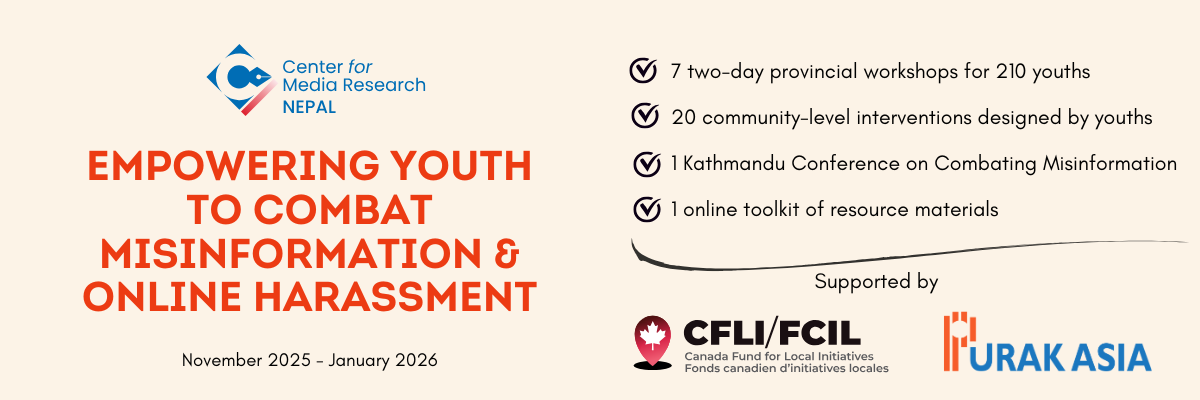
The Center for Media Research – Nepal (CMR Nepal) announces the launch of provincial activities under an initiative aimed at combating misinformation and online harassment through provincial digital literacy training and community-level micro-interventions.

The activities, which runs from November 2025 to January 2026, is co-funded by the Canada Fund of Local Initiatives (CFLI) and Purak Asia..

This evidence-based intervention will equip 210 youth—at least 50 per cent of them female—across seven provinces with crucial media and information literacy skills through seven two-day workshops. The workshop will focus to training outstation youth, supporting women and marginalized communities, and facilitating local micro-interventions designed by participants themselves.

The initiative will support at least 20 local micro interventions designed by the participants of the workshops themselves. CMR-Nepal will provide resources for youth groups to organize awareness programs, including youth-targeted handbook ‘Let’s Be Aware: Correct Use of Information and Technology’. The micro interventions will reach an estimated 1,000 people directly.

The iniviative include with the third edition of Kathmandu Confernece on Combating Misinformation in January 2026 at the Central Department of Journalism and Mass Communication, Tribhuvan University in Kathmandu. The Confernece will include an exhibition on artificial intelligence, funded by RNW Media.

This phase of the initative is a part of CMR-Nepal’s #MILinitiative aimed at promoting MIL skills among youths throughtout Nepal and underscores CMR Nepal’s continued commitment to ethical media, press freedom, and advocacy for inclusive democratic participation.

CMR-Nepal’s chair Deepak Aryal said: “CMR-Nepal is happy to continue important activities under #MILinitative, launched in 2023 and appreciates the support of CFLI, Embassy of Canada in India, as Nepal celebrates 60 years of Canada-Nepal diplomatic relations in 2025–26. CMR-Nepal also appreciates Purak Asia and RNW Media for co-funding parts of the initiatives, and hope that this important work of empowing youth on MIL will continue.”

CFLI team said:  “Canada is proud to support CMR-Nepal through the Canada Fund for Local Initiatives (CFLI), reflecting our shared commitment to inclusive development, gender equality, and sustainable, community-led solutions. We are pleased to partner with this initiative and commend their efforts to strengthen community engagement and resilience. Canada remains committed to working alongside local leaders to help build a more equitable and just future for local communities.”

The Future of Journalism (in Nepal)

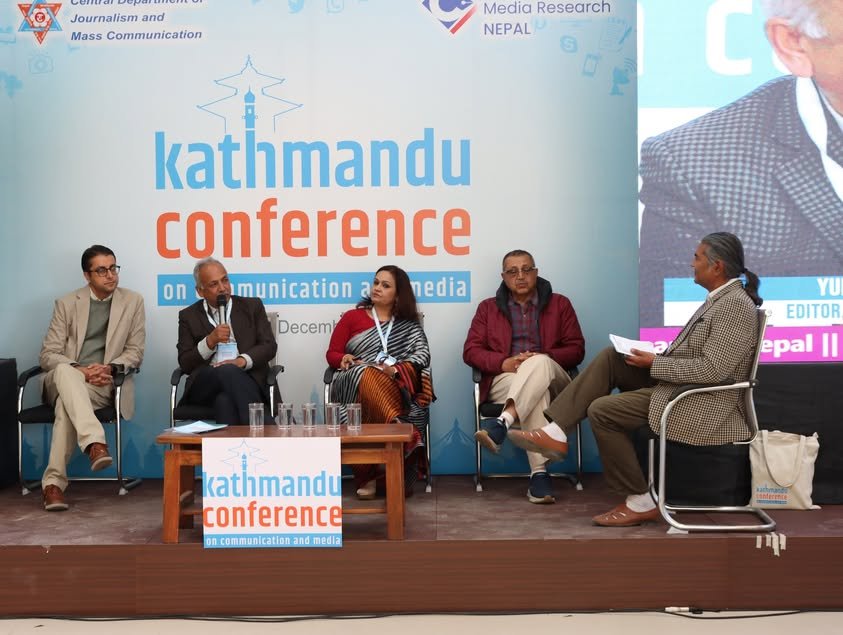
On December 24, 2024, the Center for Media Research – Nepal (CMR-Nepal) organized a panel discussion on “The Future of Journalism” during the Kathmandu Conference on Communication and Media in Kathmandu. Here is the summary report:

Moderator: Dr. Shreeram Paudel (Assistant Professor, Central Department of Journalism and Mass Communication, Tribhuvan University)

Panelists: Mr. Yubaraj Ghimire (editor in chief, Deshsanchar.com), Ms. Nirmala Sharma (president, Federation of Nepali Journalists), Mr. Gopal Guragain (Ujyaalo Network) and Mr. Biswas Baral (editor, The Kathmandu Post daily)

Summary of Panel 4 – The Future of Journalism

The fourth panel, “The Future of Journalism,” explored how journalism is evolving in the digital era. The discussion highlighted the importance of accountability, the necessity of high-quality content, and the crucial role media plays in shaping public opinion. Panelists emphasized the need for public funding, rigorous content verification, and the role of journalism in a rapidly changing technological landscape.

The panel underlined the need for accurate, well-researched, and ethical content. Traditional print media is steadily giving way to digital platforms and social media, necessitating a rethinking of how journalism is produced and distributed—while upholding the core principles of truth, accuracy, and fairness.

Panelists noted that intense competition between traditional media and digital platforms can both drive innovation and create challenges. They also highlighted the state’s role in supporting journalism by investing in media literacy, backing independent journalism, and ensuring public access to reliable information.

In conclusion, the panel recognized that while journalism faces considerable challenges, it also presents new opportunities for innovation and growth. Ensuring sustainability will require high standards of accountability, adaptability to new mediums, healthy competition, and investment in quality journalism. Recommendations included investing in training and resources for media houses, supporting media literacy programs, fostering collaboration between traditional and digital media, and implementing strong mechanisms for fact-checking and content verification to combat misinformation.

Statements by the Panelists

Mr. Yubaraj Ghimire
“My experience in print media shows that while the medium has transformed, core principles remain vital,” said Ghimire.

He emphasized three main points: First, paper remains relevant, but the way we read—and even sell news, sometimes in kilograms—has changed dramatically. Second, internal threats to journalism often stem from declining quality, where corporate interests clash with editorial conscience.

Third, journalists and corporate entities must function as separate institutions to maintain integrity and public trust. Ghimire stressed the need to boost credibility and reach wider audiences through video and written content. “We must define who we are and what our future holds,” he concluded.

Mr. Gopal Guragai
Guragai addressed how journalism’s duties and challenges are shifting amid both internal and external threats. Economic pressures complicate the landscape, while independent financing and vested interest groups threaten journalistic integrity. Regardless of the tools used, journalists must maintain a strong moral compass and ensure objective, truthful reporting. When the conversation turned to journalism education, he stressed that curricula must reflect diverse philosophical understandings of truth and ethics.

“We aim to teach students to think independently and critically question both external influences and their own assumptions,” he said. Guragai warned that the economy’s reliance on independent financing poses a growing external threat to journalism.

Ms. Nirmala Sharma
Sharma reflected on the transformation of journalism since the era of mission journalism. “We must adapt to today’s challenges with support from media institutions and beyond,” she said. Mainstream media, once dominant in news dissemination, now relies heavily on social media to distribute content—highlighting the growing divide between the two.

This shift has blurred the line between traditional and digital journalism, presenting both opportunities and risks. Sharma emphasized embracing the speed and reach of social media while safeguarding credibility and accountability. “We must be more responsible and value the quality of media content,” she said.

Mr. Biswas Baral
Baral noted that while digital platforms are gaining popularity among younger audiences, print newspapers still hold value and have adapted to meet modern demands. “The question isn’t digital vs. print,” he said, “but which medium best connects us with our audience.”

He encouraged innovation to ensure content remains relevant and accessible across all platforms. His comments sparked a lively discussion on the future of readership and the interplay between old and new media. He also pointed out that English is often more accessible to younger readers than Nepali, which has influenced hiring trends in journalism. “Print media is evolving,” he concluded.

Question & Answer Session

Prakash Kapali (Ratna Rajya Campus):
“How has the growing number of journalists ensured a promising future for the profession? Many are leaving journalism due to a lack of opportunity. What are your thoughts?”

Lekhanath Pandey:
“We’ve observed the discussion from three perspectives: technology, internal dynamics, and academic curriculum. My question is, as media workers, scholars, editors, and circulation experts—where is the transparency? The issue isn’t just investment or affiliations, but the increasing visibility of these challenges. Shouldn’t we revisit and review these aspects?”

Ravin Pun Magar (CDJMC):
“There has been discussion on the role of journalists, but how does journalism protect its practitioners? What mechanisms or support systems exist to safeguard journalists?”

Response from Ms. Nirmala Sharma

“Yes, journalism has a future,” Sharma affirmed. “The health of the media sector isn’t about numbers alone, but about quality and adaptability. Journalism students bring new ideas and energy to the profession. We need more of them.”

She emphasized the need to create compelling content, critically assess it, and offer the public original reporting. “To secure a bright future, we must inspire the next generation by showing the value journalism holds and by nurturing its many strengths.”

Moderator’s Remarks – Dr. Shreeram Paudel

Dr. Paudel opened the panel with a comprehensive overview of the evolving media ecosystem. He outlined the transition from traditional to digital media and set the stage for critical discussion by posing a series of reflective questions:

  • “How will the future of media unfold?”
  • “What will journalism look like in two years?”
  • “How do we build a value-based future for media?”
  • “Can print survive the rise of AI and new digital platforms?”
  • “What is the role of technology versus human creativity in content creation?”

These questions framed a dynamic and thought-provoking conversation on the future of journalism in a rapidly digitizing world.

The rapport is prepared by Ms. Iksha Limbu of CDJMC and the original text is edited for grammar and spelling by ChatGPT.

The Complex Relationship between Media and State

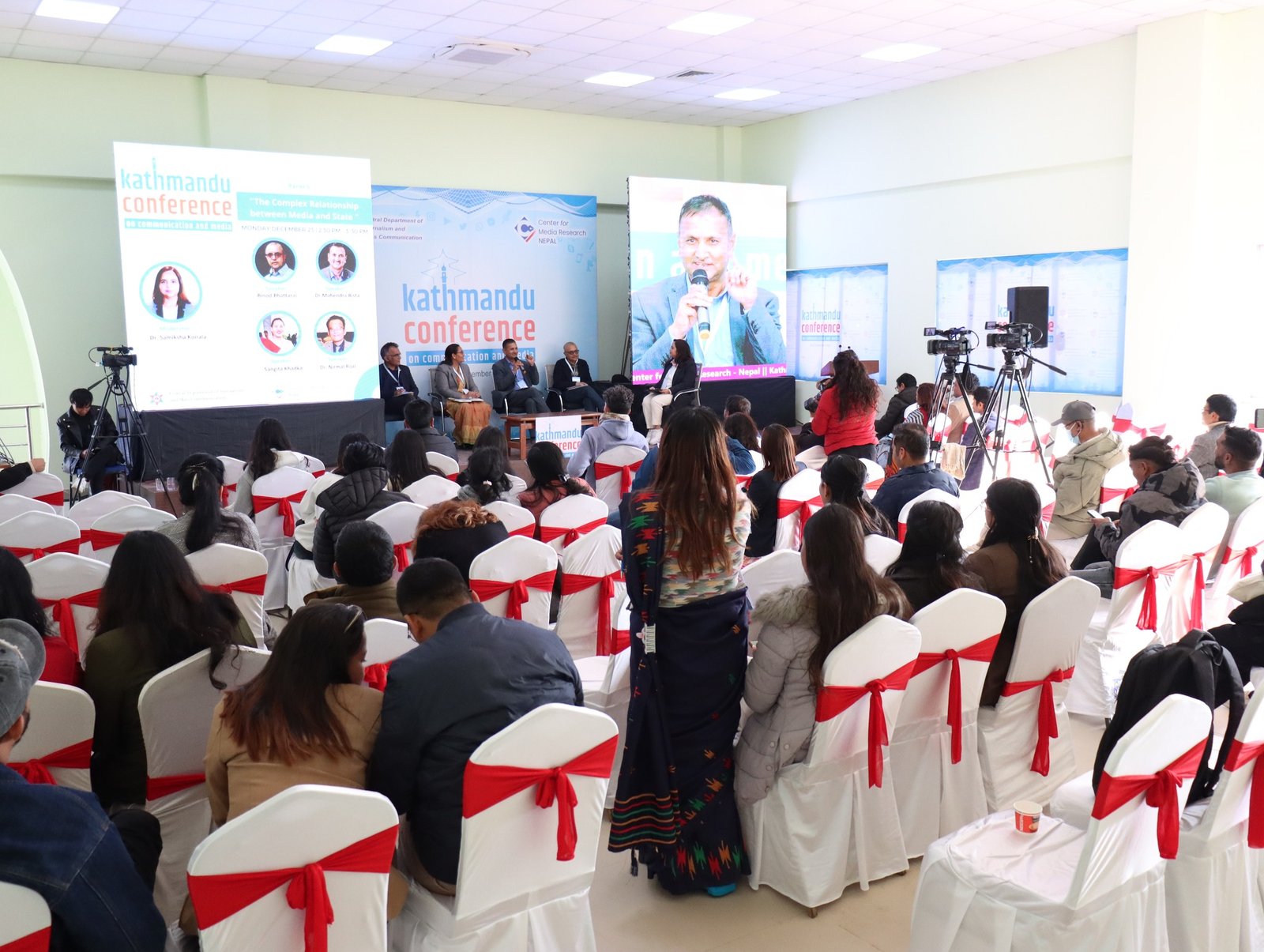
On December 24, 2024, the Center for Media Research – Nepal (CMR-Nepal) organized a panel discussion on “The Complex Relationship between Media and State in Nepal” during the Kathmandu Conference on Communication and Media in Kathmandu. Here is the summary report:

Moderator: Dr. Samiksha Koirala (Assistant Professor, North South University, Bangladesh)
Panelists: Binod Bhattarai (expert), Dr. Mahendra Bista (chairperson, Public Service Broadcasting), Sangita Khadka (chairperson, Minimum Wage Fixation Committee) and Dr. Nirmal Rijal (expert)

Summary of Panel 5 – The Complex Relationship between Media and State

The fifth panel of the conference, “The Complex Relationship between Media and State,” examined the evolving dynamics between the media, government, and external forces in an age of rapid technological change and market-driven content. The discussion focused on the challenges media outlets face in preserving their independence, ensuring accountability, and navigating the growing influence of corporate and political powers. Panelists stressed the need for ethical journalism and strong legal frameworks to uphold democratic values.

The panel explored how democracy is shifting and how media operates within it. Key issues discussed included market pressures, corporate and political influence, and the need for transparency in editorial policies. The panelists emphasized the importance of balancing financial sustainability with ethical reporting. They also addressed how technology affects journalism, bringing both opportunities and risks, including misinformation and algorithm-driven content bias.

The need for an independent media regulator was highlighted to enforce ethical standards and ensure accountability. The panelists underscored media’s responsibility in questioning power and providing fair, balanced reporting in the digital public sphere. Ultimately, the conversation reaffirmed the essential role of independent journalism and effective regulation in maintaining democratic governance.

Statements by Panelists

Dr. Mahendra Bista
“The government must actively support the media, not just by passing laws but also by ensuring editorial freedom and financial stability,” said Dr. Bista. “Journalism is the foundation of democracy, but it cannot thrive without proper funding.”

He stressed the importance of content analysis to uphold journalistic professionalism and called for editorial independence supported by data analytics from journalism websites. Both the government and media sector must take responsibility for protecting journalists from growing threats.

“We need government investment in media sustainability, and the sector must focus on ethical, innovative practices. Self-censorship exists—but freedom is the essence of democracy,” he concluded.

Sangita Khadka
Khadka focused on the working conditions of those entering the media industry. “New entrants often face low and inequitable pay, making it difficult to sustain themselves,” she said. “This is a serious issue that needs legal and policy intervention.”

She called for legislation to ensure fair compensation and uphold the dignity and rights of media professionals. “This is not just about justice; it’s about protecting the welfare of those working in this field.”

Dr. Nirmal Rijal
“The media too often portrays the government as the sole source of information—this is a problematic narrative,” said Dr. Rijal. “It undermines media independence and limits diverse perspectives.”

He welcomed the draft of the new broadcasting law but emphasized that it must promote freedom of expression while holding media to ethical standards.

“Without proper checks, media can become a tool of commercial or political interests rather than a platform for truth and public service,” he warned. He highlighted the growing commercialization of media, where profit motives often outweigh ethical considerations.

“When markets dominate unchecked, information quality suffers, and journalism loses its public value,” he said.

Binod Bhattarai
“We are witnessing media capture,” Bhattarai asserted. “When the media is captured, political shifts follow.” He emphasized that democracy is in transition, and it is essential that the media remain responsible and fact-based.

“Our democracy depends on a free and accountable press. Upholding these principles is not optional—it is fundamental.”

Question & Answer Session

Susan Bhattarai (Master’s Student, Journalism):
“Could you elaborate on the main challenges media faces due to technological change in today’s context?”

Sangita Khadka’s Response:
“We don’t oppose technology—but we must adapt to its developments and demands.”

Umesh Pokhrel:
“We talk about watchdog journalism and skill development. How has digital technology changed the landscape?”

Dr. Mahendra Bista’s Response:
“Government measures for media accountability depend on the public’s trust. To use technology effectively and enter mainstream media, we must adapt to the transformations taking place.”

Moderator’s Remarks – Dr. Samiksha Koirala

Dr. Koirala opened the discussion by addressing the state’s involvement in media regulation. “The state plays a critical role in regulating the media, and it’s essential to examine how this regulation functions,” she said. She posed a foundational question: “When the government invests in media, what are the implications for independence and objectivity?”

Dr. Koirala also raised the issue of market influence on media sustainability. “How do market forces shape the revenue streams of journalists, and what are the pros and cons of these dynamics?” she asked. She highlighted the financial pressures faced by journalists and how these might influence editorial choices. Her thoughtful framing enabled a robust discussion about the challenges and responsibilities media must navigate within today’s complex regulatory and economic landscape.

Kathmandu Conference on Communication and Media 2024 concludes successfully

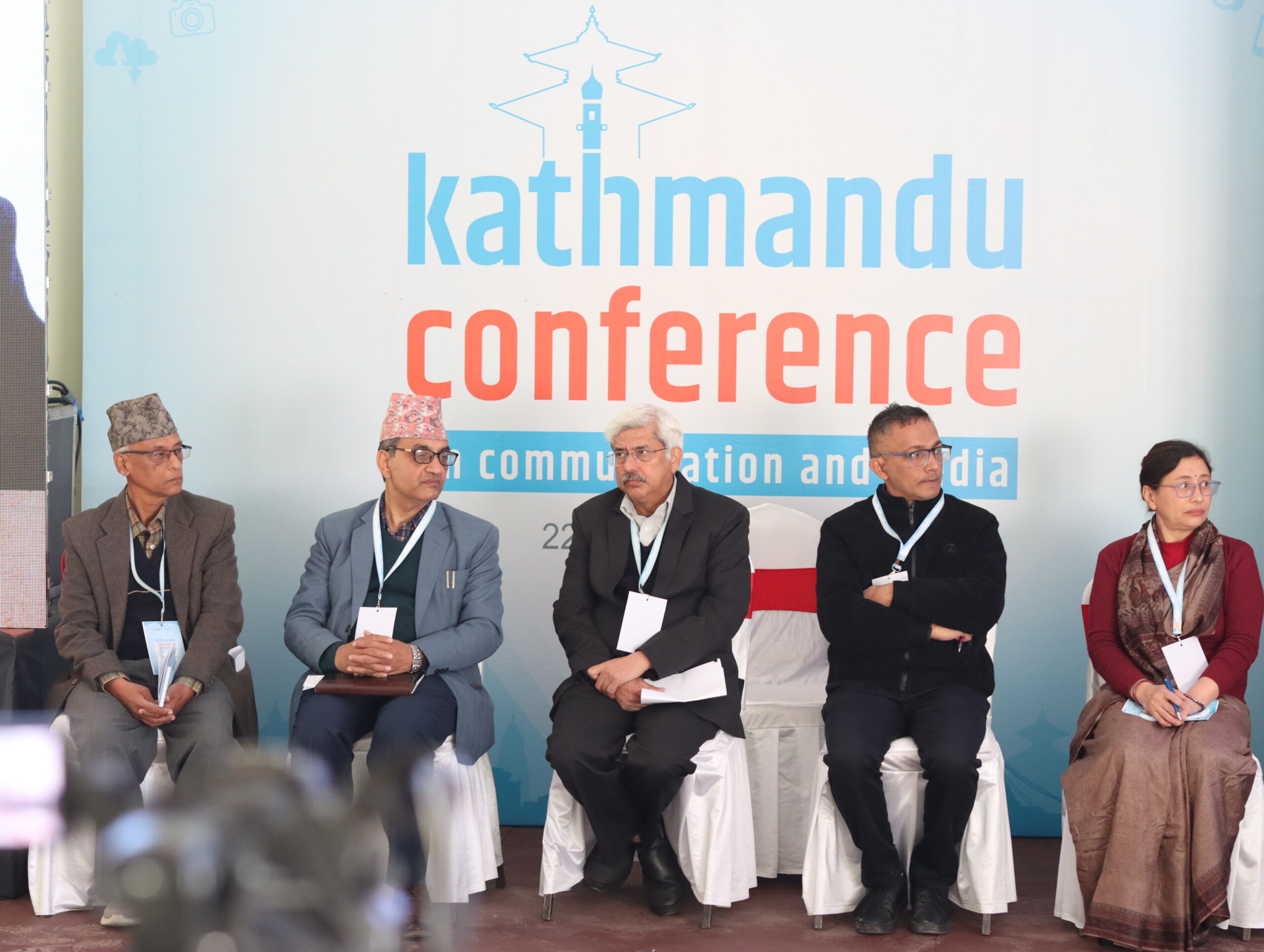
The Kathmandu Conference on Communication and Media 2024, which brought together journalism scholars and media experts from four South Asian nations, concluded on December 23 after two days of intensive discussions on the challenges and opportunities presented by technological advancement and social media in mass communication.

The conference, jointly organized by the Center for Media Research – Nepal and Tribhuvan University’s Central Department of Journalism and Mass Communication (CDJMC) addressed pressing issues on information ecosystem, journalism and media in the digital era.

In his opening keynote address, Prof. P. Kharel highlighted an enduring challenge: despite technological advancement, ensuring fair and factual reporting remains difficult.

“The concept of verification and re-verification of information’s truthfulness existed during Buddha’s time itself; but these days one can find a significant number of non-verified news in the media,” Kharel noted, emphasizing the need for legacy media to adapt to digital technology while maintaining journalistic standards.

Dr. Kundan Aryal, Head of TU CDJMC, emphasized how today’s audiences are more active than ever, necessitating well-edited and verified news content. “The conference aims to promote closer linkages between readers and audiences and academic activities,” he stated.

Prof. Dr. Dubinanda Dhakal, the Dean of the Humanities and Social Sciene at the TU, inaugurated the conference during which Prof. Dr. Shobha Shrestha, Head of the Central Department of Geography at TU and a member of Conference’s scientific committee also delivered her speech.

The first day of the Kathmandu Conference featured three sessions of research presentations, offering insights into various aspects of media and communication in South Asia.

The day began with a special presentation by Prof. Din M. Sumon Rahman from the University of Liberal Arts Bangladesh, who explored “Nomadic Narratives: the Cross-Border Spread of Misinformation in South Asia.” His research highlighted how misinformation travels across national boundaries in the region, taking on new forms and contexts.

In the first session, chaired by Assistant Professor Rishikesh Dahal, researchers presented findings on digital media and international relations. Nilima Chandani Khan‘s study examined how Muslim minorities use social media for identity formation and community engagement. Sahayog Ranjit‘s research delved into how disinformation affects Nepal’s diplomatic relations with India and China. The session also included Sunil Paudel‘s analysis of media bias in newspapers and Bhuwan Bhandari‘s assessment of digital media literacy among college students in Nepal.

The afternoon session, led by Associate Prof. Dr. Nirmala Mani Adhikary of Kathmandu University, featured a special presentation by Anil Chamadiya from Media Studies Group, New Delhi, analyzing Indian media coverage of other South Asian countries. This was followed by Assistant Professor Lekhanath Pandey‘s examination of COVID-19 pandemic narratives in Nepali media and Rudra Khadka‘s study on communication and social change. CMR-Nepal research fellow Sudeep Uprety presented research on media’s role in spreading awareness about climate crisis and displacement, while Sitashma Mainali analyzed health news coverage in Nepali national newspapers.

The day’s final session, chaired by Assistant Professor Dr. Ghama Raj Luitel, opened with H.A. Gayan Madushanka‘s presentation on data-driven media consumer behavior analysis. The session featured research on subnational media’s role in strengthening democracy by Injina Panthi, reporting patterns in Nepali print media by Tumaraj Koirala, local news coverage in regional newspapers by Ajay Sharma, and CMR-Nepal’s research fellow Shreeman Sharma‘s analysis of how Nepali newspapers frame transitional justice issues.

The research presentations highlighted emerging trends in media studies, particularly focusing on digital transformation, misinformation challenges, and the evolving role of media in addressing social issues across South Asia.

The second day’s panel discussions provided comprehensive insights into various aspects of contemporary journalism.

The first panel, moderated by journalist Namrata Sharma, explored strategies for combating misinformation in the age of AI, with fact-check editor Deepak Adhikari, IRI Nepal’s program manager Prema Thapa, and Communication Registrar of Bagmati Province Rewati Sapkota sharing insights on fact-checking mechanisms and AI’s role in both creating and detecting false information.

The second panel, led by award-winning investigative journalist Deepa Dahal, delved into media’s role in exposing and combating corruption. Panelists Assistant Professor Dr. Dipesh Ghimire of Central Department of Sociology, Assistant Professor at Nepal Law Campus Tejman Shrestha, editor of Ukaalo.com Devendra Bhattarai, and Course Professor at Nepal Open University Dr. Raghu Mainali discussed challenges journalists face while investigating corruption cases and the importance of investigative journalism in maintaining democratic accountability.

A critical discussion on making journalism financially viable followed, with Tilak Pathak, Executive Director of CMR-Nepal, moderating a conversation between Ajay Das, the Program Director at The Asia Foundation; Nirjana Sharma, the head of Communication and Information at UNESCO Kathmandu; Ameet Dhakal, editor-in-chief of Setopati.com and Ashutosh Tiwari, founder of SAFAL. The panel explored business models, challenges for sustainability and sustainable funding mechanisms for quality journalism in the digital age.

The fourth panel on the future of journalism, moderated by Assistant Professor Dr. Shreeram Paudel, featured prominent journalists including editor-in-chief of Deshantar.com Yubaraj Ghimire, chairperson of the Federation of Nepali Journalists (FNJ) Nirmala Sharma, editor-in-chief of The Kathmandu Post Biswas Baral and founder of Ujyaalo Radio Network Gopal Guragain.

The final panel, led by Assistant Professor at North South University Bangladesh Dr. Samiksha Koirala, tackled the complex relationship between media and state. Executive Chairman of Public Service Broadcasting Dr. Mahendra Bista, chairperson of the Minimum Wages Fixation Committee Sangita Khadka, and experts Binod Bhattarai and Dr. Nirmal Rijal explored press freedom challenges, regulatory frameworks, and the balance between state oversight and media independence.

Between panel discussions, founder and former editor of Nepali Times Kunda Dixit delivered a special lecture on reforming media education, emphasizing the need to blend traditional journalistic values with modern technological skills.

The day also featured a parallel session on students’ research presentations where five students – four from CDJMC and one from St. Xavier’s College, presented their researches to international participants for suggestions and comments.

The conference also featured a special exhibition titled “Supercharged by AI – Synthetic and Out of Control,” exploring artificial intelligence’s impact on online lives. The exhibition was jointly organized by Tactical Tech and CMR-Nepal. Three research were presented as posters alongside the exhibition.

The event concluded with a keynote address by Tribhuvan University’s Rector Prof. Dr. Khadga KC, marking the end of discussions that brought together academics, journalists, and media experts from across South Asia to address the evolving landscape of journalism in the digital age.

More than 200 media educators, scholars and researchers from Nepal, India, Bangladesh, and Sri Lanka participated in the conference, which served as a platform for regional collaboration in addressing contemporary media challenges while promoting academic discourse on the future of journalism in South Asia.

To learn more about the conference, visit conference website.