CMR-Nepal donates books to National News Agency’s Library

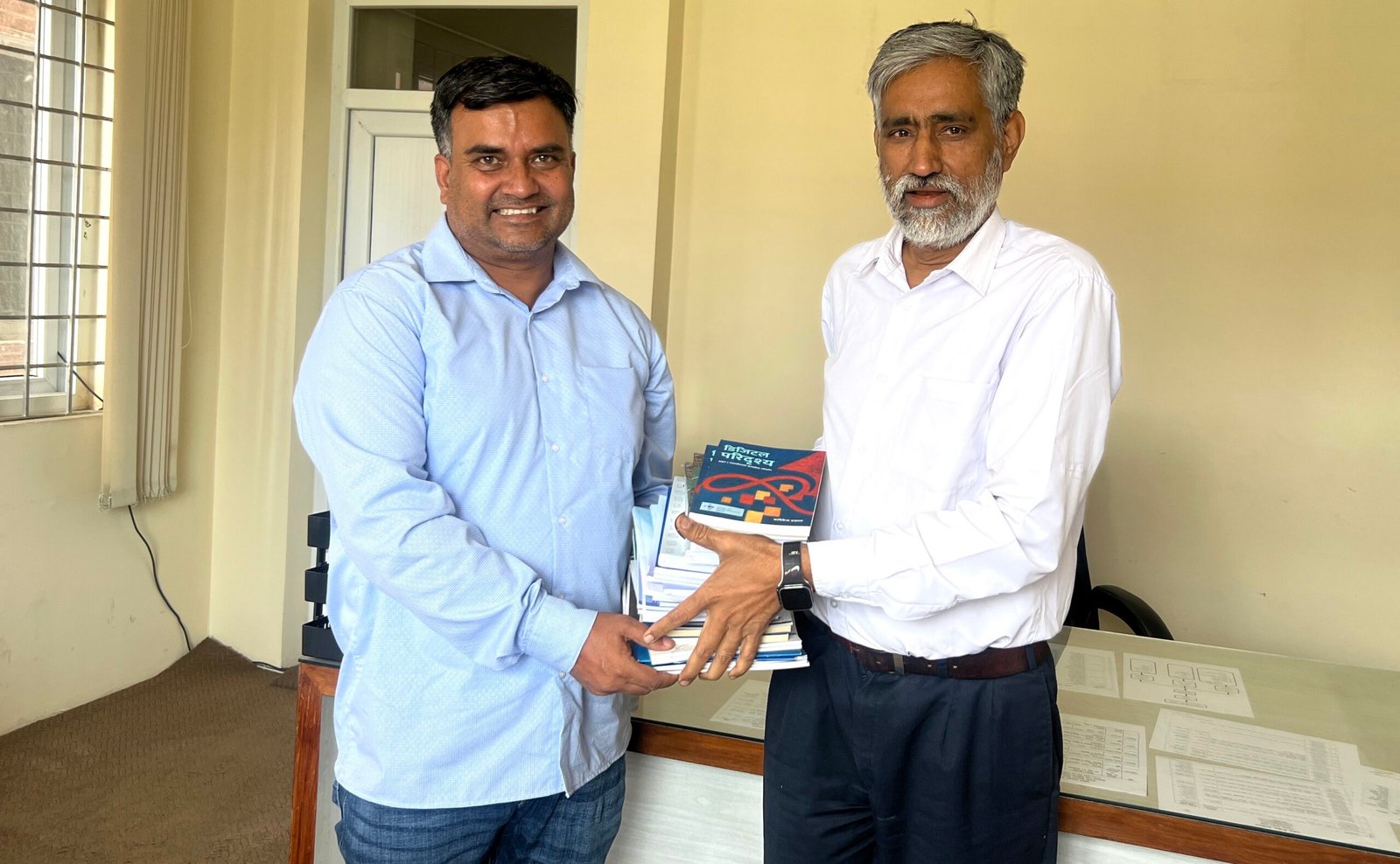
The Center for Media Research-Nepal (CMR-Nepal) has donated 30 books of 15 media-related titles to the library of National News Agency (Rastriya Samachar Samiti – RSS).

CMR-Nepal’s director Ujjwal Acharya handed over the books to RSS Executive Chairperson Dharmendra Jha at RSS Central Office, Bhradrakali Plaza, Kathmandu.

Upon receiving the books, Executive Chairman Jha emphasized the books’ relevance for RSS, journalists, media students, and stakeholders. He highlighted the library’s growing role as a resource hub for media education and research.

Director Acharya praised RSS for its adaptability in the evolving media landscape and expressed confidence that the library would become a key destination for journalists, researchers, and students.

“RSS holds significant importance in Nepal’s information ecosystem, and this library will further support media studies and research,” Acharya said.

The donated books cover critical topics such as Nepal’s media landscape, digital transformation, misinformation, media literacy, policy, and state of journalism during disasters. Notable titles include Digital Landscape, Corruption and Media, Nepal’s Misinformation Landscape, and Media in Pandemic, among others.

Acharya noted that these publications—rooted in studies, research, and statistics—will aid journalists, media professionals, and students.

During the event, Acharya toured the RSS Media Museum, News Bulletin Room, and Library. Executive Chairman Jha shared insights into the museum’s objectives and future plans, including expansions to the bulletin room and library.

Since its inauguration on February 19, 2025, to mark RSS’s 64th anniversary, the Media Museum has attracted growing interest from experts and visitors. The bulletin room archives news materials from RSS’s founding in February 18, 1962 to the present, while the library now houses nearly 700 books.

News / Photo Courtesy: National News Agency / RSS

The Complex Relationship between Media and State

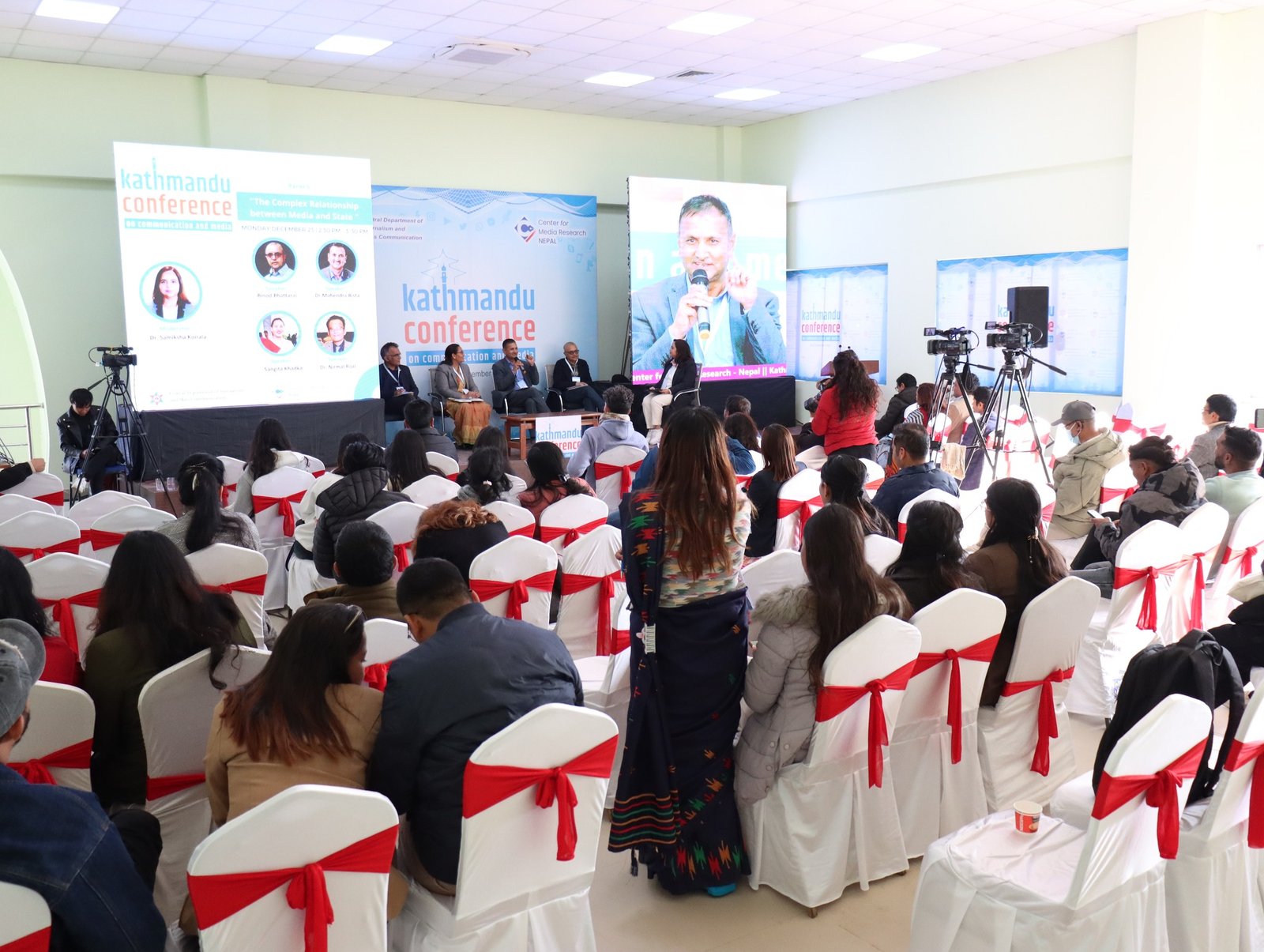
On December 24, 2024, the Center for Media Research – Nepal (CMR-Nepal) organized a panel discussion on “The Complex Relationship between Media and State in Nepal” during the Kathmandu Conference on Communication and Media in Kathmandu. Here is the summary report:

Moderator: Dr. Samiksha Koirala (Assistant Professor, North South University, Bangladesh)
Panelists: Binod Bhattarai (expert), Dr. Mahendra Bista (chairperson, Public Service Broadcasting), Sangita Khadka (chairperson, Minimum Wage Fixation Committee) and Dr. Nirmal Rijal (expert)

Summary of Panel 5 – The Complex Relationship between Media and State

The fifth panel of the conference, “The Complex Relationship between Media and State,” examined the evolving dynamics between the media, government, and external forces in an age of rapid technological change and market-driven content. The discussion focused on the challenges media outlets face in preserving their independence, ensuring accountability, and navigating the growing influence of corporate and political powers. Panelists stressed the need for ethical journalism and strong legal frameworks to uphold democratic values.

The panel explored how democracy is shifting and how media operates within it. Key issues discussed included market pressures, corporate and political influence, and the need for transparency in editorial policies. The panelists emphasized the importance of balancing financial sustainability with ethical reporting. They also addressed how technology affects journalism, bringing both opportunities and risks, including misinformation and algorithm-driven content bias.

The need for an independent media regulator was highlighted to enforce ethical standards and ensure accountability. The panelists underscored media’s responsibility in questioning power and providing fair, balanced reporting in the digital public sphere. Ultimately, the conversation reaffirmed the essential role of independent journalism and effective regulation in maintaining democratic governance.

Statements by Panelists

Dr. Mahendra Bista
“The government must actively support the media, not just by passing laws but also by ensuring editorial freedom and financial stability,” said Dr. Bista. “Journalism is the foundation of democracy, but it cannot thrive without proper funding.”

He stressed the importance of content analysis to uphold journalistic professionalism and called for editorial independence supported by data analytics from journalism websites. Both the government and media sector must take responsibility for protecting journalists from growing threats.

“We need government investment in media sustainability, and the sector must focus on ethical, innovative practices. Self-censorship exists—but freedom is the essence of democracy,” he concluded.

Sangita Khadka
Khadka focused on the working conditions of those entering the media industry. “New entrants often face low and inequitable pay, making it difficult to sustain themselves,” she said. “This is a serious issue that needs legal and policy intervention.”

She called for legislation to ensure fair compensation and uphold the dignity and rights of media professionals. “This is not just about justice; it’s about protecting the welfare of those working in this field.”

Dr. Nirmal Rijal
“The media too often portrays the government as the sole source of information—this is a problematic narrative,” said Dr. Rijal. “It undermines media independence and limits diverse perspectives.”

He welcomed the draft of the new broadcasting law but emphasized that it must promote freedom of expression while holding media to ethical standards.

“Without proper checks, media can become a tool of commercial or political interests rather than a platform for truth and public service,” he warned. He highlighted the growing commercialization of media, where profit motives often outweigh ethical considerations.

“When markets dominate unchecked, information quality suffers, and journalism loses its public value,” he said.

Binod Bhattarai
“We are witnessing media capture,” Bhattarai asserted. “When the media is captured, political shifts follow.” He emphasized that democracy is in transition, and it is essential that the media remain responsible and fact-based.

“Our democracy depends on a free and accountable press. Upholding these principles is not optional—it is fundamental.”

Question & Answer Session

Susan Bhattarai (Master’s Student, Journalism):
“Could you elaborate on the main challenges media faces due to technological change in today’s context?”

Sangita Khadka’s Response:
“We don’t oppose technology—but we must adapt to its developments and demands.”

Umesh Pokhrel:
“We talk about watchdog journalism and skill development. How has digital technology changed the landscape?”

Dr. Mahendra Bista’s Response:
“Government measures for media accountability depend on the public’s trust. To use technology effectively and enter mainstream media, we must adapt to the transformations taking place.”

Moderator’s Remarks – Dr. Samiksha Koirala

Dr. Koirala opened the discussion by addressing the state’s involvement in media regulation. “The state plays a critical role in regulating the media, and it’s essential to examine how this regulation functions,” she said. She posed a foundational question: “When the government invests in media, what are the implications for independence and objectivity?”

Dr. Koirala also raised the issue of market influence on media sustainability. “How do market forces shape the revenue streams of journalists, and what are the pros and cons of these dynamics?” she asked. She highlighted the financial pressures faced by journalists and how these might influence editorial choices. Her thoughtful framing enabled a robust discussion about the challenges and responsibilities media must navigate within today’s complex regulatory and economic landscape.

CMR-Nepal annouces Media Research Fellows 2024

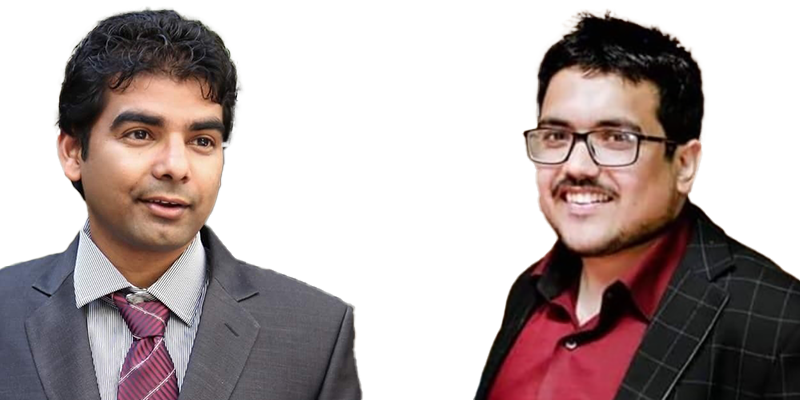
The Center for Media Research – Nepal (CMR-Nepal) on September 26 announced two researchers as Media Research Fellows 2024.

The fellows were selected from among 12 applicants who responded to the call for application for the fellowships. This year, CMR-Nepal has allocated NRs. 200,000 for the fellowship which will be used to compenstate the fellows’ works.

The concept notes of the applicants went through blind evaluation by three members of the selection committee: Mr. Deepak Aryal (Chair, CMR-Nepal), Mr. Rishikesh Dahal (Assistant Professor of Journalism, Tribhuvan University) and Mr. Tilak Pathak (Executive Director, CMR-Nepal).

The fellowship begins October 1, 2024 and ends on December 30, 2024.

The fellows will engage with CMR-Nepal in research activities and present their findings in a conference in December 2024. CMR-Nepal will publish fellows’ works with DOI in 2025.

The CMR-Nepal Media Research Fellows 2024  and their research topics are (in alphabetical order):

  • Shreeman Sharma: Media Framing of Transititonal Justice in Nepal
  • Sudeep Uprety: Spreading community awareness on Climate Crisis, Displacement and Conflict nexus in Nepal through media

Media Research Fellowships 2024: Call for Applications

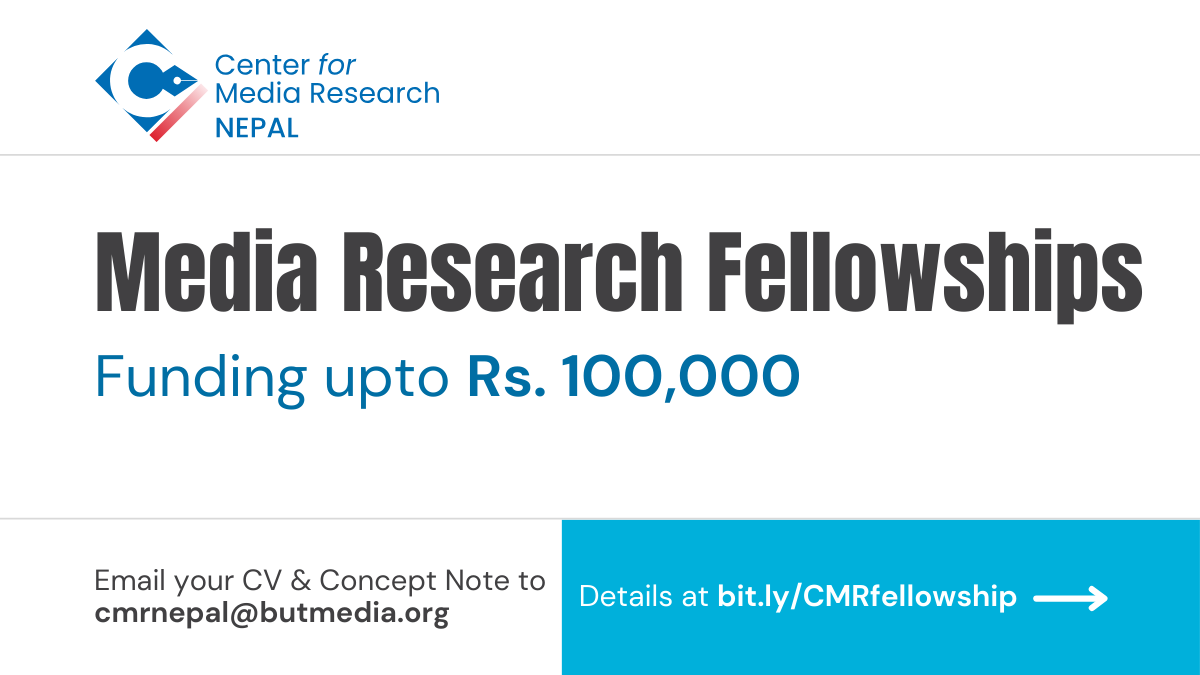
The Center for Media Research – Nepal (CMR-Nepal) invites researchers interested in studying contemporary issues in media and journalism in Nepal to apply for the CMR Media Research Fellowship 2024.

Selected fellows will receive funding between Rs. 50,000 and Rs. 100,000. CMR-Nepal will award 2 to 4 fellowships this year.

Eligibility: The ideal research fellow holds a Master’s degree and has completed at least one previous media research project (a Master’s thesis is accepted as previous media research).

Details of the Fellowship:

  • Fellowship period: 3 months, from September 16 to December 15, 2024.
  • Research topic: Should relate to contemporary issues in media and journalism in Nepal. Priority will be given to topics aligned with CMR-Nepal’s areas of work (visit cmrnepal.org.np for details on CMR-Nepal’s focus areas).
  • Expected output: A publication-quality research article in APA format. CMR-Nepal will publish the research report with a DOI.
  • Support: CMR-Nepal will provide mentorship and other support if requested by the fellow.
  • Funding: Fellowship funding will be awarded after submission and acceptance of the final draft.

Important Dates:

  • August 31: Application window closes.
  • September 15: Announcement of fellows.
  • October 1: Research fellow submits detailed methodology.
  • November 31: Submission of the first draft of research.
  • December 15: Final research report submission.

How to Apply:

  • Send a CV, budget requested and concept note in English or Nepali to cmrnepal@butmedia.org.
  • The concept note should include research questions and methodology.
  • The budget should include three-month of honorarium for researcher and any other costs associated with research.
  • Application deadline: August 31, 2024.

Experts Emphasize Policy Discourse and Media Literacy to Tackle Misinformation in Nepal

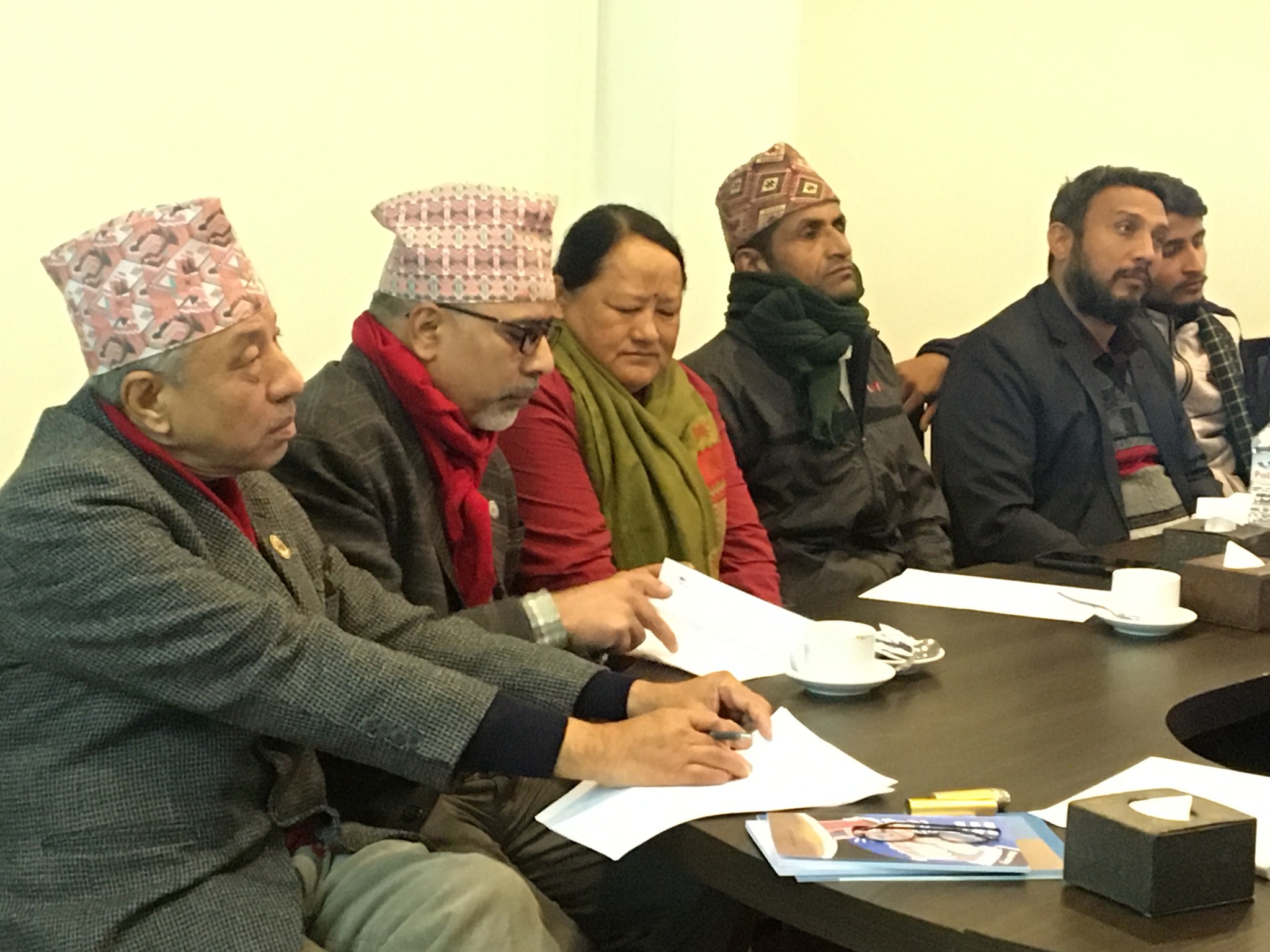
On March 24, 2023, a program titled “Misinformation Landscape: Interaction, Policy Concerns and Way Forward” was held in Kathmandu, Nepal, with the objective of addressing policy discourse on misinformation and mitigating the challenges of misinformation in Nepali society.

During the event, National Information Commissioner Mahendra Man Gurung emphasized the importance of timely dissemination of accurate information to combat misinformation.

Gurung recommended that policy interventions should assess whether existing policies can address concerns related to misinformation, rather than solely creating new legal mechanisms. He cautioned against targeting only those who engage in misinformation, as it may negatively impact the overall functioning of media and society. Gurung also recommended that self-regulation is a key mechanism to combat misinformation.

Communication Registrar of Bagmati Province Rewati Sapkota endorsed the notion of self-regulation and stressed that the emphasis should be on creating good content by journalists to ensure reliable information is disseminated widely through social media.

Sapkota suggested that strengthening the reliable media industry and promoting ethical reporting by mainstreaming media that rely on viral posts are major strategies to tackle misinformation.

Netra Prasad Subedi, Spokesperson and Joint Secretary at the Ministry of Communication and Information Technology, stated that the government is cautious about how laws will affect users. Subedi also informed that the drafting of a new law on media will cover digital media.

Media expert Raghu Mainali highlighted the importance of strengthening formal channels such as news media and community media for factual and objectively verifiable journalism. He also emphasized the need for media literacy and proactive disclosure of misinformation, considering regulation as the last option.

Shreejana Aryal, Secretary at Nepal Federation of Nepali Journalist, expressed that disregarding formal media channels is a major problem linked with misinformation. Journalists are often compelled to report based on the content disseminated by sources.

Jhabindra Bhusal, Chief Administrative Officer of Press Council Nepal, emphasized the need for digital literacy and suggested that changes in technology have resulted in confusion regarding calling YouTubers as content creators or journalists.


Indra Kumari Adhikari, Board Member of Nepal Policy Institute, believed that it is necessary to focus on public literacy about what to and what not to share online. She highlighted that political parties are engaged in developing cyber armies, which are considered major propagators of misinformation and disinformation.

Lekhanth Pandey, Assistant Professor of Tribhuvan University, presented the research paper on Misinformation Landscape Study. He identified social media as the primary source of misinformation, with Facebook being the most commonly cited platform. Pandey added that the widespread impact of misinformation in Nepali society, beyond politics and media, has the potential to exacerbate social tensions, violence, and delay in justice and infrastructure development.

Overall, 30 people from different sectors participated in the program and provided their insights on the need to tackle misinformation through policy discourse, media literacy, and self-regulation.

Discussions Held in Madhesh Province to Tackle Misinformation

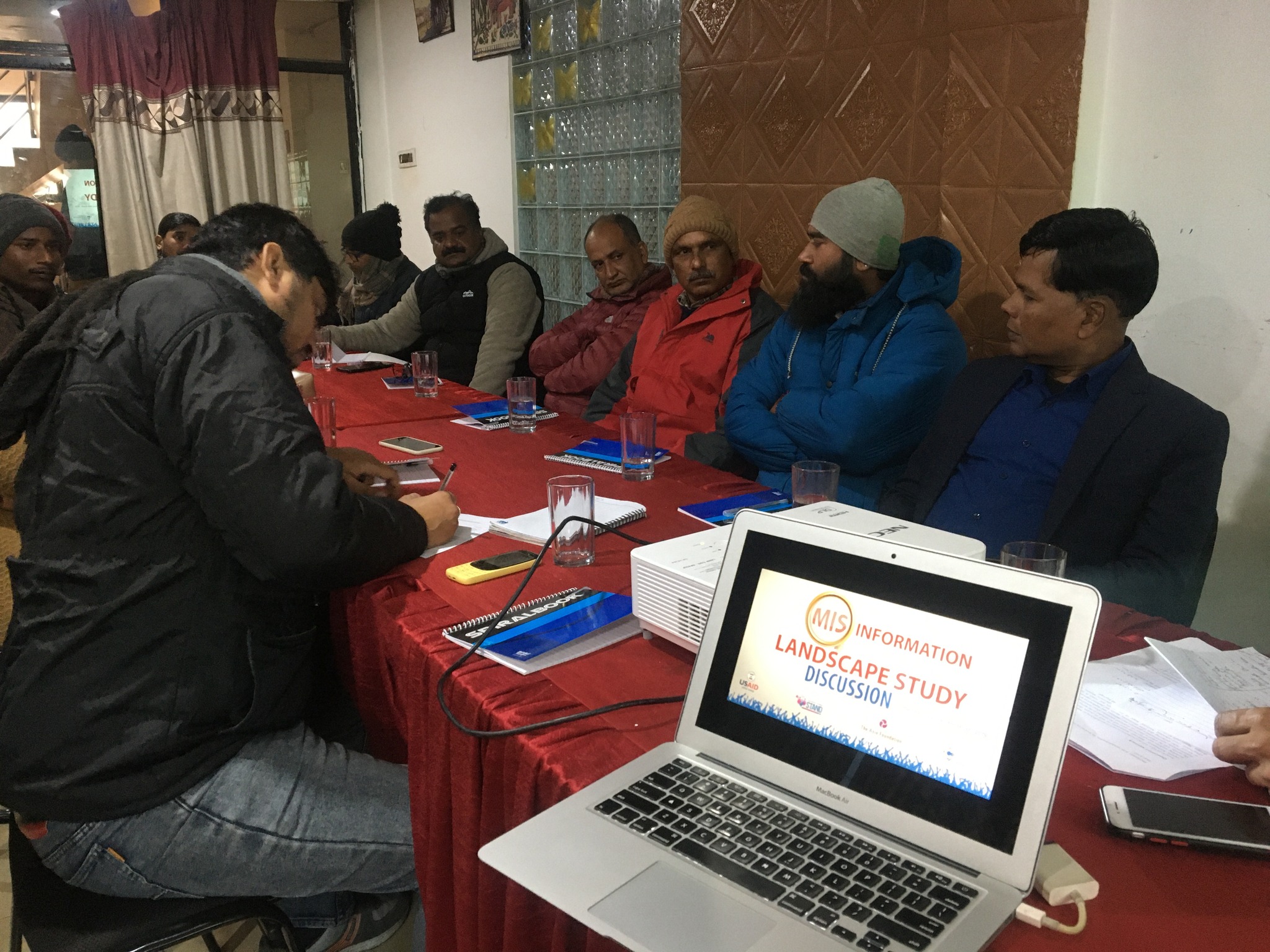
The Misinformation Landscape Study program continued with its third phase, organized in Janakpurdham, the capital of Madhesh Province on January 10, 2023.

The objective of the discussion was to raise awareness about misinformation in the region and identify ways to counter it.

The program had 25 participants, including representatives from political parties, youth, students, farmers, women’s groups, journalists, and social media influencers.

Misleading narratives that discourage women from participating in the electoral system were identified as a prominent issue in Madhesh Province. A Dalit woman respondent stated that social media is often used to defame and discourage women in politics.

Women politicians also reported facing barriers in obtaining first-past-the-post (FPTP) tickets, with misinformation being circulated that they cannot compete with male or economically well-off candidates.

Another misguided narrative identified in the region is the notion of Madhesis vs Pahadis, which has reportedly arisen due to social media and unregistered portals. However, one participant noted that politicians and opinion makers may be behind its promotion for their electoral gains.

Misunderstanding about the country’s constitution and citizenship laws were also identified as issues in Madhesh Province. According to a government attorney who is from the Madhesi community and works in Janakpur District Court, a few influential opinion makers and writers are responsible for creating the narrative that the constitution is discriminatory towards the Madhesi community.

The attorney suggests that if the constitution had been translated into Maithili, distributed widely among the Madhesi communities, and explained clearly, the violent protests that occurred before and after the adoption of the constitution could have been avoided.

The flow of misinformation was also observed to be high during crisis situations, particularly political movements. Civil society representatives noted that such misinformation is often disseminated based on emotions, religion, and threats. Additionally, student participants identified the issue of sharing information without verifying it in the province.

Misinformation Landscape Discussion in Pokhara, Gandaki Province

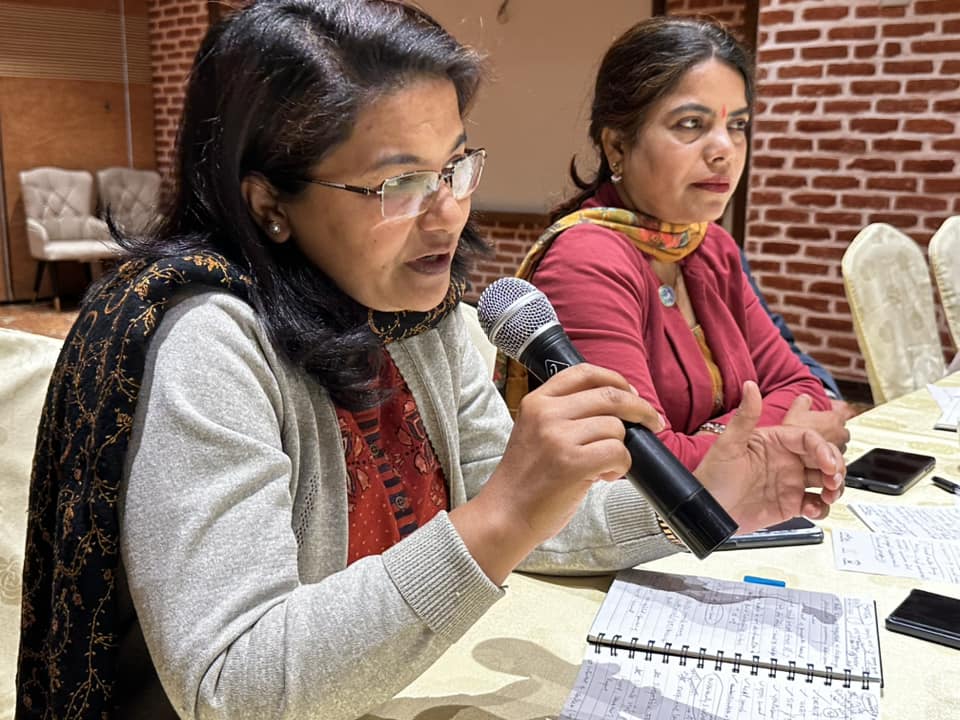
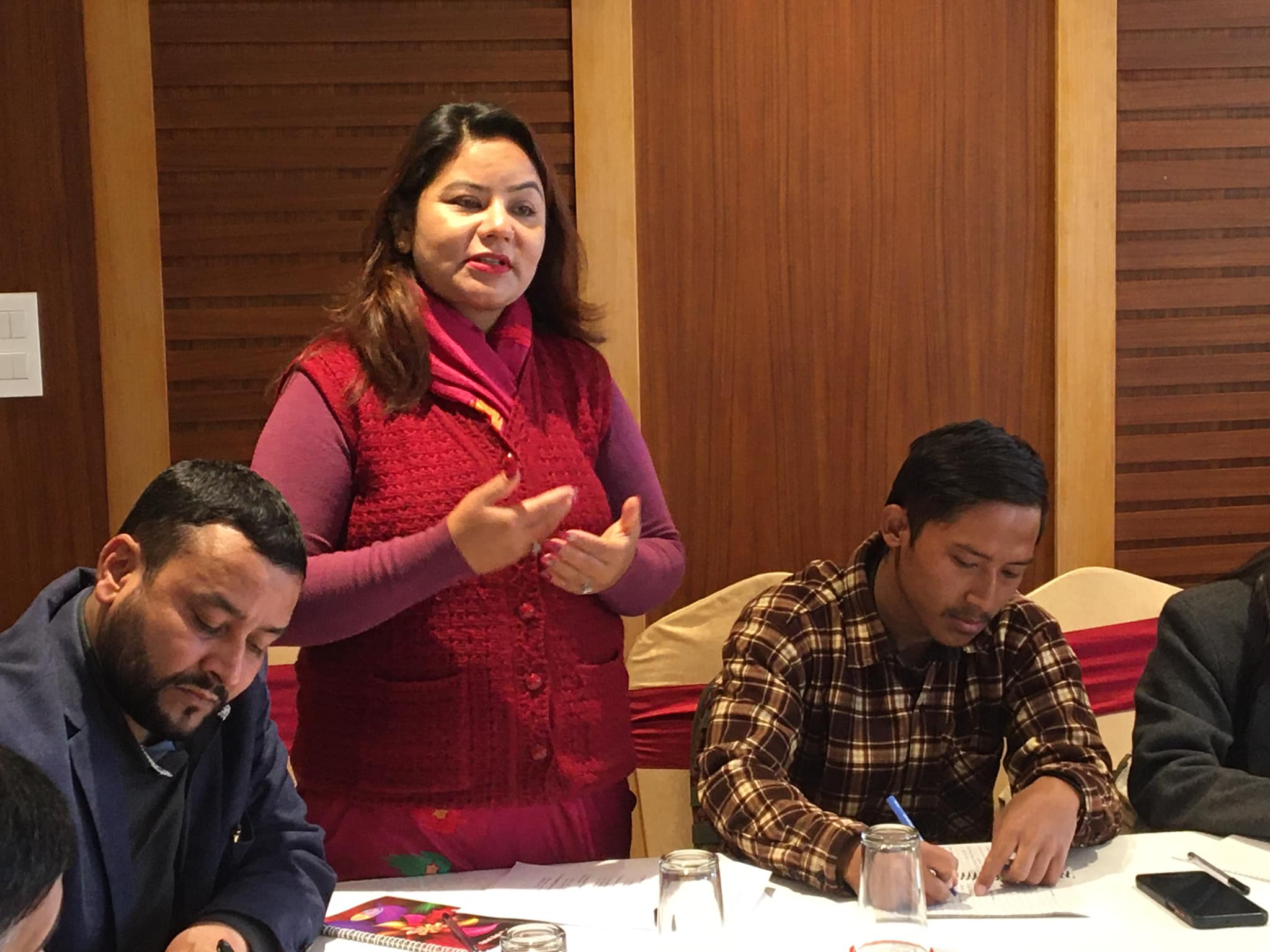
On January 3, 2023, CMR-Nepal conducted the second phase of its Misinformation Landscape Study discussion in Pokhara, Gandaki Province. The program was attended by a diverse group of 30 participants, including Province Assembly members, political party representatives, youth, students, farmers, women’s groups, journalists, and social media influencers.

During the discussion, Province Assembly Member Saraswoti Gurung highlighted the harmful effects of stereotypes and victim-blaming tendencies towards women, Dalits, and minorities, and stressed the need to combat misinformation disguised as freedom of speech.

Bimala Bhandari, the Chairperson of the Federation of Nepali Journalists in Kaski District, emphasized the importance of fact-checking information to tackle misinformation, which she described as becoming a daily diet for mobile users.

Teachers and students in the province shared their experiences with social media and recognized the need to read and verify content before sharing it. A public health official based in Pokhara also noted the negative effects of giving personal advice to patients about medicines, treatment, and doctors, which has led to misinformation in the health sector.

Dharma Datta Paudel, an agro-entrepreneur based in Pokhara, highlighted the prevalence of misinformation about seeds, fertilizers, pesticides, and subsidies for farmers. He emphasized the need to dispel such misinformation and provide accurate information to farmers.

Overall, the discussion underscored the urgent need for increased awareness and fact-checking to combat the spread of misinformation in the province.

Discussion on Misinformation Landscape in Lumbini Province

On January 3, 2023, CMR-Nepal organized a discussion in Butwal, Lumbini Province, to address the issue of misinformation in the region.

The event was attended by 54 people, including Province Assembly members, political party representatives, youth, students, farmers, business community, women’s groups, journalists, and social media influencers. The participants shared their personal experiences with misinformation in various forms of media.

During the discussion, Province Assembly Member Bhoj Prasad Shrestha highlighted the challenges faced by the public in identifying accurate information in the information era.

He emphasized that misinformation and disinformation are especially prevalent during elections and can have negative impacts on civil society and political institutions. He called for action against those involved in disseminating misinformation.

Advocate Deepa Sunar pointed out that the law prohibits the dissemination of misinformation and called for its effective implementation to combat this problem.

Jamuna Nepali, the General Secretary of Feminist Dalit Organization (FEDO) in Rupandehi District, emphasized the need to tackle misinformation targeting lower castes in the area. She explained that the use of derogatory remarks and their representation in society also constitutes misinformation.

The student and youth participants in the program emphasized that social media is a common platform for the spread of misinformation, often taking the form of parody, humor, and satire. They stressed the need for media literacy at the school and college level to combat this issue.