NepalFactcheck.org Collaborate with OnlineKhabar.com to Counter Election Misinformation in Nepal

NepalFactCheck.org has collaborated with OnlineKhabar and Himalaya Television to counter misinformation and disinformation circulating on social media during the upcoming general election scheduled for March 5, 2026.

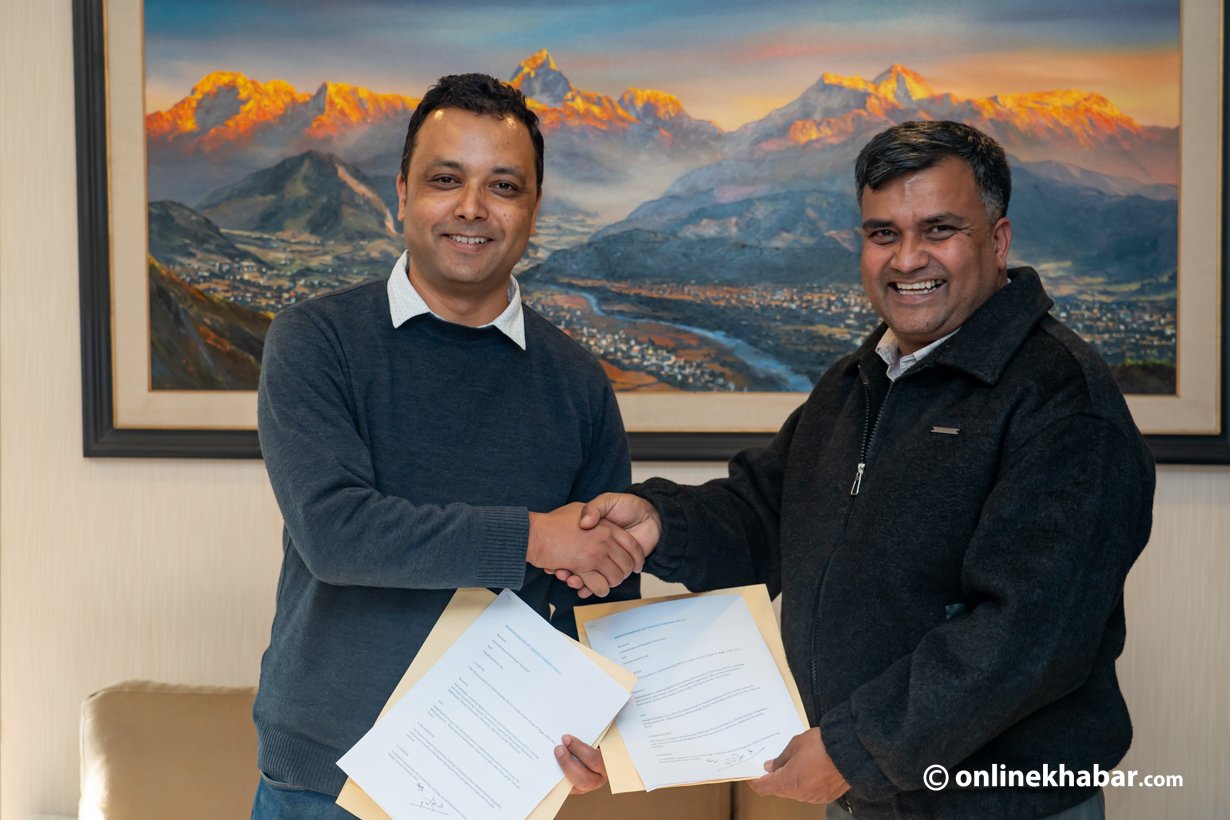
The partnership aims to identify, factcheck and debunk false, misleading and manipulated content related to the election and politics, and to ensure that accurate and verified information reaches the public. A Memorandum of Understanding (MoU) was signed on February 2, 2026 by Ujjwal Acharya, Project Head of NepalFactCheck.org, and Basanta Basnet, Editor-in-Chief of OnlineKhabar.com in presense of Chairman and Managing Direcotor Dharma Raj Bhusal, Executive Director Suresh Bhusal, News Editor Durga Khanal (from OnlineKhabar) and editor Umesh Shrestha and Assitant Factcheck Editor Chetana Kunwar (from NepalFactCheck).

The collaboration recognizes the growing risks posed by misinformation, disinformation, deepfakes and the misuse of artificial intelligence during elections, and their potential to undermine democratic processes and informed decision-making. The signing parties emphasized that fact-checking initiatives are critical during sensitive electoral periods.

NepalFactCheck.org noted that the volume and AI-generated election-related misinformation in Nepal has been increasing, posing risks to the electoral process and democratic practice. The initiative stressed that addressing this challenge requires coordinated efforts across fact-checking initiatives, mainstream media and the broader information ecosystem.

Under the agreement, NepalFactCheck will monitor election-related content circulating on social media platforms and conduct fact-checks on viral contents. These fact-checks will be published by OnlineKhabar while Himalaya Television will broadcast reports based on the verified findings.

OnlineKhabar is Nepal’s leading digital news portal, widely recognized for its extensive national reach and high readership. As one of the country’s most trusted online media platforms, OnlineKhabar plays a important role in disseminating timely news and information to millions of Nepali readers at home and abroad. Its partnership with NepalFactCheck.org strengthens efforts to combat misinformation by combining fact-checking expertise with the reach and credibility of mainstream media.

NepalFactCheck.org was established in March 2020 with the mission of identifying and debunking misinformation that could negatively affect citizens, communities, society, and democracy. Operated jointly by the Center for Media Research–Nepal and MySansar, Nepal’s first Nepali-language blog, NepalFactCheck.org is the only fact-checking organization in Nepal that is a signatory to the International Fact-Checking Network (IFCN) Code of Principles.

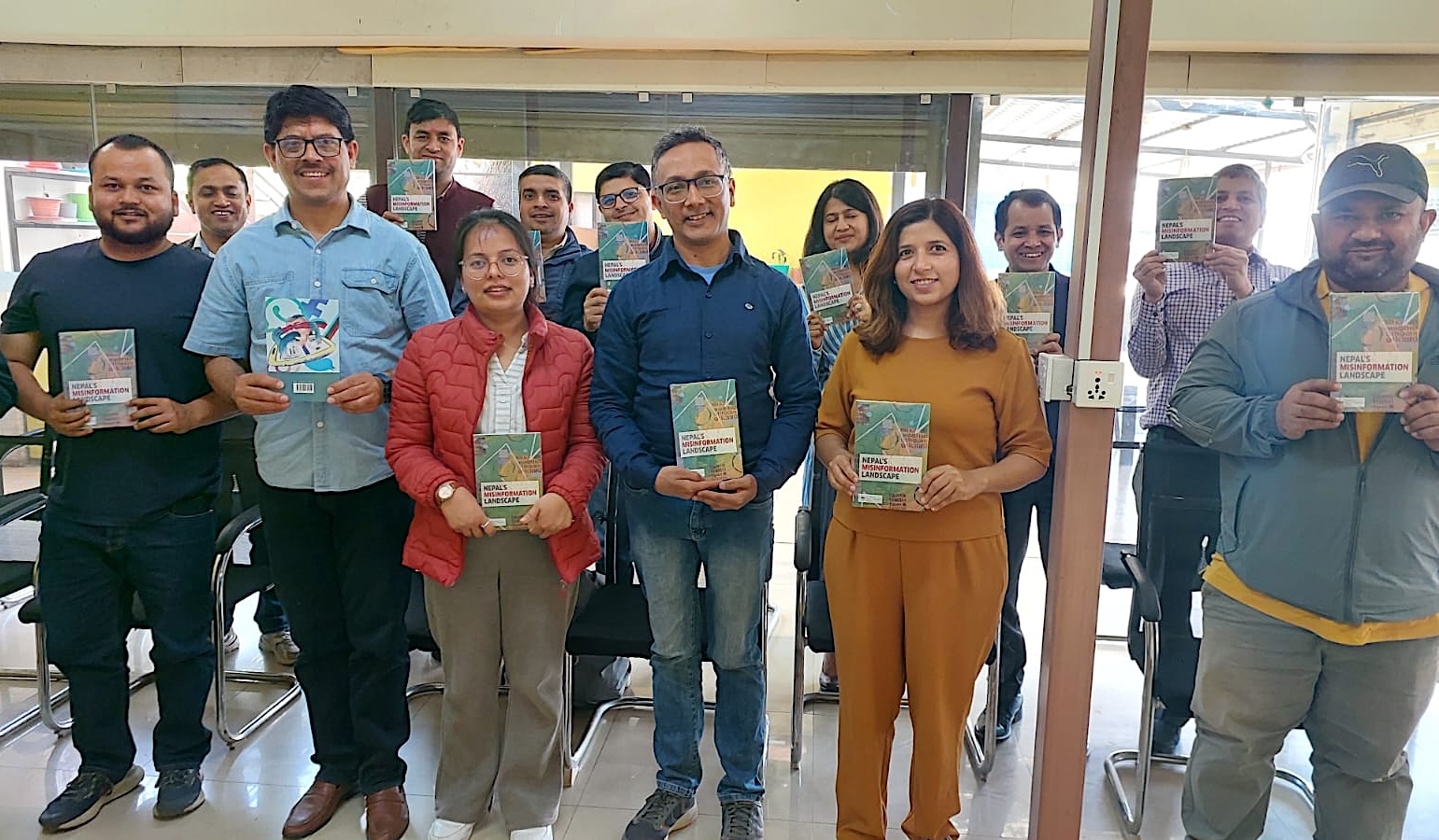
Nepal’s Misinformation Landscape launched to mark five years of NepalFactCheck.org

The Center for Media Research – Nepal (CMR-Nepal) launched Nepal’s Misinformation Landscape, an anthology of research articles, to mark the fifth anniversary of its fact-checking initiative on March 25, 2025.

NepalFactCheck.org was initiated in March 2020 as an urgent response to COVID-19 misinformation by CMR-Nepal and the first Nepali-language blog, MySansar. It has been a signatory of the International Fact-Checking Network (IFCN) since 2023.

Chetana Kunwar, assistant editor, said, “NepalFactCheck.org is a platform dedicated to verifying the authenticity of viral news, claims, and information circulating in Nepal.”

She noted that NepalFactCheck.org has published 381 fact-checks since March 2020, with three peak periods: early 2020 (COVID-related misinformation), late 2022 (political misinformation around elections), and early 2025 (surge in deepfake videos and manipulated content targeting public figures).

Nepal’s Misinformation Landscape, edited by Ujjwal Acharya, consists of six chapters, a foreword, an introduction, and a concluding chapter.

Deepak Aryal, chair of CMR-Nepal, said, “This anthology compiles key outputs of our initiative. The chapters examine misinformation and disinformation in Nepal through various theoretical frameworks—some complementary, others contradictory. Together, they provide a foundational understanding of Nepal’s misinformation landscape and offer multiple analytical lenses for further study.”

“This anthology will help researchers and policymakers design interventions to combat misinformation,” he added.

Contributing authors include Bhuwan KC, Chetana Kunwar, Lekhanath Pandey, Rishikesh Dahal, Tilak Pathak, Ujjwal Acharya, and Ujjwal Prajapati.

Hard copies of Nepal’s Misinformation Landscape are available for free to researchers, students, and journalists at the Readers’ Hub (Kaushaltar) or the CMR-Nepal office. A free digital version can also be downloaded here.

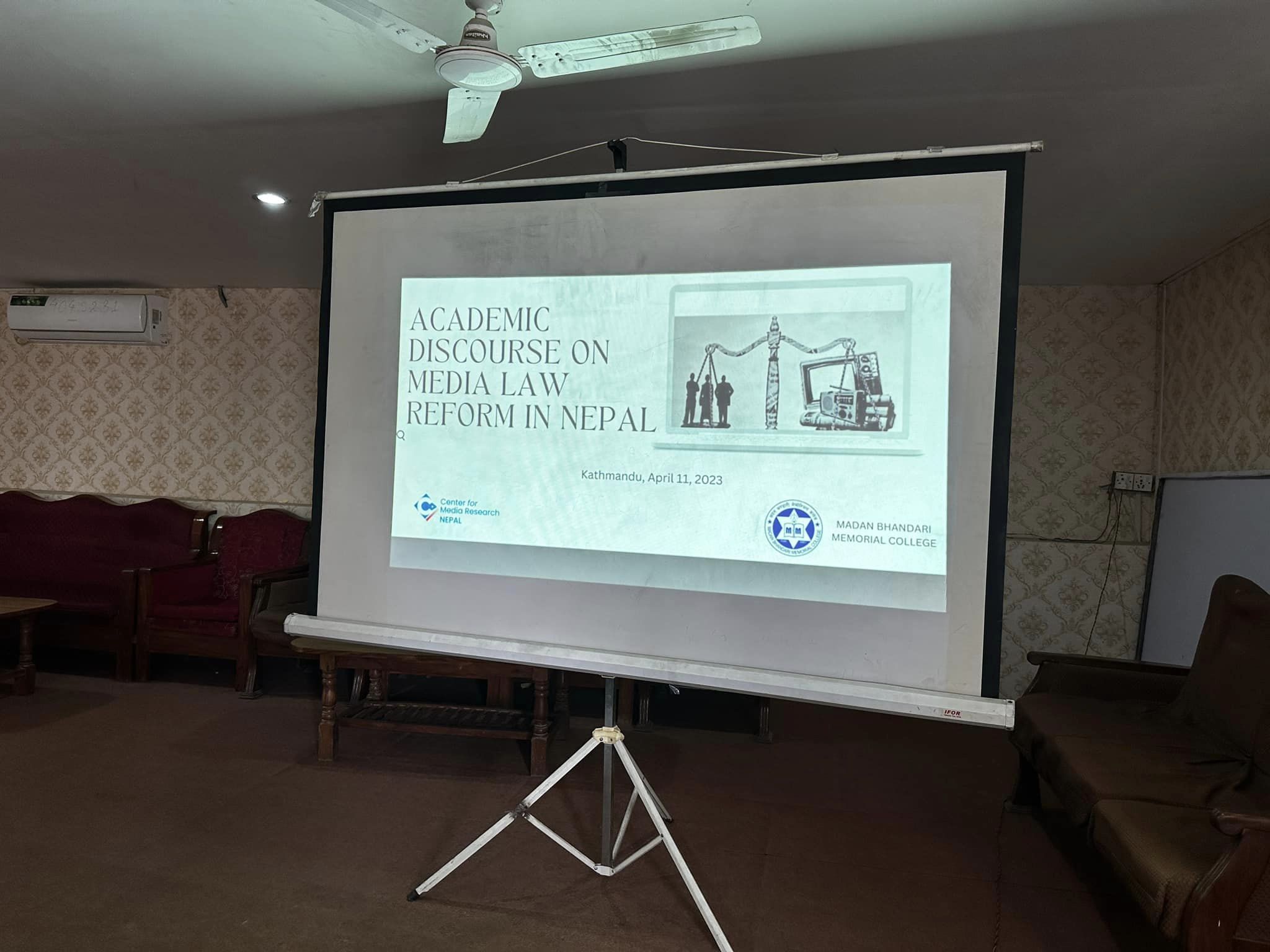
Academics Provide Suggestions for Media Law Reform in Nepal

On April 11, 2023, an academic discourse titled “Media Law Reform in Nepal” was held in Kathmandu with the aim of providing recommendations to the Mass Communication Sector Suggestion Reform Committee, responsible for reviewing new media laws in Nepal.

The committee’s coordinator, Suresh Acharya, and members Mahendra Bista, Babita Basnet, and Govinda Acharya were present at the program.

During the event, committee members discussed their efforts to address policy and practical concerns related to the creation of media laws in the current technological era.

They reiterated their commitment to upholding Nepal’s press freedom and values of freedom of expression.

Academics specializing in media studies suggested four major areas of focus for the committee.

These included emphasizing the importance of not undermining press freedom and freedom of expression, advocating for an inclusive, independent, and autonomous governing body structure, reforming existing laws and regulations in the media domain with changes and continuity, and promoting diverse discussions with different groups for ownership of the draft laws.

Following the event, CMR-Nepal provided additional suggestions to the Committee.

Experts Emphasize Policy Discourse and Media Literacy to Tackle Misinformation in Nepal

On March 24, 2023, a program titled “Misinformation Landscape: Interaction, Policy Concerns and Way Forward” was held in Kathmandu, Nepal, with the objective of addressing policy discourse on misinformation and mitigating the challenges of misinformation in Nepali society.

During the event, National Information Commissioner Mahendra Man Gurung emphasized the importance of timely dissemination of accurate information to combat misinformation.

Gurung recommended that policy interventions should assess whether existing policies can address concerns related to misinformation, rather than solely creating new legal mechanisms. He cautioned against targeting only those who engage in misinformation, as it may negatively impact the overall functioning of media and society. Gurung also recommended that self-regulation is a key mechanism to combat misinformation.

Communication Registrar of Bagmati Province Rewati Sapkota endorsed the notion of self-regulation and stressed that the emphasis should be on creating good content by journalists to ensure reliable information is disseminated widely through social media.

Sapkota suggested that strengthening the reliable media industry and promoting ethical reporting by mainstreaming media that rely on viral posts are major strategies to tackle misinformation.

Netra Prasad Subedi, Spokesperson and Joint Secretary at the Ministry of Communication and Information Technology, stated that the government is cautious about how laws will affect users. Subedi also informed that the drafting of a new law on media will cover digital media.

Media expert Raghu Mainali highlighted the importance of strengthening formal channels such as news media and community media for factual and objectively verifiable journalism. He also emphasized the need for media literacy and proactive disclosure of misinformation, considering regulation as the last option.

Shreejana Aryal, Secretary at Nepal Federation of Nepali Journalist, expressed that disregarding formal media channels is a major problem linked with misinformation. Journalists are often compelled to report based on the content disseminated by sources.

Jhabindra Bhusal, Chief Administrative Officer of Press Council Nepal, emphasized the need for digital literacy and suggested that changes in technology have resulted in confusion regarding calling YouTubers as content creators or journalists.


Indra Kumari Adhikari, Board Member of Nepal Policy Institute, believed that it is necessary to focus on public literacy about what to and what not to share online. She highlighted that political parties are engaged in developing cyber armies, which are considered major propagators of misinformation and disinformation.

Lekhanth Pandey, Assistant Professor of Tribhuvan University, presented the research paper on Misinformation Landscape Study. He identified social media as the primary source of misinformation, with Facebook being the most commonly cited platform. Pandey added that the widespread impact of misinformation in Nepali society, beyond politics and media, has the potential to exacerbate social tensions, violence, and delay in justice and infrastructure development.

Overall, 30 people from different sectors participated in the program and provided their insights on the need to tackle misinformation through policy discourse, media literacy, and self-regulation.

Misinformation Study Wraps Up with Discussion in Dhangadi

CMR-Nepal’s Misinformation Study wrapped up with a discussion in Dhangadi, the capital of Sudurpashchim Province, on January 26, 2023.

The objective of the program was to investigate the misinformation problems prevailing in the province.

The event witnessed the attendance of 30 participants, including representatives from political parties, youth, students, health workers, women’s groups, journalists, and civil society activists.

The discussion revealed that misinformation in the province is impacting diverse groups, including lower-caste communities, women, and people with disabilities. Sunita Rana, a representative of Nepal Student Wing, stated that the male-dominated society’s mindset and opinions created as a result are hindering women’s progress in the region.

Nandaraj Bhatt, a representative of the disabled community, emphasized that news media’s insensitive use of language is hurting the sentiments of the disabled community.

Bhuwan Bhandari, a journalism educator, highlighted the importance of media literacy from an early age and cautioned against sharing unverified information on social media.

Other participants identified politics as a significant cause of misinformation and stressed the need for self-restraint while sharing such information on social media.

Misinformation Landscape Discussion in Karnali Province

CMR-Nepal conducted the sixth phase of the Misinformation Landscape Study discussion in Surkhet, the capital of Karnali Province, on January 24, 2023.

The program aimed to deepen the understanding of misinformation issues in the province and was attended by 25 participants, including political party representatives, youth, students, health workers, women’s groups, journalists, and social media influencers.

During the event, participants highlighted the prevalence of misinformation in various domains in the province, including politics, youth issues, journalism, civil society, and social media.

Kamala Tiwari of Mid-Western University spoke about unregistered online news media as the main source of misinformation and the misrepresentation of women in such information. Dinesh Gautam of Riti Foundation pointed out that popular personalities and social media influencers were involved in spreading fake news and misinformation through social media.

A student shared her experience of encountering misinformation mainly on social media and called for media literacy programs in schools and universities. An agro-based entrepreneur also talked about the negative impact of misinformation on businesses, citing the example of bird flu in Kathmandu, which caused a decrease in chicken prices in Surkhet, affecting local farmers.

Kumar Thapa, a social media influencer from Motteygang, highlighted the importance of providing factual information about events in the province and holding governing agencies accountable through responsible reporting. He shared that their efforts in producing stories that bring about changes in the community have contributed to the popularity of their Facebook page in the province.

Misinformation Landscape Discussion in Bagmati Province

The fifth phase of the Misinformation Landscape Study discussion was organized by CMR-Nepal on January 17, 2023, in Hetauda, the capital of Bagmati Province.

The objective of the program was to enhance the comprehension of the problem of misinformation in the province.

The program was attended by 35 participants, including representatives from political parties, youth, students, health workers, women’s groups, journalists, and social media influencers.

During the event, Laxmi Jimba, the Ward Chair of Bakaiya Rural Municipality-5 in Makwanpur District, blamed “dirty politics” for the spread of misleading information across political and societal domains.

She shared how her affiliation with a political party prevented her from speaking freely about certain topics.

Jimba also pointed out that journalists and news media have failed to counter misinformation due to their affiliations with various political parties, but she held politicians responsible for this problem.


“If journalists are given the freedom to work independently, the spread of political misinformation would be largely controlled,” she added.

The discussion also highlighted the media’s role in spreading misinformation in the field of agriculture.

An agro-entrepreneur from Hetauda shared how news media present misleading data about profits from agriculture, often framing turnovers as profits.


A local journalist and educator, Suresh Shrestha, explained that he and others were engaged in media literacy campaigns in Hetauda to encourage students to read news media and develop an understanding of written texts.

Koshi Province Participants Highlight Impact of Misinformation on Politics, Women’s Health, and Education

The fourth phase of the Misinformation Landscape Study discussion program was held on January 12, 2023, in Biratnagar, Koshi Province, organized by CMR-Nepal with the objective of increasing awareness of misinformation in the region.

The program was attended by 30 participants, including representatives of political parties, youth, students, health workers, women’s groups, journalists, and social media influencers.

During the program, participants shared their experiences of encountering misinformation in different sectors of the province. Sagar Thapa, a UML leader from Biratnagar Metropolitan City, highlighted how politics and politicians are being misguided due to waves of misinformation during elections and beyond. He noted that misinformation and conspiracy theories in politics and political agendas can have a negative impact on every aspect of Nepali life and society.

A health official pointed out that women are facing significant problems due to misinformation in the province, particularly regarding gender-biased sex selection during pregnancy. Riju Poudel, a health officer, emphasized the importance of combating such misinformation to prevent such harmful practices.

The discussion also highlighted the role of language in spreading misinformation, with concerns raised about its impact on handicapped people. Additionally, a public educator from Biratnagar in Province 1 recalled how a former minister claimed in a television interview that school textbooks had already reached all schools across the country, but he was still waiting for them in his own school, highlighting the prevalence of misinformation even at the highest levels of government.

Finally, some participants emphasized that not all information on social media is fake, and that positive information can also be shared. However, they also stressed the importance of exercising self-control when sharing information on social media to prevent the spread of misinformation.

Discussions Held in Madhesh Province to Tackle Misinformation

The Misinformation Landscape Study program continued with its third phase, organized in Janakpurdham, the capital of Madhesh Province on January 10, 2023.

The objective of the discussion was to raise awareness about misinformation in the region and identify ways to counter it.

The program had 25 participants, including representatives from political parties, youth, students, farmers, women’s groups, journalists, and social media influencers.

Misleading narratives that discourage women from participating in the electoral system were identified as a prominent issue in Madhesh Province. A Dalit woman respondent stated that social media is often used to defame and discourage women in politics.

Women politicians also reported facing barriers in obtaining first-past-the-post (FPTP) tickets, with misinformation being circulated that they cannot compete with male or economically well-off candidates.

Another misguided narrative identified in the region is the notion of Madhesis vs Pahadis, which has reportedly arisen due to social media and unregistered portals. However, one participant noted that politicians and opinion makers may be behind its promotion for their electoral gains.

Misunderstanding about the country’s constitution and citizenship laws were also identified as issues in Madhesh Province. According to a government attorney who is from the Madhesi community and works in Janakpur District Court, a few influential opinion makers and writers are responsible for creating the narrative that the constitution is discriminatory towards the Madhesi community.

The attorney suggests that if the constitution had been translated into Maithili, distributed widely among the Madhesi communities, and explained clearly, the violent protests that occurred before and after the adoption of the constitution could have been avoided.

The flow of misinformation was also observed to be high during crisis situations, particularly political movements. Civil society representatives noted that such misinformation is often disseminated based on emotions, religion, and threats. Additionally, student participants identified the issue of sharing information without verifying it in the province.

Misinformation Landscape Discussion in Pokhara, Gandaki Province

On January 3, 2023, CMR-Nepal conducted the second phase of its Misinformation Landscape Study discussion in Pokhara, Gandaki Province. The program was attended by a diverse group of 30 participants, including Province Assembly members, political party representatives, youth, students, farmers, women’s groups, journalists, and social media influencers.

During the discussion, Province Assembly Member Saraswoti Gurung highlighted the harmful effects of stereotypes and victim-blaming tendencies towards women, Dalits, and minorities, and stressed the need to combat misinformation disguised as freedom of speech.

Bimala Bhandari, the Chairperson of the Federation of Nepali Journalists in Kaski District, emphasized the importance of fact-checking information to tackle misinformation, which she described as becoming a daily diet for mobile users.

Teachers and students in the province shared their experiences with social media and recognized the need to read and verify content before sharing it. A public health official based in Pokhara also noted the negative effects of giving personal advice to patients about medicines, treatment, and doctors, which has led to misinformation in the health sector.

Dharma Datta Paudel, an agro-entrepreneur based in Pokhara, highlighted the prevalence of misinformation about seeds, fertilizers, pesticides, and subsidies for farmers. He emphasized the need to dispel such misinformation and provide accurate information to farmers.

Overall, the discussion underscored the urgent need for increased awareness and fact-checking to combat the spread of misinformation in the province.

Discussion on Misinformation Landscape in Lumbini Province

On January 3, 2023, CMR-Nepal organized a discussion in Butwal, Lumbini Province, to address the issue of misinformation in the region.

The event was attended by 54 people, including Province Assembly members, political party representatives, youth, students, farmers, business community, women’s groups, journalists, and social media influencers. The participants shared their personal experiences with misinformation in various forms of media.

During the discussion, Province Assembly Member Bhoj Prasad Shrestha highlighted the challenges faced by the public in identifying accurate information in the information era.

He emphasized that misinformation and disinformation are especially prevalent during elections and can have negative impacts on civil society and political institutions. He called for action against those involved in disseminating misinformation.

Advocate Deepa Sunar pointed out that the law prohibits the dissemination of misinformation and called for its effective implementation to combat this problem.

Jamuna Nepali, the General Secretary of Feminist Dalit Organization (FEDO) in Rupandehi District, emphasized the need to tackle misinformation targeting lower castes in the area. She explained that the use of derogatory remarks and their representation in society also constitutes misinformation.

The student and youth participants in the program emphasized that social media is a common platform for the spread of misinformation, often taking the form of parody, humor, and satire. They stressed the need for media literacy at the school and college level to combat this issue.

Interventions to Combat Misinformation in Nepal’s 2022 Elections

Background and Political Context

According to the 2021 census, 38 percent of households in Nepal have internet connections, while 52 percent of the population are internet users [1].

A large number of citizens use the internet via mobile phones. There are many citizens who don’t use browsers to access the internet but use social media. Facebook, YouTube, and TikTok are popular social media in Nepal. The number of people using social media is higher than those who watch TV (31 percent), listen to radio (26 percent), and read newspapers (four percent) for news [2], and they are more likely to be affected by misinformation.

Nine out of every 10 internet users encounter misinformation, and 98 percent of Nepal’s internet users are concerned about the flow of misinformation and its impact on society [3].

Due to the lack of information literacy, limited access to news media, and political instability seen in recent decades, there is a high likelihood of information manipulation in Nepal. Policies drafted by the government to regulate social media, citing the spread of misinformation and other negative trends, do not show respect for freedom of speech, internet freedom, and basic civil rights [4].

Information Manipulation in Nepal

Nepal had experienced information manipulation and its adverse effects even before social media became popular. In 2000, a misinformation about comment on Nepal by an Indian actor led to ethnic violence across the country and the death of some citizens. Around 2009, when misinformation about child kidnappers spread, innocent people were injured and killed in mob beatings in various locations [5].

Although a lot of misinformation spread during the 2001 Royal Massacre or the 2015 Gorkha Earthquake, it was more extensively seen during the 2017 elections. After the start of the COVID pandemic in 2020, misinformation increased dramatically, and due to the increasing use of misinformation during elections worldwide, it was anticipated that information manipulation could influence elections in Nepal as well.

In a 2021 CMR-Nepal survey, 92 percent of respondents reported seeing misinformation on the internet, and 98 percent believed that misinformation could be a problem for Nepali society and politics [6]. Experts were also concerned about the possibility of information manipulation during elections, and even more so about the potential involvement of foreign actors, especially neighboring countries [7].

Election Commission’s Intervention

In the Social Media Usage Policy [8] issued in 2020, Nepal’s Election Commission identified information manipulation as a challenge and put forward the concept of developing necessary policies, strategies, and programs against it, as well as collaborating with technology companies.

The Commission conducted orientations to enhance the capacity of election officers and its staff regarding misinformation. During the 2022 election, the Election Code of Conduct included provisions related to misinformation and propaganda, as well as policies regarding misinformation and hate speech.

The Commission established a monitoring unit, including the cyber bureaus of Nepal Police and Nepali Army, to monitor misinformation and hate speech transmitted through online media. Additionally, for public awareness, the Commission collaborated with some telecomm companies to provide information about misinformation in mobile ringtones.

In 2022, the Election Commission attempted to expand relationships with platforms like Facebook, TikTok, and Twitter to reduce the number and impact of misinformation that could spread on social media during elections. Stating that information manipulation on social media during elections would be the biggest challenge, the Commission made its first attempt to establish contact with major technology companies. Among them, Meta, the company of Facebook and Instagram, collaborated with the Commission, while TikTok and Twitter opened direct communication channels regarding harmful election-related misinformation [9].

Facebook announced on September 7, 2022, that Nepal’s data would be available in its Ad Library. In this library, data regarding political or other advertisements from Nepal on Facebook and Instagram can be viewed for up to seven years. Before the election, the Meta company held various meetings and discussions in Nepal, as well as separate programs to inform the Election Commission, representatives of political parties, and journalists about Meta’s election-related efforts and available tools.

Civil Society Programs Against Information Manipulation

Among the notable interventions from the civil society during Nepal’s 2022 election, the work done by the Center for Media Research — Nepal (CMR-Nepal) and Nepal Fact Check can be considered as examples. When Nepal held elections in 2017, CMR-Nepal published an flyer [10] to inform citizens and media about misinformation, as well as conducted general monitoring of information manipulation during the election.

The monitoring showed that there were extensive attempts to manipulate information on online media and social media for the benefit by political actors during the election. Since then, CMR-Nepal has been continuously monitoring information manipulation, and it started Nepal Fact Check in 2020 in collaboration with the popular blog MySansar to fight viral misinformation [11].

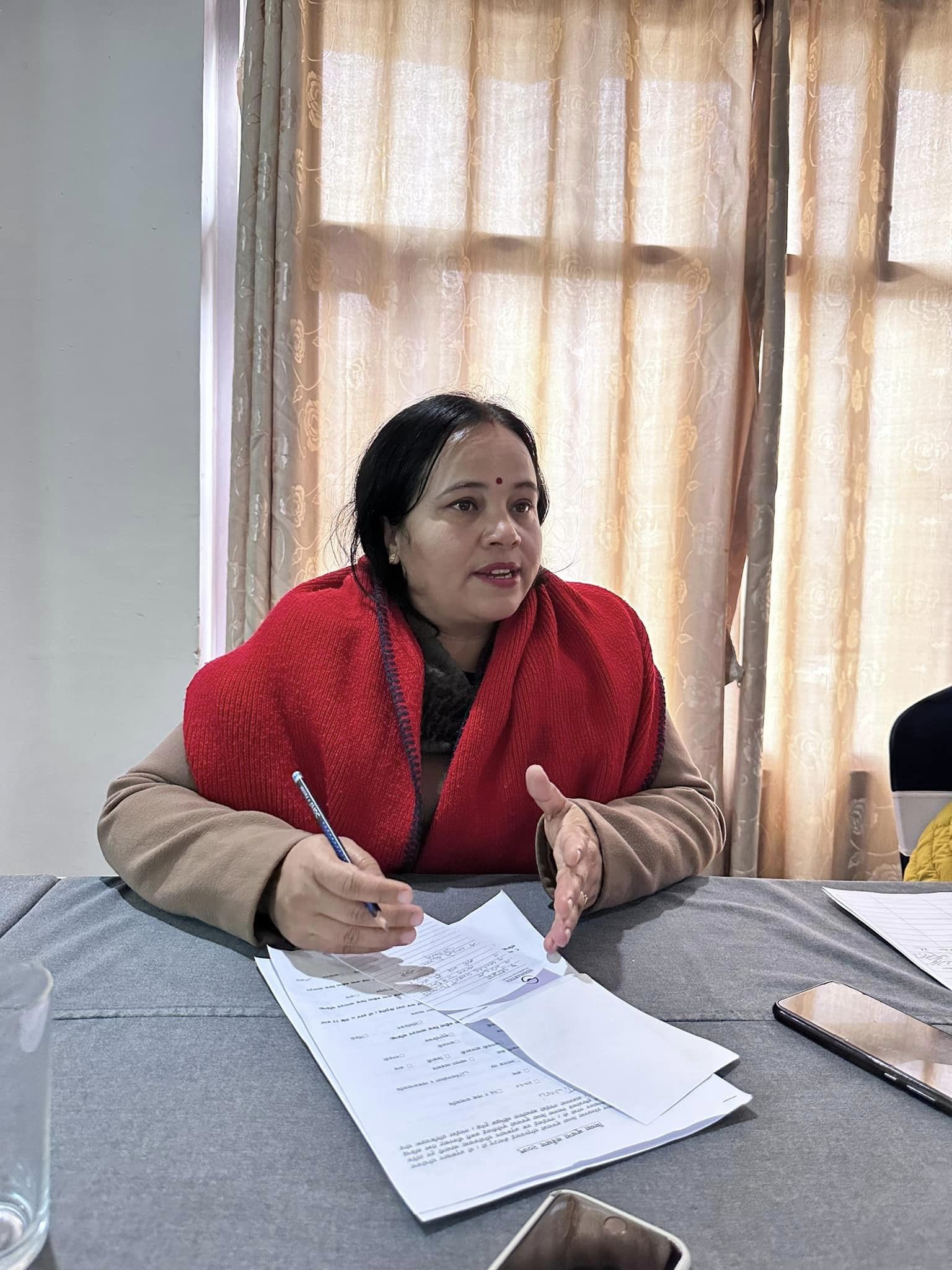
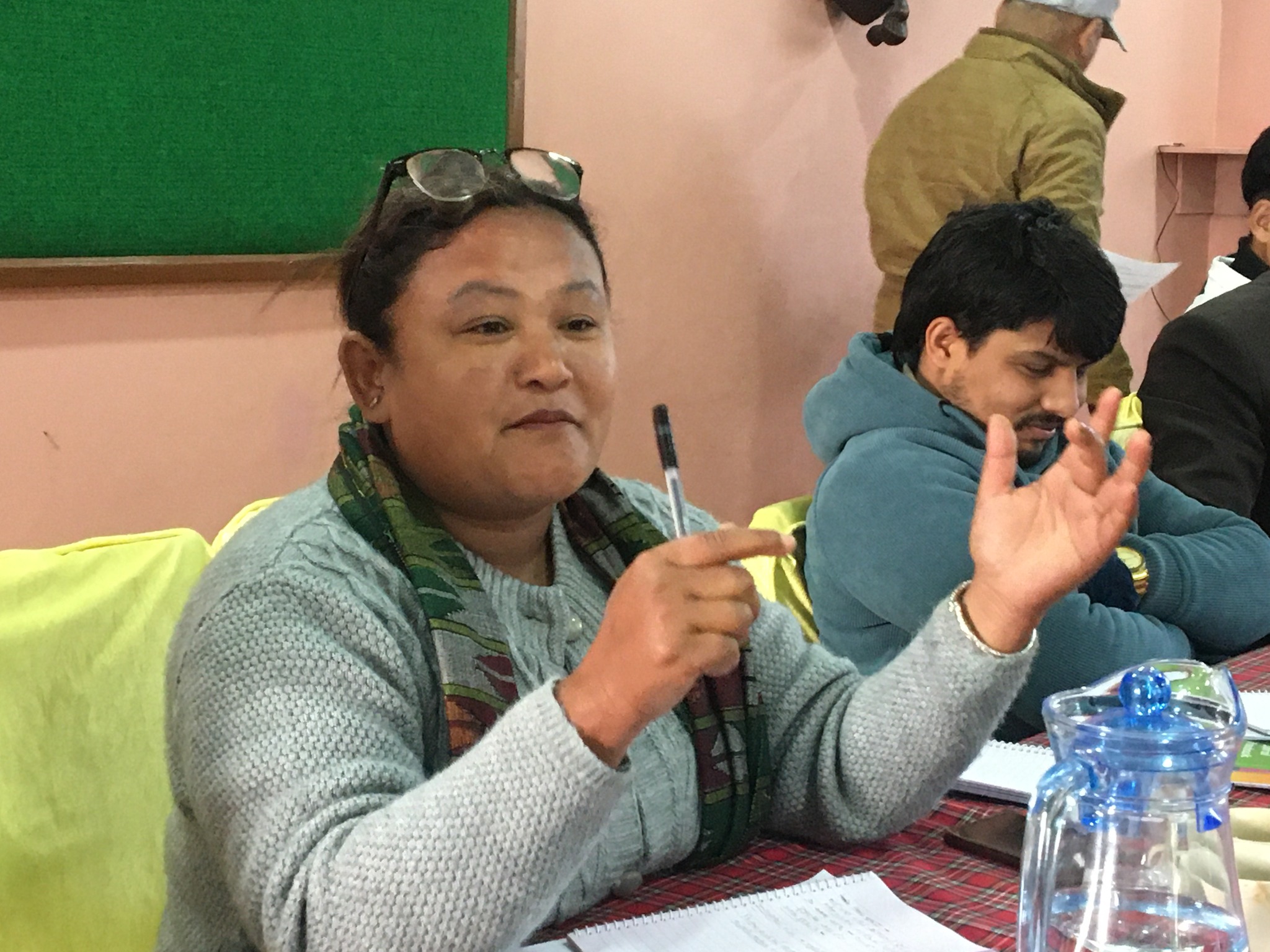
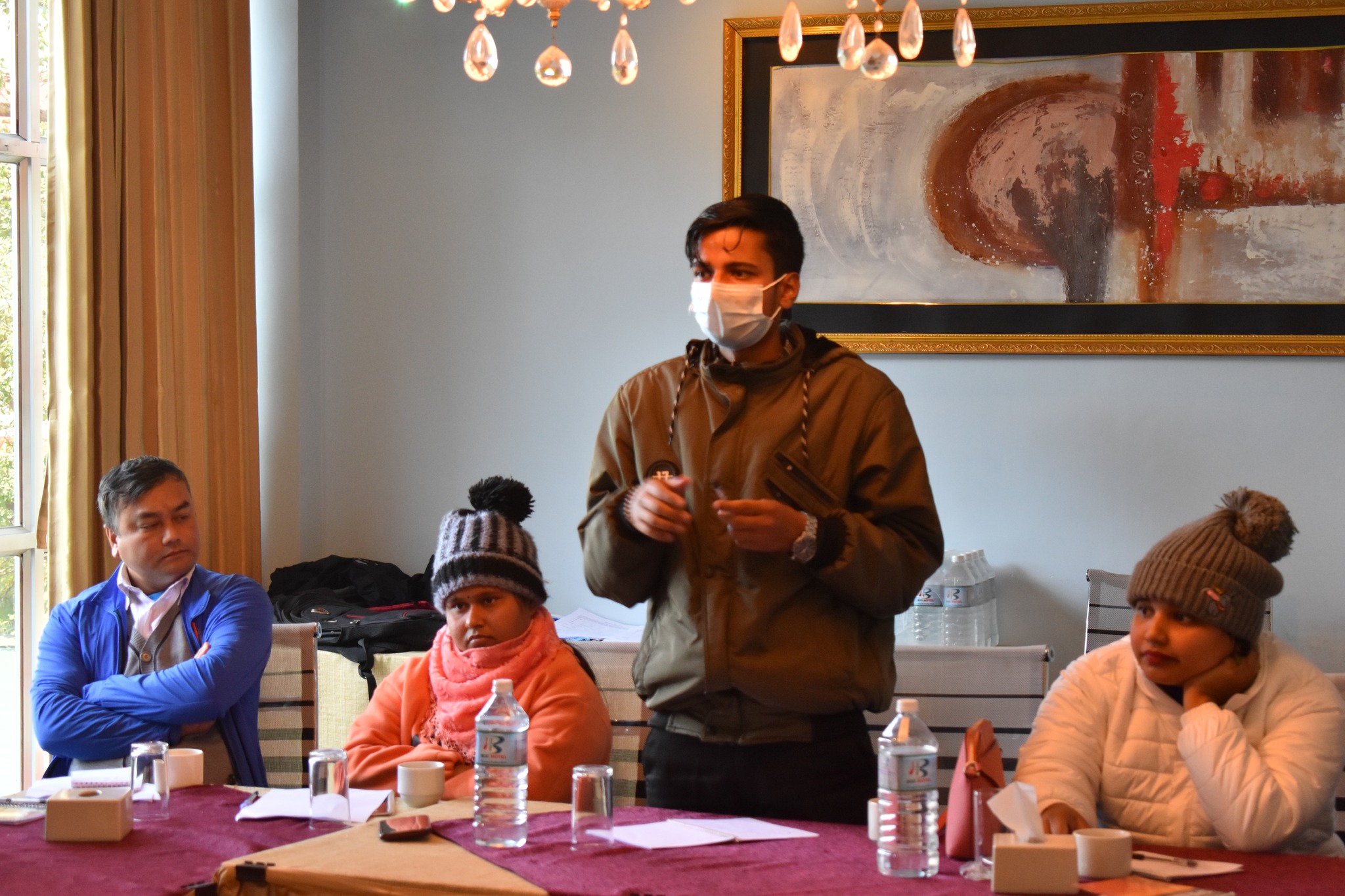
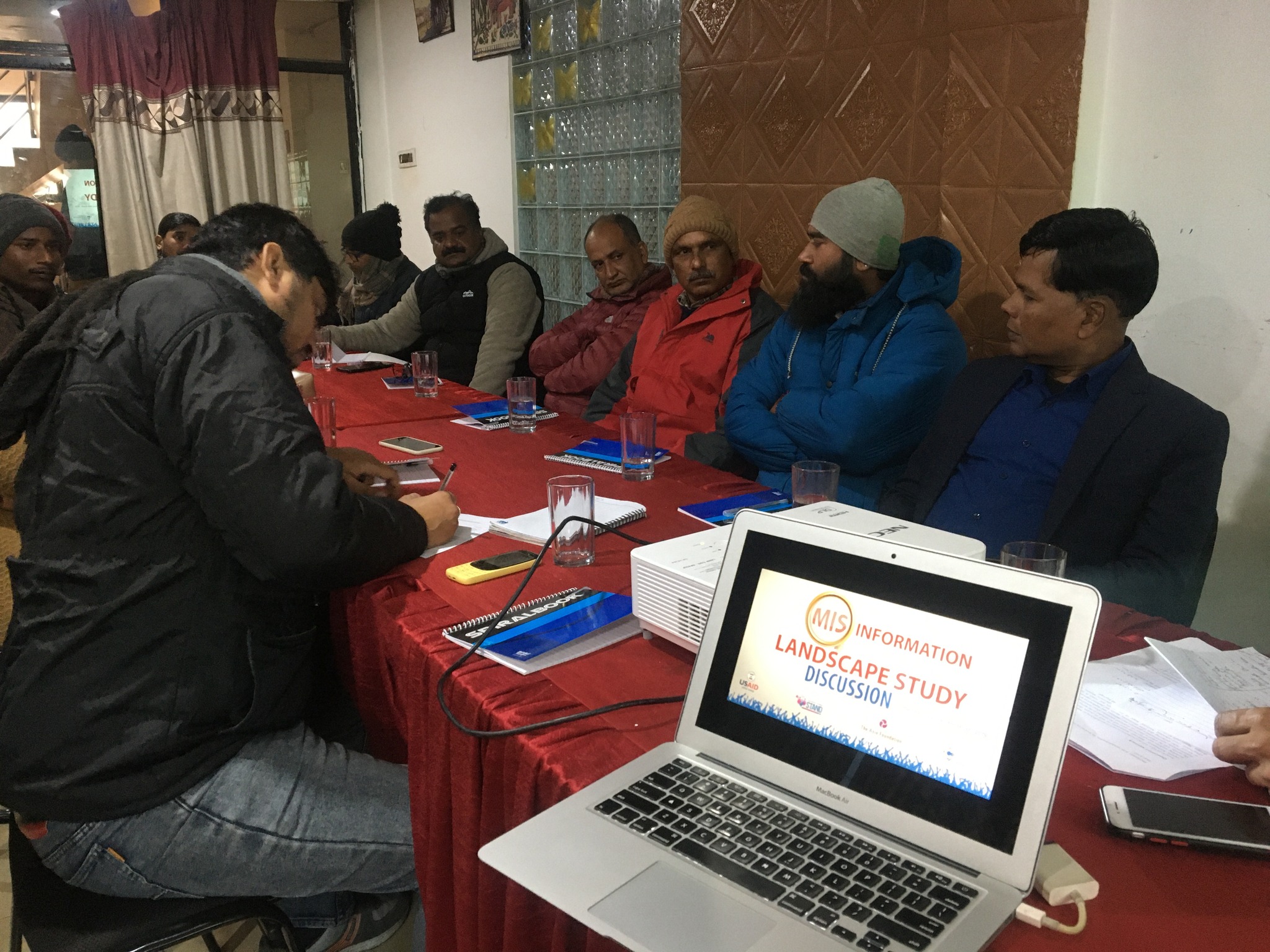
Before the 2022 election, with the support of the International Republican Institute (IRI), the organization held discussions with stakeholders about information manipulation and its impacts in all seven provinces of Nepal. The discussions concluded that there is a lot of information manipulation during elections, and such manipulation can affect democracy itself, so it needs to be addressed in a timely manner.

IRI’s support in placing monitors in all seven provinces of the country to monitor information manipulation during the election, and the training provided to them on fact-checking, developed Nepal Fact Check’s capacity to monitor misinformation across the country during the election, report potential harmful content to social media, and conduct fact-checks [12].

Additionally, Nepal Fact Check was able to reach millions of citizens by helping influential TikTok users create videos to spread awareness about misinformation, and even produced a song against misinformation in collaboration with a popular folk singer, which has been viewed more than three hundred thousand times on YouTube.

The National Democratic Institute (NDI), on the other hand, helped PANOS South Asia’s fact-checking effort called South Asia Check to monitor misinformation and hate speech targeting social media pages of women in politics for a year before the election. NDI provided support to develop the necessary skills and methods for this.

Similarly, it supported the Purple Foundation to study online hate speech against women in politics. According to NDI, the study, based on a survey of 492 people across the country, 80 interviews, and 42 discussions, is the first on this subject in Nepal.

IFES had been working with various NGOs since June 2020 to empower youth across Nepal to fight misinformation. Under this program, they trained 34 youths, who subsequently conducted 23 webinars, successfully passing on that learning to more than 500 youths. Based on complaints, the Nepal Press Council suspended seven online news portals on charges of violating the Election Code of Conduct. IFES had also provided media literacy training to 7,200 youths across the country.

Nepal’s Lessons on Combating Misinformation During Elections

A Whole-Society Response is Necessary

During Nepal’s 2022 general election, there was no evidence of information manipulation significantly influencing the election results or incite violence. There was more discussion about misinformation and other information manipulation in newspaper materials or public discussions than before. One factor in such increased discussion was the collaboration of the Election Commission and civil society with platforms. Such collaborations included proactive and reactive communication programs, from spreading public awareness and educating authorities to fact-checking and reporting.

Both Governmental and Non-governmental Efforts are Necessary

Efforts made only by the government or only by the non-governmental sector may not be effective in mitigating information manipulation. It is effective to have as many types of programs as possible against information manipulation, along with both proactive and reactive communication. The government can effectively work on policy development and implementation, collaboration with platforms, increasing public awareness, and monitoring, while the private sector can work on increasing public awareness, collaborating with and reporting to social media platforms, fact-checking, and studying potential impact assessment.

The Role of Platforms is Important

Meta company’s positive presence was evident in Nepal’s 2022 election. Meta not only showed its activity through discussions and meetings before the election but also provided training to stakeholders. In such training, Meta showcased its features and provided information about policies on Facebook. This increased access to their data. Additionally, by establishing direct contact points for the Election Commission and civil society, it accelerated the process of identifying misinformation in a timely manner and taking necessary action. TikTok and Twitter also established direct communication channels and committed to taking timely action regarding harmful information.

(English translation of the case study published in “सूचना चलखेलको मुकाबिला: निर्वाचन र त्यसको सेरोफेरोका लागि स्रोतपुस्तिका” published by NDI, IRI and Standford Internet Observatory in 2022. Download Nepali version here.)

References

[1] National Statistics Office (n.d.). National Population and Housing Census 2021. https://censusnepal.cbs.gov.np/results

[2] Dixit, Kunda (2022). Nepal’s interface with information. Nepali Times, 2022 May 28.

[3] Acharya, Ujjwal (2022). Nepal Social Media Users Survey 2021. Center for Media Research — Nepal.

[4] Digital Rights Nepal (n.d.). https://digitalrightsnepal.org/?page_id=1008

[5] Acharya, Ujjwal (2023). Nepal: Promoting digital literacy with scarce resources, in Worthington, Jane (eds.) Managing the Misinformation Effect : The State of Fact-Checking in Asia. International Federation of Journalists.

[6] Acharya, Ujjwal (2022). Nepal Social Media Users Survey 2021. Center for Media Research — Nepal.

[7] Shrestha, Umesh (2022). Misinformation During Election (in Nepali). Kantipur Daily, 2022 December 23.

[8] Election Commission of Nepal (2021). Policy on the use of social media in Electoral Management, 2077. https://election.gov.np/source/Resources%20Other/05_ECN_Social_Media_Policy_English_20210622_v1.pdf

[9] Ojha, Anup (2022). Election Commission joins hands with social media giants to rein in misinformation. The Kathmandu Post, 2022 October 15. https://kathmandupost.com/politics/2022/10/15/election-commission-joins-hands-with-social-media-giants-to-rein-in-misinformation

[10] CMR — Nepal (2017). What is misinformation? https://research.butmedia.org/fake-news-disinformation-misinformation/

[11] CMR — Nepal (2020). NepalFactCheck launched to fight fake news and disinformation. https://research.butmedia.org/nepal-fact-check-launched-to-fight-fake-news-and-disinformation/

[12] CMR — Nepal (2022). Roundtables on misinformation and its impact on democracy held in 7 provinces. https://research.butmedia.org/roundtables-on-misinformation-its-impact-on-democracy-in-all-7-provinces/