Misinformation during the Gen Z Uprising in Nepal: Trends and Lessons Learned for Interventions

Author: Ujjwal Acharya

With research support from Umesh Shrestha, Chetana Kunwar and Pravin Bhatta of NepalFactCheck.org and editorial support from Tilak Pathak of CMR-Nepal.

Abstract

The Gen Z demonstrations in Nepal, in September 2025, was an unprecedented uprising driven by youth anger over corruption and political exclusion, triggered by a social media ban. Peaceful demonstrations escalated into violent clashes, resulting in fall of the government and the formation of an interim citizens’ government. The crisis exposed risks of misinformation, which spread rapidly across social media, fueling panic and polarization. Misinformation ranged from exaggerated death tolls to religious and political falsehoods. Fact-checkers struggled to counter emotionally charged viral claims, with even educated individuals falling prey to rumors. Key lessons learned include the need for rapid, verified official communication, prioritization of debunking malinformation by fact-checkers, closer collaboration with social media platforms, and strengthened public resilience through media and information literacy campaigns. This report recommends establishing a government crisis communication unit, increasing law enforcement transparency, scaling up media capacity and partnerships, strengthening fact-checking and launching long-term media and information literacy initiatives to combat future information disorder.

Keywords: crisis communication, misinformation, fact-checking, Gen Z protest, Nepal,

Context

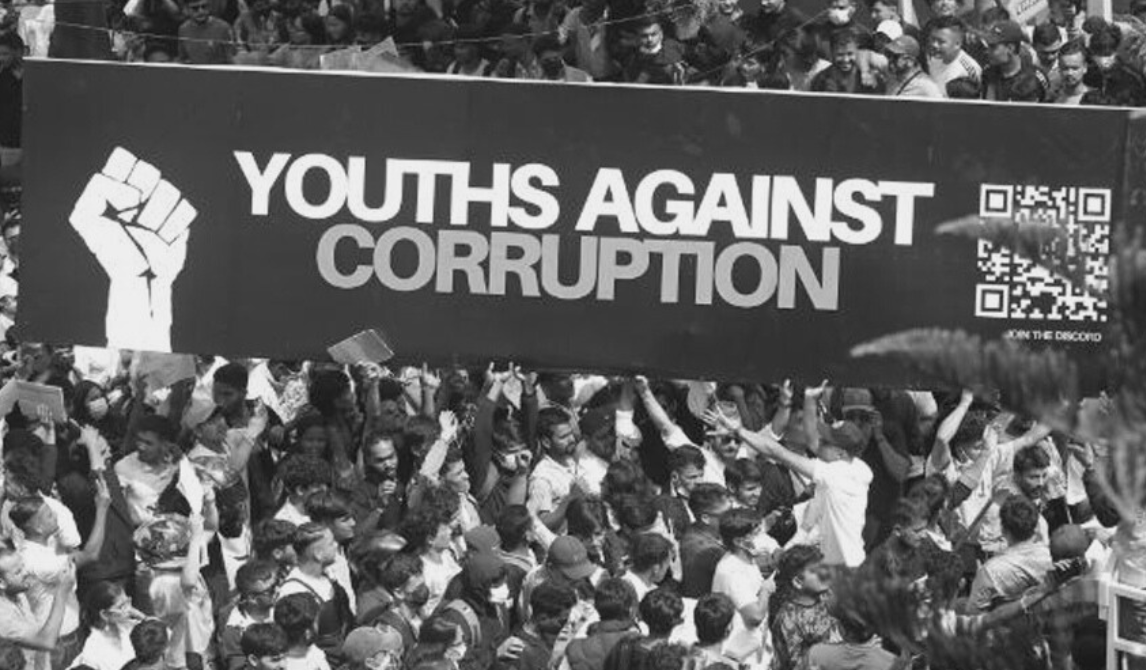
On September 8, 2025, youths identifying themselves as Gen Z gathered at Maitighar, Kathmandu for a peaceful anti-corruption demonstration. What began as a peaceful demonstration quickly escalated as a group of protesters stormed the Parliament compound in New Baneshwor.[1] Security forces used heavy handed measures including tear gas, rubber bullets, and real ammunitions indiscriminately. Seventeen people were killed in Kathmandu and two more outside the Kathmandu Valley, bringing the total death toll to 19 by end of the day.[2] Everyone was shocked and stunned as the news of state repression spread and Minister for Home Affairs Ramesh Lekhak resigned on the same evening, taking moral responsibility for the deaths.[3]

On September 9, 2025, despite imposing the curfew, the state was unable to stop protests all over the nation which now were joined by thousands others angry at the government for killing youths. The day saw widespread riots. Kathmandu and other cities experienced violence on an unprecedented scale. Demonstrators burned down the Parliament, the Prime Minister’s Office, the President’s Office, the Supreme Court, the Special Court, the District Court and dozens of government buildings as well as private properties and residences owned by the political leaders and businesses of people close to political parties.[4] The rage on the day forced Prime Minister KP Sharma Oli to resign, and he was airlifted to safety by the army.[5] The ministers’ quarters were also stormed and set on fire immediately after the sitting ministers present were also airlifted to safety. Five-time former PM Sher Bahadur Deuba and his wife, the Foreign Affairs Minister Arzu Rana Deuba, faced those who stormed their residence, and were physically assaulted before they were handed over to the army.[6]

The Nepal Army took over security from 10PM on September 9 as the country slowly returned to peace.[7] The army also mediated talks with the protesters and the President resulting in appointment of Sushila Karki, Nepal’s first female Chief Justice, as the Prime Minister of the caretaker interim citizens’ government on the evening of September 12.[8] The new government swiftly dissolved the House of Representatives and is scheduled to hold the general elections on March 5, 2026.[9]

The Gen Z protest, as it is popularly known, was an unprecedented and social-media-driven movement that became a cornerstone incident in Nepal’s democratic history. However, it was not as sudden as it seemed. It was the culmination of years of frustrations among Nepal’s Gen Z youth, who were largely othered by political and social leaderships as the generation not interested in political and social matters, and only interested in migrating abroad.[10] They had witnessed and experienced bad governance, political instability, hardship in dealing with state regulations for entrepreneurship.

Nepal’s political instability added to the public frustrations. Since 2015, either of three aging leaders – Sher Bahadur Deuba of Nepali Congress, KP Sharma Oli of CPN-UML and Pushpa Kamal Dahal of Maoist Center – led seven governments, forging different equations for coalitions among each other in a political musical chair. They also stuck to the leadership within their parties, leaving no space for generational change. For example, Deuba first joined the government as the home affairs minister on May 29, 1991, and became the Prime Minister on August 23, 1995, while Oli first joined government, also as home affairs minister, on November 30, 1994, and became Deputy PM on May 2, 2006, and the PM on October 12, 2015. Similarly, Dahal first became the PM on August 22, 2008.

Nepal in past three decades has witnessed bad governance and corruption to a level that almost every citizen who had any engagement with government agencies experienced it. This experience eroded public trust in the state’s ability and willingness to deliver services to the public. Successive governments, regardless of their ideology, failed to check corruption and were non-accountable to citizens’ growing concerns. Survey findings reveal that citizens are dissatisfied with the lack of economic opportunities, rampant institutional corruption, weak governance and mass youth migration. Ineffective political leadership and subpar performance of public institutions have eroded public trust and resulted in widespread frustration at frequent government changes, political patronage and disregard for citizen voices.[11]

Development projects, even those emphasized as projects of national pride, were delayed, were subject of allegations of misappropriation of funds. Nepal’s bureaucracy and public service remain burdensome often forcing ordinary people search for intermediaries and/or pay bribe even for routine services. Bureaucratic procedures and delays became a barrier, discouraging innovation and entrepreneurship. Youth entrepreneurs found themselves obstructed by unresponsive system despite rhetorics about promoting start-ups or innovation.

Within this context, the quality of education, particularly at the university level, lagged far behind global standards, with outdated curricula, inadequate infrastructure and politicized institutions. Higher education struggled to provide students relevant skills. Taken together, these overlapping crises painted a picture of a state ignoring the needs and aspirations of its people, especially youth. Whereas the leaders and their families continued to earn successes and display a lavish lifestyle, the ordinary citizens struggled and remained helpless.

These grievances had been “boiling under the surface” for years, waiting for a trigger.

Social Media Ban as the Trigger

On September 4, 2025, The government imposed a ban on 26 social media platforms.[12] The government justified this move under a controversial directive requiring platforms to register locally which required platforms to remove government-flagged content within 24 hours or face heavy fines. The government also pointed towards a Supreme Court ruling on a contempt of court case involving an online media which directed the government to ensure registration of online platforms.[13]

For many Nepalis, especially youth, this was a direct assault on their connectivity, entrepreneurship and freedoms. In the last decade, social media had become a platform of connectivity to majority of Nepali citizens and was central to their daily lives. Only a small number of people used social media as platform of self-expression, even less to criticize government and political leaders, while a majority used it as a communication platform to remain connected with family members residing outstation or abroad and friends as well as keeping oneself updated on them. There were a sizeable number of youths who had small business that they conducted and promoted through social media, ranging from teashops to retail selling to software and web development.[14] Then there are content creators, social media influencers and their audiences who were dependent upon social media platforms. The ban struck at the heart of their social, economic and cultural engagement.

The social media ban became a hot topic for discussion in various internet-based platforms not only in well-known Facebook, X and YouTube but also in lesser-known platforms such as Reddit where the youths found out that their individual experience and frustration with the government was actually a shared experience which encouraged them to do something to change it. Another aspect that played a role in the youth’s aspiration to do something is that they were othered by the political and social leadership as a generation deep into the internet and moving abroad that they avoided political and social issues. They were potentially in a lookout to reassign their identity as a generation caring for the state. When the discussion moved to need to do something, it needed a real-time discussion platform which they found in Discord, which they used to discuss, plan and delegate responsibilities for a peaceful demonstration against corruption and political dysfunction.[15]

So, on September 8, youth groups mobilized through online networks and took to the streets. After 48 hours, Nepal saw state repression and mob violence causing 74 deaths and over 2,000 injuries as well as the political leadership kneeling down paving a way for Gen Z supported interim citizen government.

Patterns of Misinformation

The political crisis, especially due to its leaderless structure and uncalled-for state repression, was a fertile period for misinformation, disinformation, malinformation, propaganda, and hate speech, especially spreading through social media platforms.[16] There was an overwhelming volume of information which meant that correct information often gets missed with misinformation to such an extent that people don’t have the time or clarity to reflect on what’s true and what’s false.[17] The crisis was used by all threat actors, including political groups, foreign actors, partisan media, social media influencers, and extremist groups to spread disinformation supportive of their agenda and/or interest.

The misinformation observed during this period fell broadly into five categories:

  1. Geographic misattribution of foreign videos (e.g., Maldives, Sikkim, Karnataka videos passed off as Nepal)
  2. Exaggerated violence and casualty claims (e.g., Bhatbhateni skeleton claim, Parliament building death claim)
  3. Miscontextualised military/security activity (e.g., army vehicles video and army coup)
  4. Religious/cultural misinformation (e.g., Pashupatinath video, Hindu nation narrative)
  5. False political/leadership claims (e.g., ex-PM’s wife death, Balen Shah as PM, videos of leaders being beatn)

There were also potential malinformation that played on sensitive topics such as religion (for example: a mob trying to vandalize the Pashupatinath temple, the most revered Hindu temple; and demonstrators chanting Hindutva slogans), nationalism (for example: demonstrators chanting pro-India slogans, and foreign governments’ role) and political extremism (for example: the protest being pro-monarchy; and the army coup). Such malinformation had potentials of inciting more violence and serious unrest.

The impacts of misinformation were also partly recorded, especially through how general public responded to the misinformation on social media. There were public panic and anger as exaggerated claims of deaths and military action created fear and anxiety. There were also confusions over incidents and what’s happening as questions regarding trustworthy sources were raised by many. The distortion of protest goals where narratives were reframed to pro-monarchy and pro-Hinduism risked polarization.

A trend that was seen was misinformation was not only being shared publicly on social media but also within the closed groups, even those including opinion leaders of society.[18] A few such closed groups were monitored which indicated that even those who are considered information-literate could not escape falling victim to misinformation and in many cases sharing it. The intent may be to help, but such unverified warnings can also spark intense panic.

Another trend observed was misinformation spread in India aiming at Indian citizens to promote local political agenda also has impact in Nepal as those social media contents were also consumed in Nepal. What seemingly was an attempt to promote political positioning and ideology of certain political group in India has a more dangerous nationalistic sentiments in Nepal.

It was also noted that due to such misinformation in India, Indian fact-checking initiatives also fact-checked several viral claims, especially those relevant to them, thereby aiding efforts of Nepali fact-checkers. At NepalFactCheck.org, with limited resources and fact-checkers, it was impossible to fact-check all potential misinformation quick and effectively. Therefore, the fact-checkers focused on misinformation that carry strong elements of malinformation, and deliberately misleading content designed to cause harm and incite violence.[19] Malinformation and such narratives posed the highest risk of escalating violence at the time of crisis.

Based on the analysis of misinformation patterns during Nepal’s Gen Z protests, several critical lessons emerge for managing information disorders during political crises.

Lessons Learned for Combating Misinformation

The high number and rapid spread of misinformation during the Gen Z protests in Nepal showed that timely verified information is essential to counter misinformation. At the time when government agencies and official sources fail to provide immediate and factual information about unfolding events, there is an information vacuums which is filled by speculation, rumors and deliberately misused by the malicious actors to spread false narratives of political and other agenda.

During Gen Z protests, the state’s failure to provide real-time official updates about casualty figures and military movements created fertile ground for exaggerated claims and conspiracy theories. Citizens seeking information turned to unverified social media posts and clickbait contents. This shows the need of establishing official communication system actively monitoring rumors and providing factual information on those rumors.

It also highlighted the need of fact-checking which prioritizes emotionally charged claims, particularly those involving religion, nationalist and political sensitives. During such events, misinformation with emotional resonance such as exaggerated death tolls, false claims about attacks on religious sites or fabricated stories about political leaders spread more rapidly and had the potential to escalate tensions.

These emotionally charged narratives are not only shared widely but also pose the dangerous risk of inciting violence or deepening social divisions. The showed that fact-checking should be promoted and their limited resources must be strategically deployed to address malinformation rather than trying to debunk all misinformation.

Another crucial learning was that fact-checkers need to create a pre-agreed emergency channel with social media platforms to flag dangerous contents, so that the resources of the platforms are also mobilized to check those contents to limit spread.

Finally, the widespread circulation of misinformation among even information-literate individuals showed that media and information literacy campaigns are crucial to strengthen public resilience and are needed in a bigger scale.

The observation that misinformation was shared not only publicly but also within closed groups containing opinion leaders and educated individuals showed that traditional assumptions about promoting information literacy among vulnerable population only may be insufficient during crisis situations. It was seen that even people normally capable of analyzing information critically became vulnerable to misinformation as emotions ran high and the desire to help or warn others overrode critical thinking.

Recommendations

The government should

  • establish a crisis communication unit to provide monitor rumors and provide verified updates through responsible agencies during crisis. Such unit should be responsible for disseminating accurate, timely information across multiple channels preventing information vacuums that allow misinformation.
  • ensure transparency of law enforcement operations to prevent speculation that fuels conspiracy theories and rumors.
  • initiate mass scale media and information literacy campaigns, including adding critical thinking and combating misinformation knowledge and skills in school curricula.

The media and fact-checkers should

  • scale up fact-checking capacity during crises and distribute debunks as widely as possible across multiple platforms and formats.
  • monitor misinformation narratives and focus on fact-checking malinformation.
  • build collaborative partnerships to use each other’s strength to fact-check and distribute debunks.
  • build relationship with social media platforms, especially their trust and safety teams, to establish direct communication channels to flag dangerous contents.

The social media platforms should

  • scale up content moderation during crisis period by adding friction to viral sharing by implementing temporary measures to slow the spread of unverified content.
  • display warnings about the rapidly changing situation and potential misinformation
  • reduce the algorithmic promotion of content from sources other than trusted sources. However, such measures should be designed to balance free expression with harm reduction and be temporary in nature during crisis periods when misinformation poses higher risks to public safety.
  • flag out of context and old media being shared through metadata and identification.
  • develop partnership with and support local fact-checking initiatives to flag, identify and label misinformation.

The civil society organizations and educational institutions should

  • design and implement media and information literacy interventions to all citizens.
  • train opinion leaders to serve as local sources of verified information during crises.
  • promote fact-checking and trusted sources of information.

Further Reading:

  1. Ray, Aarati (2025 September 15). How misinformation fulled panel during Gen Z uprising. The Kathmandu Post. https://kathmandupost.com/national/2025/09/15/how-misinformation-fuelled-panic-during-gen-z-uprising
  2. Gahatraj, Diwash & Sinha, Chandrani (2025 September 18). Nepal’s Gen Z protest: How Fake News Tried to Rewrite a Revolution. Inter Press Services. https://www.ipsnews.net/2025/09/nepals-gen-z-protest-how-fake-news-tried-to-rewrite-a-revolution/
  3. Adhikari, Deepak (2025 September 18). How Social Media Was Flooded With False News After Nepal’s Gen Z Protests. Nepal Check. https://nepalcheck.org/2025/09/18/how-social-media-was-flooded-with-false-news-after-nepals-gen-z-protests/

[1] The Himalayan Times. (2025, September 9). Gen Z protesters enter Federal Parliament Building. https://thehimalayantimes.com/kathmandu/gen-z-protesters-enter-federal-parliament-building

[2] BBC. (2025, September 8). Nepal lifts social media ban after 19 killed in protests. https://www.bbc.com/news/articles/cp98n1eg443o

[3] Nepal News. (2025, September 22). Home Minister Ramesh Lekhak resigns. https://english.nepalnews.com/s/politics/home-minister-ramesh-lekhak-resigns/

[4] BBC. (2025, September 9). Nepal parliament set on fire after PM resigns over anti-corruption protests. https://www.bbc.com/news/articles/c0m4vjwrdwgo

[5] Kathmandu Post. (2025, September 9). Prime Minister Oli resigns amid deadly protestshttps://kathmandupost.com/national/2025/09/09/prime-minister-oli-resigns-amid-deadly-protests

[6] CNN. (2025, September 10). Nepal protests: After toppling the prime minister, Gen-Z protesters face an uncertain future. https://edition.cnn.com/2025/09/10/asia/nepal-protests-gen-z-outcome-intl-hnk

[7] BBC. (2025, September 9). Nepal parliament set on fire after PM resigns over anti-corruption protests. https://www.bbc.com/news/articles/c0m4vjwrdwgo  

[8] BBC. (2025, September 14). Nepal’s interim PM to hand over power within six months. https://www.bbc.com/news/articles/cp8wjz90z4no

[9] Al Jazeera. (2025, September 17). Who is Sushila Karki, Nepal’s new 73-year-old interim prime minister. https://www.aljazeera.com/news/2025/9/17/who-is-sushila-karki-nepals-new-73-year-old-interim-prime-minister

[10] See Britannica. (2025, September 22). 2025 Nepalese Gen Z Protests. In Encyclopædia Britannica. https://www.britannica.com/event/2025-Nepalese-Gen-Z-Protests

[11] Sapkota, P., Adhikari, S. & Pathak, T. (2025, June 26). Frustrated by leaders, not democracy. The Kathmandu Post. https://kathmandupost.com/columns/2025/06/26/frustrated-by-leaders-not-democracy

[12] Kathmandu Post. (2025, September 4). Nepal bans Facebook and other major social media platforms over non-compliance. https://kathmandupost.com/national/2025/09/04/nepal-bans-facebook-and-other-major-social-media-platforms-over-non-compliance

[13] Anadolu Agency. (2025, August 16). Nepal’s top court orders all social media, online sites must register. https://www.aa.com.tr/en/asia-pacific/nepals-top-court-orders-all-social-media-online-sites-must-register/3661965

[14] See Kathmandu Post. (2025e, September 4). Nepal’s social media ban explained in six questions. https://kathmandupost.com/national/2025/09/04/nepal-s-social-media-ban-explained-in-six-questions

[15] See Al Jazeera. (2025, September 15). ‘More egalitarian’: How Nepal’s Gen Z used gaming app Discord to pick PM. https://www.aljazeera.com/news/2025/9/15/more-egalitarian-how-nepals-gen-z-used-gaming-app-discord-to-pick-pm

[16] [17] [18] [19] Kathmandu Post. (2025, September 15). How misinformation fuelled panic during Gen Z uprising. https://kathmandupost.com/national/2025/09/15/how-misinformation-fuelled-panic-during-gen-z-uprising

CMR-Nepal donates books to National News Agency’s Library

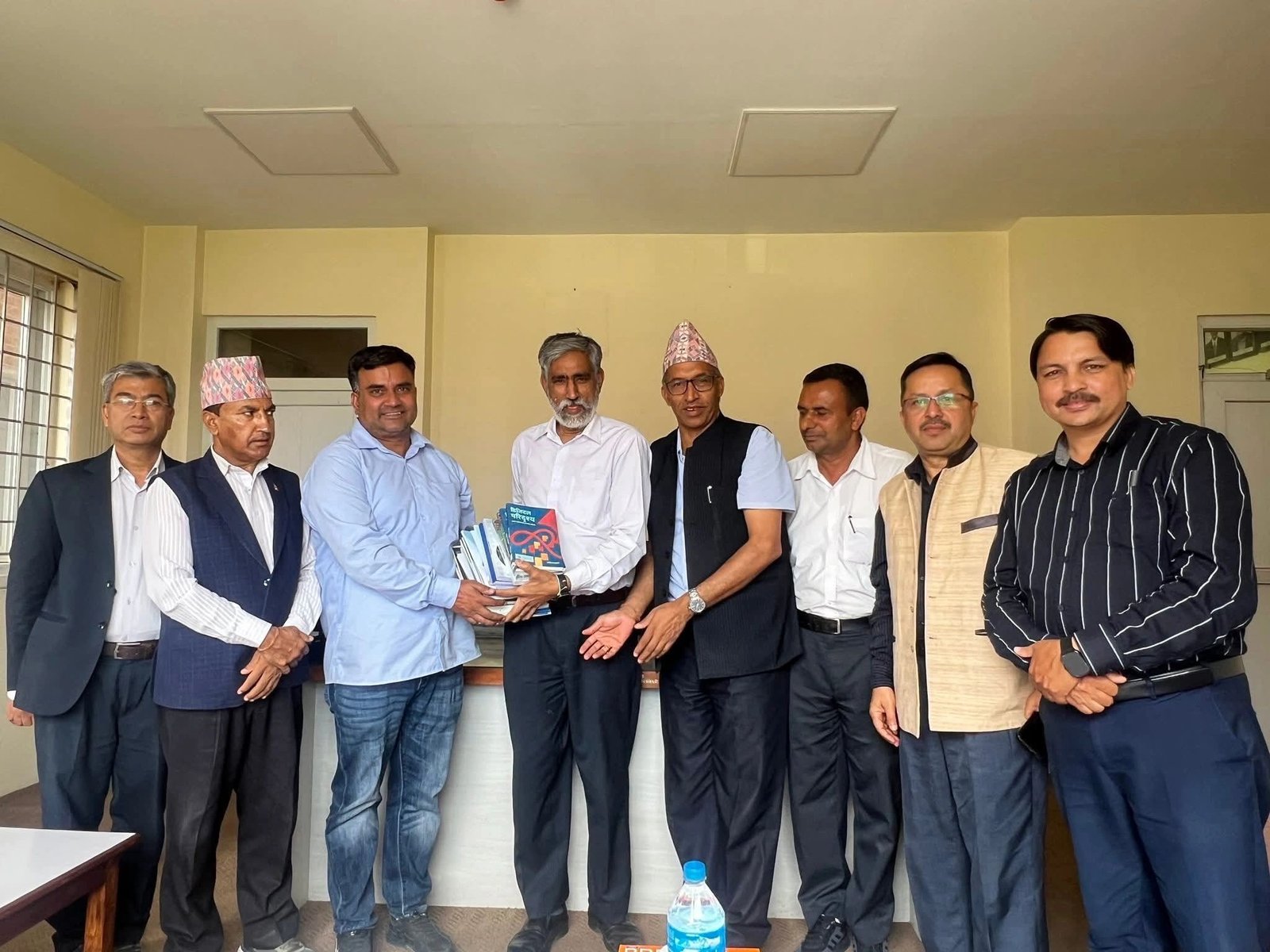
The Center for Media Research-Nepal (CMR-Nepal) has donated 30 books of 15 media-related titles to the library of National News Agency (Rastriya Samachar Samiti – RSS).

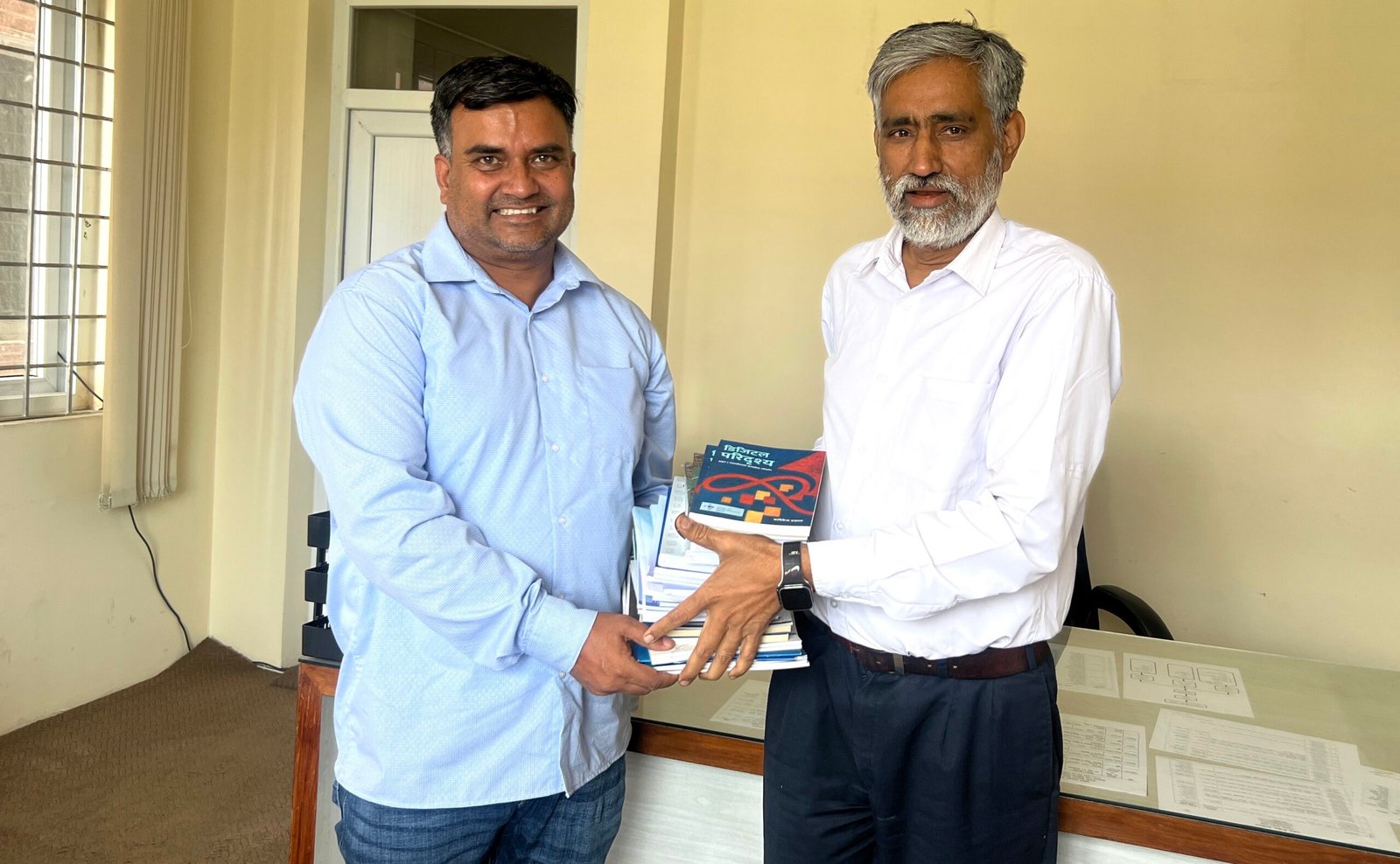
CMR-Nepal’s director Ujjwal Acharya handed over the books to RSS Executive Chairperson Dharmendra Jha at RSS Central Office, Bhradrakali Plaza, Kathmandu.

Upon receiving the books, Executive Chairman Jha emphasized the books’ relevance for RSS, journalists, media students, and stakeholders. He highlighted the library’s growing role as a resource hub for media education and research.

Director Acharya praised RSS for its adaptability in the evolving media landscape and expressed confidence that the library would become a key destination for journalists, researchers, and students.

“RSS holds significant importance in Nepal’s information ecosystem, and this library will further support media studies and research,” Acharya said.

The donated books cover critical topics such as Nepal’s media landscape, digital transformation, misinformation, media literacy, policy, and state of journalism during disasters. Notable titles include Digital Landscape, Corruption and Media, Nepal’s Misinformation Landscape, and Media in Pandemic, among others.

Acharya noted that these publications—rooted in studies, research, and statistics—will aid journalists, media professionals, and students.

During the event, Acharya toured the RSS Media Museum, News Bulletin Room, and Library. Executive Chairman Jha shared insights into the museum’s objectives and future plans, including expansions to the bulletin room and library.

Since its inauguration on February 19, 2025, to mark RSS’s 64th anniversary, the Media Museum has attracted growing interest from experts and visitors. The bulletin room archives news materials from RSS’s founding in February 18, 1962 to the present, while the library now houses nearly 700 books.

News / Photo Courtesy: National News Agency / RSS

CMR-Nepal’s submission on Media Council Bill to the Parliamentary Committee

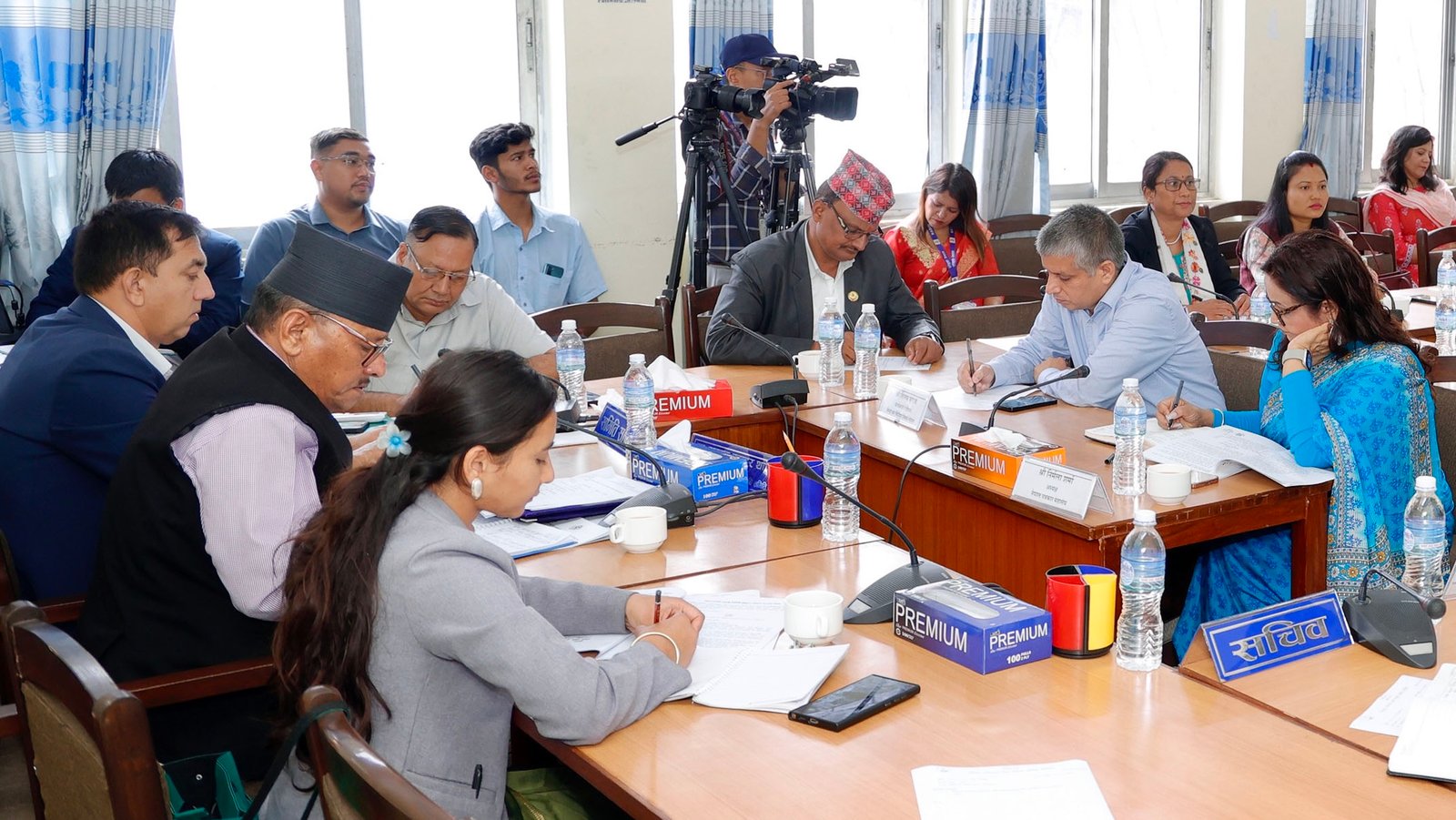
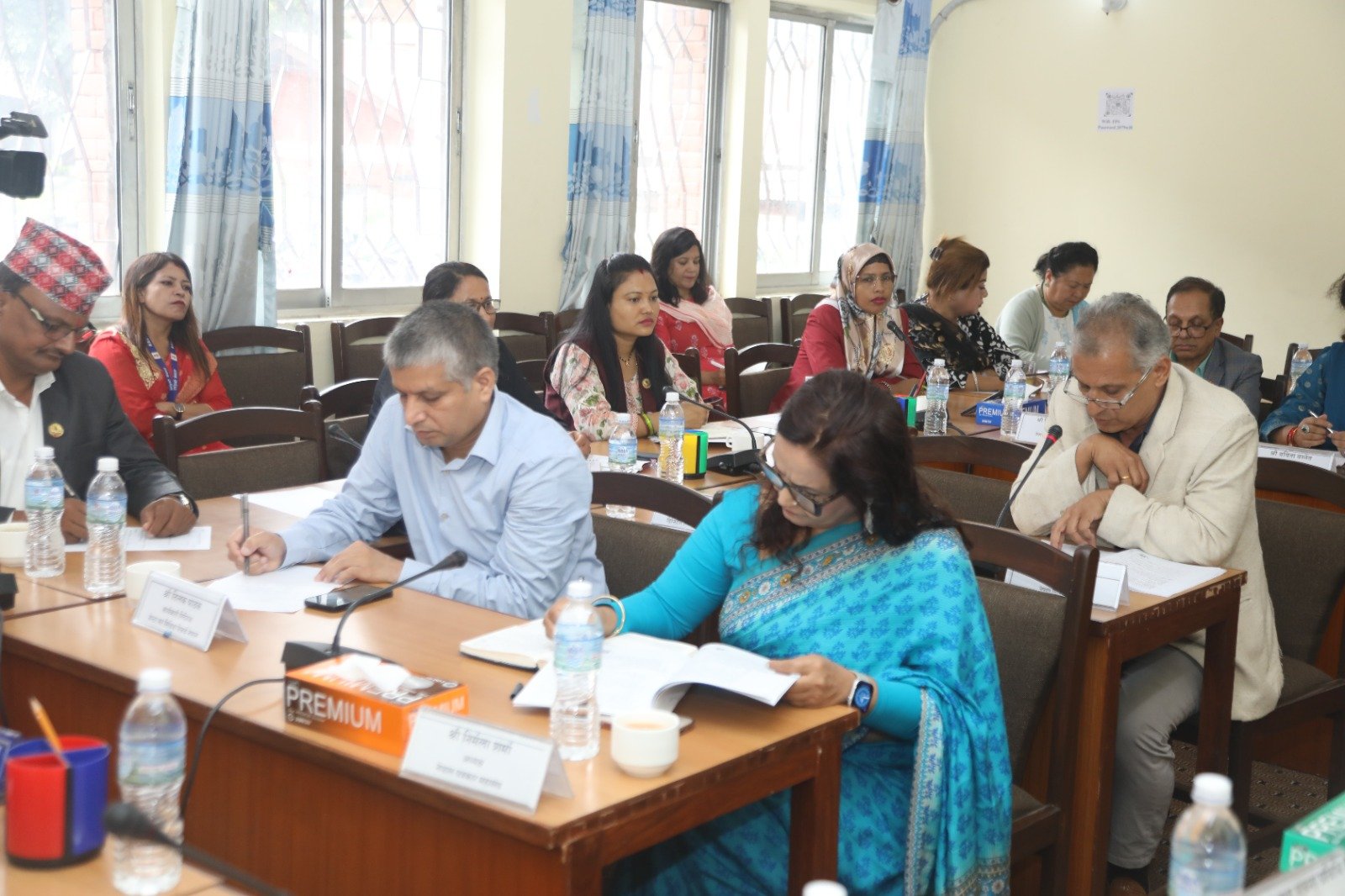
On July 28, 2025, the Center for Media Research – Nepal (CMR-Nepal) was invited by the Education, Health and Information Technology Committee of the House of Representatives of the Federal Parliament of Nepal in a consultation meeting with CSOs/experts on the Media Council Bill.

Executive Director Mr. Tilak Pathak represented CMR-Nepal in the deliberations; and presented CMR-Nepal’s summarized submission.

The submission is based on the in-depth review of the bill by CMR-Nepal. The policy review and submission brief in written were also submitted to the committee members.

Below is the outline of the CMR-Nepal’s submission:

Suggestions from the Center for Media Research–Nepal (CMR-Nepal) on the Bill to Amend and Consolidate the Laws on the Media Council

On the Purpose of the Bill
The bill states that there is a “new need for the establishment and operation of the Media Council as an autonomous regulatory body for the development and protection of fair, independent, and accountable journalism by maintaining professional conduct in the field of journalism and promoting self-regulation.” In line with this stated purpose, it is essential to emphasize the autonomy of the Media Council and design mechanisms that ensure its independence in both structure and function.

On the Need to Enact a New Law
The constitutional reference to “any other type of digital” and the need for “managing and regulating other media” appears to include social media, which makes this law necessary in the current media landscape.

Furthermore, in the context of improving relations with the World Press Council, South Asian press councils, and similar international bodies, renaming the Press Council of Nepal to “Media Council” is more than symbolic—it signals a substantive shift. The government’s own policies and programs state that the council will be developed as an independent, autonomous, and competent body to hear complaints related to violations of the journalistic code of conduct. This intention should be backed by concrete legal guarantees of autonomy.

The bill also mentions the need to establish the Media Council in line with principles of proportionality and inclusion. Therefore, these principles should be meaningfully integrated into the council’s formation and functioning.

On the Mandate of the Media Council
The Council is empowered to issue and enforce the journalistic code of conduct, monitor compliance, and take action in case of violations. It is also tasked with managing accreditation for press representatives. These responsibilities are welcome and should be retained in the final legislation.

On the Qualifications of the Chairperson and Members, and the Recommendation Committee
The bill proposes that the Chairperson’s qualifications be equivalent to those of a Supreme Court judge. However, the proposed appointment mechanism—a three-member committee composed of a government-appointed expert, a joint secretary, and coordinated by the secretary of the ministry—seems inconsistent with the high level of independence the role demands.

A better alternative would be a recommendation committee that includes the Speaker of the National Assembly, the Chairperson of a relevant Parliamentary Committee of the House of Representatives, and the Minister of Information and Communications.

Given that the appointment committee is currently dominated by government officials, there is a risk of political influence. For the Media Council to function impartially, autonomy must be ensured from the appointment stage. Therefore, involving parliament in the selection process is critical to safeguarding independence.

On the Provision for Removal of the Chairperson or Members
The clause allowing the removal of the Chairperson or members for “lack of efficiency” or “failure to fulfill responsibilities” is problematic. Vague grounds for removal risk enabling arbitrary government interference, which may lead to council members being unduly loyal to the government rather than acting independently.

On the Provision for Acting Leadership
Section 14(2) of the bill states that in the absence or suspension of the Chairperson, the member mentioned in Clause (b) of Sub-section (1) of Section 6 will act as Chairperson and convene meetings until a new Chairperson is appointed. Since this provision may result in a joint secretary leading the Council, it risks bureaucratic control and increases the possibility of government interference—contrary to the principles of independent journalism and the intended autonomy of the Council.

In both the recommendation process and the provision for acting leadership, bureaucratic dominance is concerning. This structure could reduce the Council to a government unit rather than an autonomous regulatory body. The provision should be reconsidered accordingly.

On Coordination with Provincial Media Councils
With federalism in place, provincial media councils are being formed and, in some cases, are already operational. This may create confusion among media outlets regarding whose directives to follow. There is also a risk of duplication of roles between federal and provincial bodies. To address these challenges, the bill should include provisions for coordination between federal and provincial media councils to ensure clarity, efficiency, and coherence in media regulation.

Access the PDF of the Policy Review of the bill here (in Nepali).

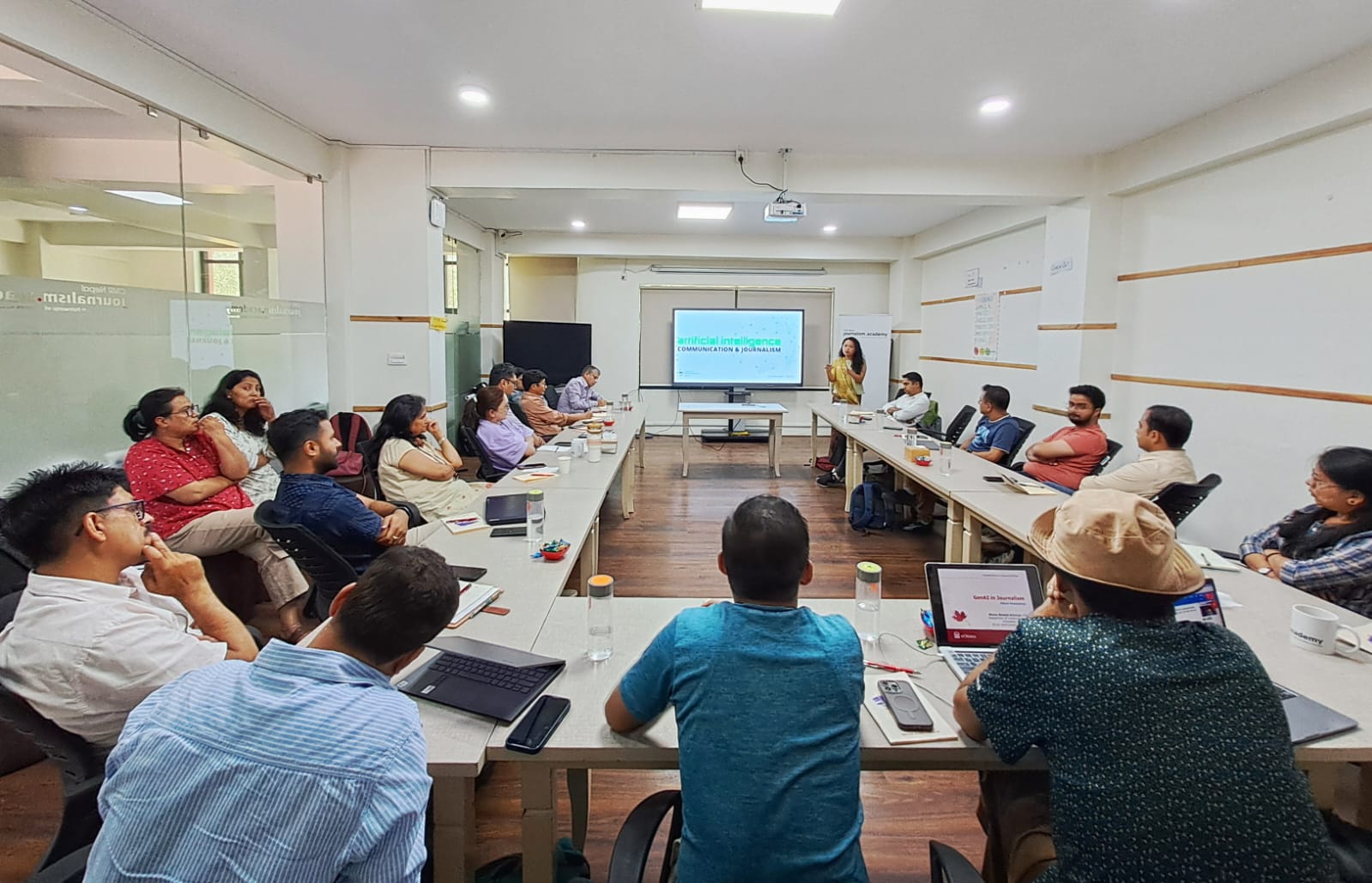
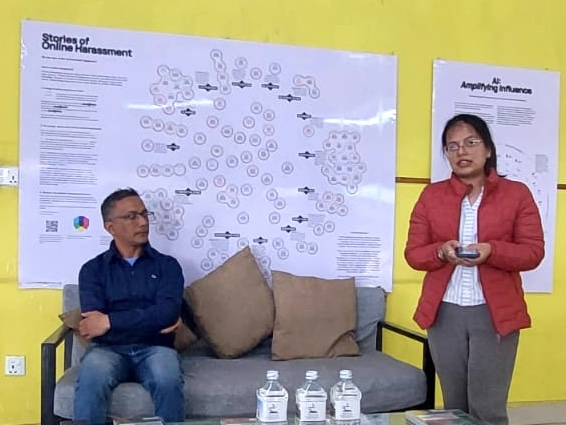
Discussion held on “AI, Communication & Journalism”

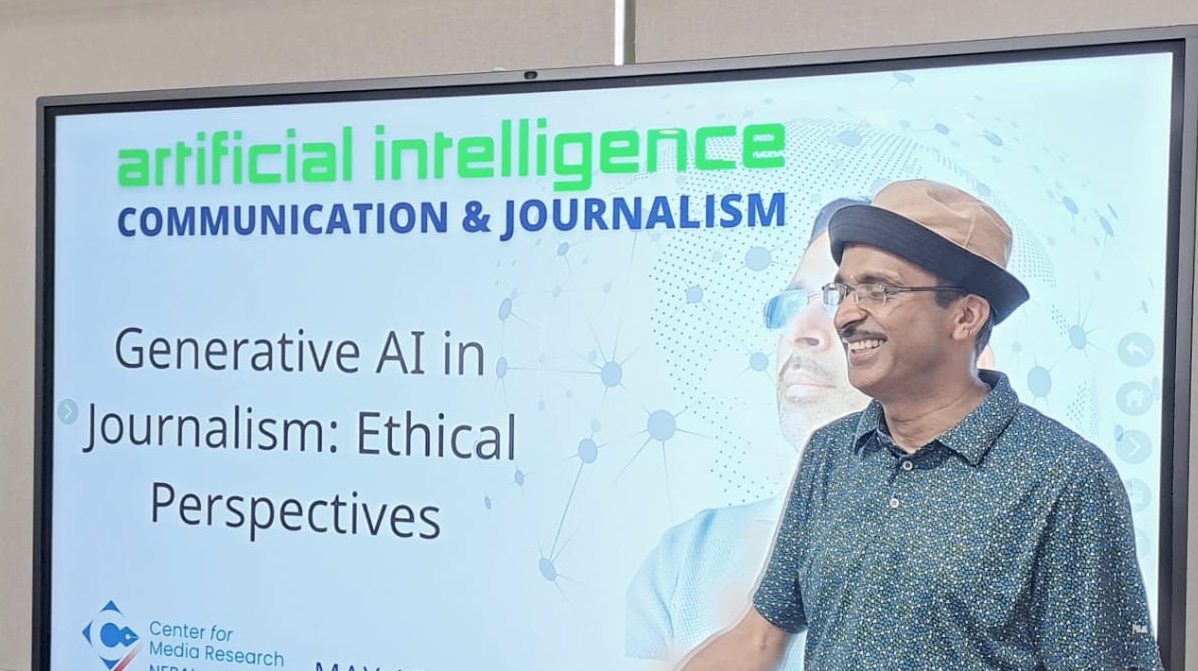
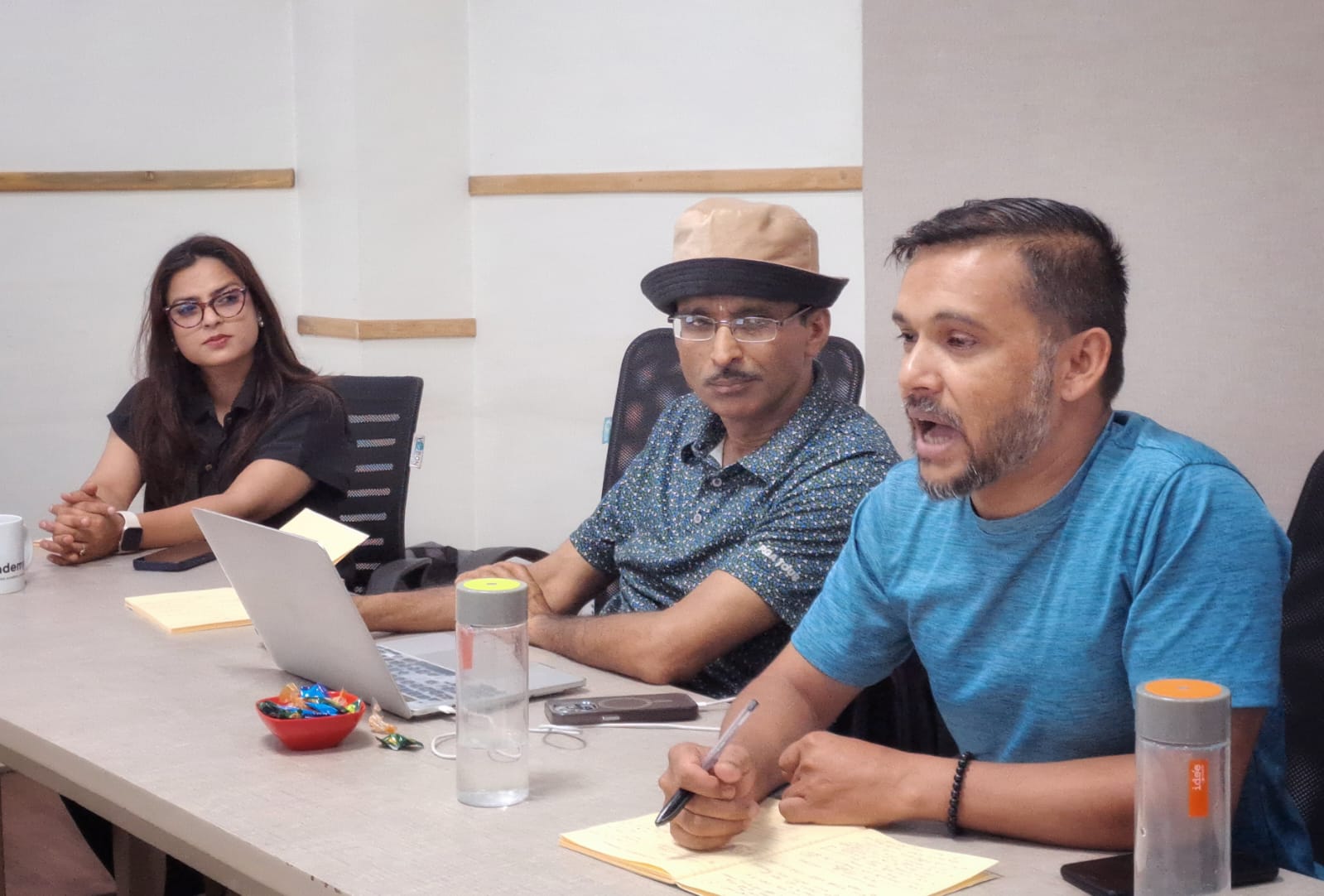
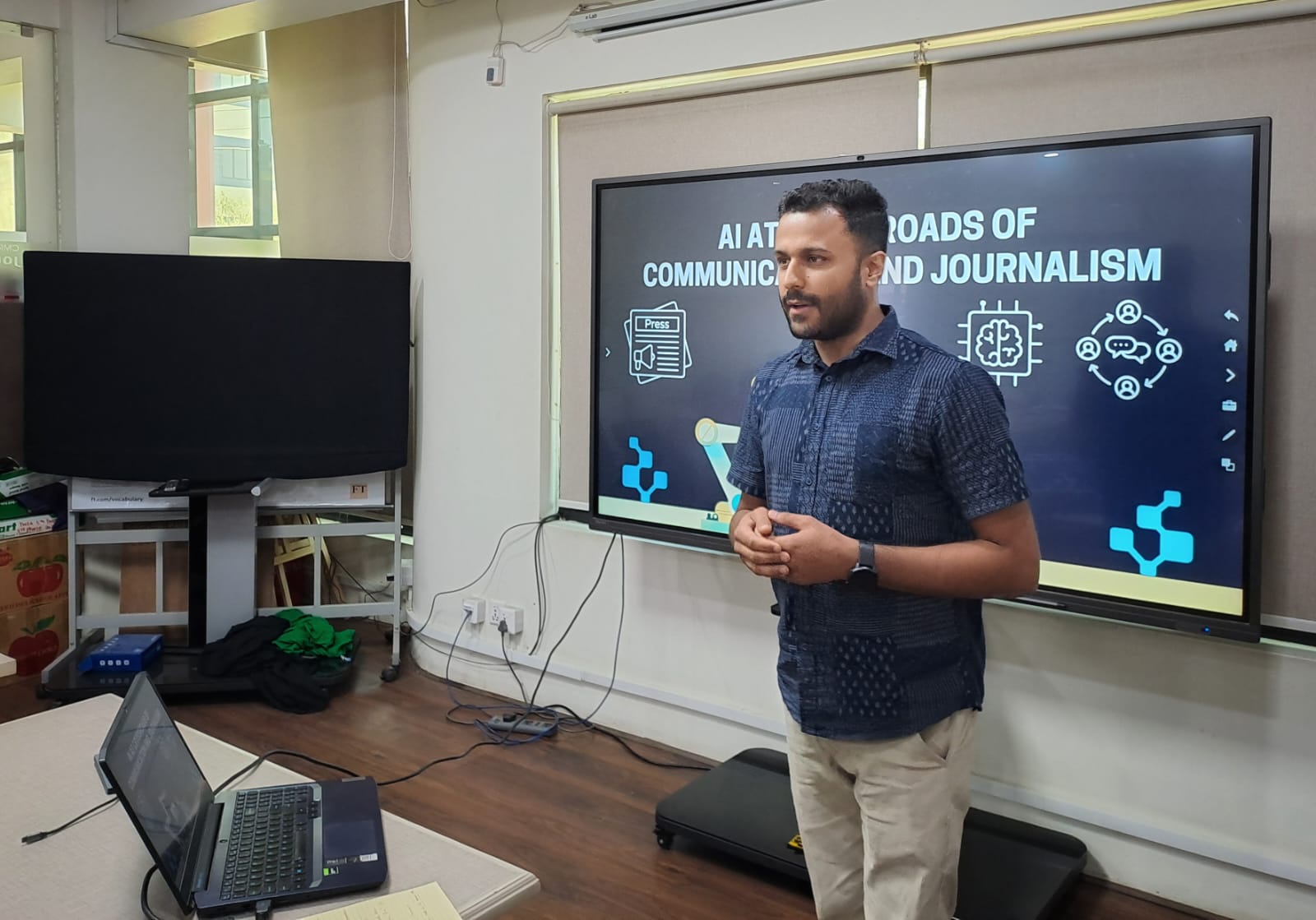
The Center for Media Research – Nepal (CMR-Nepal) organized a discussion on Artificial Intelligence (AI), Communication and Journalism with experts in the relevant fields sharing their opinions, ideas and perspectives on the use of AI and its possible impact in the future.

During the program, Prof. Bhanubhakta Acharya of the University of Ottawa said that the use of AI in journalism should be guided by ethics. Dr. Acharya also said that the use of AI has recently led to manipulation of information in audiovisual materials and the spread of deepfake videos.

Stating that the use of AI-generated content by media outlets worldwide has increased, Dr. Acharya added that a code of ethics should be formulated for the use of such content. He also said that more attention should be paid while using content created by third parties.

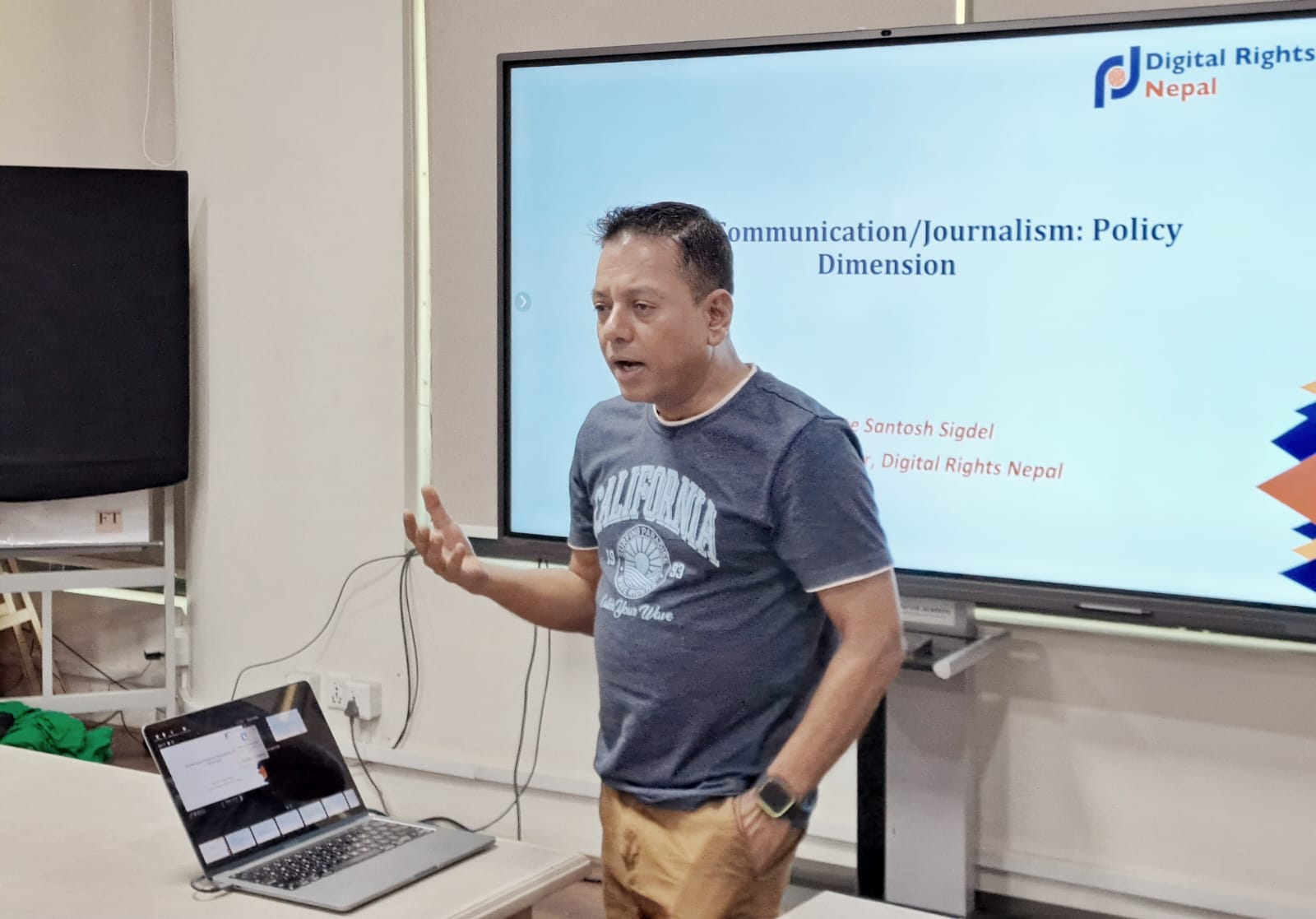
Advocate Santosh Sigdel, Founding President of Digital Rights Nepal and General Secretary of AI Association of Nepal, pointed out the lack of policy regarding the use of AI. Citing the current AI policies in Nepal, Sigdel also talked about the policy and legal frameworks that the government is preparing for AI.

Sigdel also emphasized that there should be a broad discussion on what reforms are needed in the current and upcoming policy and legal frameworks, and that civil society and the media should intervene constructively in these matters.

Dr. Dovan Rai, the Executive Director of Body & Data, said that even experts are confused about what AI is and what it is not, and the impact it will bring. She said that AI is not just a technology but also linked to power and money. Rai also said that the content created by AI tends to be biased due to limited data.

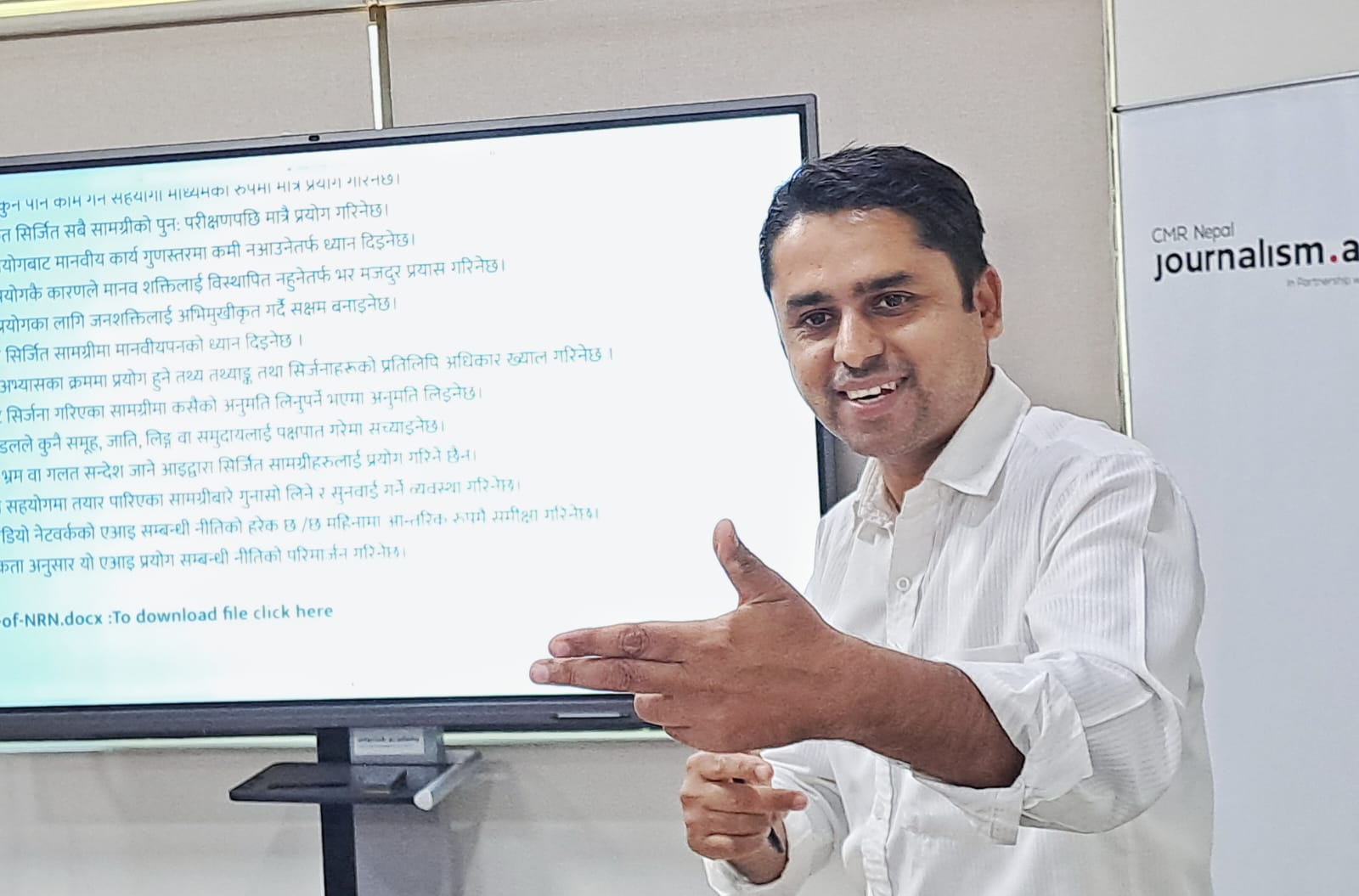
Jeevan Bhandari, the founding chair of Online TV Journalists Association of Nepal, shared his experiences that they have used AI generated video and audio in mainstream television and radio. He also shared AI Policy introduced by Nepali Radio Network.

Namrata Sharma, freelance journalist, said that AI cannot be completely trusted. Stating that those who are using AI are not fully aware of potentials and limitations of AI, she stressed that universities should provide good courses on the use of AI. She also stressed that AI platforms should be held accountable through policy and legal management.

Journalism instructor Rabiraj Baral expressed the view that AI should be used to make news about melting snow in the Himalayas and news about forest expansion. He stressed that media houses should also invest in this.

AI scientist Sanjay Khanal discussed recent developments in AI beyond large language models such as AI agents. He said that AI agents can understand the context and access information, do any work and even improve it. He said that technology is being developed that can work in such a way that AI agents can put people’s thoughts into words.

He also discussed in detail the tasks that AI can do in the future and the challenges it will bring.

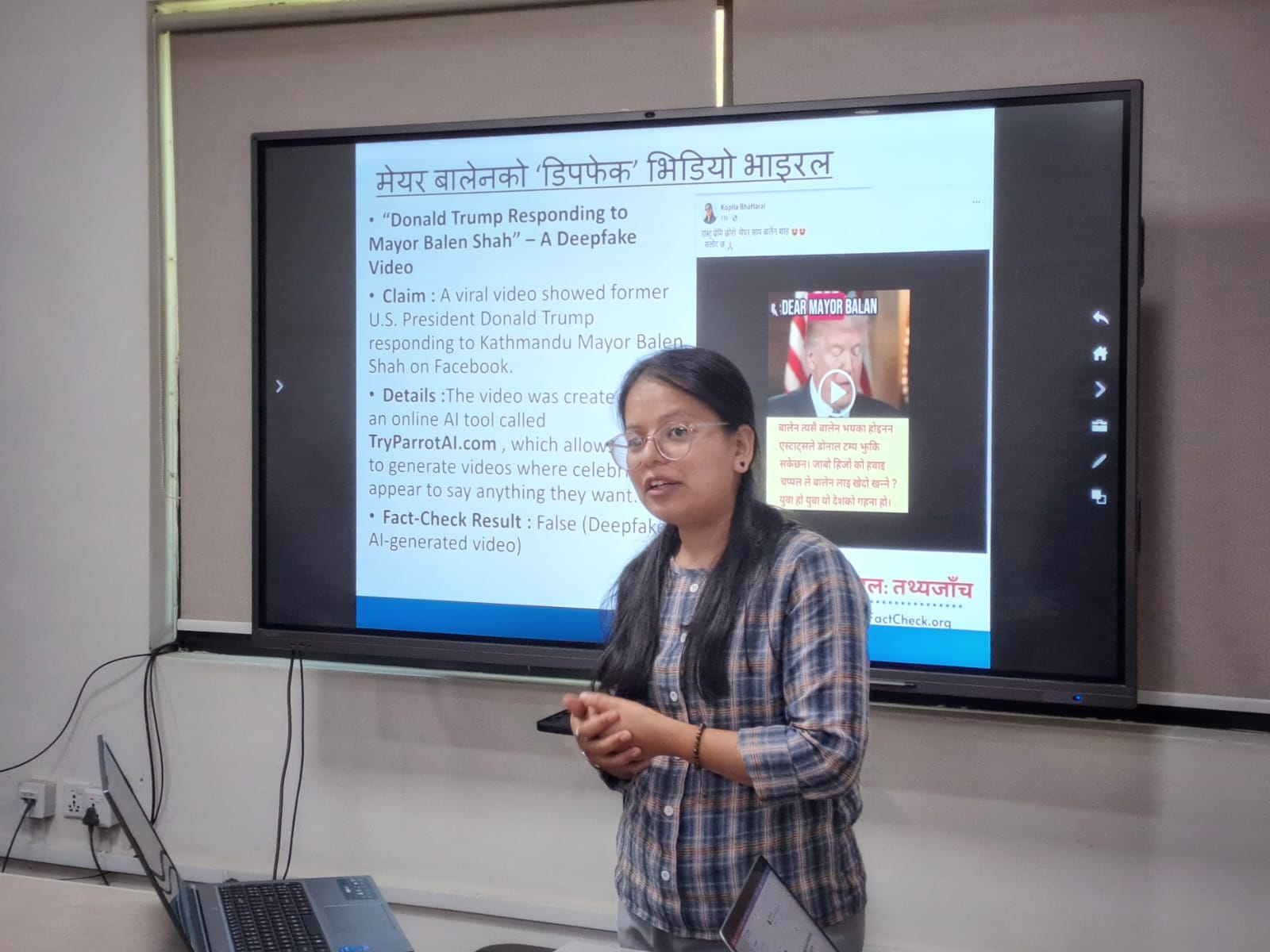
Chetna Kunwar of NepalFactCheck.org said that AI is useful for fact-checking. She said that AI is useful in checking misinformation created through AI.

Fact-checking trainer Umesh Shrestha said that the flow of information has become blurred due to AI. He said that this makes it difficult to distinguish between right and wrong. He also warned that misinformation could spread due to AI in the upcoming elections.

During the program, Ajay Das said that the advent of AI has made it difficult to distinguish between right and wrong and said that there has been a crisis in the meaning and ethics of published and broadcast material. Stating that the main task of journalism is to question and check facts, he said that AI has had a wide impact on this.

Journalist Durga Khanal of Kantipur Daily emphasized that the media should also create AI guidelines to increase its credibility.

Shehnaz Banu, Program Manager of Purak Asia, said that the use of AI cannot be ignored, but attention should be paid to how any work can be done quickly, efficiently and at low cost through its use. She also said that AI can only help in the research and in-depth news that mainstream media is doing, which cannot be done through AI.

Ujjwal Acharya, the Director of CMR Nepal Journalism Academy, talked about risks and potentials of AI in communication, journalism as well as in labour rights of journalists. He also hoped that the development in AI would not only create misinformation but also help in fact-checking and creating awareness among public about deepfakes.

Earlier, CMR-Nepal Executive Director Tilak Pathak, welcoming the participants, talked about the CMR-Nepal and its activities. He also said that such discussions will contribute to the study and research on this subject in the coming days.

Nepal’s Misinformation Landscape launched to mark five years of NepalFactCheck.org

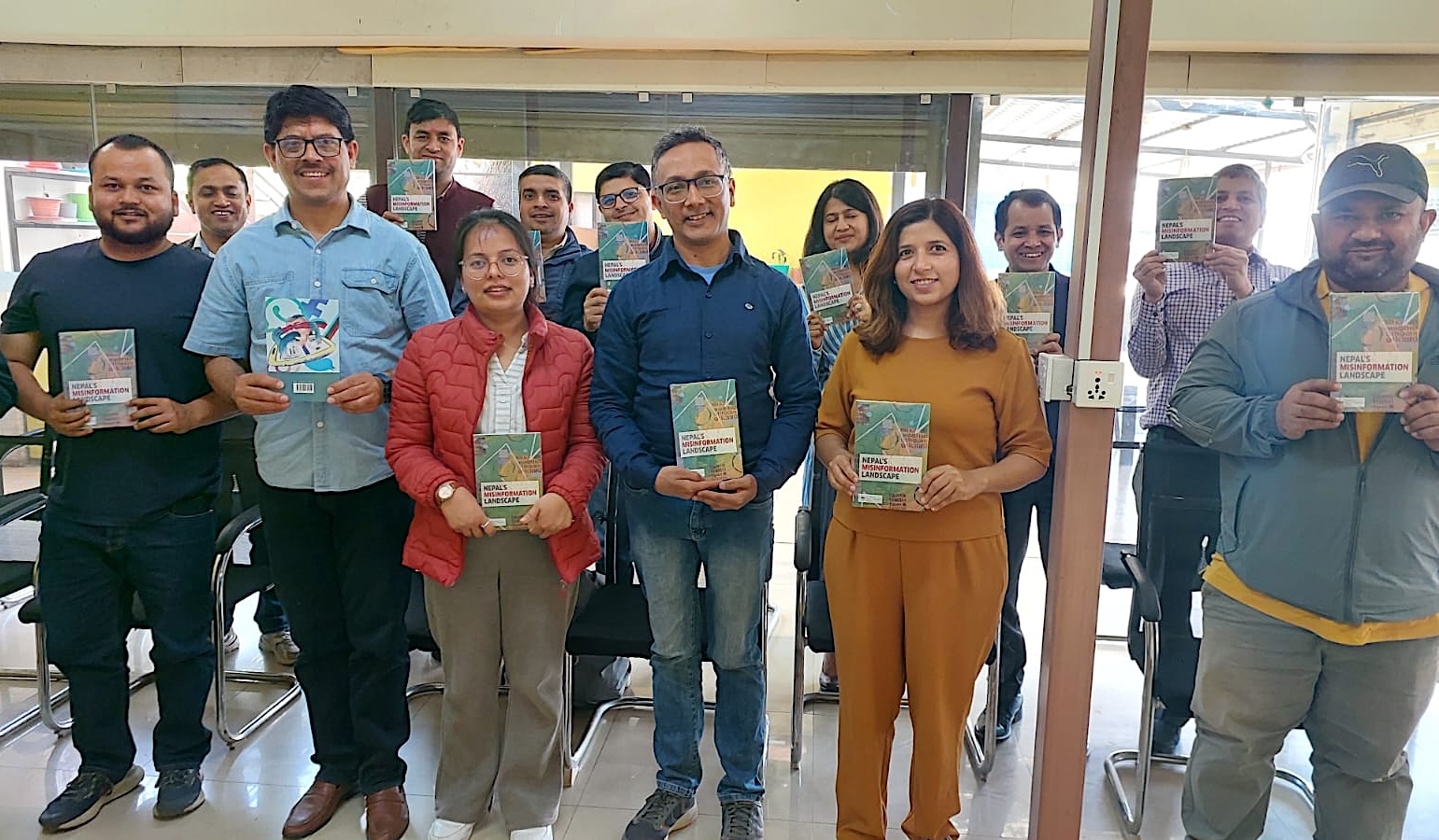
The Center for Media Research – Nepal (CMR-Nepal) launched Nepal’s Misinformation Landscape, an anthology of research articles, to mark the fifth anniversary of its fact-checking initiative on March 25, 2025.

NepalFactCheck.org was initiated in March 2020 as an urgent response to COVID-19 misinformation by CMR-Nepal and the first Nepali-language blog, MySansar. It has been a signatory of the International Fact-Checking Network (IFCN) since 2023.

Chetana Kunwar, assistant editor, said, “NepalFactCheck.org is a platform dedicated to verifying the authenticity of viral news, claims, and information circulating in Nepal.”

She noted that NepalFactCheck.org has published 381 fact-checks since March 2020, with three peak periods: early 2020 (COVID-related misinformation), late 2022 (political misinformation around elections), and early 2025 (surge in deepfake videos and manipulated content targeting public figures).

Nepal’s Misinformation Landscape, edited by Ujjwal Acharya, consists of six chapters, a foreword, an introduction, and a concluding chapter.

Deepak Aryal, chair of CMR-Nepal, said, “This anthology compiles key outputs of our initiative. The chapters examine misinformation and disinformation in Nepal through various theoretical frameworks—some complementary, others contradictory. Together, they provide a foundational understanding of Nepal’s misinformation landscape and offer multiple analytical lenses for further study.”

“This anthology will help researchers and policymakers design interventions to combat misinformation,” he added.

Contributing authors include Bhuwan KC, Chetana Kunwar, Lekhanath Pandey, Rishikesh Dahal, Tilak Pathak, Ujjwal Acharya, and Ujjwal Prajapati.

Hard copies of Nepal’s Misinformation Landscape are available for free to researchers, students, and journalists at the Readers’ Hub (Kaushaltar) or the CMR-Nepal office. A free digital version can also be downloaded here.

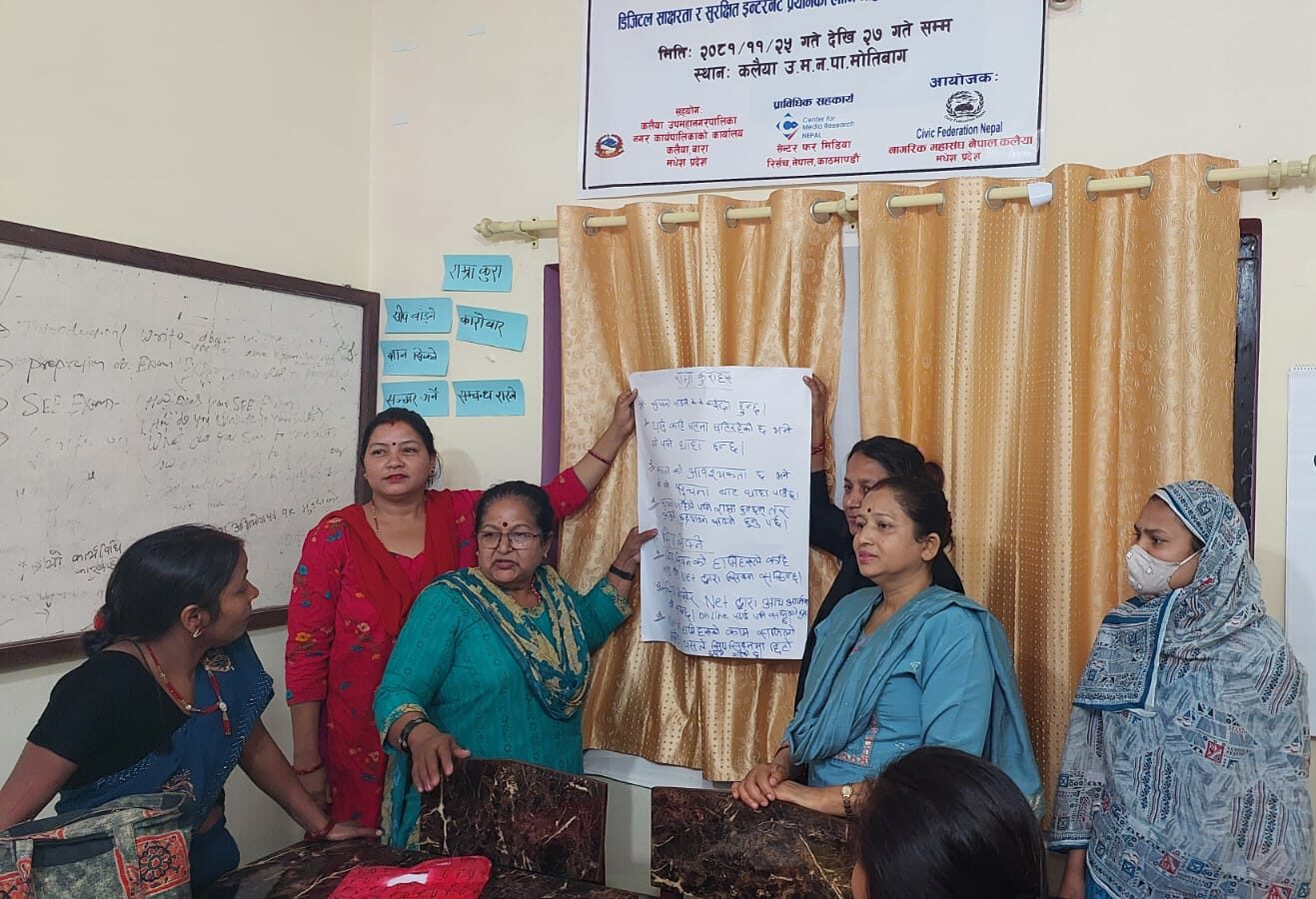
CMR-Nepal supports Digital Literacy workshop for women in Kalaiya

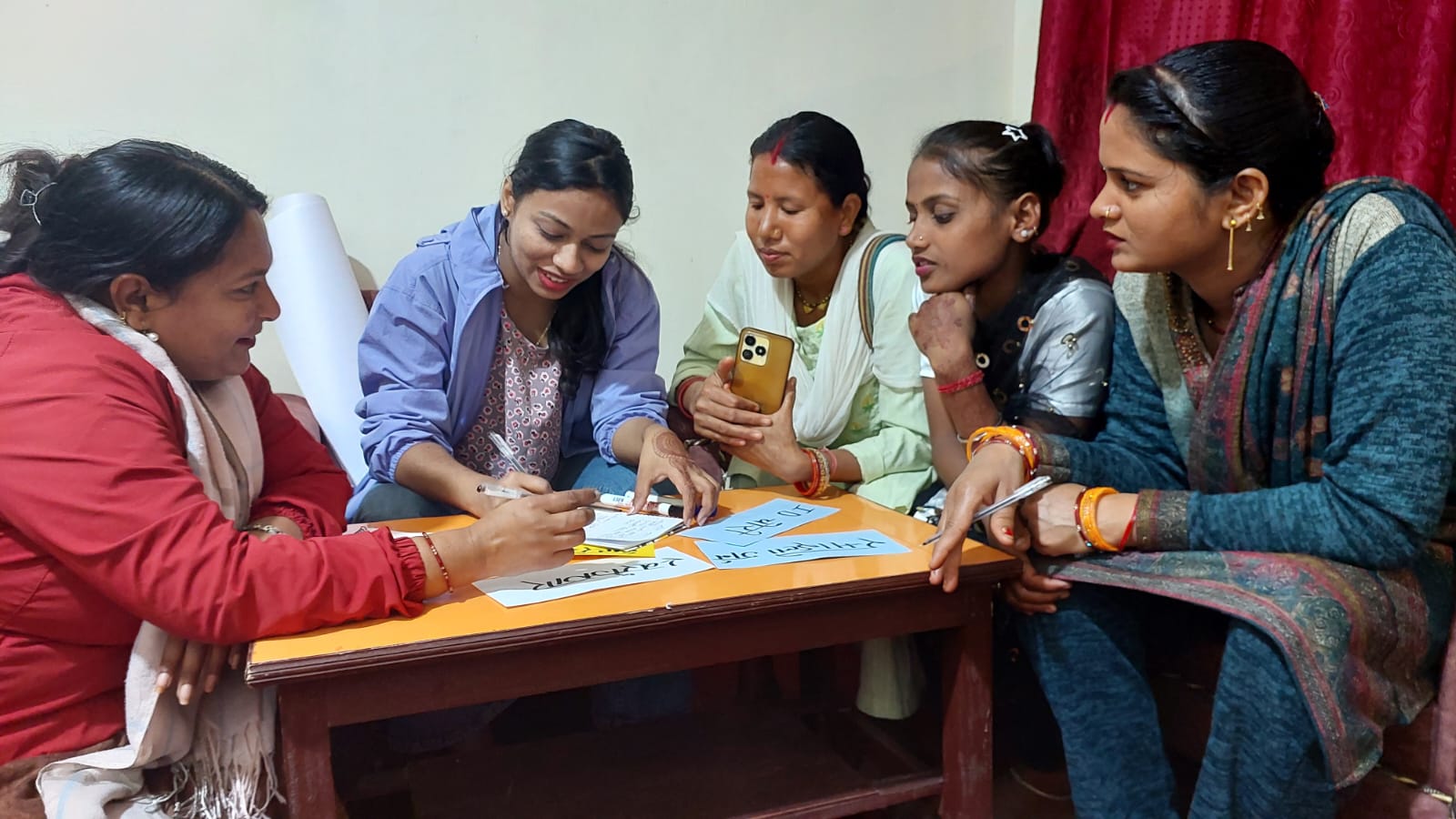
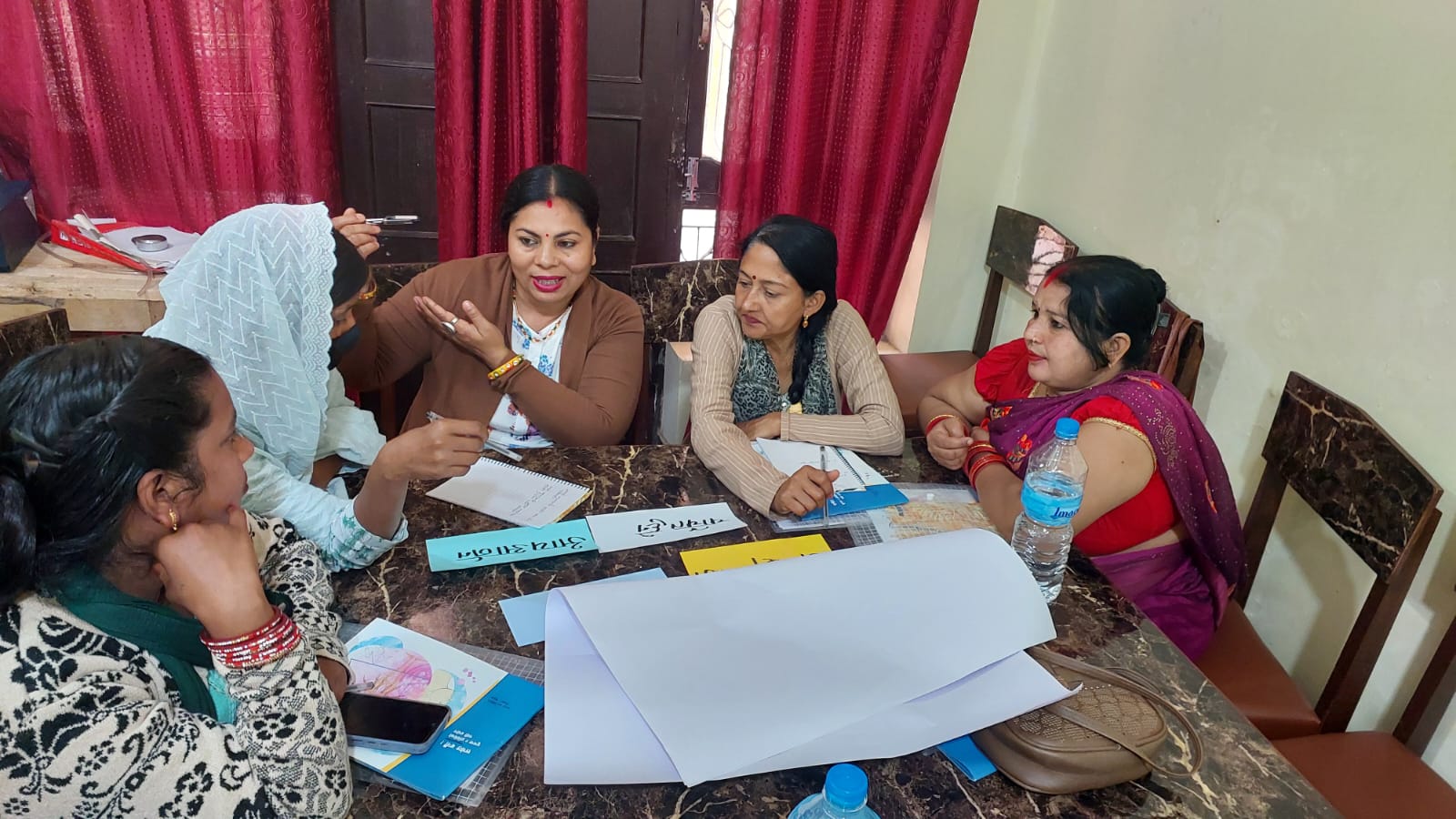
The Center for Media Research – Nepal partnered with the Civic Federation Nepal of Bara to empower women in Kalaiya through a 3-day digital literacy workshop to mark the International Women’s Day.

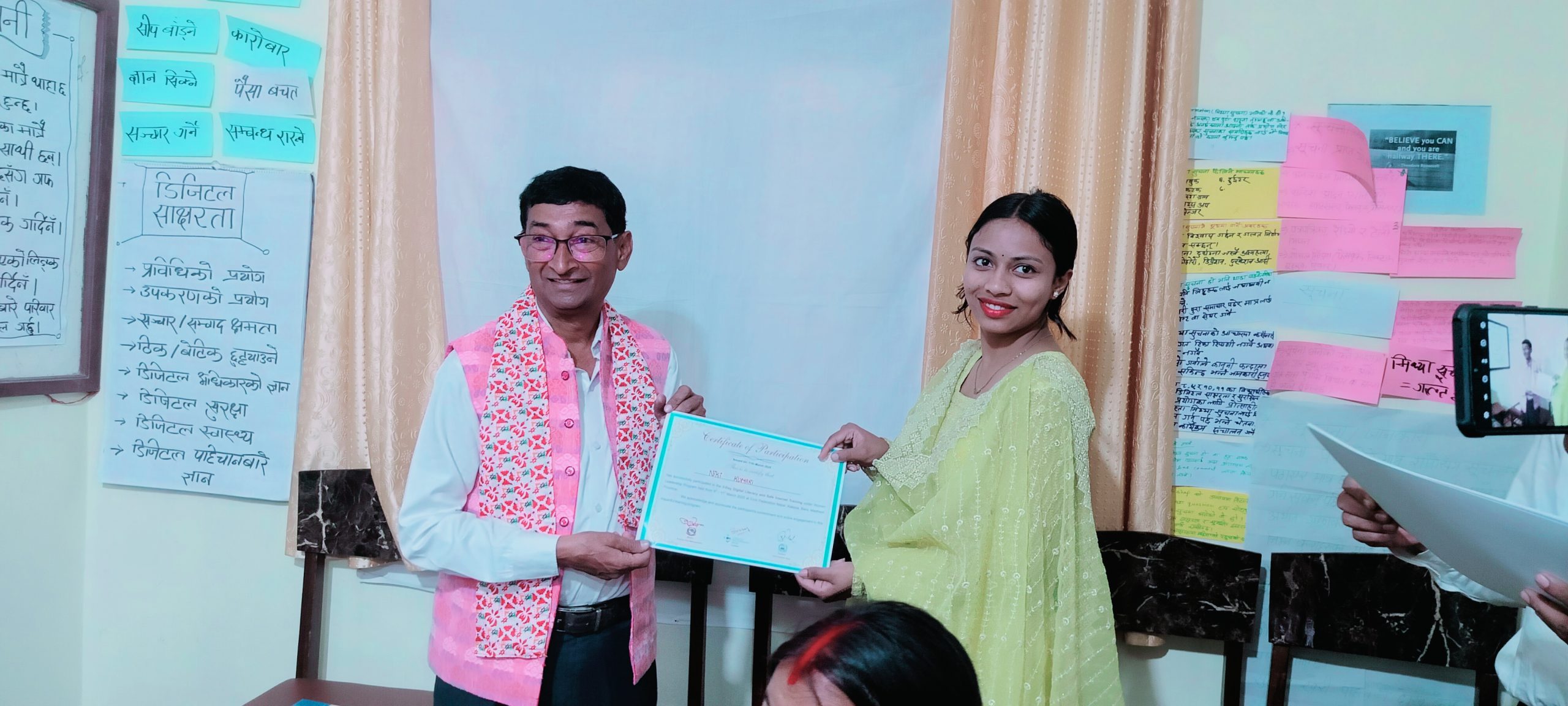
The workshop was held March 9-11 and brought together 27 women representing all wards of Kalaiya Municipality in Madhesh province. Funded through the municipality’s Women Leadership Program, the workshop aimed to build essential digital skills among local women.

Mayor Binod Shah graced the closing event handing over certificates to the participants.

The workshop was inaugurated by Chief Administrative Officer of Kalaiya Municipality Nathu Shah. Deputy Mayor Raushan Parveen also visited on the first day to supervise the workshop.

CMR-Nepal’s Ujjwal Acharya led sessions covering digital rights, safety, hygiene, and best practices for social media and internet use.

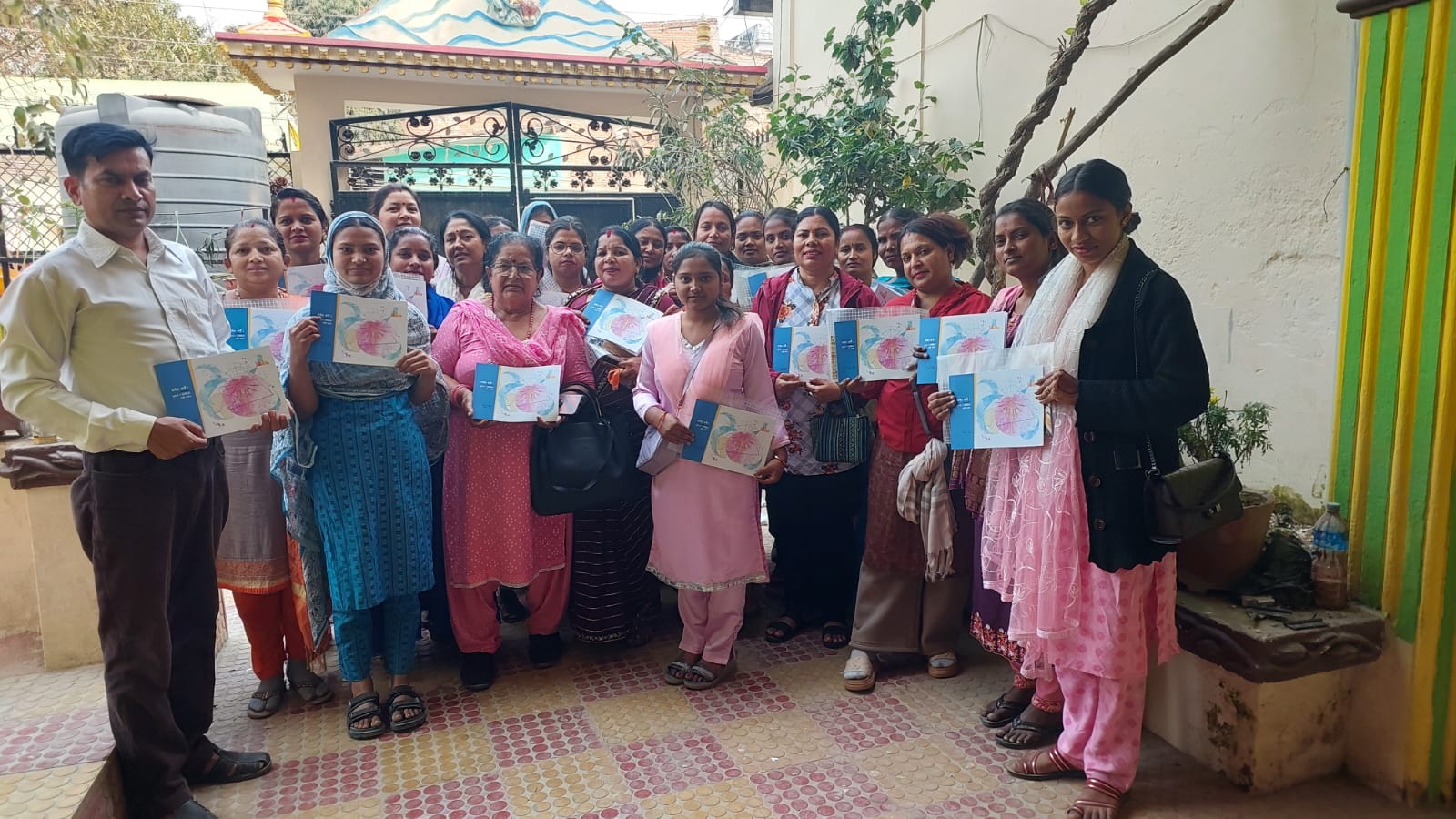
Each participant received a copy of CMR-Nepal’s publication “Sachet Banau: Correct Use of Information and Technology“.

“This is our first step in promoting digital literacy in Madhesh province,” said Jeetendra Yadav, Executive Director of Civic Federation Nepal. “We plan to extend these efforts by organizing workshops at 71 high schools and other communities in Kalaiya, with these newly trained women taking the lead.”

The initiative marks the first collaboration under CMR-Nepal’s “Partnership with CMR” program launched in early 2025.

Tilak Pathak, Executive Director of CMR-Nepal, expressed happiness about the partnership: “We’re delighted to collaborate with Civic Federation Nepal and will continue working with them and other local organizations to expand our impact.”

The Partnership with CMR initiative aims to extend CMR-Nepal’s work to local communities by empowering civil society organizations through collaborative activities.

The Future of Journalism (in Nepal)

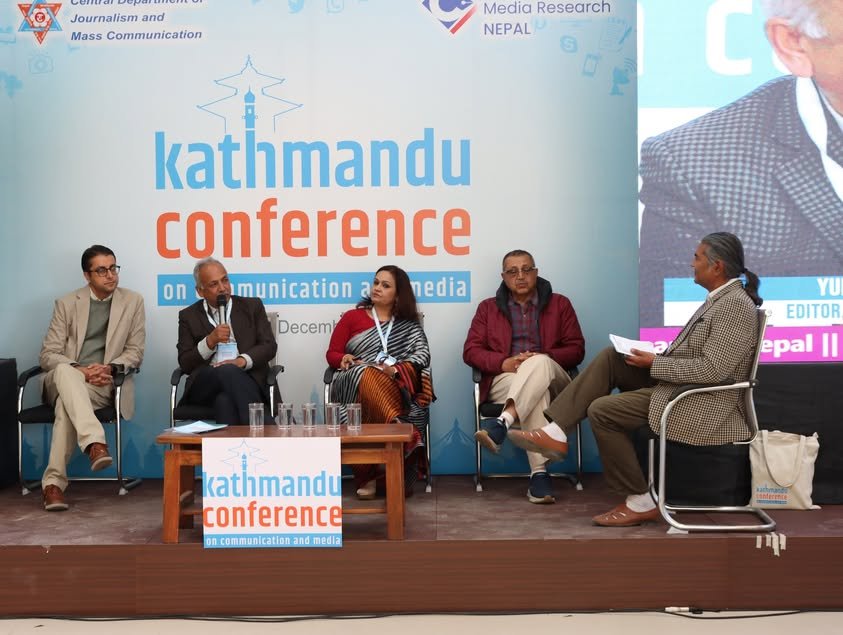
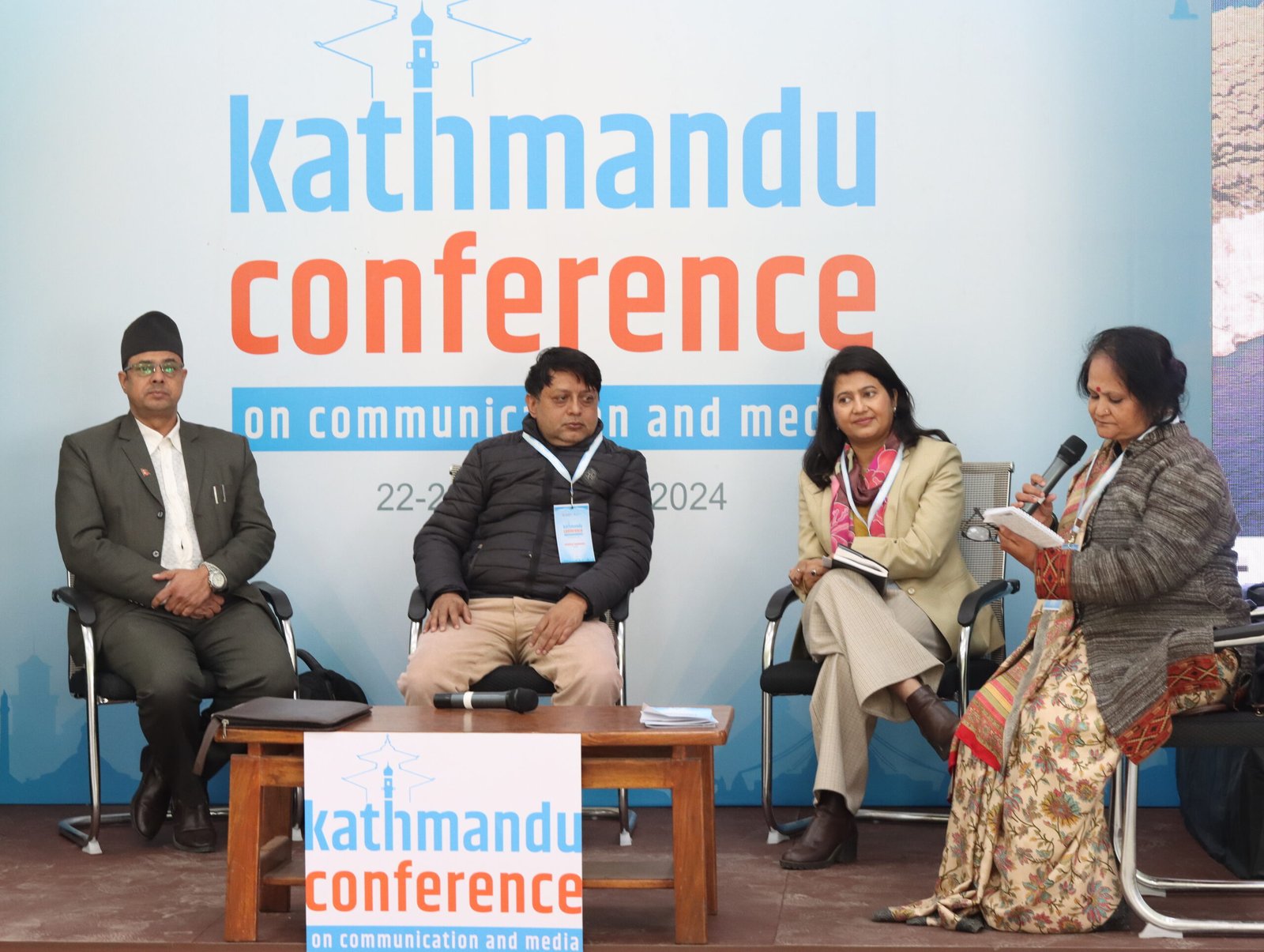
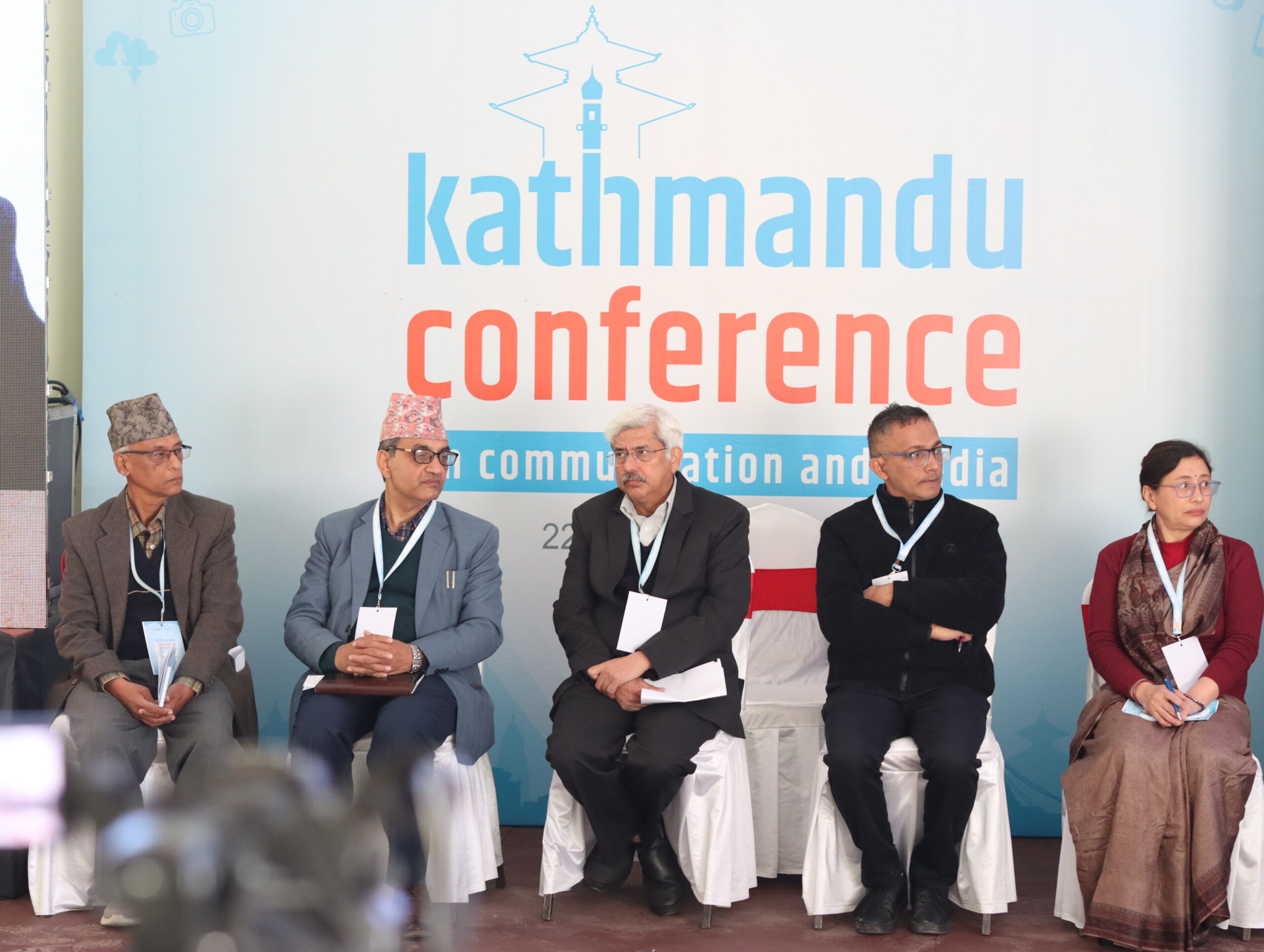
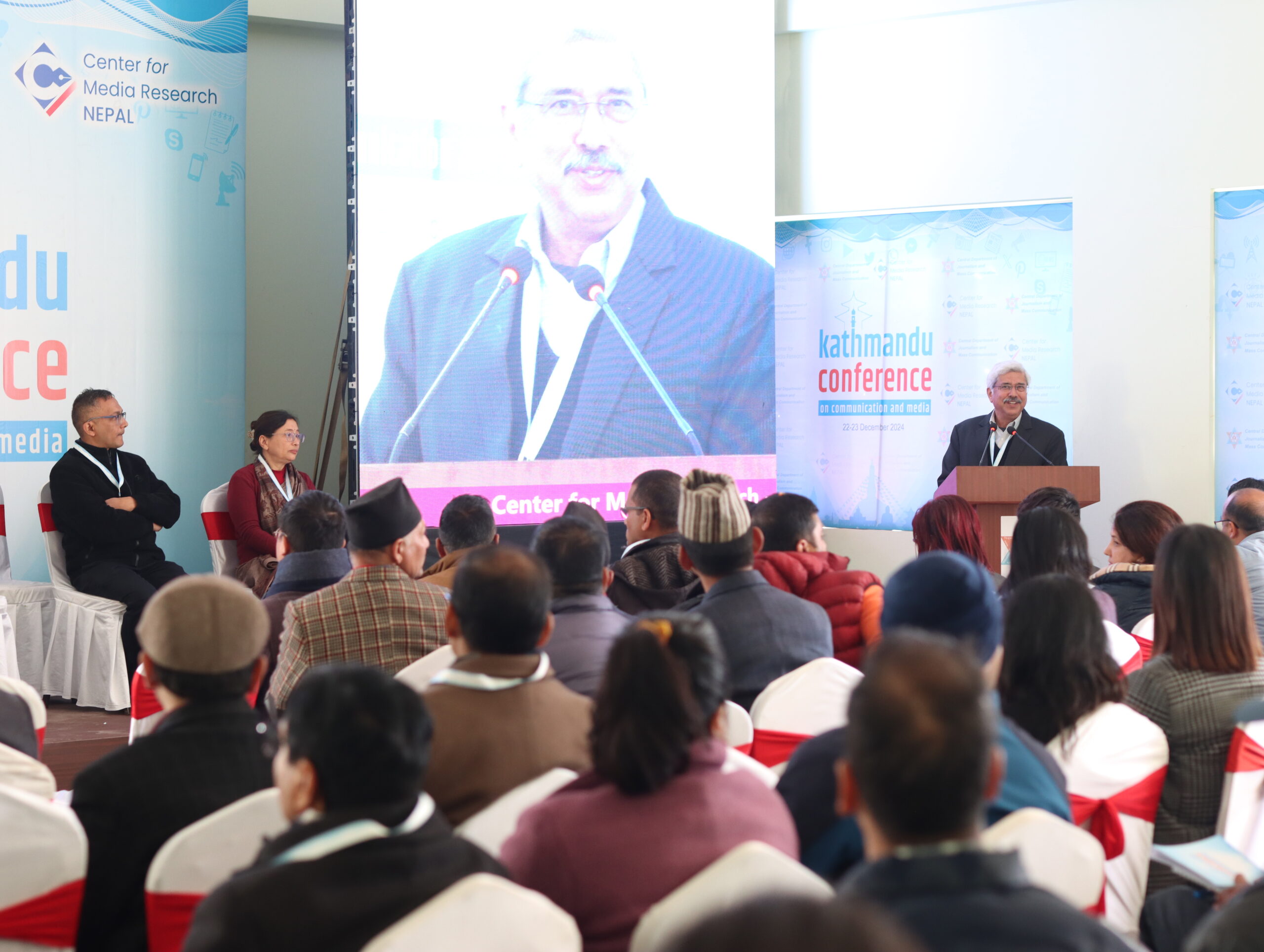
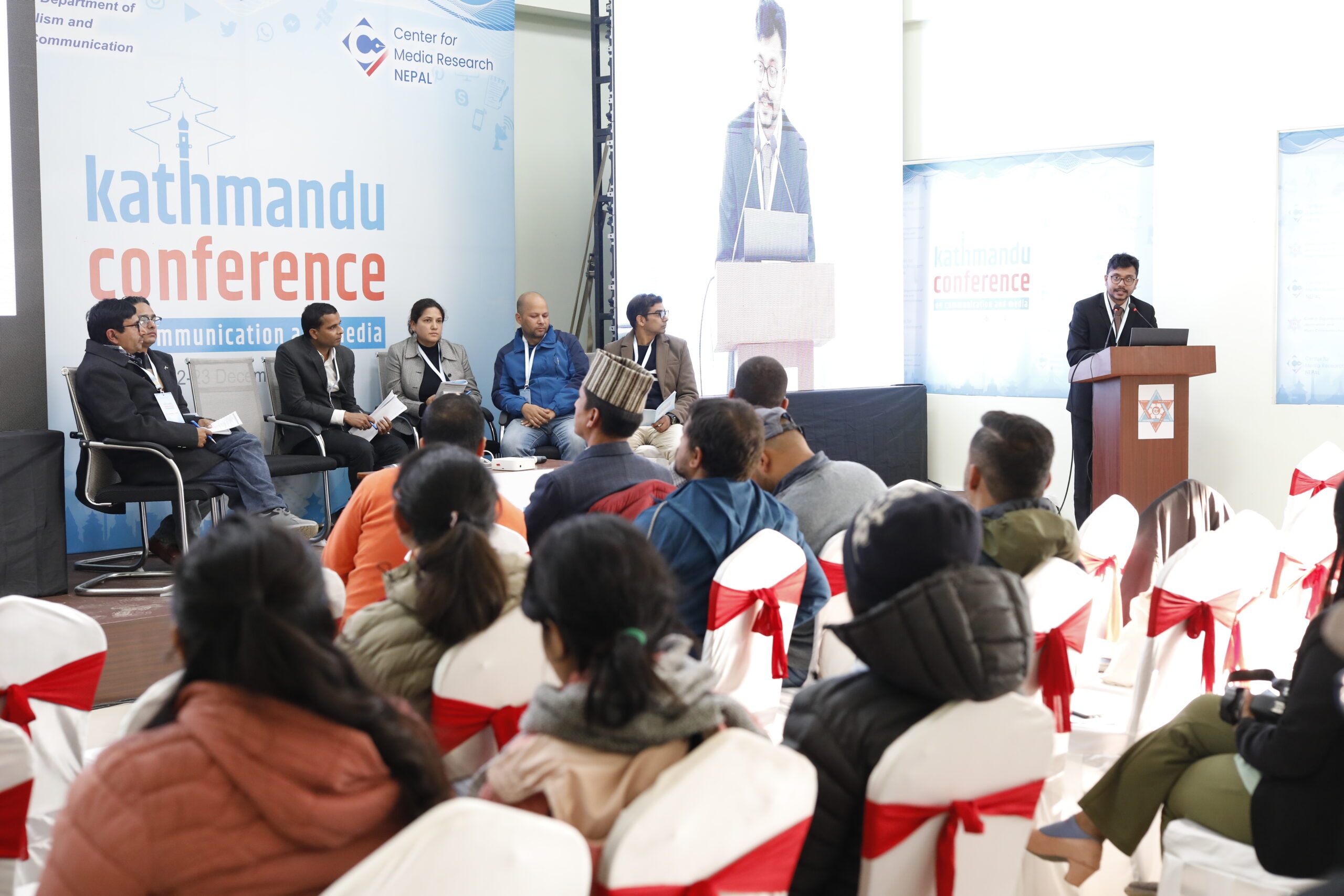
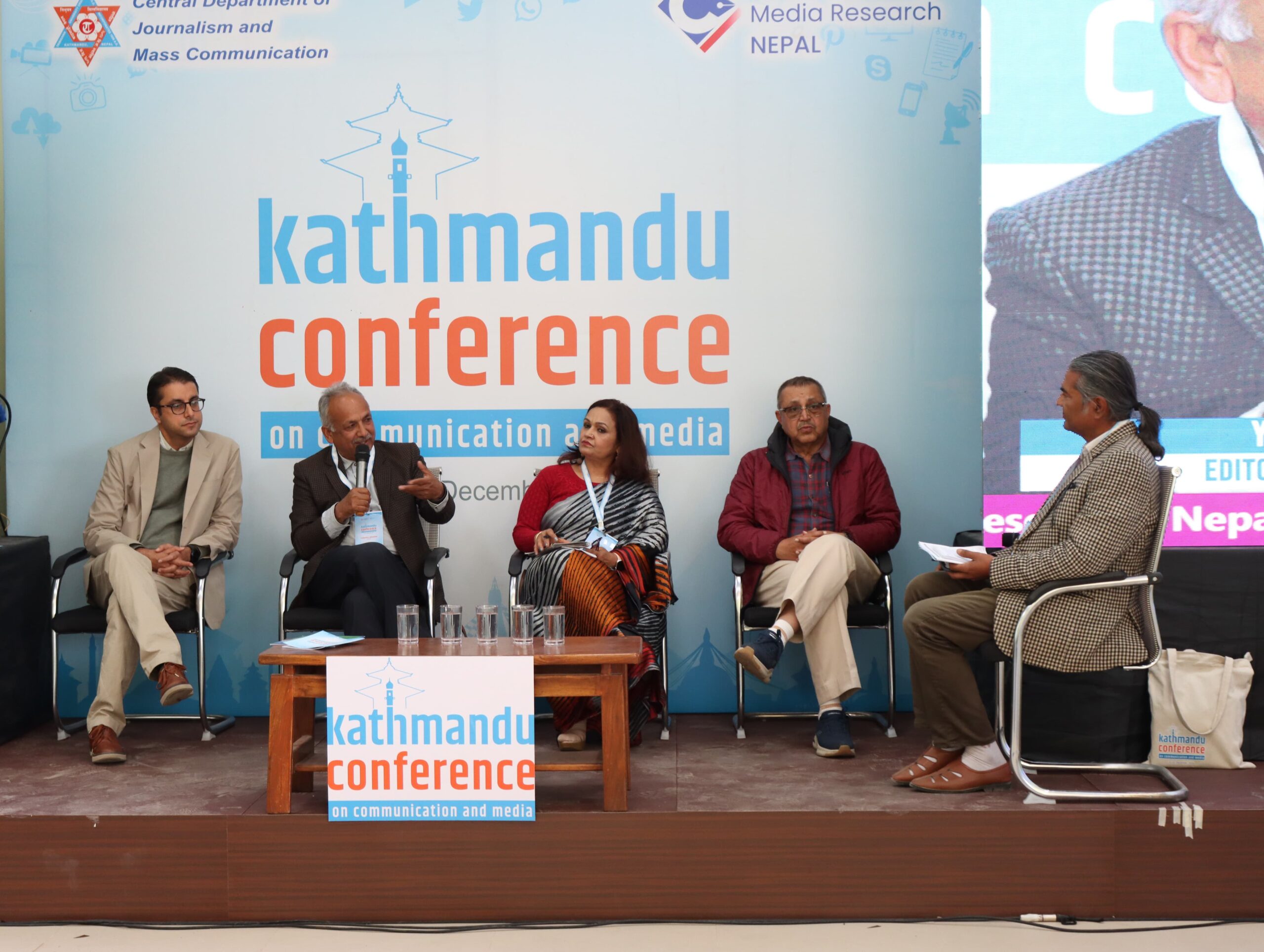
On December 24, 2024, the Center for Media Research – Nepal (CMR-Nepal) organized a panel discussion on “The Future of Journalism” during the Kathmandu Conference on Communication and Media in Kathmandu. Here is the summary report:

Moderator: Dr. Shreeram Paudel (Assistant Professor, Central Department of Journalism and Mass Communication, Tribhuvan University)

Panelists: Mr. Yubaraj Ghimire (editor in chief, Deshsanchar.com), Ms. Nirmala Sharma (president, Federation of Nepali Journalists), Mr. Gopal Guragain (Ujyaalo Network) and Mr. Biswas Baral (editor, The Kathmandu Post daily)

Summary of Panel 4 – The Future of Journalism

The fourth panel, “The Future of Journalism,” explored how journalism is evolving in the digital era. The discussion highlighted the importance of accountability, the necessity of high-quality content, and the crucial role media plays in shaping public opinion. Panelists emphasized the need for public funding, rigorous content verification, and the role of journalism in a rapidly changing technological landscape.

The panel underlined the need for accurate, well-researched, and ethical content. Traditional print media is steadily giving way to digital platforms and social media, necessitating a rethinking of how journalism is produced and distributed—while upholding the core principles of truth, accuracy, and fairness.

Panelists noted that intense competition between traditional media and digital platforms can both drive innovation and create challenges. They also highlighted the state’s role in supporting journalism by investing in media literacy, backing independent journalism, and ensuring public access to reliable information.

In conclusion, the panel recognized that while journalism faces considerable challenges, it also presents new opportunities for innovation and growth. Ensuring sustainability will require high standards of accountability, adaptability to new mediums, healthy competition, and investment in quality journalism. Recommendations included investing in training and resources for media houses, supporting media literacy programs, fostering collaboration between traditional and digital media, and implementing strong mechanisms for fact-checking and content verification to combat misinformation.

Statements by the Panelists

Mr. Yubaraj Ghimire
“My experience in print media shows that while the medium has transformed, core principles remain vital,” said Ghimire.

He emphasized three main points: First, paper remains relevant, but the way we read—and even sell news, sometimes in kilograms—has changed dramatically. Second, internal threats to journalism often stem from declining quality, where corporate interests clash with editorial conscience.

Third, journalists and corporate entities must function as separate institutions to maintain integrity and public trust. Ghimire stressed the need to boost credibility and reach wider audiences through video and written content. “We must define who we are and what our future holds,” he concluded.

Mr. Gopal Guragai
Guragai addressed how journalism’s duties and challenges are shifting amid both internal and external threats. Economic pressures complicate the landscape, while independent financing and vested interest groups threaten journalistic integrity. Regardless of the tools used, journalists must maintain a strong moral compass and ensure objective, truthful reporting. When the conversation turned to journalism education, he stressed that curricula must reflect diverse philosophical understandings of truth and ethics.

“We aim to teach students to think independently and critically question both external influences and their own assumptions,” he said. Guragai warned that the economy’s reliance on independent financing poses a growing external threat to journalism.

Ms. Nirmala Sharma
Sharma reflected on the transformation of journalism since the era of mission journalism. “We must adapt to today’s challenges with support from media institutions and beyond,” she said. Mainstream media, once dominant in news dissemination, now relies heavily on social media to distribute content—highlighting the growing divide between the two.

This shift has blurred the line between traditional and digital journalism, presenting both opportunities and risks. Sharma emphasized embracing the speed and reach of social media while safeguarding credibility and accountability. “We must be more responsible and value the quality of media content,” she said.

Mr. Biswas Baral
Baral noted that while digital platforms are gaining popularity among younger audiences, print newspapers still hold value and have adapted to meet modern demands. “The question isn’t digital vs. print,” he said, “but which medium best connects us with our audience.”

He encouraged innovation to ensure content remains relevant and accessible across all platforms. His comments sparked a lively discussion on the future of readership and the interplay between old and new media. He also pointed out that English is often more accessible to younger readers than Nepali, which has influenced hiring trends in journalism. “Print media is evolving,” he concluded.

Question & Answer Session

Prakash Kapali (Ratna Rajya Campus):
“How has the growing number of journalists ensured a promising future for the profession? Many are leaving journalism due to a lack of opportunity. What are your thoughts?”
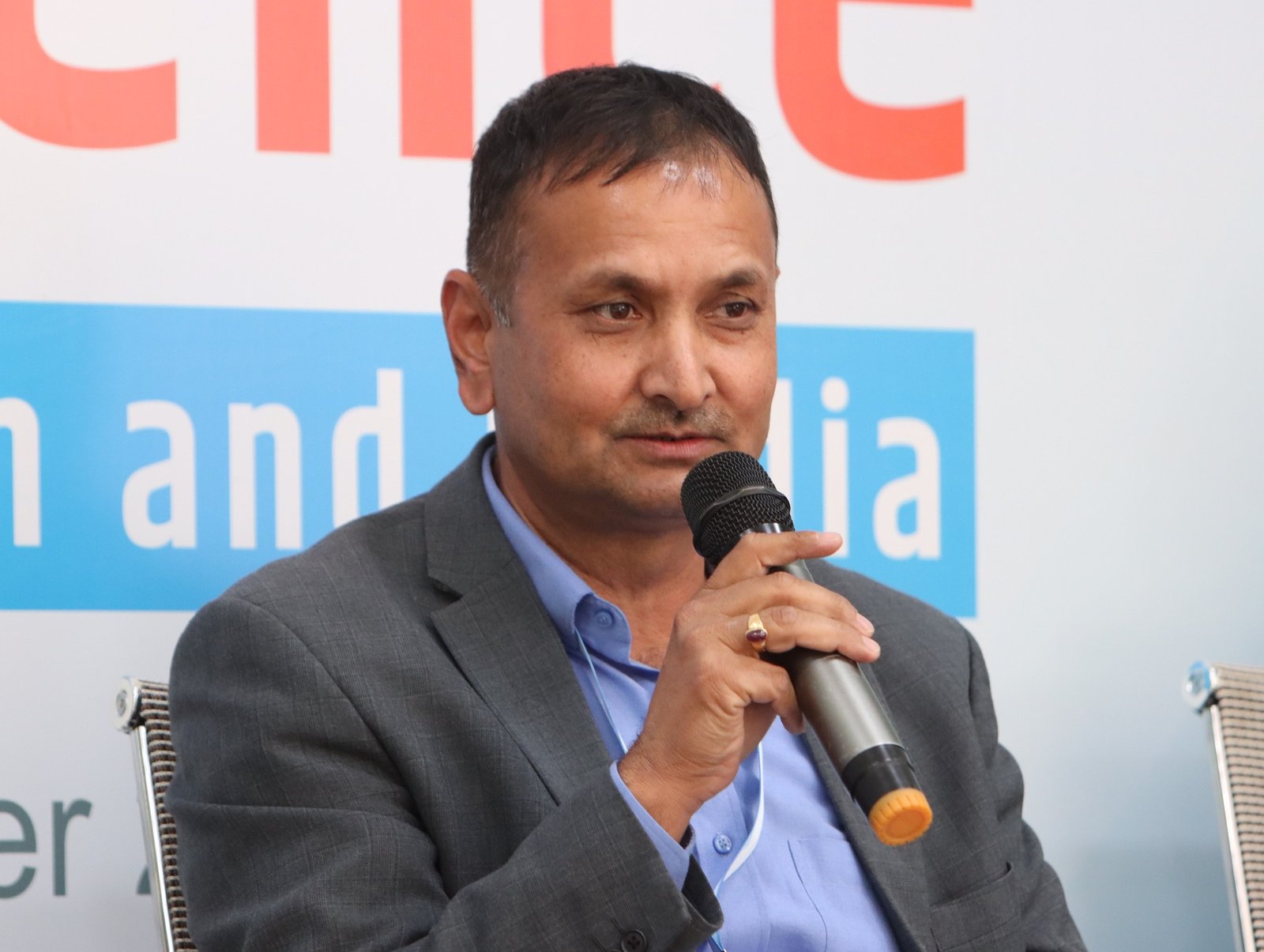
Lekhanath Pandey:
“We’ve observed the discussion from three perspectives: technology, internal dynamics, and academic curriculum. My question is, as media workers, scholars, editors, and circulation experts—where is the transparency? The issue isn’t just investment or affiliations, but the increasing visibility of these challenges. Shouldn’t we revisit and review these aspects?”
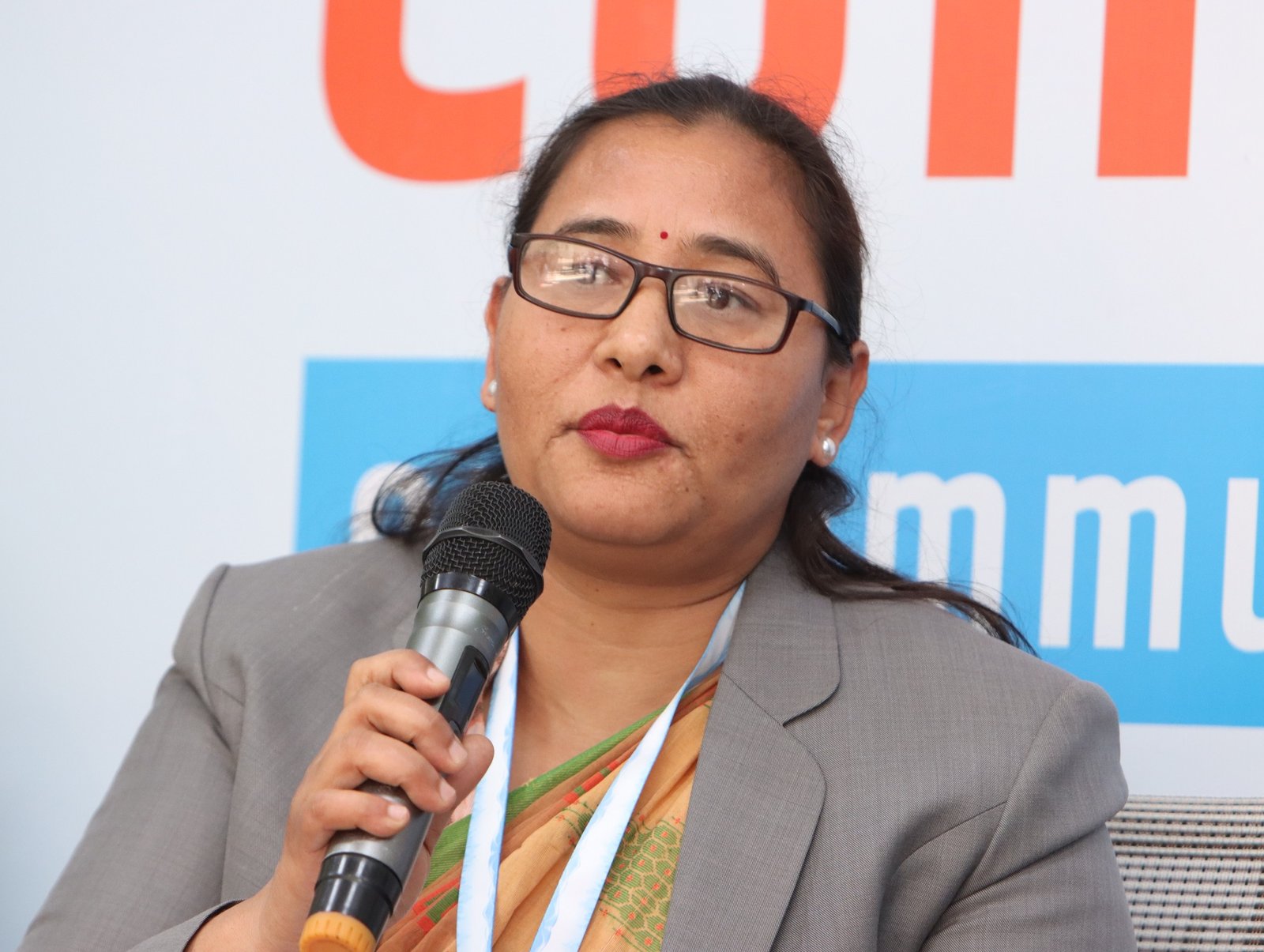
Ravin Pun Magar (CDJMC):
“There has been discussion on the role of journalists, but how does journalism protect its practitioners? What mechanisms or support systems exist to safeguard journalists?”

Response from Ms. Nirmala Sharma

“Yes, journalism has a future,” Sharma affirmed. “The health of the media sector isn’t about numbers alone, but about quality and adaptability. Journalism students bring new ideas and energy to the profession. We need more of them.”
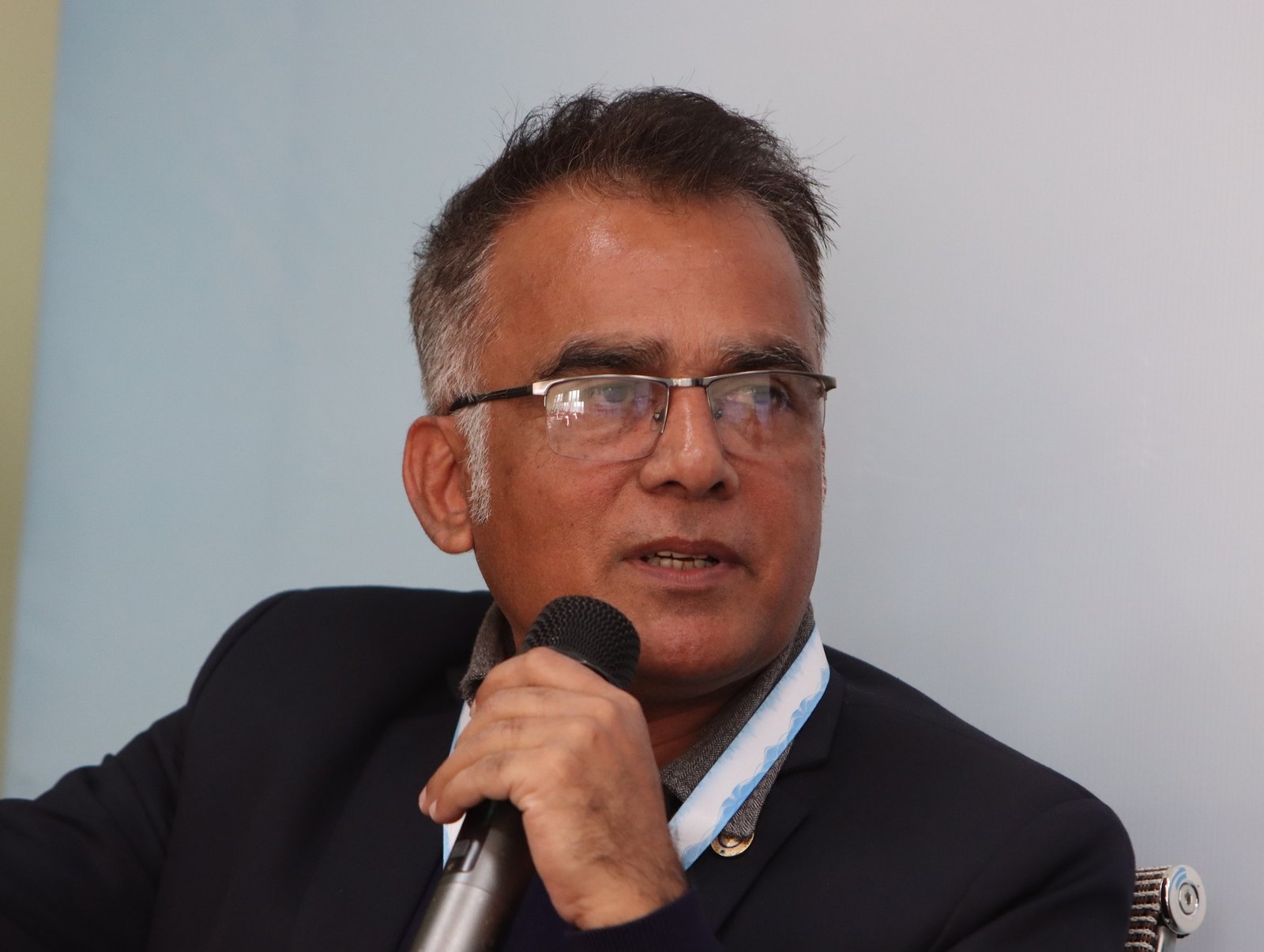
She emphasized the need to create compelling content, critically assess it, and offer the public original reporting. “To secure a bright future, we must inspire the next generation by showing the value journalism holds and by nurturing its many strengths.”
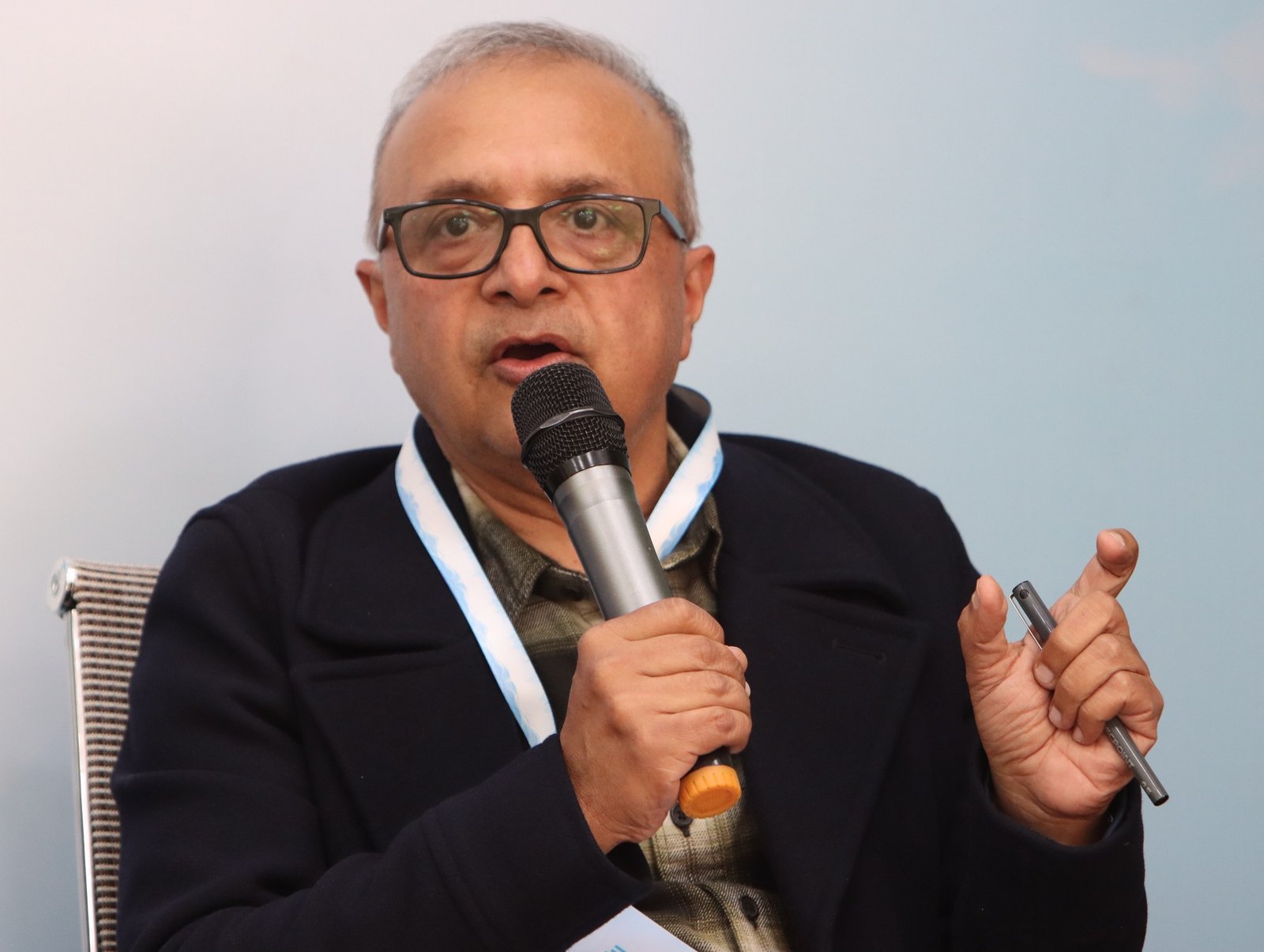
Moderator’s Remarks – Dr. Shreeram Paudel

Dr. Paudel opened the panel with a comprehensive overview of the evolving media ecosystem. He outlined the transition from traditional to digital media and set the stage for critical discussion by posing a series of reflective questions:

  • “How will the future of media unfold?”
  • “What will journalism look like in two years?”
  • “How do we build a value-based future for media?”
  • “Can print survive the rise of AI and new digital platforms?”
  • “What is the role of technology versus human creativity in content creation?”

These questions framed a dynamic and thought-provoking conversation on the future of journalism in a rapidly digitizing world.

The rapport is prepared by Ms. Iksha Limbu of CDJMC and the original text is edited for grammar and spelling by ChatGPT.

The Complex Relationship between Media and State

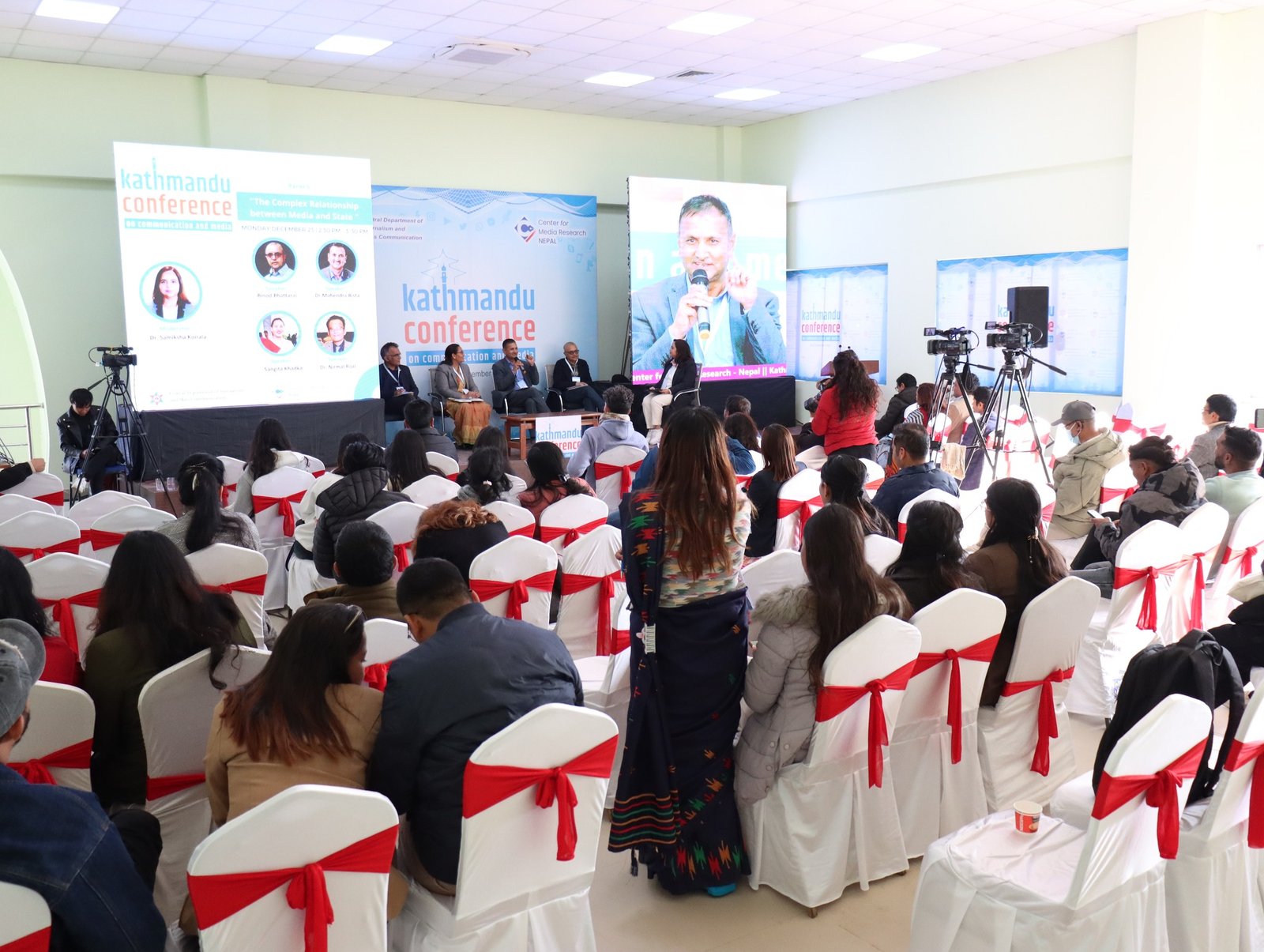
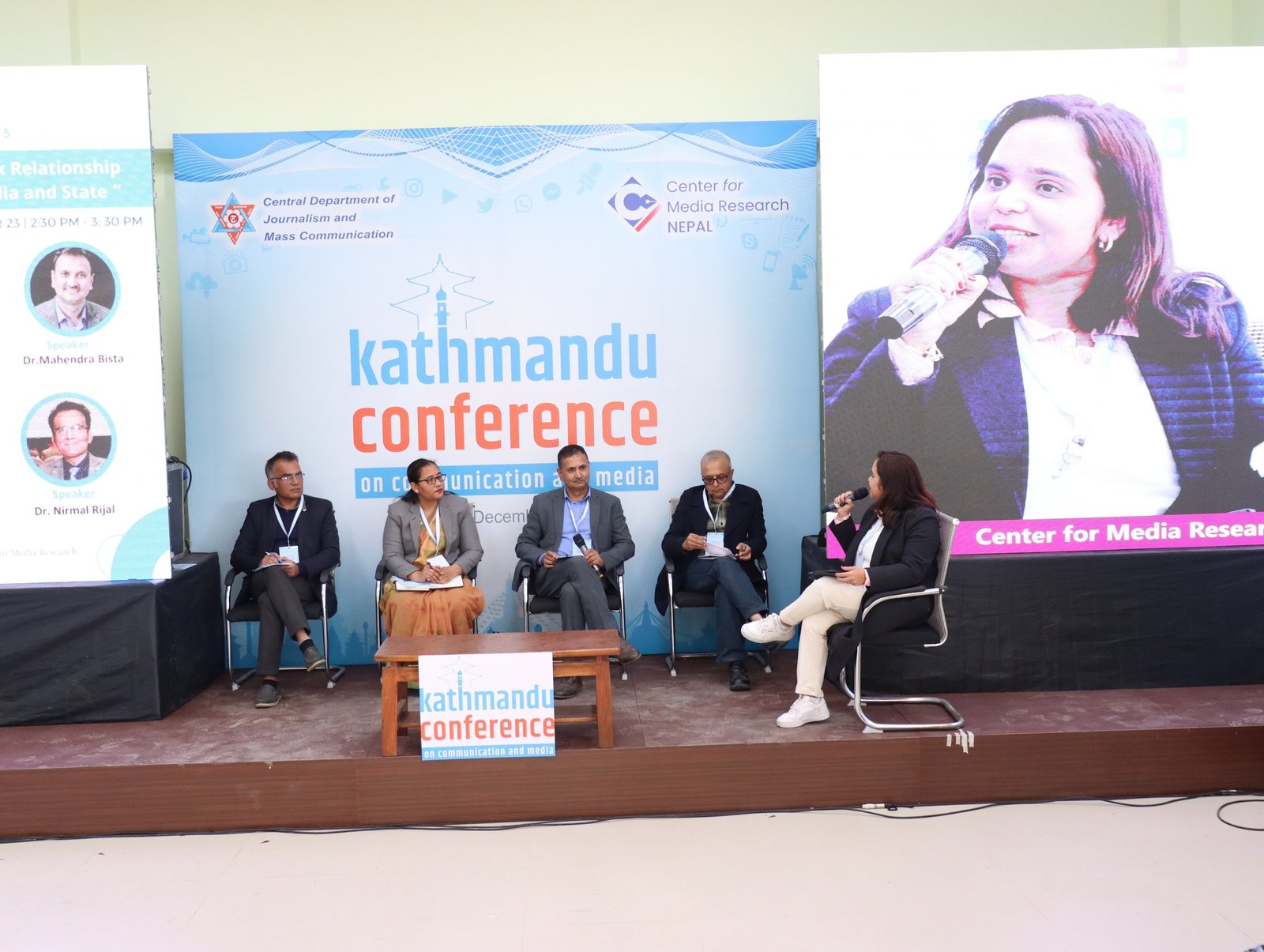
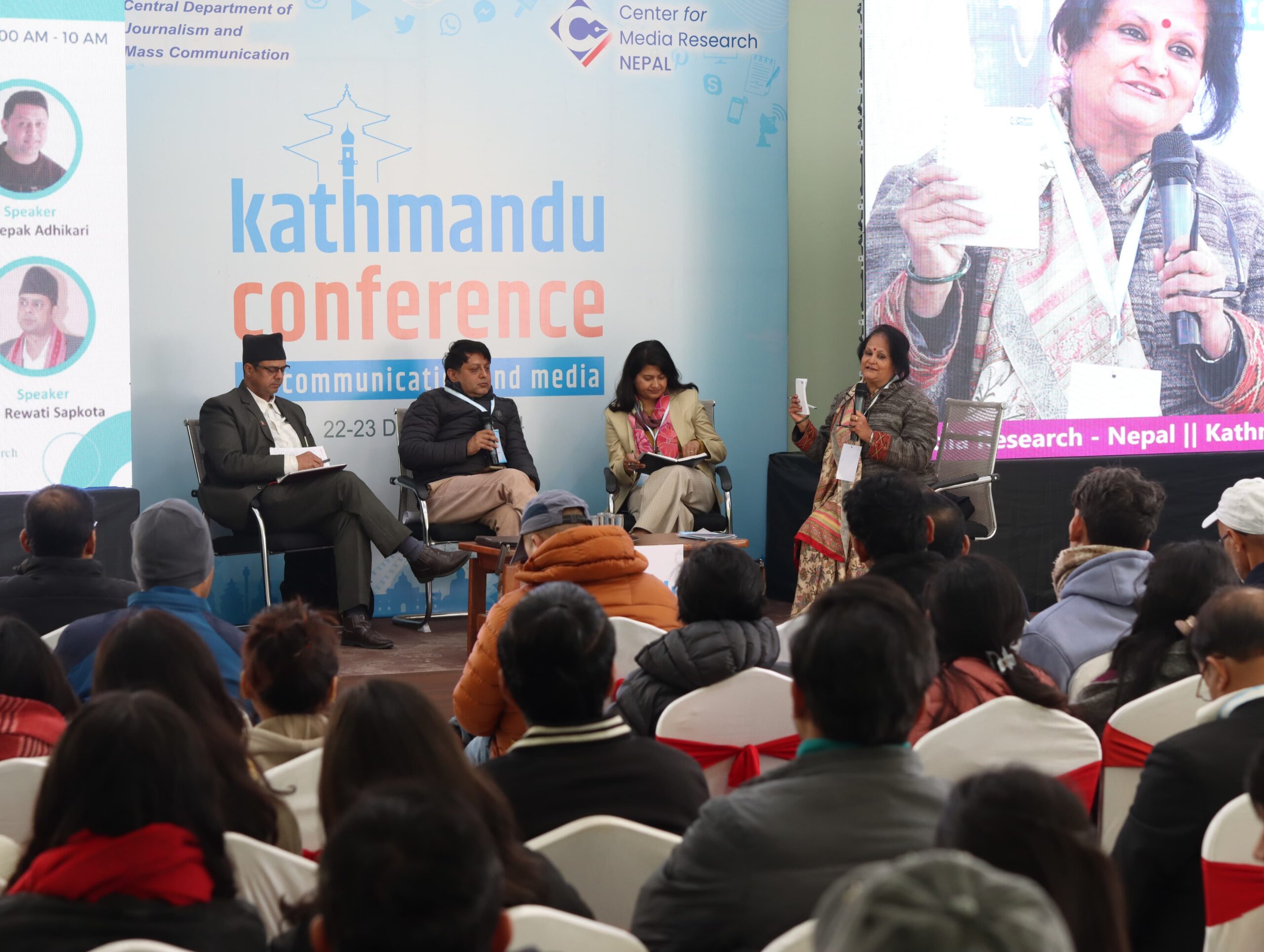
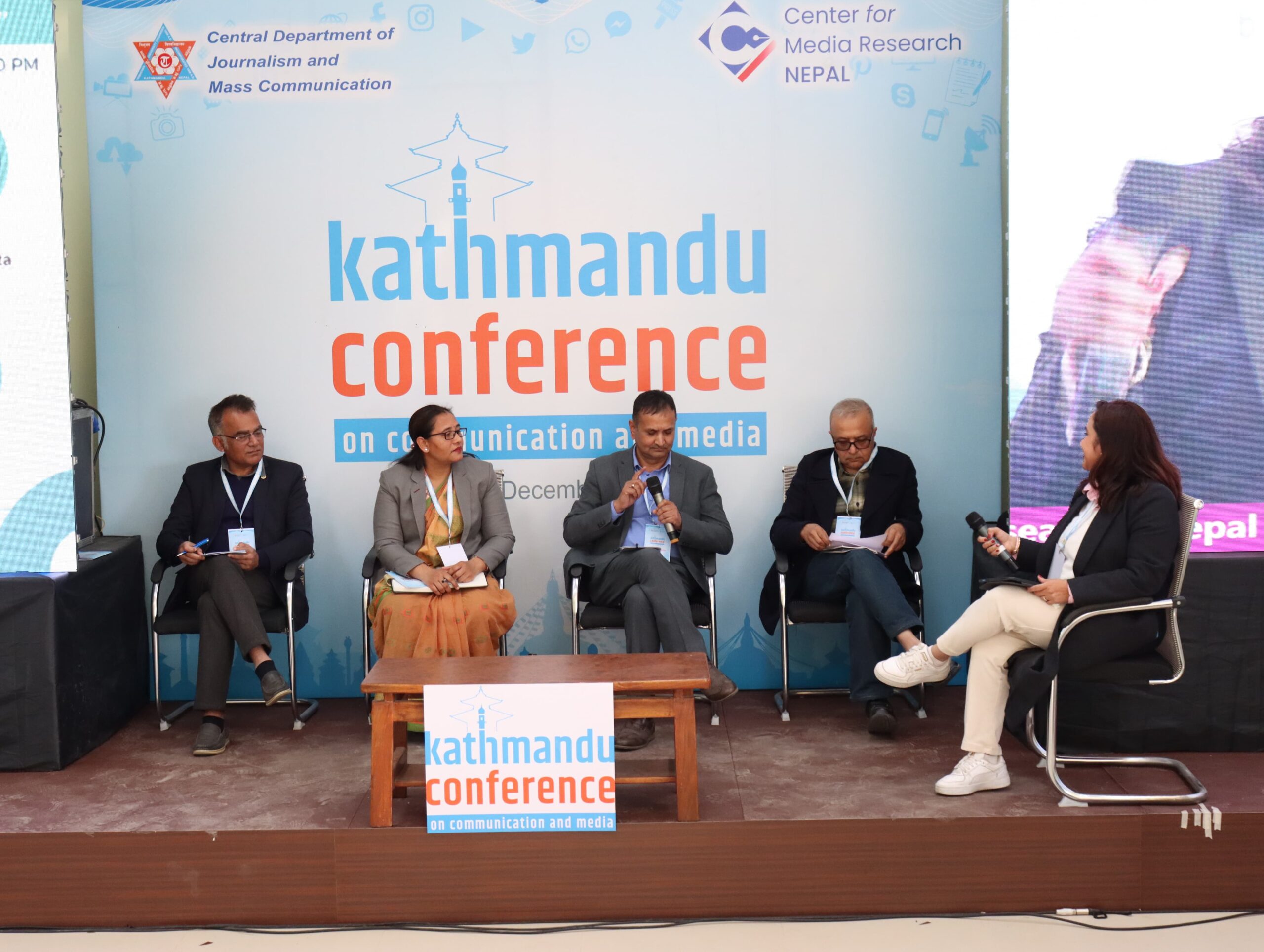
On December 24, 2024, the Center for Media Research – Nepal (CMR-Nepal) organized a panel discussion on “The Complex Relationship between Media and State in Nepal” during the Kathmandu Conference on Communication and Media in Kathmandu. Here is the summary report:

Moderator: Dr. Samiksha Koirala (Assistant Professor, North South University, Bangladesh)
Panelists: Binod Bhattarai (expert), Dr. Mahendra Bista (chairperson, Public Service Broadcasting), Sangita Khadka (chairperson, Minimum Wage Fixation Committee) and Dr. Nirmal Rijal (expert)

Summary of Panel 5 – The Complex Relationship between Media and State

The fifth panel of the conference, “The Complex Relationship between Media and State,” examined the evolving dynamics between the media, government, and external forces in an age of rapid technological change and market-driven content. The discussion focused on the challenges media outlets face in preserving their independence, ensuring accountability, and navigating the growing influence of corporate and political powers. Panelists stressed the need for ethical journalism and strong legal frameworks to uphold democratic values.

The panel explored how democracy is shifting and how media operates within it. Key issues discussed included market pressures, corporate and political influence, and the need for transparency in editorial policies. The panelists emphasized the importance of balancing financial sustainability with ethical reporting. They also addressed how technology affects journalism, bringing both opportunities and risks, including misinformation and algorithm-driven content bias.

The need for an independent media regulator was highlighted to enforce ethical standards and ensure accountability. The panelists underscored media’s responsibility in questioning power and providing fair, balanced reporting in the digital public sphere. Ultimately, the conversation reaffirmed the essential role of independent journalism and effective regulation in maintaining democratic governance.

Statements by Panelists

Dr. Mahendra Bista
“The government must actively support the media, not just by passing laws but also by ensuring editorial freedom and financial stability,” said Dr. Bista. “Journalism is the foundation of democracy, but it cannot thrive without proper funding.”

He stressed the importance of content analysis to uphold journalistic professionalism and called for editorial independence supported by data analytics from journalism websites. Both the government and media sector must take responsibility for protecting journalists from growing threats.

“We need government investment in media sustainability, and the sector must focus on ethical, innovative practices. Self-censorship exists—but freedom is the essence of democracy,” he concluded.

Sangita Khadka
Khadka focused on the working conditions of those entering the media industry. “New entrants often face low and inequitable pay, making it difficult to sustain themselves,” she said. “This is a serious issue that needs legal and policy intervention.”

She called for legislation to ensure fair compensation and uphold the dignity and rights of media professionals. “This is not just about justice; it’s about protecting the welfare of those working in this field.”

Dr. Nirmal Rijal
“The media too often portrays the government as the sole source of information—this is a problematic narrative,” said Dr. Rijal. “It undermines media independence and limits diverse perspectives.”

He welcomed the draft of the new broadcasting law but emphasized that it must promote freedom of expression while holding media to ethical standards.

“Without proper checks, media can become a tool of commercial or political interests rather than a platform for truth and public service,” he warned. He highlighted the growing commercialization of media, where profit motives often outweigh ethical considerations.

“When markets dominate unchecked, information quality suffers, and journalism loses its public value,” he said.

Binod Bhattarai
“We are witnessing media capture,” Bhattarai asserted. “When the media is captured, political shifts follow.” He emphasized that democracy is in transition, and it is essential that the media remain responsible and fact-based.

“Our democracy depends on a free and accountable press. Upholding these principles is not optional—it is fundamental.”

Question & Answer Session

Susan Bhattarai (Master’s Student, Journalism):
“Could you elaborate on the main challenges media faces due to technological change in today’s context?”

Sangita Khadka’s Response:
“We don’t oppose technology—but we must adapt to its developments and demands.”

Umesh Pokhrel:
“We talk about watchdog journalism and skill development. How has digital technology changed the landscape?”

Dr. Mahendra Bista’s Response:
“Government measures for media accountability depend on the public’s trust. To use technology effectively and enter mainstream media, we must adapt to the transformations taking place.”

Moderator’s Remarks – Dr. Samiksha Koirala

Dr. Koirala opened the discussion by addressing the state’s involvement in media regulation. “The state plays a critical role in regulating the media, and it’s essential to examine how this regulation functions,” she said. She posed a foundational question: “When the government invests in media, what are the implications for independence and objectivity?”

Dr. Koirala also raised the issue of market influence on media sustainability. “How do market forces shape the revenue streams of journalists, and what are the pros and cons of these dynamics?” she asked. She highlighted the financial pressures faced by journalists and how these might influence editorial choices. Her thoughtful framing enabled a robust discussion about the challenges and responsibilities media must navigate within today’s complex regulatory and economic landscape.

How to Make Journalism Viable in Nepal

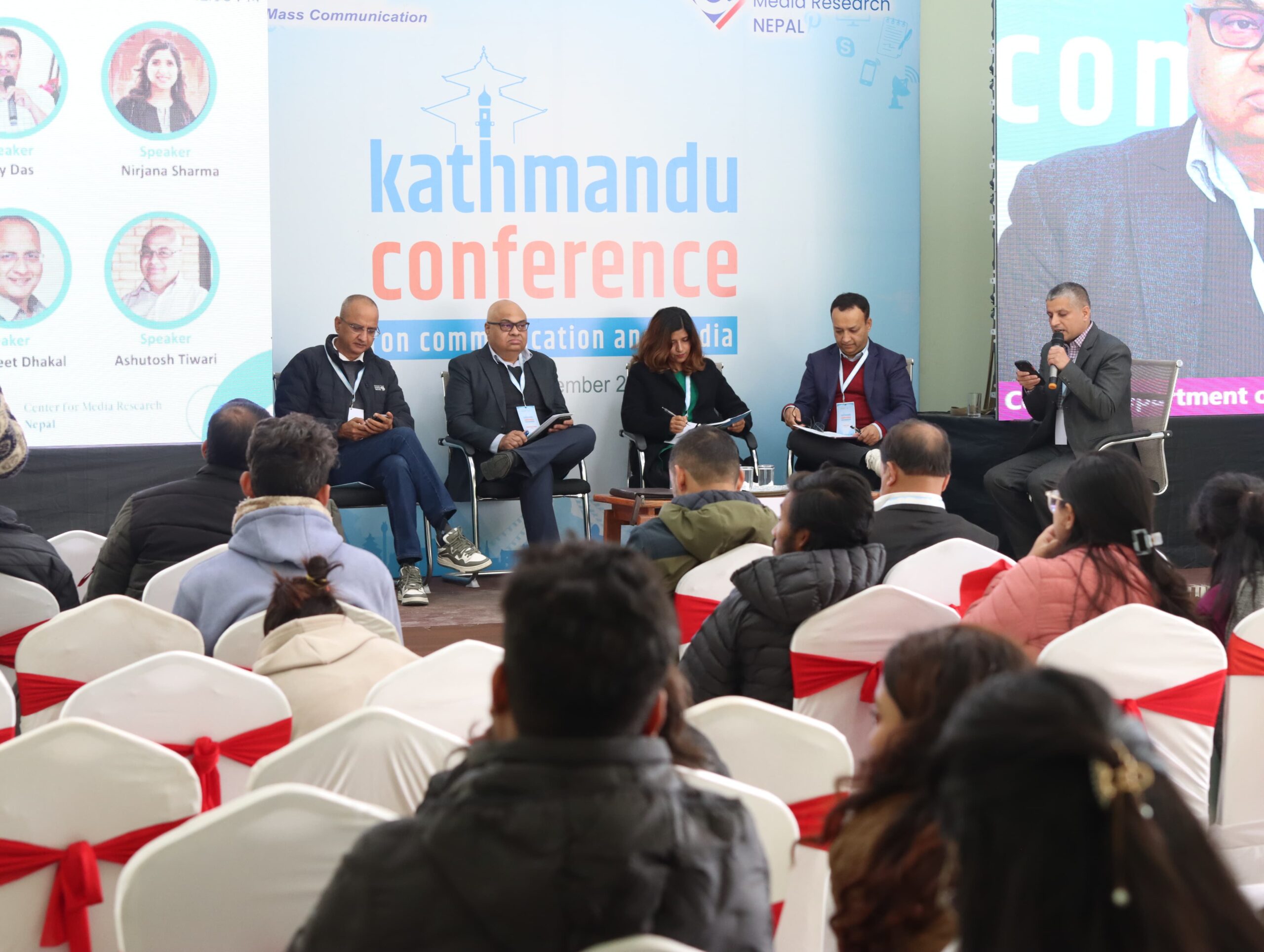
On December 23, 2024, the Center for Media Research – Nepal (CMR-Nepal) organized a panel discussion on “Making Journalism Viable” during the Kathmandu Conference on Communication and Media in Kathmandu. Here is the summary report.

Moderator: Tilak Pathak

Panelists: Ajay Das (The Asia Foundation), Nirjana Sharma (UNESCO Kathmandu), Ameet Dhakal (editor, Setopati) and Ashutosh Tiwari (business development expert)

Panel Summary

The conference’s third panel, “Making Journalism Viable,” addressed the financial viability of journalism in the contemporary landscape. The panelists discussed the difficulties media outlets confront in generating revenue and staying independent while producing high-quality journalism. The conversation focused on the necessity of specialized reporting, innovative financial structures, and regulatory changes to guarantee journalism’s long-term survival.

The panel discussed the importance of revenue generation and corporate advertising for media organizations, suggesting the implementation of laws to regulate advertising practices and maintain editorial independence. They also emphasized the need for clear financial health indicators to identify areas for improvement in revenue generation and maintain ethical standards. Additionally, they advocated for specialized reporting and subscription-based models to diversify revenue streams and attract dedicated audiences. The panel also stressed the importance of rigorous content analysis and quality assurance, including fact-checking, ethical reporting, and meeting the highest journalistic standards, to maintain credibility and relevance in media.

Panel Recommendations

The Making Journalism Viable panel recommended:

  • Regulating corporate advertising practices
  • Developing media viability indicators
  • Promoting subscription-based models
  • Investing in content quality and assurance
  • Encouraging innovation in business models

These measures will help media organizations maintain ethical standards and achieve financial sustainability without undermining journalistic independence. The panel also emphasized the importance of content analysis and quality assurance for maintaining credibility and public trust.

Individual Panelist Speeches

Ameet Dhakal: “Let me talk about my experience and the difficulties the media sector faces. One of the main problems is that media companies depend largely on advertising for 90% of their revenue, which leads to a conflict of interest that frequently erodes audience loyalty. For example, because of its low cost, Indian media has had a significant impact in Nepal. The profitability of color printing and the sustainability of publishers were seriously called into question when a newspaper in Nepal was sold for Rs. 5 but the publisher only received Rs. 3.

We discuss subscription models and corporate governance. For instance, The New York Times has effectively transitioned to a subscription-based business model, guaranteeing both financial stability and exceptional reporting. As a journalist, I always felt that I could operate autonomously, and I had the opportunity to invest more in the media. However, the harsh reality of being a publisher is that you must pay your bills at the end of each month.

It must be up to the readers to decide what they wish to read. The pay structure and the criticism publishers receive, however, are the issues. We must review and amend current legislation in order to make the media autonomous and viable. To establish a sustainable solution, the problems with these laws need to be carefully examined.

We have a misunderstanding between private and social work. Tax money is being paid by someone; everyone should contribute as we are valuable. Everyone contributes to advertising, but few people read or share critical and opinion pieces. There is a smaller critical mass of decision-makers and policymakers. We have been trying to use the subscription model as a psychological transition from free to paid content.”

Ajay Das: “The Vibrant Information Barometer study highlights important concepts that influence our media landscape and offers insightful information about how information is consumed and transformed. In terms of media vitality, Nepal receives a score of 23 out of 40, which suggests that there is room for improvement. Lumbini receives a score of 24 out of 40 when considering regional gaps, while Madhesh receives a score of 22 out of 40.

While important subjects like climate change and other socioeconomic issues receive less coverage in Nepali media, political matters are frequently the main focus. Furthermore, underrepresented voices—such as those speaking Bhojpuri, Maithili, and other regional languages—are frequently ignored. These problems are exacerbated by financial difficulties, which impact all media outlets.

Online media, however, has become a powerful instrument that unites people and provides a forum for a range of viewpoints. Although this is a step in the right direction, we still need to address the inequalities and guarantee that all groups, irrespective of language or location, have equal access to representation and information. Only then can we establish a truly dynamic and inclusive media environment.

People who are new to journalism should enter the field. The number of media enthusiasts is declining in the new era of journalism. Quality, inclusive newsrooms and diversified content must be the foundation for good journalism.”

Nirjana Sharma: “Global surveys have revealed a dramatic change in advertising patterns since COVID-19, with 50% of advertisements being directed toward the internet and only 6% going to other traditional media channels. This emphasizes how digital platforms are becoming increasingly dominant, but it also highlights how much more research is needed to fully comprehend the ramifications of this shift.

We must use UNESCO’s media viability indicators to evaluate the state of our media ecosystems in the context of media viability, especially in Bangladesh, India, and Nepal. To effectively handle issues, we must, however, set aside generalizations and focus on details at the individual level. In order to guarantee diversity and equity, we also need to examine media from a variety of perspectives, including feminist and legal viewpoints.

By 2025, we should strive to establish a media environment that not only endures but flourishes, meeting the particular requirements of each stakeholder and advancing equity and sustainability.

The audience and the media are not in sync. People are creating false narratives because the media isn’t regarded as reliable. Misinformation should be addressed by the media. We are working with young people based on their consumption and content creation, but they are not welcomed in the media industry. As content creators gain prominence and work as competitors to traditional media, both journalists and creators should be retained and collaborate with mutual understanding and respect.”

Ashutosh Tiwari: “The media must be viewed as a business. We will lose money if we don’t compete in the media sector. For the media to survive and prosper, it must be profitable. Health and education were once considered purely social services, but the media industry needs to function differently; it must be profitable, competitive, and viable.

There is a concept known as the “economics of superstars” in the media economic model, which holds that a small number of powerful companies retain the majority of the profits. One of the best examples of this phenomenon is The New York Times—a media outlet that has dominated the market and satisfied its audience. In Nepal, this leaves a void in which two to three other media organizations find it difficult to compete.

Superstar economics extends beyond media to include sports, entertainment, and content production. Media must prioritize high-quality content, subscriptions, and creative revenue sources in order to be sustainable. We must use our creativity to organize events, produce engaging content, and prioritize quality because the advertising business has slowed down. If the journalism is strong, a two-line headline might be sufficient.

We should focus on producing high-quality journalism since it is in high demand. Although journalists and media owners frequently argue philosophically about the role of the media, the truth is that media products need to be robust in order to thrive. Since owners don’t have unlimited resources, we must rely on events, subscriptions, and high-quality content to maintain viability.

Similar to journalism, business models have expanded. Media should be made feasible based on multiple revenue streams and diverse approaches, not just in one area but also through the utilization of various media outlets and platforms.”

Question and Answer Session

Questions Asked

Raviraj Baral (Media Kurakani): “How is media viability ensured when it relies heavily on advertising, following the 80-20% model?”

Unknown Participant: “How does mainstream media balance its role as a service to the audience versus being market-driven? How should social media and convergence media adapt to these changes?”

Umesh Pokhrel (Media Student): “What are some alternative business models that media can adopt beyond the traditional advertising-based model? For example, what can conclave media or other innovative approaches offer?”

Panelist Responses

Ameet Dhakal’s Reply

“Although content has always been essential, the focus now shifts from the institution to the individual. All genders and voices are now represented by individual content creators, who are both king and queen of their domains. When your content is so compelling that no one can argue against it based on its value or the issues it addresses, you have truly succeeded.

Only large media outlets used to be able to publish and reach audiences. However, the landscape has drastically changed in the modern era. Anyone can reach a large audience by publishing content on blogs, social media, and other platforms. Although the democratization of media has leveled the playing field, content quality and credibility are now more important than ever.

As media practitioners, we need to adapt to this change by focusing on producing content that is reliable, relevant, and impactful. Standing out in a crowded field with content that connects and sparks meaningful conversations is now more challenging than gaining access to platforms.”

Ashutosh Tiwari’s Reply

“These days, our own media students and individual experts are conducting research, particularly market research, in addition to major institutions. This shift emphasizes how crucial research is becoming as a means of understanding markets, audiences, and trends. With a wide range of applications across industries, research has grown to be a substantial business in and of itself.

The emergence of digital platforms has democratized access to research. Resources such as online databases, newsletters, and collaborative platforms facilitate the broad dissemination of ideas and discoveries by both individuals and organizations. Because of this accessibility, media professionals and students are now able to make significant contributions to the sector, encouraging innovation and informed decision-making.”

Nirjana Sharma’s Reply

“We’ve examined media economics and business models from a variety of interesting perspectives during this conference. It is evident that the media landscape is changing rapidly, and in order to adapt and thrive, we must continue having these conversations. To move forward, we must focus on making genuine connections with our audiences and ensuring that the media continues to serve as a forum for accountability, truth, and public service.

To handle opportunities and challenges, the media must engage with a variety of stakeholders in addition to press councils and civil society. We require media-focused conversations that prioritize sustainability, innovation, and ethical behavior.”

Ajay Das’s Reply

“We have focused on issues that have a significant impact on media sustainability, particularly in the post-truth era where individual opinions and preferences frequently trump facts. People today are more likely to seek information that supports their opinions, which creates a gap between traditional media and its role of reporting in a fair and accurate manner.

This shift raises important questions about the media’s future. What will happen to the media industry’s sustainability, diversity, and credibility if the younger generation no longer participates in or enters the field? This perspective requires careful consideration. The media runs the risk of becoming stagnant and outdated without new ideas and talent. Making media more appealing and accessible to younger generations is one way to address this challenge.”

Moderator’s Remarks

Moderator Tilak Pathak began the conference by introducing the panelists and setting the stage for a thorough discussion. He started by inquiring about the obstacles and challenges of media viability in Nepal, emphasizing financial sustainability and technological advancements. He asked, “How have media challenges evolved until now?” and cited the Asia Foundation’s report on Nepal’s media vibrancy.

He also questioned UNESCO’s role in media viability and how media entrepreneurship has influenced vibrancy. He expressed concern about the viability of specialist reporting under subscription arrangements, questioning, “Is this model sustainable?” He also highlighted how to regain media trust and the role of civil society in fostering it. Each panelist shared their insights and concluded by summarizing their key points, capping off an engaging discussion.

Media’s Role in Exposing and Combating Corruption


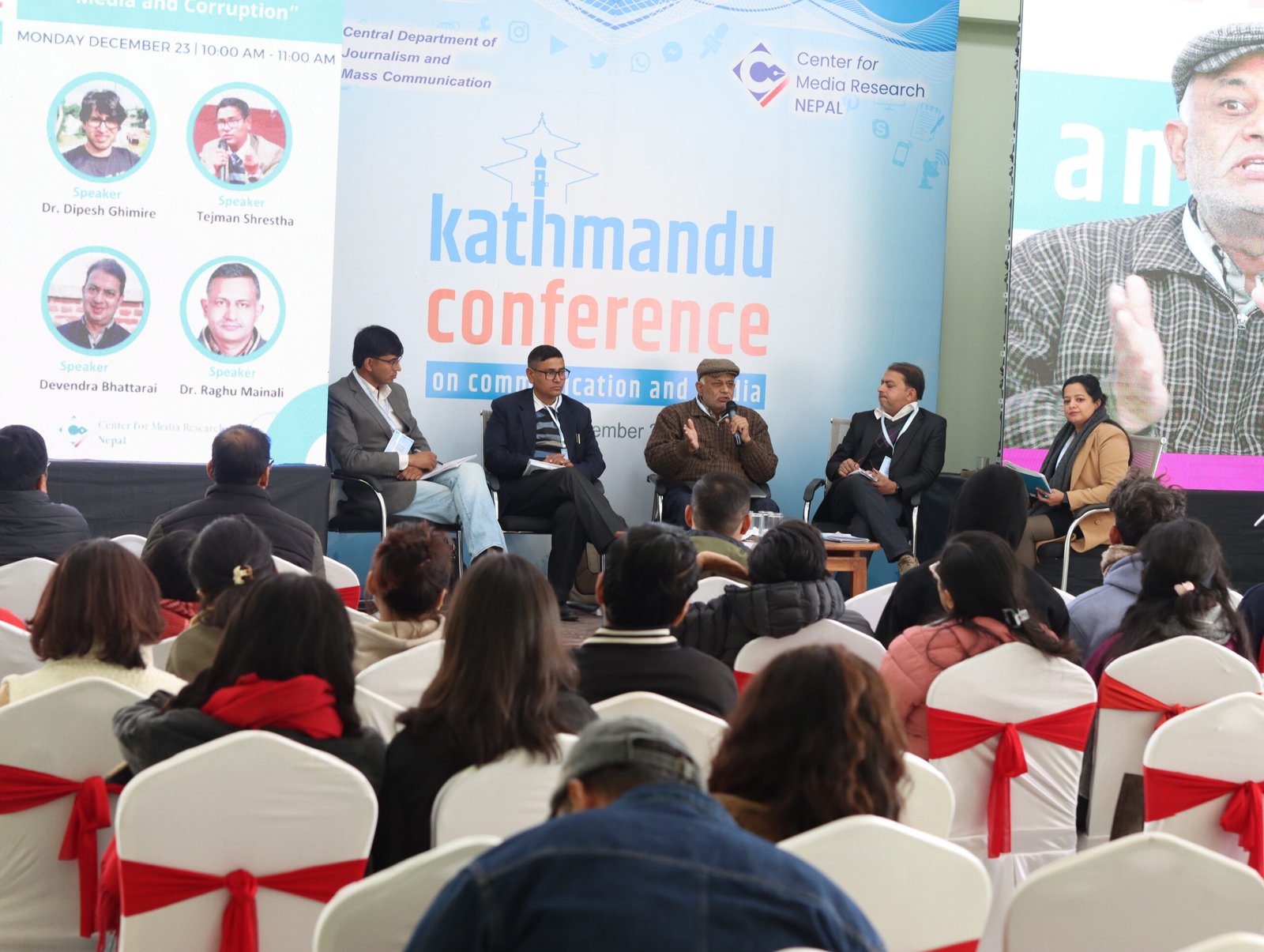
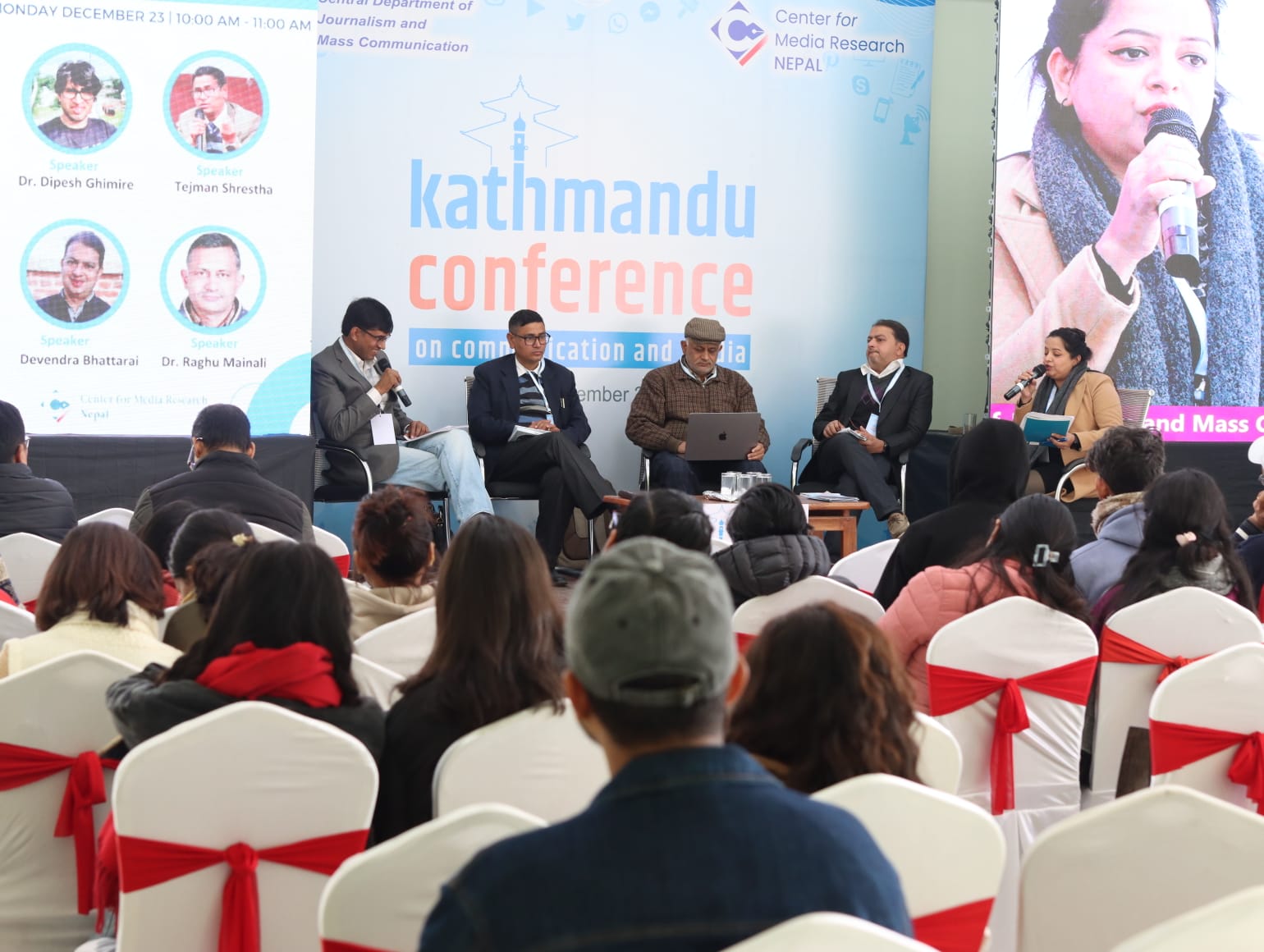
On December 23, 2024, the Center for Media Research – Nepal (CMR-Nepal) organized a panel discussion on “Media’s Role in Exposing and Combating Corruption” during the Kathmandu Conference on Communication and Media in Kathmandu. Here is the summary report:

Moderator: Deepa Dahal

Panelists: Dr. Dipesh Ghimire (good government expert), Tejman Shrestha (Assistant Professor, Nepal Law Campus), Devendra Bhattarai (editor, Ukaalo) and Dr. Raghu Mainali (Professor, Nepal Open University)

Panel Summary

The conference’s second panel, “Media’s role in exposing and combating corruption,” explored the complex interrelationships among corruption, governance, and the media. The discussion emphasized the importance of accountability, transparency, and policy-driven journalism while highlighting the media’s crucial role in combating state capture, control, and systematic corruption.

The panel discussed key issues such as state capture and corruption, media’s role in combating corruption, the shift to new media, accountability and transparency, and policy and legal reforms. They emphasized the need for robust fact-checking mechanisms and legal frameworks, as well as a redefinition of the relationship between media and corporate entities. They also called for media literacy and education to help the public navigate the evolving landscape of information consumption. Additionally, they called for enacting laws to regulate media ownership and promote transparency, as without a strong legal framework, the media’s ability to act as a watchdog is severely limited.

Panel Recommendations

The Media and Corruption panel recommended:

  • Strengthening legal frameworks
  • Promoting media literacy
  • Encouraging policy-focused journalism
  • Ensuring editorial independence
  • Supporting investigative journalism

They emphasized the media’s role in addressing corruption and promoting good governance. To effectively fulfill its watchdog function, systemic reforms are needed, including legal protections for journalists, greater transparency in media ownership, and a commitment to policy-driven reporting. This will foster a more accountable and independent media landscape.

Summary of Individual Panelist Speeches

Dr. Dipesh Ghimire: “Corruption is a developing problem with changing dynamics; although it may not always be obvious, its effects are felt everywhere. Numerous legislation and initiatives have been put in place to fight corruption since 2009, but the truth is that we still need to demonstrate our commitment to doing so.

Once thought to have corruption on a smaller scale, Nepal has witnessed shocking levels of corruption, with content analysis of six important sectors revealing misconduct worth 232 Arab. This demonstrates how widespread the problem is. State capture, in which powerful entities control state institutions for their own benefit, is one of the major issues we confront. Despite efforts, accountability is still lacking and control systems are not operating as they should.

Stronger institutional structures, transparent governance, and cooperation from the public, civil society, and government are all necessary to address this. The media needs to be held accountable as well.”

Devendra Bhattarai: “Corruption is a problem that has traditionally been avoided, but it is critical that we approach it honestly and thoroughly. This issue must be addressed based on the various areas or ‘beats’ in which it manifests—whether in traditional media such as print (copy, pen) and visual media (camera) or in the emerging media environment.

Unfortunately, areas supposed to promote accountability and transparency, such as media platforms, have been misused for unethical purposes. Fact-checking, which is critical for revealing corruption, is frequently overlooked or performed under pressure, resulting in a lack of thorough research. Furthermore, the competitive nature of the media sometimes emphasizes speed over accuracy, hurting the battle against corruption.

While opportunities and forums for combating corruption exist, they have not been utilized effectively. It is time to work harder, ensuring that fact-checking is prioritized and that media platforms are used properly to hold authority accountable. Only then can we make significant progress against corruption.”

Tejman Shrestha: “I remain skeptical of how society accesses and perceives corruption-related news. While the media is crucial in uncovering corruption, there are growing concerns regarding the veracity and accessibility of such information. Policy-level corruption, in particular, has increased significantly, which is very concerning.

In Nepal, the separation of powers between the three tiers of government—executive, legislative, and judicial—is established by legislation. However, the effectiveness of this separation is sometimes questioned. Cabinet decisions and court assessments, which are intended to enhance accountability, are sometimes hindered by bureaucratic red tape and a lack of transparency. Furthermore, the right to privacy has frequently been misused to cover up unethical behavior, making it challenging to hold people and organizations accountable.

Justice and the pursuit of truth are hampered by this abuse of privacy rights. We must utilize the pen to draft appropriate legislation.”

Dr. Raghu Mainali: “Over time, print media has changed dramatically, moving from restriction in the days of radio and television to a more accessible and user-friendly environment. Since media has become more accessible and customized with the introduction of new technology, people have grown more attached to it. Media is now more personal than ever as anyone may upload and distribute content on their own. This change has produced a unique dynamic in which personal and traditional media follow parallel trajectories, each with distinct functions.

People can now interact with knowledge in new ways thanks to the transformation of the public realm. But this change has also brought attention to a crucial problem: traditional media must adapt in order to stay relevant. We must shift to a more professional media model that puts accountability, honesty, and quality above competition. Serving the public interest should take precedence over pursuing clicks or ratings. By accepting this shift, we can ensure that the media maintains its important role in society, promoting knowledgeable and engaged citizens while preserving the legitimacy and confidence that traditional media has long maintained.

He concluded that media ownership ought to be ethically transparent. Media education is necessary since the business strategy should be innovative and investigative journalism skills need to be strengthened in the current crisis.”

Moderator’s Discussion Points

Moderator Deepa Dahal presented significant concerns by beginning with defining corruption. According to her reporting experience, corruption is the abuse of authority in a society that is becoming increasingly centralized. The general public now faces difficulties as a result of corruption.

She raised questions about how the media has fulfilled its obligation to address corruption. What role can media play in this? What part does corruption play in Nepal? She also questioned how the media has prioritized reporting on corruption-related topics and how media ought to address corruption-related issues within their coverage areas.

Combating Misinformation in the Age of AI (Artificial Intelligence)

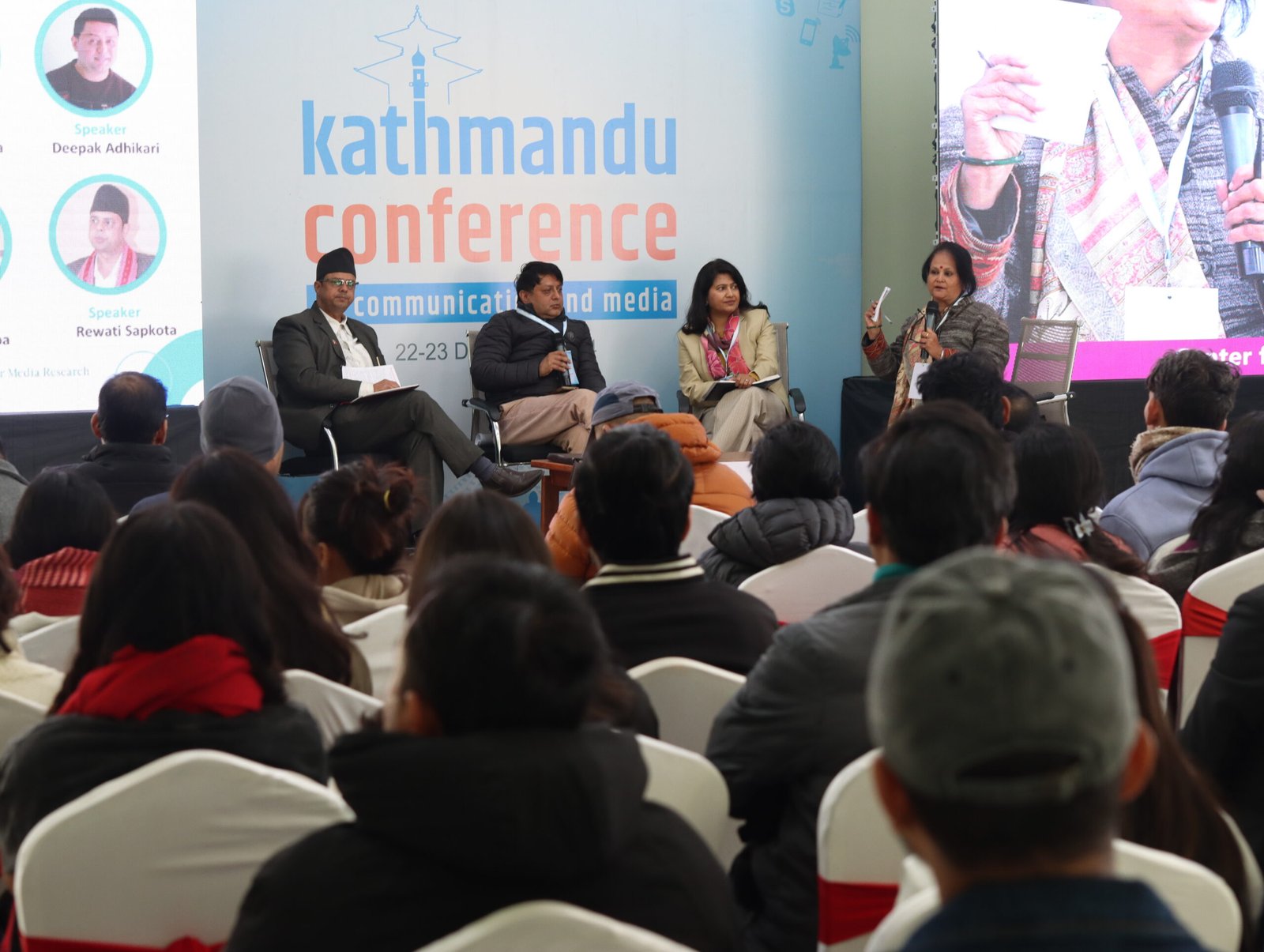
On December 23, 2024, the Center for Media Research – Nepal (CMR-Nepal) organized a panel discussion on “Combating Misinformation in the Age of Artificial Intelligence (AI)” during the Kathmandu Conference on Communication and Media in Kathmandu. Here is the summary report:

Moderator: Ms. Namrata Sharma

Panelists: Mr. Rewati Sapkota (Communication Registrar, Bagmati Province), Mr. Deepak Adhikari (editor, Nepal Check) and Ms. Prema Thapa (International Republic Institute, Nepal)

Panel Summary

The panel discussed the increasing problems with disinformation in the digital era and how AI can both propagate and counteract false narratives. AI can help fact-check and identify corrupted content but can also be used to spread false information. AI-generated content can be difficult to distinguish from authentic material, though visual errors can sometimes reveal falsehoods. Media literacy and journalism are crucial for verifying and contextualizing information, while public education on media literacy is essential. Social media platforms are the main conduits for false information, and reducing dissemination requires user awareness campaigns, ethical content-sharing norms, and regulatory actions.

AI has become a powerful tool in combating misinformation, providing resources to fact-check and debunk content while also accelerating the spread of misleading information. Tools like ChatGPT have transformed the way information is digested and transmitted, but they can also be misused to produce and spread false information. AI-generated information has made it difficult to distinguish between authentic and fake content, leading to increased disinformation in areas like politics, health, and local communities. Media literacy and journalist training are crucial in slowing the spread of misinformation, while policy-level measures like regulating content distribution and incorporating media literacy into educational institutions are needed.

Panel Recommendations

The panel recommended:

  • Investing in AI-driven fact-checking tools
  • Developing comprehensive media literacy programs
  • Regulating content sharing on social media platforms
  • Encouraging ethical content sharing practices
  • Strengthening collaboration between journalists, policymakers, and tech developers to combat misinformation effectively

Summary of Individual Panelist Statements

Deepak Adhikari: “Let me talk about my professional experience. I worked for two years as a member of South Asian Check during my early career. Due to financial constraints, our group later established NepalCheck.org, where we verified facts in both English and Nepali. Plane crashes, which were noteworthy occurrences at the time, were one of the main subjects we covered. AI wasn’t available to help us back then, but it’s now available and has revolutionized our work. We’ve moved from fact-checking false information during the TV era to social media, and from false information about COVID-19 to the current period.

An AI-generated image that went viral from Jajarkot was one of our first significant fact-checks employing AI. We must consider new technology to be a double-edged sword, with both advantages and disadvantages. Although AI has simplified the process of creating and monetizing content, humans still need to use our minds since AI is not perfect, particularly when it comes to specifics like faces and colors. Human intelligence is still essential to combating misinformation produced by AI.

A power imbalance exists. Whoever is strong always targets the weak. Social media just serves to magnify the discrimination in places like untouchability, but we only see the surface effects rather than the underlying causes. Instead, we perceive just the symptoms when we examine the structure.”

Prema Thapa: “Yes, AI presents both challenges and opportunities,” she said in response to the discussion. “Talking about information integrity, COVID-19 brought a lot of challenges,” she continued, reflecting on recent events. “The provincial-level lawmakers have their own understanding of any changes,” she added, highlighting the perspectives of those legislators.

“The IRI report, Democracy in the Age of AI, clearly outlines the opportunities and challenges we face,” she remarked, referring to a recent study. “In the past, disinformation was a major problem, and during our policy dialogues, we discovered that both disinformation and misinformation were consumed locally,” she added. “Disinformation is not limited to one sector; we have seen its impact in health and politics,” she said, highlighting the problem’s pervasiveness.

“To address the situation, we need to be group-specific in our approach to tackling disinformation,” she concluded. “At the policy level, there is a significant gap between debate and the actual implementation of all proposed initiatives. Having said that, political parties are interested as they are both users and victims as well.”

Rewati Sapkota: “As consumers, we must emphasize media literacy because disinformation has grown to concerning levels in this era of artificial intelligence. Public awareness is necessary to help us, the audience, recognize and counteract false information. It’s important to keep in mind that we are technology users rather than necessarily inventors, and that distinction calls for vigilance.

For policymaking to successfully address these issues, a long-term perspective is required. Additionally, journalists need to be trained to ensure credibility and fact-checking, as their role is more important than ever. Although social media has emerged as a major information source, it is also a place where accurate information can increase ad revenue. By taking advantage of this, we can establish sustainable media ecosystems that tackle economic issues in addition to combating disinformation.

Together, let’s create a future in which media literacy becomes a pillar of our society and the truth prevails.”

Question and Answer Session

Questions Asked

Sherman Sharma (Herd International): “Misinformation has grown alongside the use of AI. How can we stop it? In the context of ten years, what is the level of digital literacy in the digital age?”

Baburam Acharya (CDJMC): “How are social media and AI perceived negatively, and how can the government change the way people view social media? How can we use social media, like foreign leaders such as Trump, to reach an audience effectively?”

Rudra Khadka (Journalist): “Is AI beneficial, and how can we use it for the better?”

Aditi Sharma (Madanbhandari Memorial College): “How do AI-generated images become viral? How can we be aware of things in advance, such as celebrity photos of women, LGBTIQ individuals, or men using viral images on social media? How can we ensure these are checked by authorities?”

Bibek Pageni (Butwal): “How has false information impacted mainstream media? Why aren’t there specific requirements for children and the elderly to comply with laws regarding misinformation? Why isn’t this addressed by a specific department?”

Unnamed Participant: “Why have we left open access to false information and digital literacy? Where are the control mechanisms?”

Panelist Responses

Rewati Sapkota’s Reply

“I appreciate you bringing up these important topics. Indeed, control is a global and local problem that affects more than just the media. At the provincial level, there are currently no effective mechanisms in place to address digital literacy and misinformation, and priorities have shifted.

To address this, we must give top priority to raising digital literacy through public service announcements and the development of easily accessible educational materials, like general-language books. We must also change the way we think about digital devices, emphasizing their advantages over their drawbacks.

Regarding the establishment of a specialized department, I admit that we are just in the planning stages, but things are moving forward. To ensure a more efficient and successful approach, we are actively exploring the integration of data systems, much like how citizenship data is managed. We’re working on developing a framework to help with the curation and public release of some data. The department will be established, but it will take rigorous preparation and teamwork. Let’s continue this conversation and collaborate to create a system that empowers people, fights false information, and promotes a digitally aware culture.”

Deepak Adhikari’s Reply

“The dual nature of technology—it has both advantages and disadvantages. You are entirely correct; in order to provide students the tools they need to appropriately navigate the digital world, we must intervene in education at all levels, beginning with primary school. Teaching children to evaluate information, develop critical thinking, and use technology as a tool or extension of their brains instead of being overly reliant on it is part of this.

You make a valid point when you say it’s important to know how and where our content gets spread. People need to be taught the value of creating secure passwords, understanding privacy settings, and exercising caution when disclosing personal information online. We require public awareness campaigns, cybersecurity workshops, and comprehensive educational initiatives that incorporate digital literacy into the curriculum in order to solve these issues. By doing this, we can reduce the dangers associated with technology while enabling people to use it as a tool for innovation and growth. Together, let’s build a future in which everyone is prepared to use technology responsibly and it becomes a friend rather than a threat.”

Prema Thapa’s Reply

“It is crucial to address AI’s role in combating misinformation. Through low-cost, mass communication, artificial intelligence (AI) can be a potent weapon in the fight against disinformation, allowing us to quickly spread factual information and disprove myths. To prevent unforeseen consequences, we must, however, also ensure AI is applied ethically and responsibly.

It’s crucial that traditional media be strengthened, as you mentioned. Since traditional media outlets have a long history of being reliable, we should support them in order to maintain their position as trustworthy information providers. At the same time, we must focus on policy frameworks that tackle the problems that AI and digital media present. This involves drafting laws that support accountability, transparency, and fact-checking.

Fact-checking is an essential component of this task. To ensure that information is accurate before it spreads, we need to invest in robust human and AI-driven fact-checking systems. We can build a more knowledgeable and resilient society by combining the advantages of AI tools, governmental initiatives, and traditional media. While being cautious about its possible misuse, let’s embrace AI as a force for good.”

Moderator’s Closing Remarks

Moderator Namrata Sharma summarized the day’s topics and underlined the importance of journalism in the age of rapidly evolving technology in her concluding remarks for the conference. She emphasized that technology is here to stay, whether we like it or not, and it is our duty to use it for the benefit of society.

She emphasized how journalism can be used as a means of bridging the divide between the “haves” and the “have-nots.” From far-flung locations like Humla and Jumla to global concerns like climate change, journalists must prioritize increasing investigative journalism, holding politicians accountable, and boosting productivity. She reminded the audience that accuracy and honesty are at the core of journalism. By incorporating technology into journalism, we can raise important concerns like social inequality and climate change while simultaneously challenging established power structures. She asked the audience a number of challenging questions that made them consider how journalism might remain true to its core values while embracing the digital age.

Ms. Sharma praised the speakers, organizers, and attendees for their contributions to the stimulating conversation in her closing remarks. She said she hoped the conference’s ideas and solutions would spur practical actions toward a society that is more educated, compassionate, and digitally aware.

Kathmandu Conference on Communication and Media 2024 concludes successfully

The Kathmandu Conference on Communication and Media 2024, which brought together journalism scholars and media experts from four South Asian nations, concluded on December 23 after two days of intensive discussions on the challenges and opportunities presented by technological advancement and social media in mass communication.

The conference, jointly organized by the Center for Media Research – Nepal and Tribhuvan University’s Central Department of Journalism and Mass Communication (CDJMC) addressed pressing issues on information ecosystem, journalism and media in the digital era.

In his opening keynote address, Prof. P. Kharel highlighted an enduring challenge: despite technological advancement, ensuring fair and factual reporting remains difficult.

“The concept of verification and re-verification of information’s truthfulness existed during Buddha’s time itself; but these days one can find a significant number of non-verified news in the media,” Kharel noted, emphasizing the need for legacy media to adapt to digital technology while maintaining journalistic standards.

Dr. Kundan Aryal, Head of TU CDJMC, emphasized how today’s audiences are more active than ever, necessitating well-edited and verified news content. “The conference aims to promote closer linkages between readers and audiences and academic activities,” he stated.

Prof. Dr. Dubinanda Dhakal, the Dean of the Humanities and Social Sciene at the TU, inaugurated the conference during which Prof. Dr. Shobha Shrestha, Head of the Central Department of Geography at TU and a member of Conference’s scientific committee also delivered her speech.

The first day of the Kathmandu Conference featured three sessions of research presentations, offering insights into various aspects of media and communication in South Asia.

The day began with a special presentation by Prof. Din M. Sumon Rahman from the University of Liberal Arts Bangladesh, who explored “Nomadic Narratives: the Cross-Border Spread of Misinformation in South Asia.” His research highlighted how misinformation travels across national boundaries in the region, taking on new forms and contexts.

In the first session, chaired by Assistant Professor Rishikesh Dahal, researchers presented findings on digital media and international relations. Nilima Chandani Khan‘s study examined how Muslim minorities use social media for identity formation and community engagement. Sahayog Ranjit‘s research delved into how disinformation affects Nepal’s diplomatic relations with India and China. The session also included Sunil Paudel‘s analysis of media bias in newspapers and Bhuwan Bhandari‘s assessment of digital media literacy among college students in Nepal.

The afternoon session, led by Associate Prof. Dr. Nirmala Mani Adhikary of Kathmandu University, featured a special presentation by Anil Chamadiya from Media Studies Group, New Delhi, analyzing Indian media coverage of other South Asian countries. This was followed by Assistant Professor Lekhanath Pandey‘s examination of COVID-19 pandemic narratives in Nepali media and Rudra Khadka‘s study on communication and social change. CMR-Nepal research fellow Sudeep Uprety presented research on media’s role in spreading awareness about climate crisis and displacement, while Sitashma Mainali analyzed health news coverage in Nepali national newspapers.

The day’s final session, chaired by Assistant Professor Dr. Ghama Raj Luitel, opened with H.A. Gayan Madushanka‘s presentation on data-driven media consumer behavior analysis. The session featured research on subnational media’s role in strengthening democracy by Injina Panthi, reporting patterns in Nepali print media by Tumaraj Koirala, local news coverage in regional newspapers by Ajay Sharma, and CMR-Nepal’s research fellow Shreeman Sharma‘s analysis of how Nepali newspapers frame transitional justice issues.

The research presentations highlighted emerging trends in media studies, particularly focusing on digital transformation, misinformation challenges, and the evolving role of media in addressing social issues across South Asia.

The second day’s panel discussions provided comprehensive insights into various aspects of contemporary journalism.

The first panel, moderated by journalist Namrata Sharma, explored strategies for combating misinformation in the age of AI, with fact-check editor Deepak Adhikari, IRI Nepal’s program manager Prema Thapa, and Communication Registrar of Bagmati Province Rewati Sapkota sharing insights on fact-checking mechanisms and AI’s role in both creating and detecting false information.

The second panel, led by award-winning investigative journalist Deepa Dahal, delved into media’s role in exposing and combating corruption. Panelists Assistant Professor Dr. Dipesh Ghimire of Central Department of Sociology, Assistant Professor at Nepal Law Campus Tejman Shrestha, editor of Ukaalo.com Devendra Bhattarai, and Course Professor at Nepal Open University Dr. Raghu Mainali discussed challenges journalists face while investigating corruption cases and the importance of investigative journalism in maintaining democratic accountability.

A critical discussion on making journalism financially viable followed, with Tilak Pathak, Executive Director of CMR-Nepal, moderating a conversation between Ajay Das, the Program Director at The Asia Foundation; Nirjana Sharma, the head of Communication and Information at UNESCO Kathmandu; Ameet Dhakal, editor-in-chief of Setopati.com and Ashutosh Tiwari, founder of SAFAL. The panel explored business models, challenges for sustainability and sustainable funding mechanisms for quality journalism in the digital age.

The fourth panel on the future of journalism, moderated by Assistant Professor Dr. Shreeram Paudel, featured prominent journalists including editor-in-chief of Deshantar.com Yubaraj Ghimire, chairperson of the Federation of Nepali Journalists (FNJ) Nirmala Sharma, editor-in-chief of The Kathmandu Post Biswas Baral and founder of Ujyaalo Radio Network Gopal Guragain.

The final panel, led by Assistant Professor at North South University Bangladesh Dr. Samiksha Koirala, tackled the complex relationship between media and state. Executive Chairman of Public Service Broadcasting Dr. Mahendra Bista, chairperson of the Minimum Wages Fixation Committee Sangita Khadka, and experts Binod Bhattarai and Dr. Nirmal Rijal explored press freedom challenges, regulatory frameworks, and the balance between state oversight and media independence.

Between panel discussions, founder and former editor of Nepali Times Kunda Dixit delivered a special lecture on reforming media education, emphasizing the need to blend traditional journalistic values with modern technological skills.

The day also featured a parallel session on students’ research presentations where five students – four from CDJMC and one from St. Xavier’s College, presented their researches to international participants for suggestions and comments.

The conference also featured a special exhibition titled “Supercharged by AI – Synthetic and Out of Control,” exploring artificial intelligence’s impact on online lives. The exhibition was jointly organized by Tactical Tech and CMR-Nepal. Three research were presented as posters alongside the exhibition.

The event concluded with a keynote address by Tribhuvan University’s Rector Prof. Dr. Khadga KC, marking the end of discussions that brought together academics, journalists, and media experts from across South Asia to address the evolving landscape of journalism in the digital age.

More than 200 media educators, scholars and researchers from Nepal, India, Bangladesh, and Sri Lanka participated in the conference, which served as a platform for regional collaboration in addressing contemporary media challenges while promoting academic discourse on the future of journalism in South Asia.

To learn more about the conference, visit conference website.