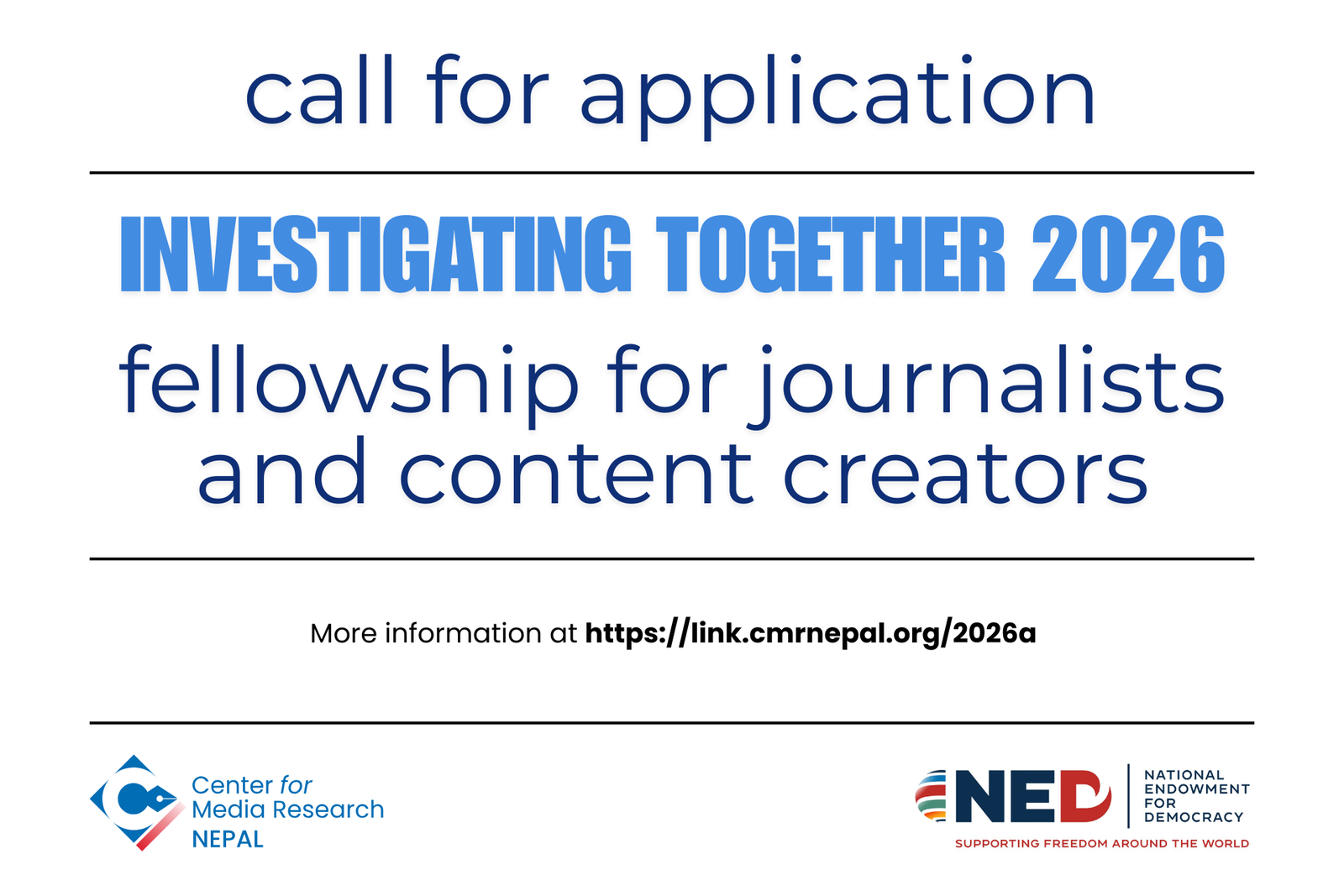
Call for Applications: Investigating Together Fellowship 2026 for Journalists and Content Creators

Center for Media Research–Nepal (CMR-Nepal) invites applications from journalists, content creators or interested two-member teams (one journalist and one content creator) to join the Investigating Together Fellowship 2026, a unique collaborative fellowship designed to strengthen public-interest investigations through cross-platform storytelling and mutual learning.

The fellowship will bring together 14 fellows – 7 journalists and 7 content creators – who will be paired based on their areas of interest and investigative proposals. Each pair will work on a common investigation while producing separate stories tailored to their respective platforms, audiences, and storytelling formats.

About the Fellowship

Investigating Together seeks to bridge the growing divide between traditional journalism and digital content creation by fostering collaboration, knowledge exchange and innovative approaches to accountability reporting. The fellowship focuses on investigations related to:

  • Corruption and abuse of power
  • Political and campaign financing
  • Public spending and procurement
  • Illicit financial flows
  • Influence networks and money in politics
  • Other public-interest issues involving the flow of money and accountability

Through this fellowship, journalists and content creators will have the opportunity to learn from one another’s skills, methodologies, and audiences while working together on evidence-based investigations that contribute to public understanding and democratic accountability.

Fellowship Structure

The fellowship consists of three phases:

1. Residential Orientation and Networking Program

Selected fellows will participate in a five-day residential orientation and networking workshop. The orientation will cover investigative techniques, financial investigation methods, open-source intelligence (OSINT), data gathering and verification, digital security, legal and ethical considerations, and storytelling across different media platforms. The fellows will also share their expertise, expereince and knowledge. The program will also provide opportunities for fellows to build professional networks and develop collaborative working relationships.

2. Three-Month Investigation Period

Following the orientation, fellows will undertake a three-month investigative project. Journalist–creator pairs will jointly research and investigate a selected topic, sharing information, sources, and findings throughout the process.

While the investigation will be conducted collaboratively, each fellow will retain editorial independence to develop stories suitable for their own platform and audience. For example, a journalist may produce an investigative article, documentary, or multimedia report, while a content creator may develop video explainers, digital storytelling products, podcasts, or other audience-focused content based on the same investigation.

3. Mentorship 

Throughout the fellowship period, fellows will receive continuous support from experienced editors, investigators, and legal experts. Mentorship sessions will help fellows strengthen reporting methodologies, improve storytelling approaches, and address legal, ethical, and safety considerations associated with investigative work.

Fellowship Benefits

Each selected fellow will receive:

  • Honorarium of NPR 150,000
  • Participation in a five-day residential orientation and networking program
  • Editorial mentorship from experienced investigative journalists and editors
  • Legal guidance and support related to investigative reporting
  • Access to peer-learning and collaboration opportunities
  • Networking with journalists, content creators, researchers and accountability advocates
  • Support in developing and publishing high-quality public-interest investigations

Collaborative Approach

The fellowship is built on the principle that journalists and content creators can complement one another’s strengths. Each investigation will be undertaken by a pair consisting of one journalist and one content creator. Fellows will collaborate in researching, documenting, and analyzing their chosen topic while producing separate outputs for their respective platforms.

This approach allows investigations to reach wider and more diverse audiences through different formats, while also creating opportunities for participants to learn new reporting, storytelling, and audience-engagement techniques.

Who Can Apply?

Applications are open to:

  • Journalists working in print, broadcast, online, or multimedia platforms
  • Independent journalists and freelance reporters
  • Digital content creators, video creators, podcasters, and social media storytellers
  • Individuals applying independently
  • Existing journalist–creator teams wishing to apply together

Applicants should demonstrate a strong interest in public-interest investigations, accountability reporting, and collaborative storytelling.

Expected Outputs

By the end of the fellowship, each pair will complete a joint investigation and publish or distribute separate stories through their respective platforms. Fellows are expected to uphold the highest standards of accuracy, fairness, transparency and ethical reporting throughout the fellowship period.

CMR-Nepal encourages applications from diverse backgrounds and regions of Nepal and welcomes innovative ideas that can strengthen investigative journalism and public accountability. Priority will be given to women and members of marginalised communities, and applicants who have had limited opportunities in the past.

This fellowship is supported by the Naitonal Endowment for Democracy (NED).

Any questions, email to cmrnepal@butmedia.org. Apply here.

Call for Applications: Climate Change Reporting Fellowship 2026 for Experienced Journalists

The Center for Media Research – Nepal (CMR Nepal) invites applications from experienced Nepali journalists for the Climate Change Reporting Fellowship 2026, supported by UNESCO’s Global Initiative for Information Integrity on Climate Change (GIIICC).

This fellowship is designed to support in-depth, investigative and data-driven reporting on underreported, overlooked or misinterpreted climate change–related issues in Nepal, with the aim of strengthening evidence-based public discourse and accountability.

Fellowship Details

  • Number of Fellowships: 5
  • Fellowship Duration: Ideally 3 months (May – July 2026)

Fellowship Support

The fellowship includes:

  • Participation in Data Journalism and Fact-Checking for Climate Change Stories course at CMR Nepal Journalism Academy. It’s 6+6+6 module with two 6-day attendance phases sandwiching 6 weeks of eLearning.
  • Editorial guidance and mentorship support throughout the fellowship period.

Note: Journalists may apply for the “Data Journalism and Fact-Checking for Climate Change Stories” course independently. Those applying for fellowship will be considered even if they are not selected for the fellowship.

Selected fellows will receive:

  • Stipend: NPR 75,000
  • Travel Allowance: Up to NPR 50,000 (based on approved reporting needs)

Expected Output

  • At least one investigative, comprehensive or in-depth news report (~5000 words if print, ~15 minutes if audio / visual (alternatively for audio/vide0 – at least three packaged news contents of 3-5 mins); and similarly designed if digital, with major elements being field reporting and data-driven). The report must be published in a reputed media platform.
  • At least one explainer on an issue of climate change that are often misunderstood in Nepal to be submitted to CMR-Nepal.

Eligibility

  • Applicants must be an experienced Nepali journalists with at least 5 years in journalism.
  • Demonstrated experience in climate change (at least three samples of previously published investigative or comprehensive in-depth stories to be submitted)

To apply, please prepare:

  • A detailed concept note on the story that you want to report. Include topic, why the topic is important, your angle and how you will report it.
  • Topic of explainer with questions. An explainer is a know-all about a topic (here topic is relevant to climate change) in a question/answer format that delivers factual information in straight and concise way. An example of explainer is here.
  • A tenative travel plan (if travelling is required, preference will be given to stories that includes field reporting) and budget (transport, accomodation, food and others).
  • A CV.
  • Three samples of your previous work on climate change / environment either in English or Nepali (stories in other topics will not be accepted), preferably within last 24 months. Links are accepted.

Apply Here.

आवेदन आह्वान: अनुभवी पत्रकारका लागि जलवायु परिवर्तन रिपोर्टिङ् फेलोशीप २०२६

सेन्टर फर मिडिया रिसर्च–नेपालले युनेस्कोको Global Initiative for Information Integrity on Climate Change को सहयोगमा सञ्चालन गर्न लागेको अनुभवी पत्रकारका लागि जलवायु परिवर्तन रिपोर्टिङ् फेलोशीप २०२६ का लागि आवेदन आह्वान गरेको छ।

नेपालमा जलवायु परिवर्तनसँग सम्बन्धित कम रिपोर्टिङ् भएका, बेवास्ता गरिएका वा भ्रामक रूपमा बुझिएका विषयवस्तुहरूमा तथ्यनिष्ठ सार्वजनिक बहस र नीतिनिर्माणलाई गहन, अनुसन्धानात्मक र तथ्याङ्क-आधारित बनाउने यस फेलोशीपको उद्देश्य रहेको छ।

फेलोशीप विवरण

फेलोशीप सङ्ख्या:
अवधि: सामान्यतया ३ महिना (सन् २०२६ मेदेखि जुलाईसम्म)

फेलोशीप प्राप्त गर्ने पत्रकारका लागि:

  • सिएमआर नेपाल जर्नलिजम एकेडेमीमा सञ्चालन हुने जलवायु परिवर्तन रिपोर्टिङ्का लागि तथ्याङ्क पत्रकारिता तथा तथ्यजाँच तालिममा सहभागिता। उक्त तालिम ८ हप्ताको हुनेछ, जसमा ६–६ दिनका दुई साता प्रत्यक्ष (दिनभरि) प्रशिक्षण हुनेछ र बीचको ६ साता अनलाइन सिकाइ हुनेछ।
  • फेलोशीप अवधिभर मेन्टरशिप तथा सम्पादकीय सहयोग।

नोट: फेलोशीपबाहेक तालिमका लागि मात्र पनि आवेदन गर्न सकिनेछ। फेलोशीपका लागि आवेदन दिनेहरू फेलोशीपमा छनोट नभए पनि तालिमका लागि छनोट हुन सक्नेछन्।

सुविधा

  • प्रोत्साहन रकम: रु ७५,०००
  • फिल्ड रिपोर्टिङ् खर्च: अधिकतम रु ५०,००० सम्म

अपेक्षित नतिजा

  • फिल्ड रिपोर्टिङ्मा आधारित कम्तीमा एउटा खोजमूलक, विस्तृत वा विश्लेषणात्मक समाचार सामग्री (छापा माध्यमका लागि लगभग ५,००० शब्द; अडियो वा भिजुअलका लागि लगभग १५ मिनेट (अथवा कम्तीमा ३ वटा ३‍ देखि ५ मिनेटको समाचार सामग्री); अनलाइनका लागि सोही प्रकृतिको सामग्री)। उक्त रिपोर्ट प्रतिष्ठित सञ्चारमाध्यममा प्रकाशित/प्रसारित हुनुपर्नेछ।
  • नेपालको सन्दर्भमा सान्दर्भिक जलवायु परिवर्तन विषयमा कम्तीमा एउटा एक्स्प्लेनर सामग्री।

योग्यता

  • कम्तीमा ५ वर्षको पत्रकारिता अनुभव भएको अनुभवी नेपाली पत्रकार।
  • जलवायु परिवर्तन विषयमा प्रमाणित अनुभव (बाइलाइनमा प्रकाशित कम्तीमा तीन वटा जलवायु वा वातावरणसम्बन्धी खोजमूलक, विस्तृत वा विश्लेषणात्मक समाचार सामग्री)।

आवेदनका लागि आवश्यक सामग्री

  • आफूले रिपोर्टिङ् गर्न चाहेको विषयबारे एक पृष्ठीय प्रस्ताव (विषय, यसको महत्त्व, रिपोर्टिङ् कोण, र रिपोर्टिङ् विधिबारे स्पष्ट विवरण सहित)।
  • एक्स्प्लेनरको प्रस्तावित विषय र त्यससँग सम्बन्धित मुख्य प्रश्नहरू।
  • फिल्ड रिपोर्टिङ्का लागि प्रस्तावित यात्रा योजना र खर्च विवरण (यातायात, आवास र खाना)।
  • बायोडेटा।
  • विगत दुई वर्षमा प्रकाशित जलवायु/वातावरण विषयका बाइलाइन भएका तीन समाचार सामग्री (लिङ्क भएमा समावेश गर्न सकिनेछ)।

यहाँ आवेदन दिनुहोस् ।

CMR-Nepal launches “Nepal Climate Information Integrity Initiative” under UNESCO partnership

The Center for Media Research–Nepal (CMR-Nepal) has launched the Nepal Climate Information Integrity Initiative, a multi-phase effort aimed at strengthening the quality, reliability and impact of climate-related information in Nepal.

The initiative is part of the Global Initiative for Information Integrity on Climate Change led by UNESCO, which is supporting frontline organisations worldwide to counter climate misinformation.

Selected among ten global entities through a highly competitive process that received around 500 proposals from 93 countries, CMR-Nepal joins a cohort working to ensure that scientific evidence informs public debate and policymaking on climate change, particularly in the Global South, where both climate vulnerability and information manipulation are intensifying.

In Nepal, where climate risks are acute, public discourse is often shaped by misinformation, fragmented narratives and event-driven reporting. These dynamics can delay informed decision-making and weaken public trust. Responding to this challenge, CMR-Nepal’s initiative adopts a comprehensive five-phase approach integrating research, capacity building, fact-checking, investigative reporting and policy dialogue.

The initiative begins with a nationwide scoping study to map key actors, narratives and channels driving climate misinformation in Nepal. The findings will be published as an open-access research report to inform future interventions and policy responses.

Training Participants

Alongside this, CMR-Nepal will train climate journalists from all provinces through an intensive eight-week programme combining climate science, data journalism and fact-checking. Selected participants will also receive advanced fellowships to support in-depth environmental reporting.

A key component of the initiative is the strengthening of NepalFactCheck.org, an IFCN-signatory platform operated by CMR-Nepal. A dedicated Climate Desk will produce fact-checks and explanatory content focused on climate-related misinformation, contributing to more accurate and accessible public information.

To conclude the first phase, national and provincial roundtables will bring together journalists, researchers, policymakers and civil society actors to discuss findings and develop evidence-based responses to climate misinformation.

By integrating research, newsroom strengthening and policy engagement, the initiative seeks to enhance climate information integrity in Nepal and contribute to global efforts to address the growing challenge of climate disinformation.

For more information, visit UNESCO website.

CMR-Nepal Trains Provincial Monitors on Election-Related Misinformation

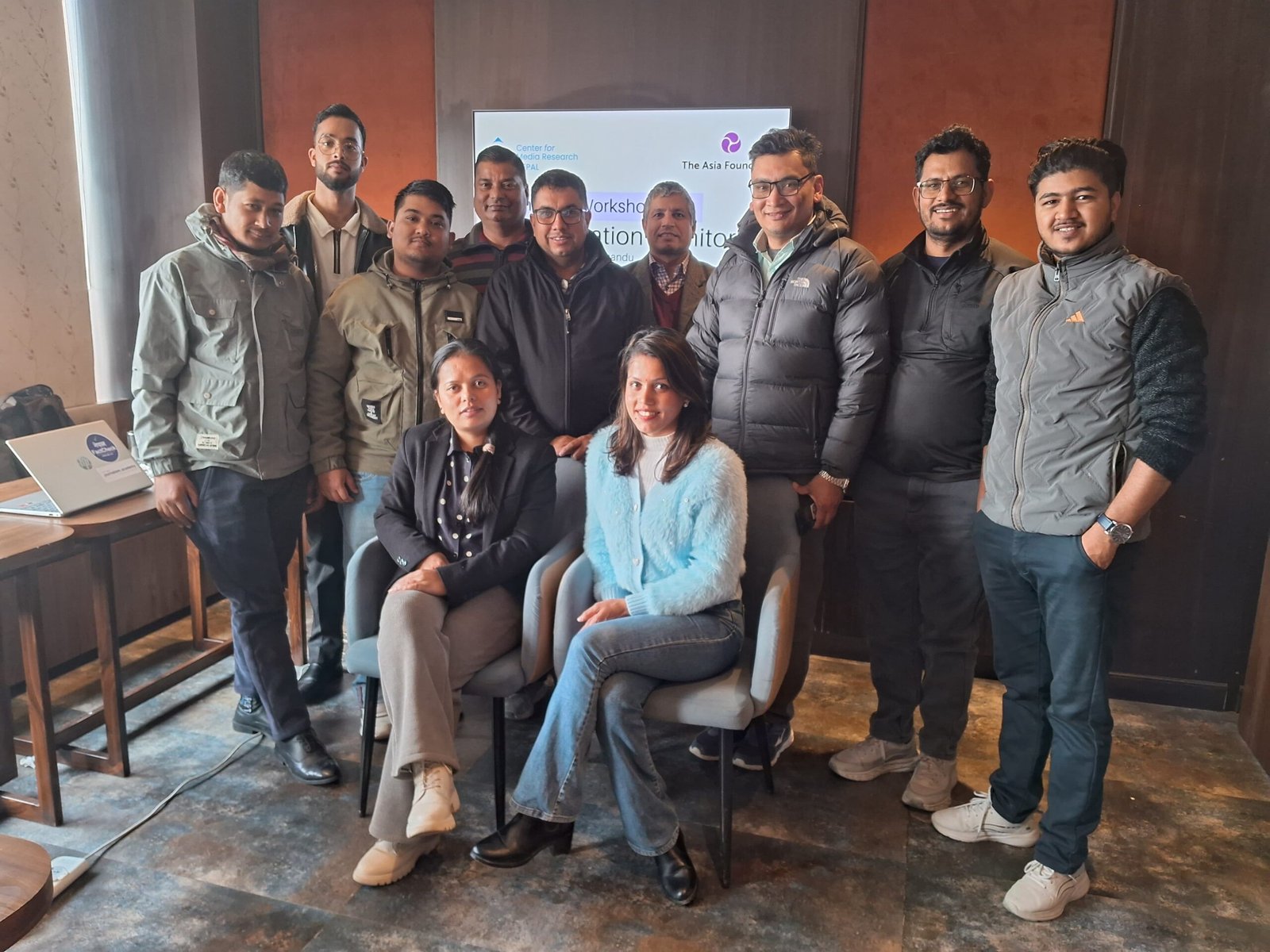
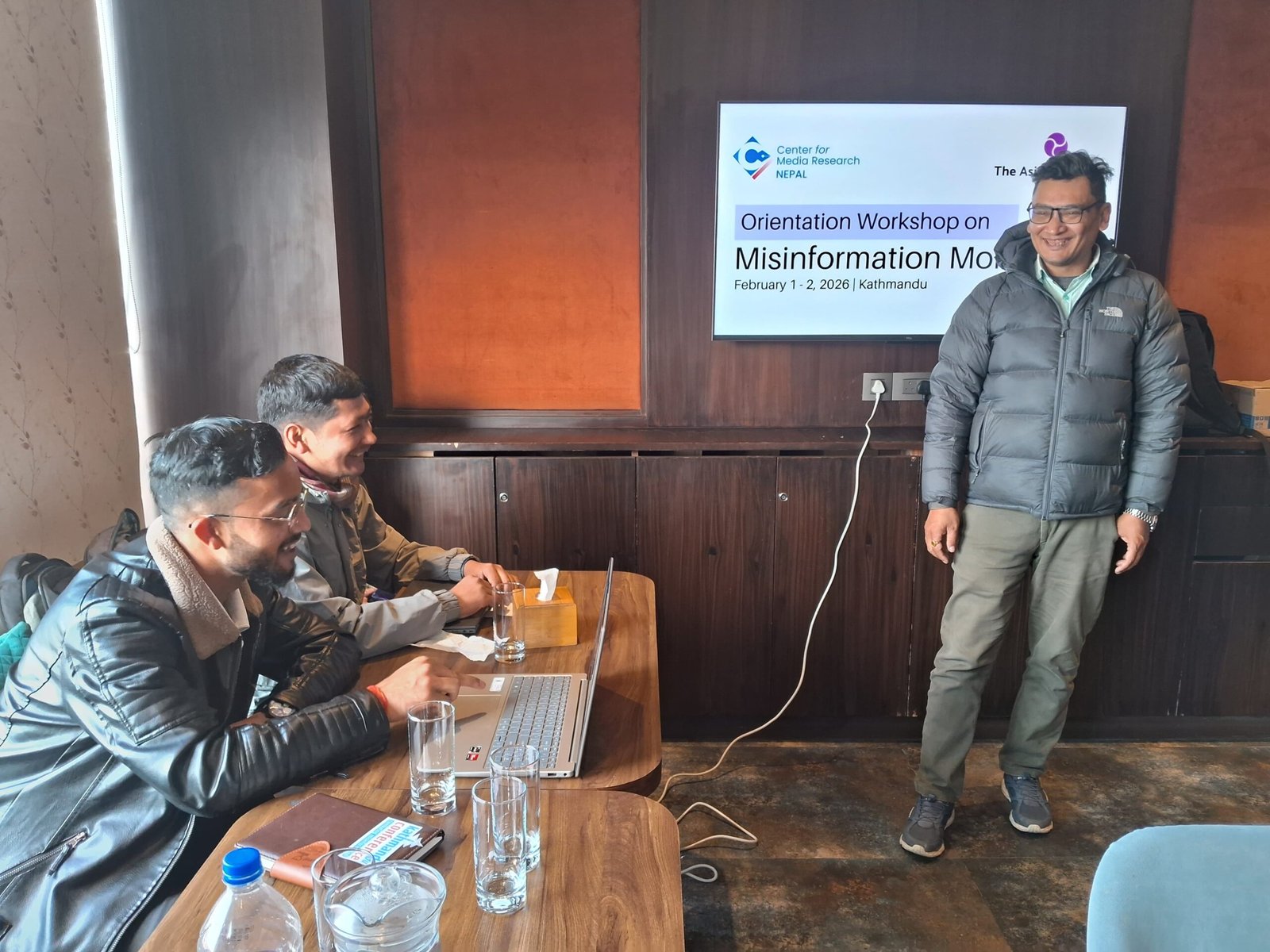
The Center for Media Research – Nepal (CMR-Nepal) organized a two-day orientation workshop on misinformation monitoring for provincial misinformation monitors on February 1 and 2, 2026 in Kathmandu focusing on election-related contents.

The workshop aimed to strengthen provincial-level monitoring efforts that have been ongoing since the 2022 general elections and continue to support CMR Nepal’s research and fact-checking work.

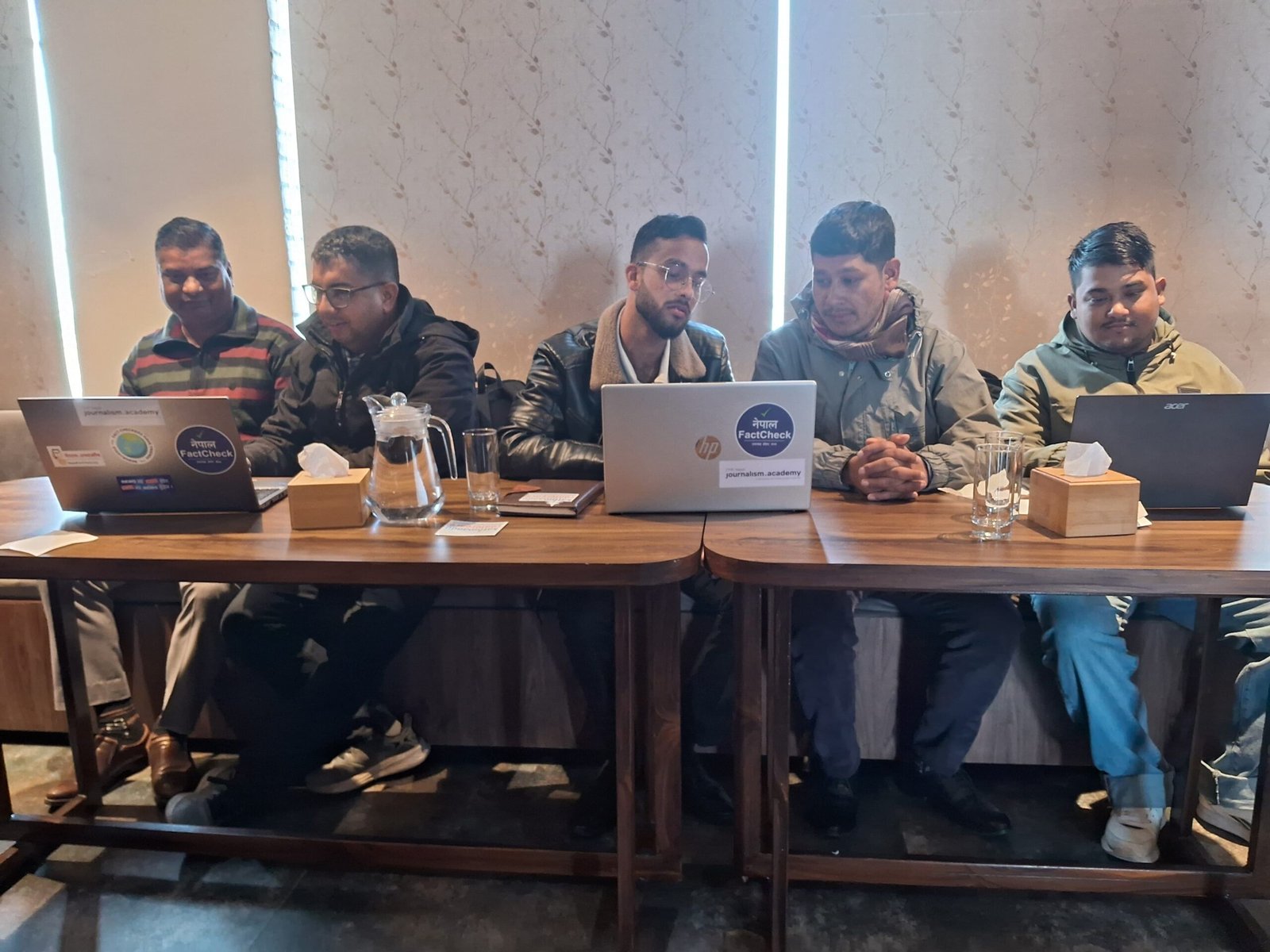
Participants received hands-on training on tracking misinformation across social media platforms and mainstream media, documenting and archiving misleading content, and coordinating as a monitoring team.

The sessions were facilitated by NepalFactCheck editor Umesh Shrestha, assistant fact-check editor Chetana Kunwar, and CMR Nepal Executive Director Tilak Pathak.

Facilitators shared practical tools and methodologies for identifying election-related misinformation and emphasized the importance of timely documentation to inform research and fact-checking to build evidence.

CMR Nepal said the training is part of its ongoing efforts to strengthen provincial capacities to monitor and respond to misinformation, particularly during sensitive political periods, and to ensure credible, evidence-based inputs for fact-checking initiatives nationwide.

Provincial misinformation monitors participating in the workshop are: Nishant Dhungana (Koshi), Ajit Tiwari (Madhesh), Pabitra Parajuli, Tekman Shakya, Suraj Ghimire (Bagmati), Santosh Pokharel (Gandaki), Chandra Prakash Khanal (Lumbini) and Labdev Dhami (Sudurpaschim).

NepalFactcheck.org Collaborate with OnlineKhabar.com to Counter Election Misinformation in Nepal

NepalFactCheck.org has collaborated with OnlineKhabar and Himalaya Television to counter misinformation and disinformation circulating on social media during the upcoming general election scheduled for March 5, 2026.

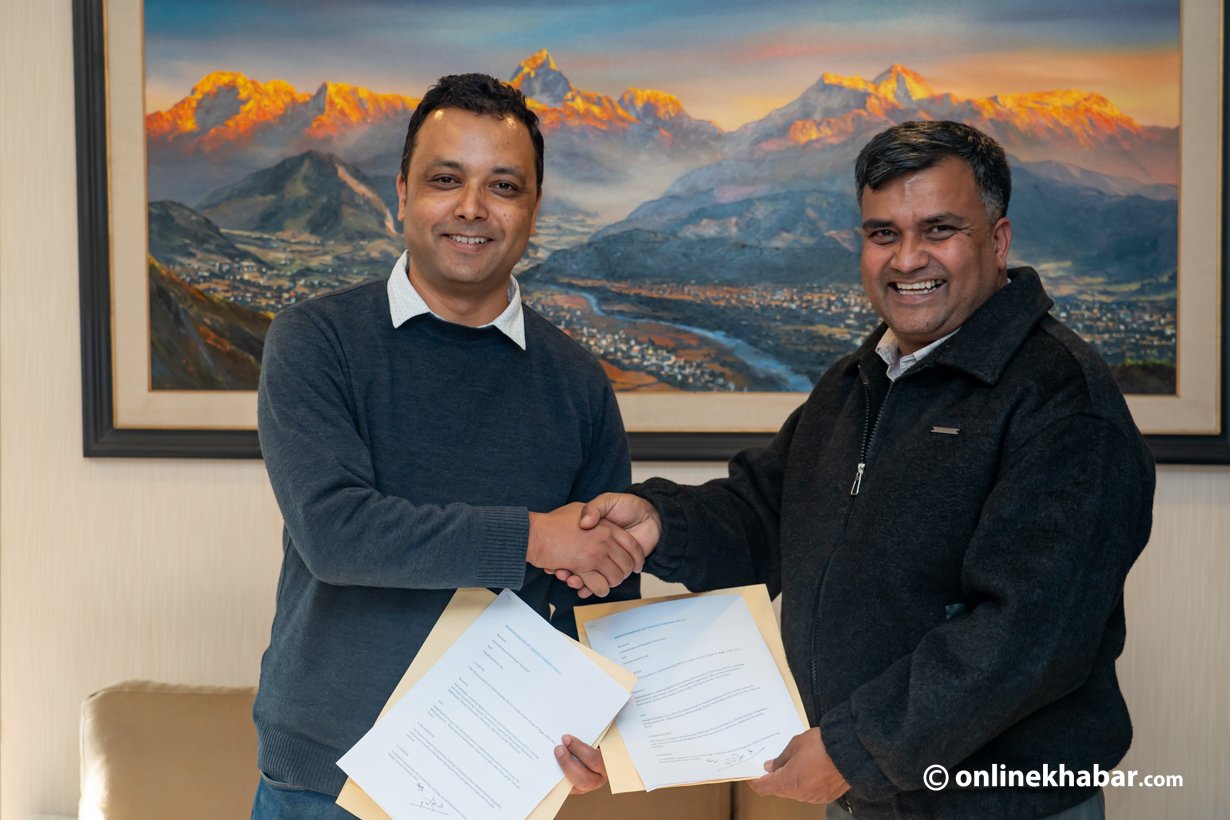
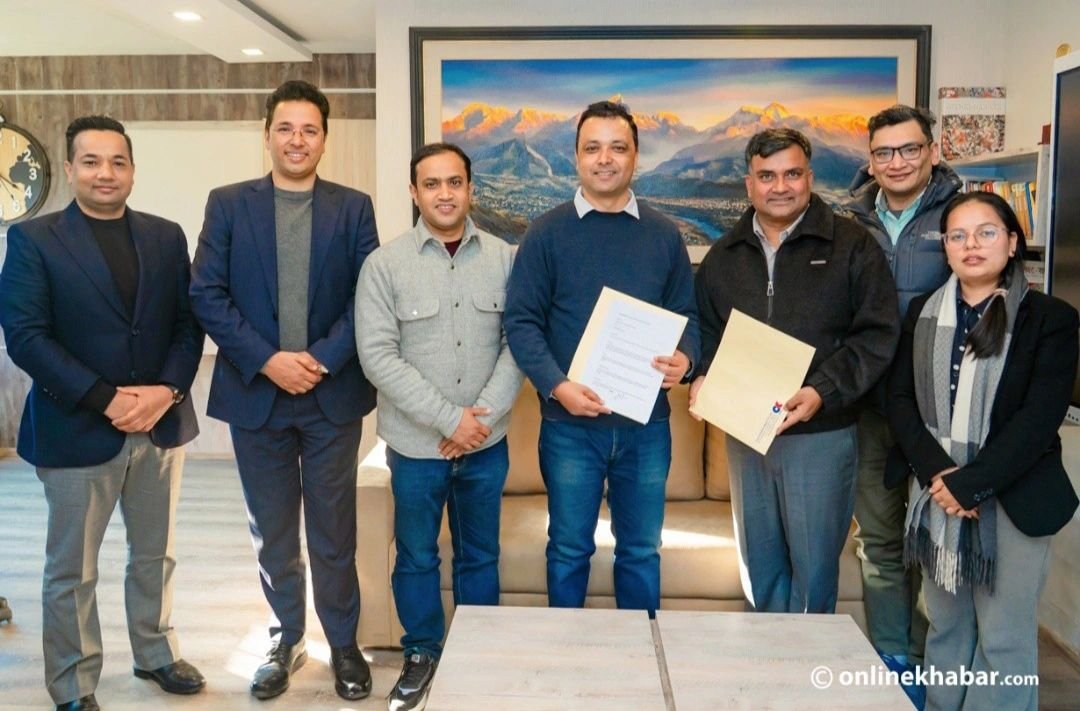
The partnership aims to identify, factcheck and debunk false, misleading and manipulated content related to the election and politics, and to ensure that accurate and verified information reaches the public. A Memorandum of Understanding (MoU) was signed on February 2, 2026 by Ujjwal Acharya, Project Head of NepalFactCheck.org, and Basanta Basnet, Editor-in-Chief of OnlineKhabar.com in presense of Chairman and Managing Direcotor Dharma Raj Bhusal, Executive Director Suresh Bhusal, News Editor Durga Khanal (from OnlineKhabar) and editor Umesh Shrestha and Assitant Factcheck Editor Chetana Kunwar (from NepalFactCheck).

The collaboration recognizes the growing risks posed by misinformation, disinformation, deepfakes and the misuse of artificial intelligence during elections, and their potential to undermine democratic processes and informed decision-making. The signing parties emphasized that fact-checking initiatives are critical during sensitive electoral periods.

NepalFactCheck.org noted that the volume and AI-generated election-related misinformation in Nepal has been increasing, posing risks to the electoral process and democratic practice. The initiative stressed that addressing this challenge requires coordinated efforts across fact-checking initiatives, mainstream media and the broader information ecosystem.

Under the agreement, NepalFactCheck will monitor election-related content circulating on social media platforms and conduct fact-checks on viral contents. These fact-checks will be published by OnlineKhabar while Himalaya Television will broadcast reports based on the verified findings.

OnlineKhabar is Nepal’s leading digital news portal, widely recognized for its extensive national reach and high readership. As one of the country’s most trusted online media platforms, OnlineKhabar plays a important role in disseminating timely news and information to millions of Nepali readers at home and abroad. Its partnership with NepalFactCheck.org strengthens efforts to combat misinformation by combining fact-checking expertise with the reach and credibility of mainstream media.

NepalFactCheck.org was established in March 2020 with the mission of identifying and debunking misinformation that could negatively affect citizens, communities, society, and democracy. Operated jointly by the Center for Media Research–Nepal and MySansar, Nepal’s first Nepali-language blog, NepalFactCheck.org is the only fact-checking organization in Nepal that is a signatory to the International Fact-Checking Network (IFCN) Code of Principles.

CMR-Nepal: 2025 Year in Review

2025 marked the 15th year of Center for Media Research – Nepal (CMR-Nepal). The year reflected an expansion of its works from a primarily research-focused CSO to one engaged in professional media development, grassroots empowerment, and information integrity across Nepal.

2025 at a Glance

  • Journalism courses: 12
  • Journalists trained: 145
  • Workshops conducted: 13
  • People engaged: 272
  • Research & reporting fellowships: 12
  • Publications: 5
  • Fact-checks published: 92
  • Civil society collaborations: 3

Key Areas of Work

Media & Policy Research

The September Gen Z Uprising was a defining moment for CMR-Nepal’s public-interest work. CMR-Nepal played a leading role in monitoring misinformation, fact-checking high-risk claims, and analyzing the effects of social media restrictions on public discourse.

Publications

In 2025, CMR-Nepal strengthened access to global journalism standards in Nepali.

Media Development

2025 was the most successful year for the CMR Nepal Journalism Academy.

  • The Academy surpassed its three-year target, training 299 mid-career journalists by year-end.
  • 42% of participants were women, and more than half came from outside the Kathmandu Valley.
  • 12 specialized eight-week courses were delivered in areas such as data journalism, multimedia storytelling, and podcasting, with support from Interlink Academy (Germany).

Collaboration included:

  • Nepal Sports Journalists Forum (NSJF): Training of Trainers
  • Working Women Journalists (WWJ): Podcasting course
  • Civic Federation Nepal: Digital literacy workshops for women in Madhesh Province

In December, CMR-Nepal hosted a four-day orientation workshop for 12 women journalists selected for the #HerClimateStory Fellowship.

Information Integrity

CMR-Nepal marked the 5th anniversary of NepalFactCheck.org in 2025, reaffirming its leadership in countering misinformation.

  • 92 fact-checks were published during the year.
  • A dedicated fact-checking course trained 12 journalists.
  • Key convenings included:
    • AI, Communication & Journalism Seminar addressing deepfakes and newsroom ethics
    • Responsible AI Use in the Classroom session for university teachers
    • Climate misinformation dialogue with environmental journalists ahead of COP30
    • Content Authenticity Masterclass for senior journalists

Media & Information Literacy

Through the #MILinitiative, CMR-Nepal expanded its reach across all seven provinces.

  • In partnership with CFLI and Purak Asia, 224 youth were trained to counter misinformation and online harassment.
  • 31 youth-led micro-interventions were supported through small grants at the community level.

Other Activities

  • CMR-Nepal leadership participated in Global Investigative Journalism Conference 2025 (Malaysia), integrating global investigative journalism trends into training programs.
  • Executive Director Tilak Pathak provided testimony to the federal parliament on the Media Council Bill, advocating for editorial independence.
  • The organization participated in the National Human Rights Magna Meet 2025.
  • In December, CMR-Nepal held its Social Audit and Annual General Assembly, electing a new board chaired by Navin Khatiwada.

Funders & Partners (2025)

Canada Fund for Local Initiatives (CFLI) • German Ministry for Economic Cooperation (BMZ) • Interlink Academy • International Fact-Checking Network (IFCN) • Purak Asia • RNW Media • The Asia Foundation • UNESCO

#HerClimateStory: Orientation Workshop for 12 Female Journalist on Climate Change Reporting

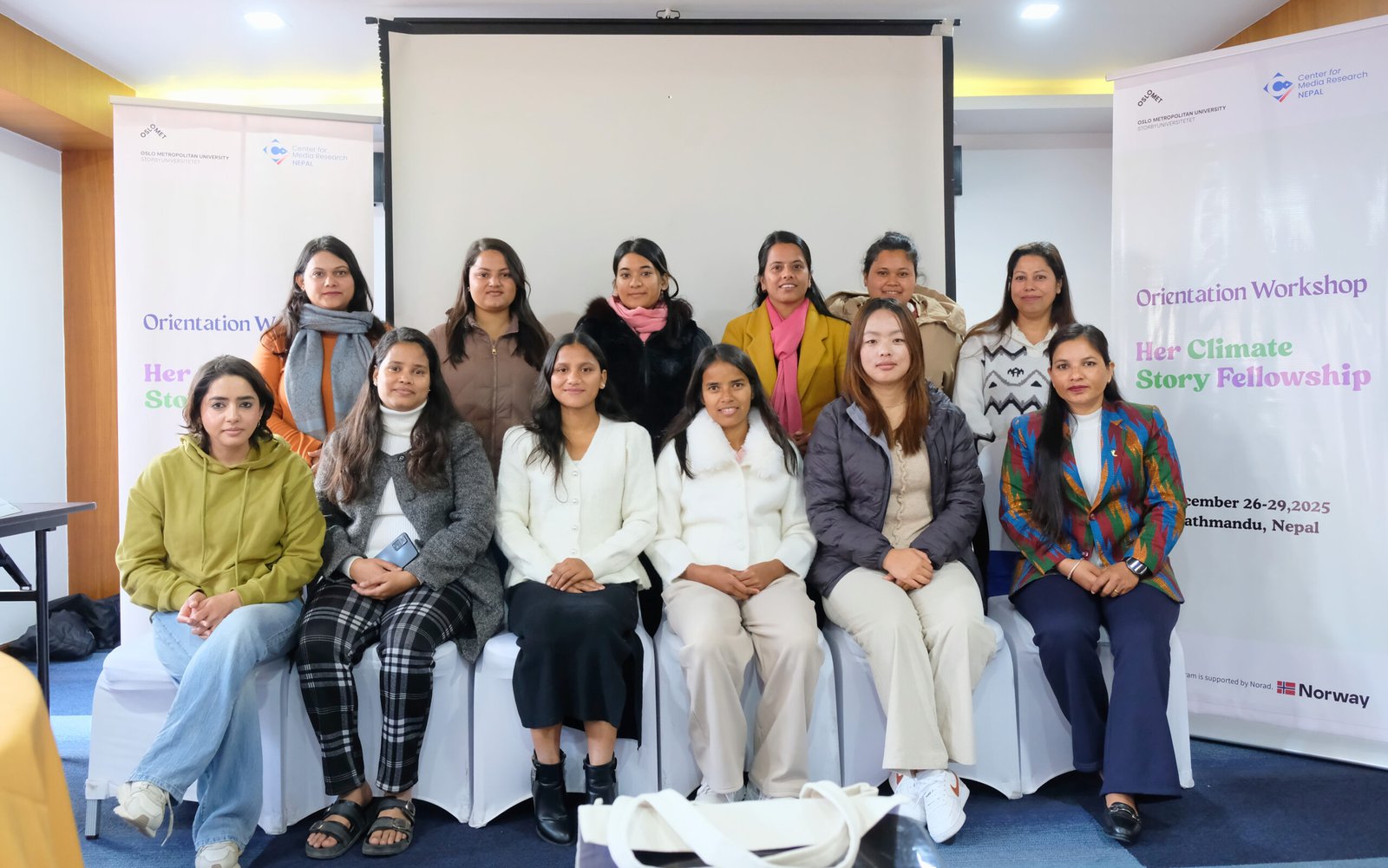
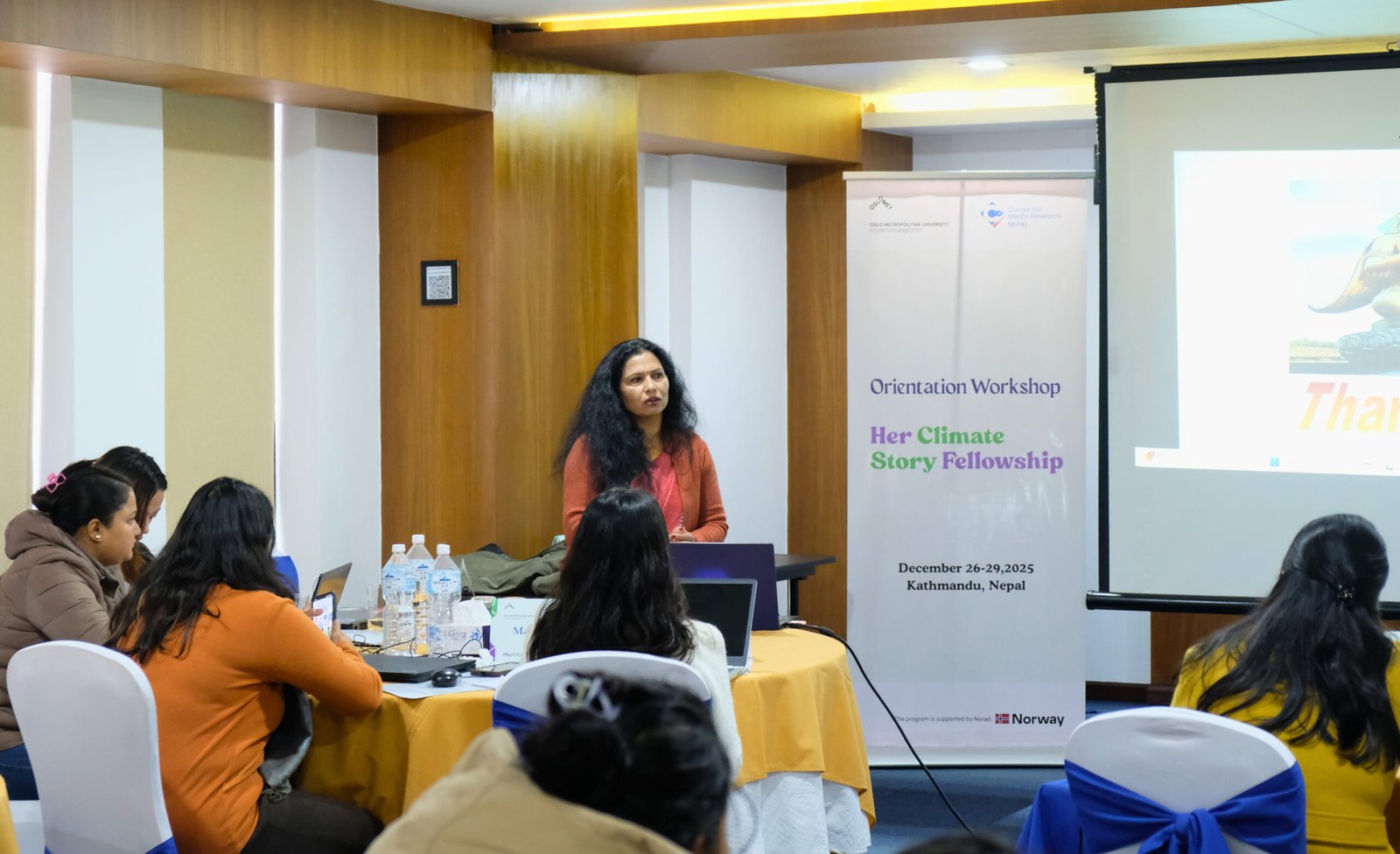
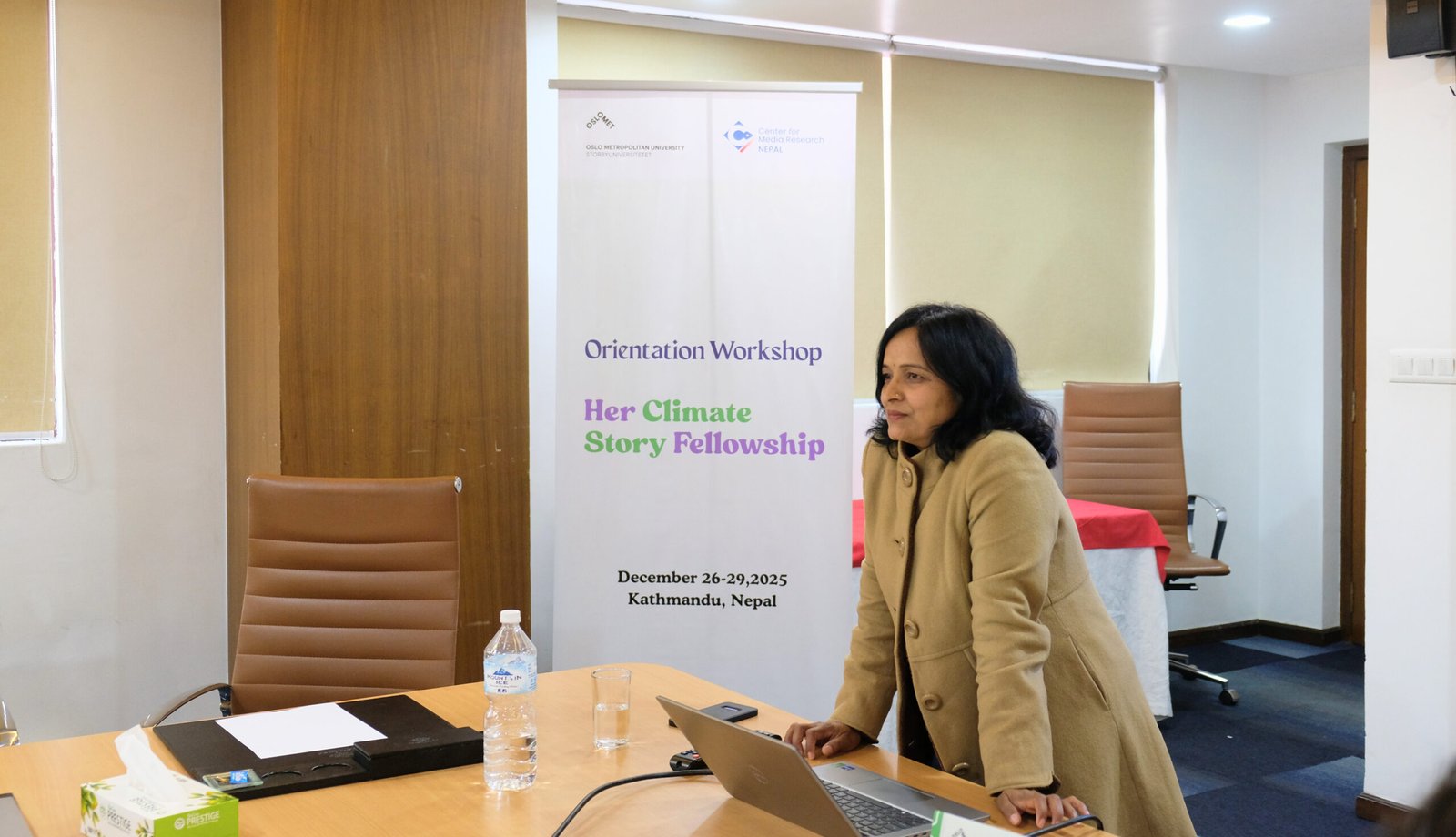
The Center for Media Research – Nepal (CMR–Nepal), with support from Oslo Metropolitan University (OsloMet), Norway launched the #HerClimateStory Climate Change Reporting Fellowship 2025 with an orientation workshop in Kathmandu.

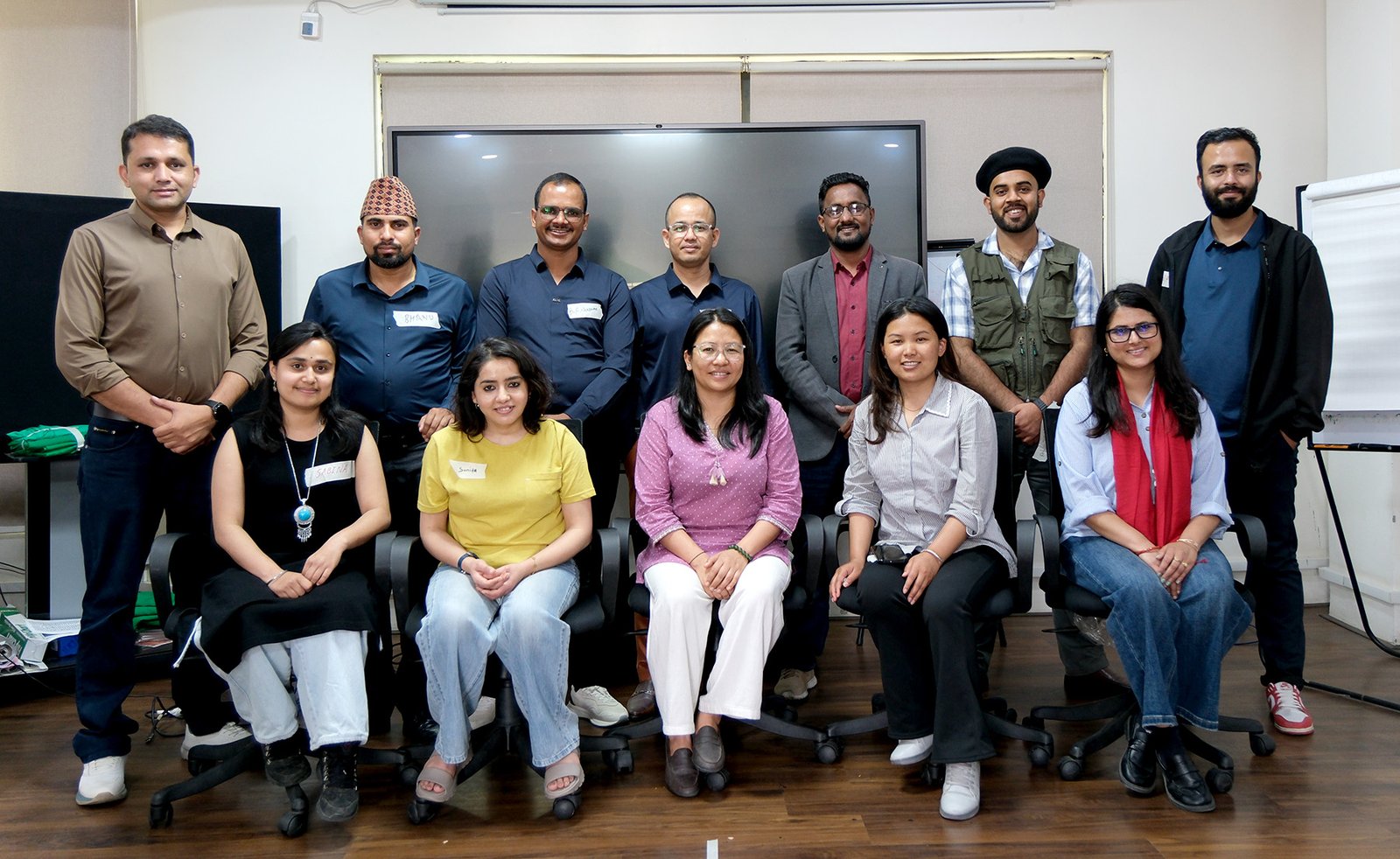
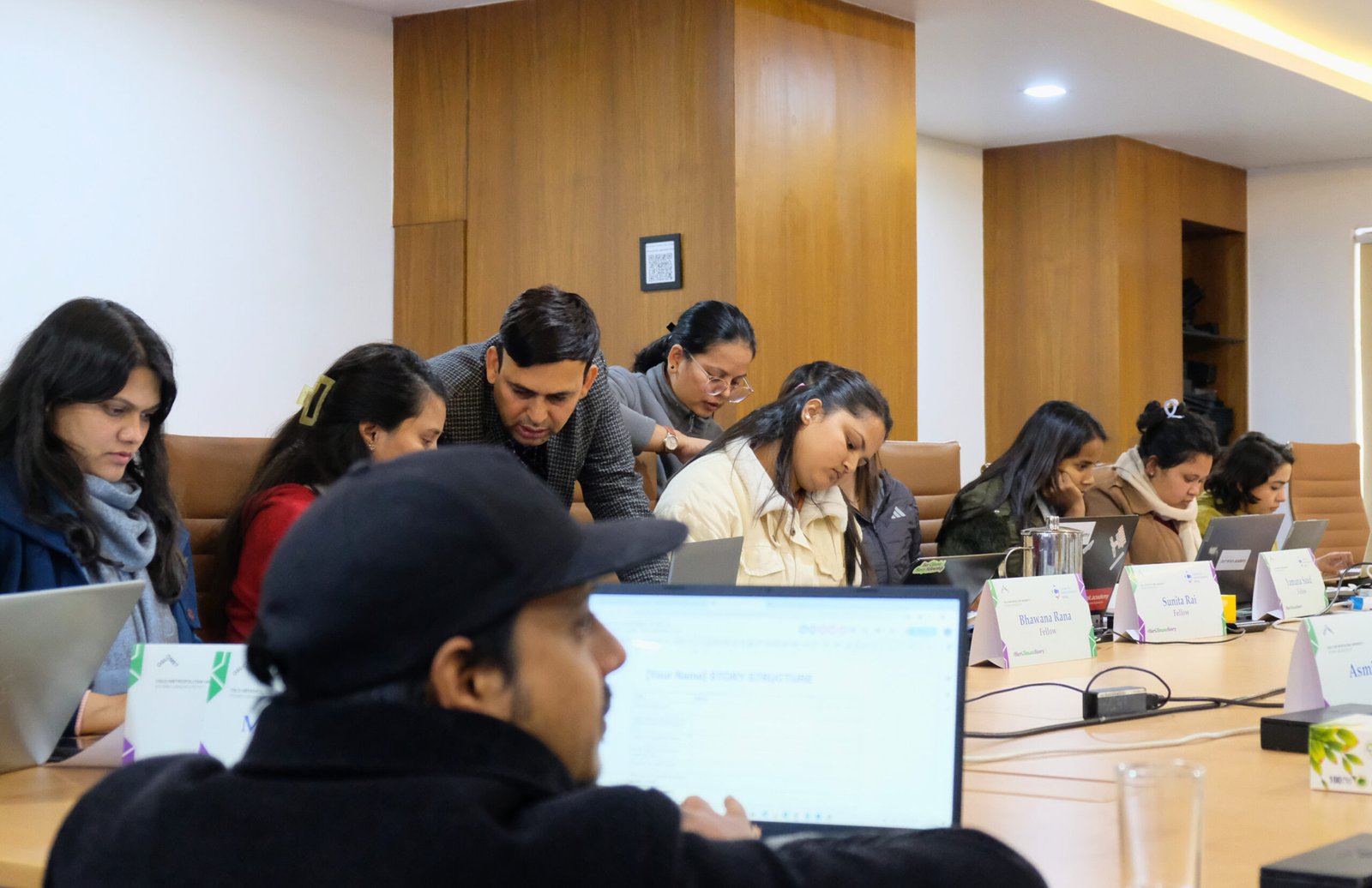
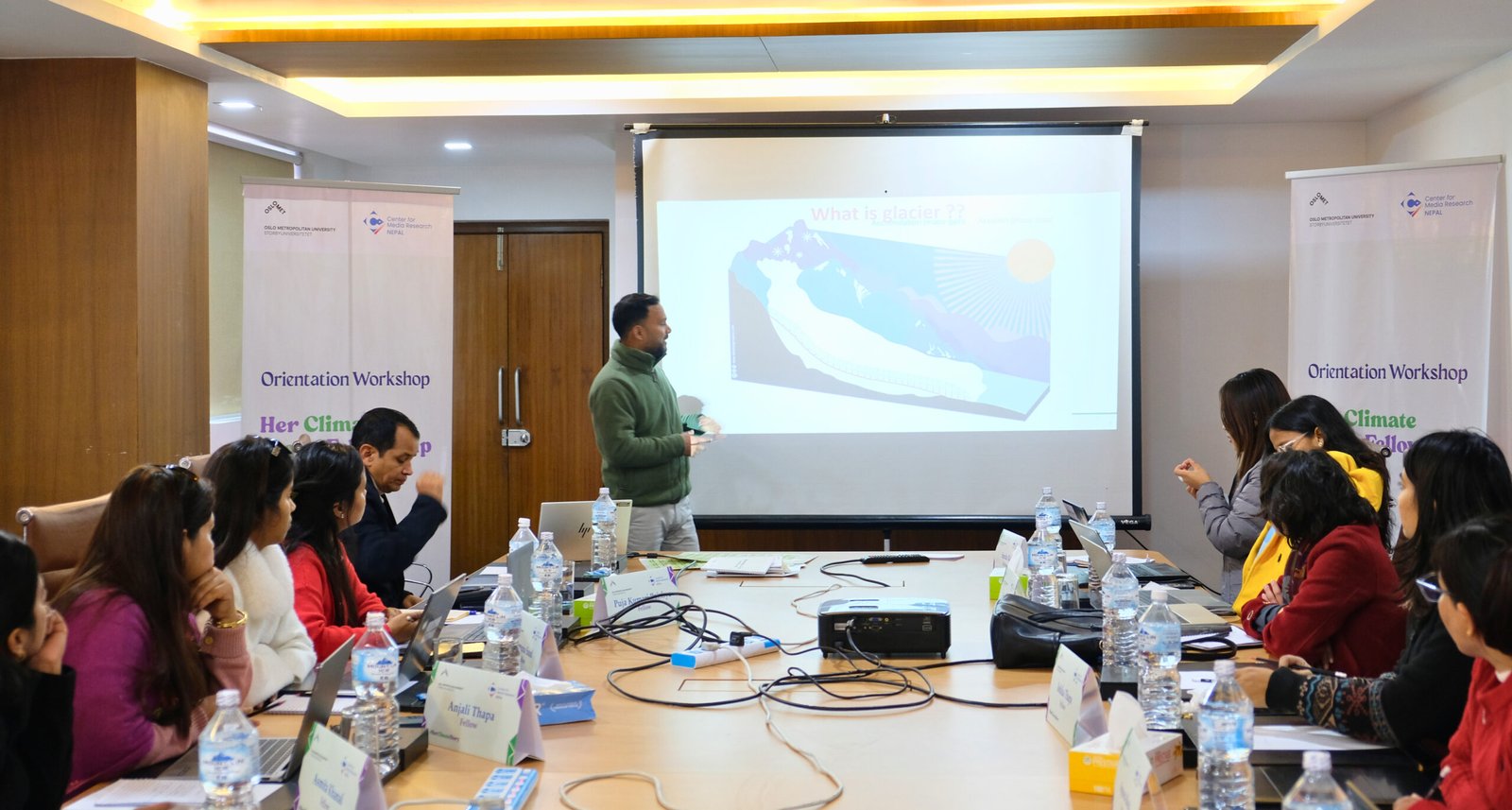
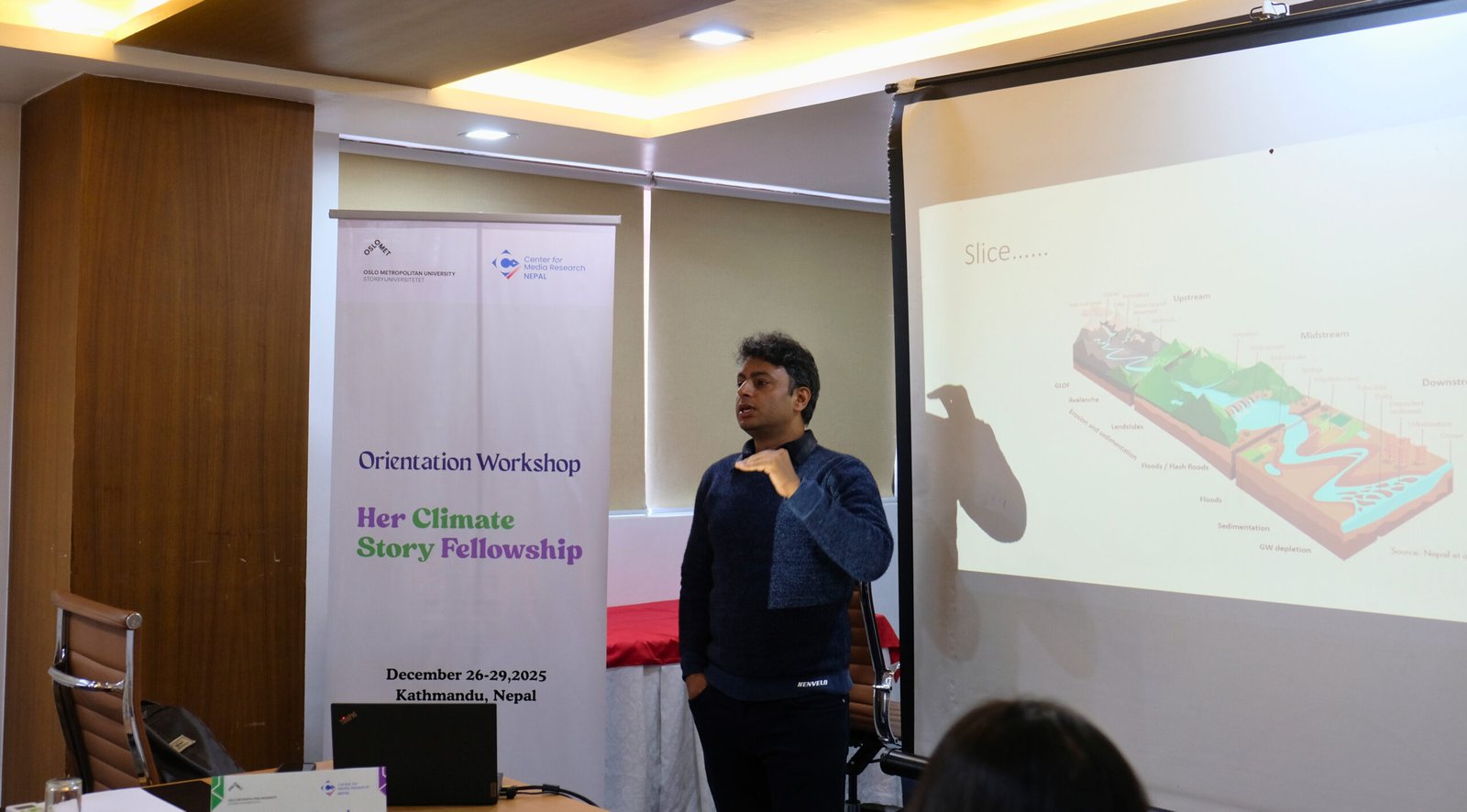
The fellowship began with 12 women journalists from across Nepal participating in a four-day residential orientation workshop in Kathmandu (December 26–29, 2025). Eight of the fellows came from provinces outside the Kathmandu Valley, ensuring regional diversity.

The workshop brought together nine climate experts and senior journalists as well as three mentors creating a collaborative learning space that combined science, policy and storytelling.

The #HerClimateStory fellowship was designed to enhance capacity of women journalists to report on climate change issues as Nepal stands in the frontline of the global climate crisis witnessing melting Himalayan glaciers to climate-induced disasters in the plains.

The #HerClimateStory fellowship is designed with a clear objective: to strengthen the presence, skills and leadership of women journalists in environment and climate reporting in Nepal. Over the course of one month, fellows are expected to produce and publish at least one climate- or environment-related story, participate in national-level discussions on misinformation, and engage in peer learning and reflection.

Orientation Workshop: Learning from Experts

The fellowship began with a virtual session on December 23 where the fellows presented their story ideas and got to know each-other.

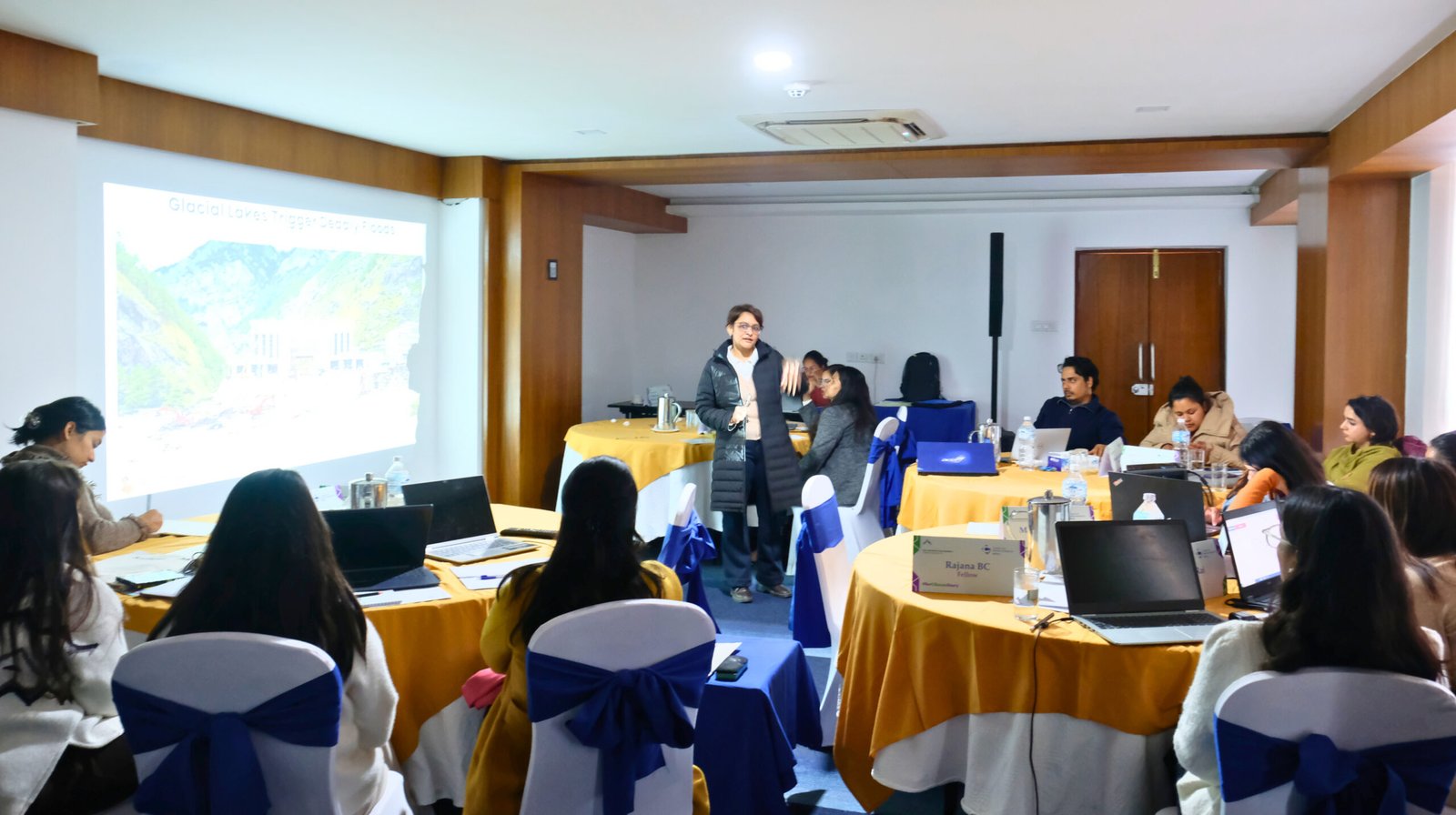
The in-person orientation workshop was structured to bridge the gap between climate science, public policy, and journalistic practice. Sessions combined expert lectures with interactive discussions and newsroom-style mentoring.

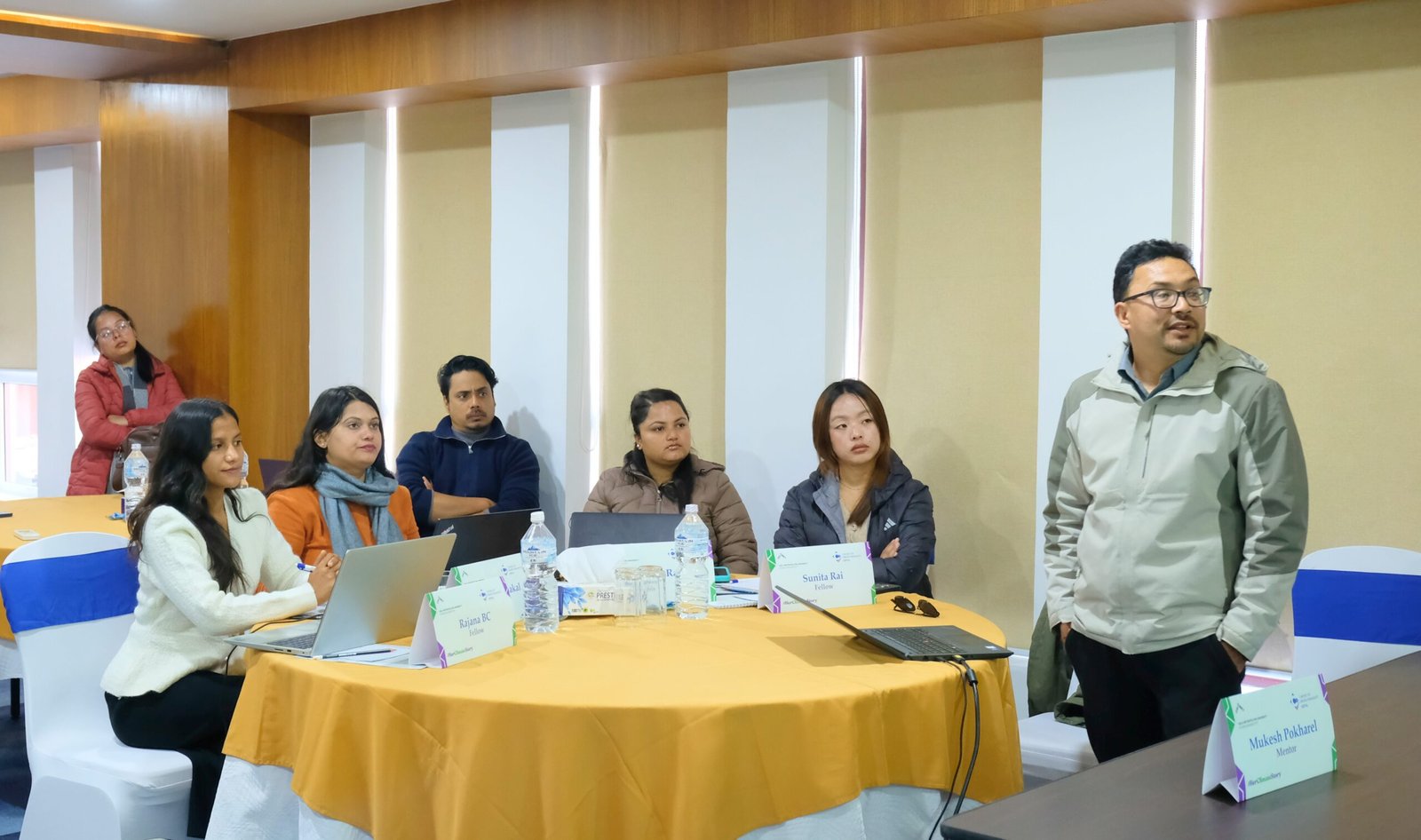
The introductory first day began with project head Chetana Kunwar explaining the fellowship and organizers’ expectations and CMR-Nepal’s Executive Director Tilak Pathak introducting the organization and its works. Then, the fellows introduced themselves, their pitched stories and their expecations from the fellowship. The mentors – Kunwar, climate journalist Mukesh Pokharel and data journalist Arun Karki – discussing each fellow’s story in length.

Climate governance and disaster risk were central themes on the second day of the workshop. Mr. Sushil Kumar Shrestha, Senior Divisional Engineer at the National Disaster Risk Reduction and Management Authority, unpacked Nepal’s disaster risk framework and the role of early warning systems in a changing climate.

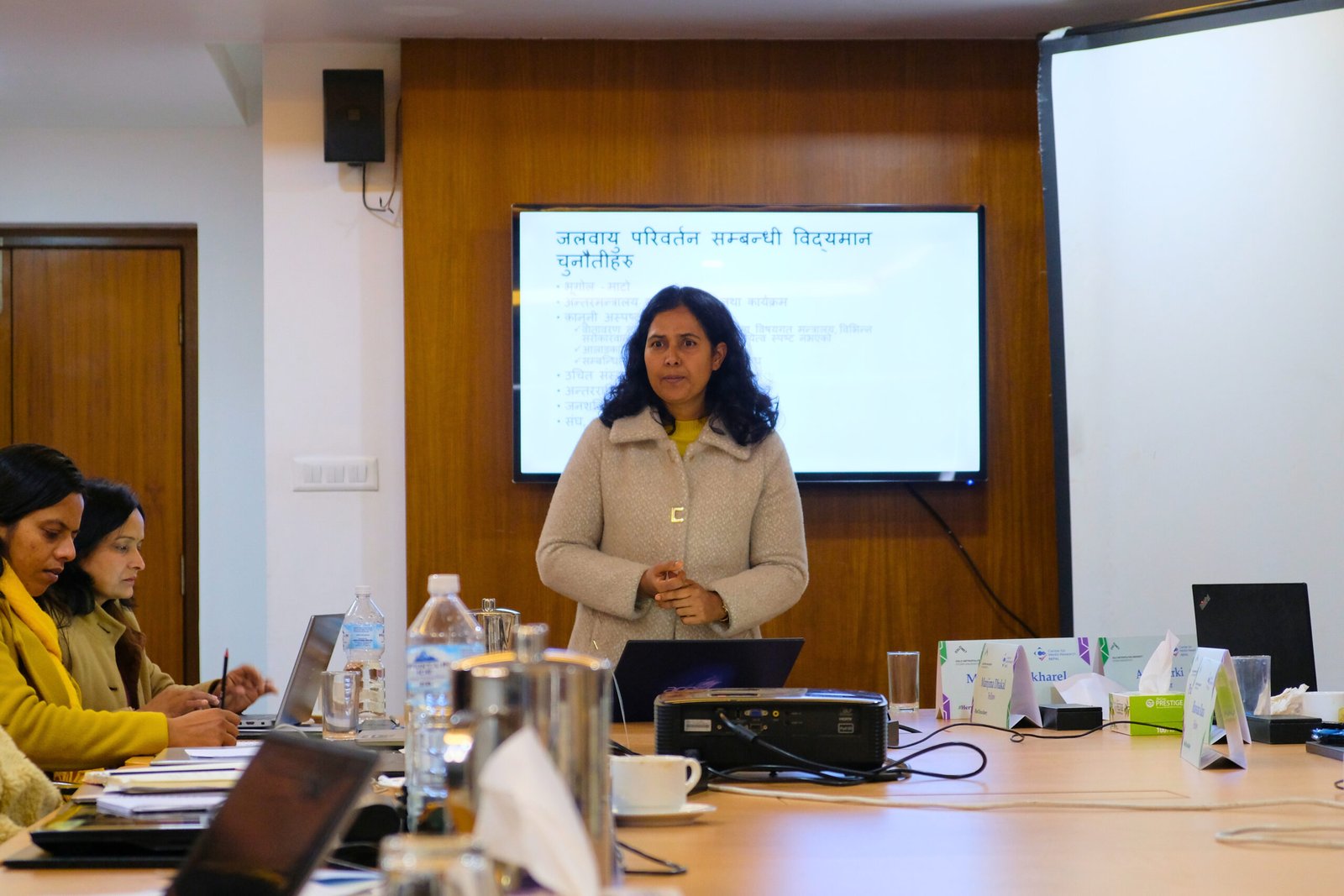
This was followed by a policy-focused session by Ms. Madhu Ghimire, Undersecretary at the Ministry of Forest and Environment, who discussed Nepal’s climate commitments, adaptation priorities, and the challenges of implementation at provincial and local levels .

Journalistic practice was equally emphasized. Ms. Indira Aryal, climate and environment journalist at The Rising Nepal daily, led an in-depth session on climate reporting—highlighting ethical challenges, sourcing scientific data, and translating complex climate information into accessible public narratives. Fellows then worked closely with mentors during newsroom sessions, refining story ideas and angles.

On the third day, the focus shifted to climate science and sectoral impacts. Dr. Mohan Chand, Associate Professor at Kathmandu University and a glaciology expert, provided a compelling overview of climate change and its impact on Nepal’s Himalayan region, emphasizing glacier retreat, glacial lake outburst floods (GLOFs), and data gaps in mountain research.

This was complemented by insights from Mr. Sushil Chandra Acharya, Joint Secretary at the Ministry of Energy, Water Resources and Irrigation, who discussed climate stress on water and energy systems.

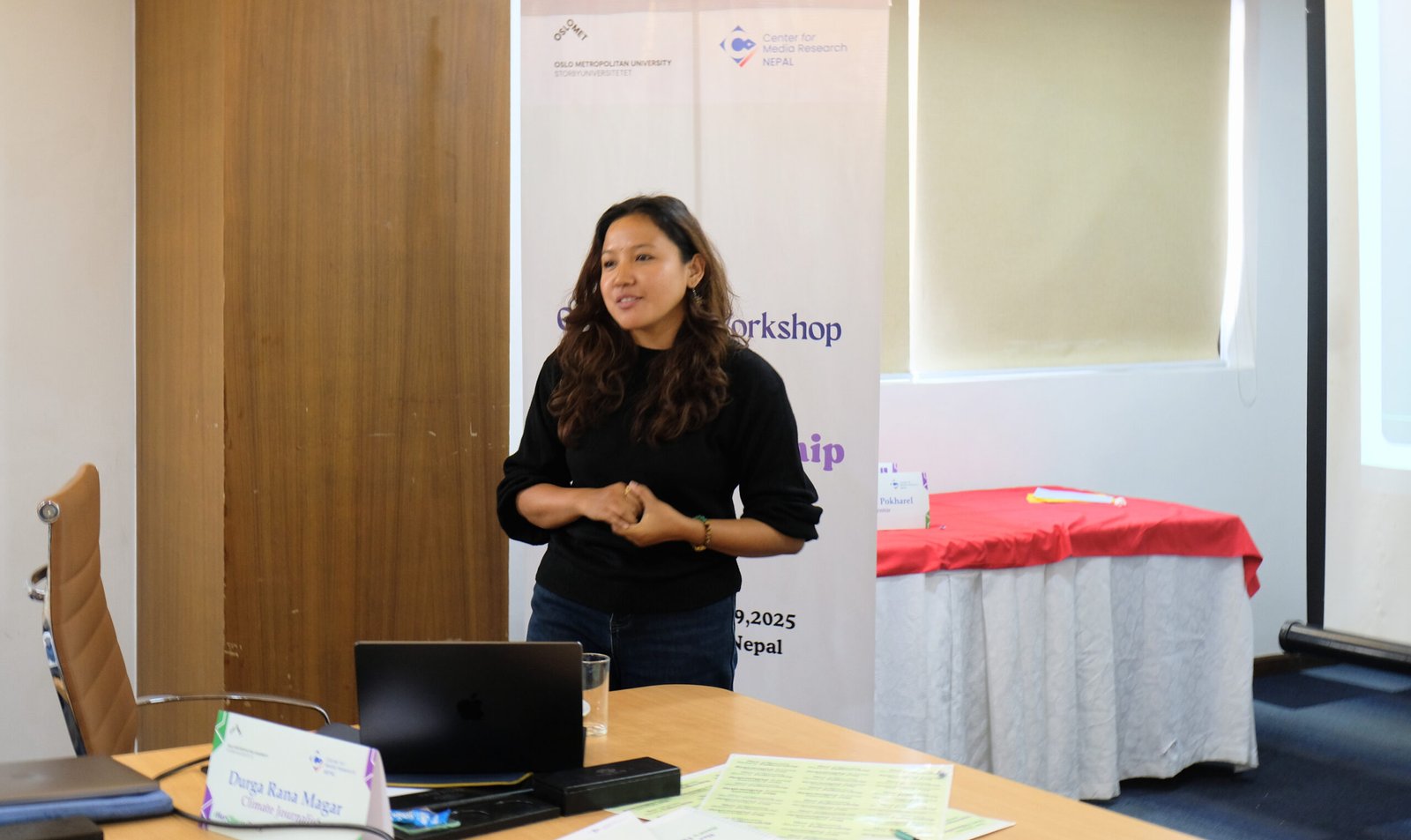
The day also featured experience-sharing from Ms. Durga Rana Magar, climate journalist and EJN Fellow 2025, who reflected on reporting from COP processes and navigating global climate negotiations as a Nepali journalist .

The final day brought together climate reporting and science once again. Mr. Ramesh Bhusal, Climate and Environment Journalist and South Asia Coordinator at the Earth Journalism Network, spoke on investigative climate journalism, cross-border environmental stories, and the importance of regional collaboration.

Expert inputs from government were further strengthened by Ms. Januka Pandit, Joint Secretary and Climate Change Focal Person at the Ministry of Agriculture and Livestock Development, who highlighted climate impacts on food systems and farmers’ livelihoods.

The final expert session was led Ms. Indira Kandel, Senior Meteorologist at the Department of Hydrology and Meteorology, focusing on weather data, forecasting, and how journalists can responsibly report on extreme weather events .

Throughout the workshop, fellows worked intensively with mentors Kunwar, Karki and Pokharel, transforming ideas into story pitches and draft outlines. These newsroom sessions emphasized editorial rigor, field-based reporting, and ethical storytelling especially when covering climate-affected communities.

The #HerClimateStory fellowship is more than a training program. It is an investment in long-term, inclusive climate journalism in Nepal. As these fellows return to their newsrooms and communities, their reporting will help amplify local climate realities, challenge misinformation, and ensure that women’s perspectives are central to Nepal’s climate discourse.

CMR–Nepal remains committed to nurturing this network of women climate journalists and to building a more informed, equitable, and resilient public sphere around climate change in Nepal.

Meet the #HerClimateStory Fellows 2025

The open call for application for the fellowships was answered by 86 women journalists of Nepal, who all pitched two story ideas. A three-member selection committee led by Ms. Indira Aryal selected the following fellows based on their story ideas.

Anjali Thapa (RSS, Bagmati Province) brings thirteen years of reporting experience at the national news agency, with a strong focus on women, marginalized communities, natural resources, community forestry, and climate change.

Apsara Bista (NepalPress.com, Karnali Province) is a Surkhet-based journalist covering politics and social issues across Karnali, one of Nepal’s most climate-vulnerable regions.

Asmita Khanal (Public 4K TV, Gandaki Province) is a multimedia journalist from Tanahun with experience in television and online reporting, specializing in field-based storytelling.

Bhagirathi Pandit (Freelancer, Bagmati Province) is an investigative journalist with eight years of experience across radio, television, and digital media, and a strong portfolio in climate, health, and education reporting.

Bhawana Rana (NepalViews.com, Karnali Province) is a journalist and producer focusing on climate change, disaster risk reduction, governance, and youth issues.

Ishika Thapa (Kalam Weekly, Bagmati Province) works as a reporter and social media associate, covering politics, local governance, feminism, youth, and climate narratives.

Manjima Dhakal (The Rising Nepal, Bagmati Province) has fourteen years of reporting experience and covers social issues, education, environment, gender, and human rights for the state-owned English daily.

Pooja Kumari Baishya (Freelancer, Lumbini Province) is a Nepalgunj-based journalist, researcher, and activist whose work spans SRHR, elections, misinformation, and women’s empowerment.

Ranjana B.K. (Kantipur, Sudurpaschim Province) reports on political, social, and economic issues while pursuing formal studies in journalism.

Sunita Neupane (Freelancer, Kathmandu Valley) is a feature journalist and Reporter-in-Residence at Global Press Journal, covering civil liberties, health, environment, and women’s and children’s rights.

Sunita Rai (Radio Nepal, Koshi Province) is a senior radio journalist and station manager with leadership experience in the Federation of Nepali Journalists, Ilam.

Yamuna Saud (Sudurpatra.com, Sudurpaschim Province) is an emerging journalist from Kailali, combining academic training with local radio and digital reporting experience.

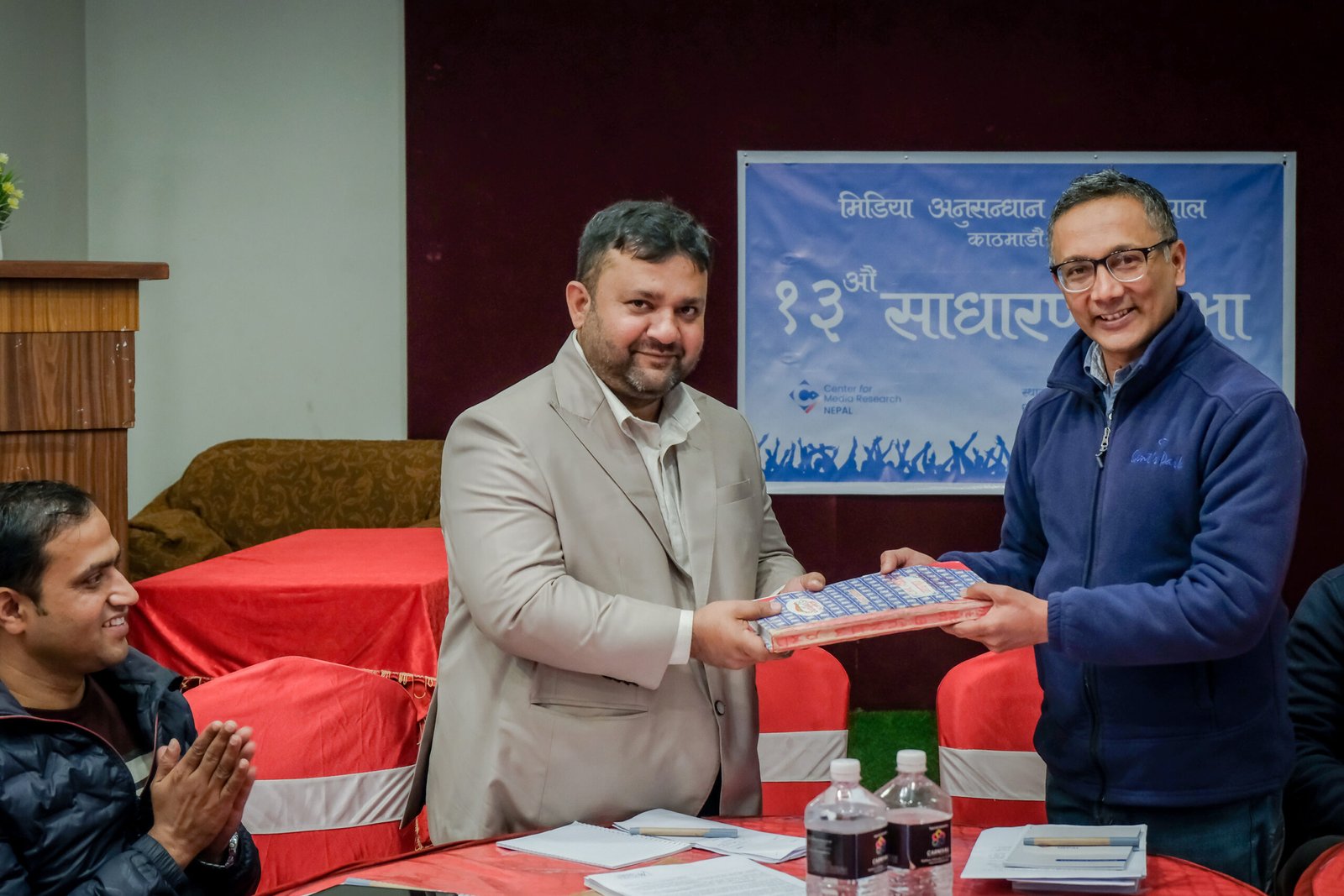
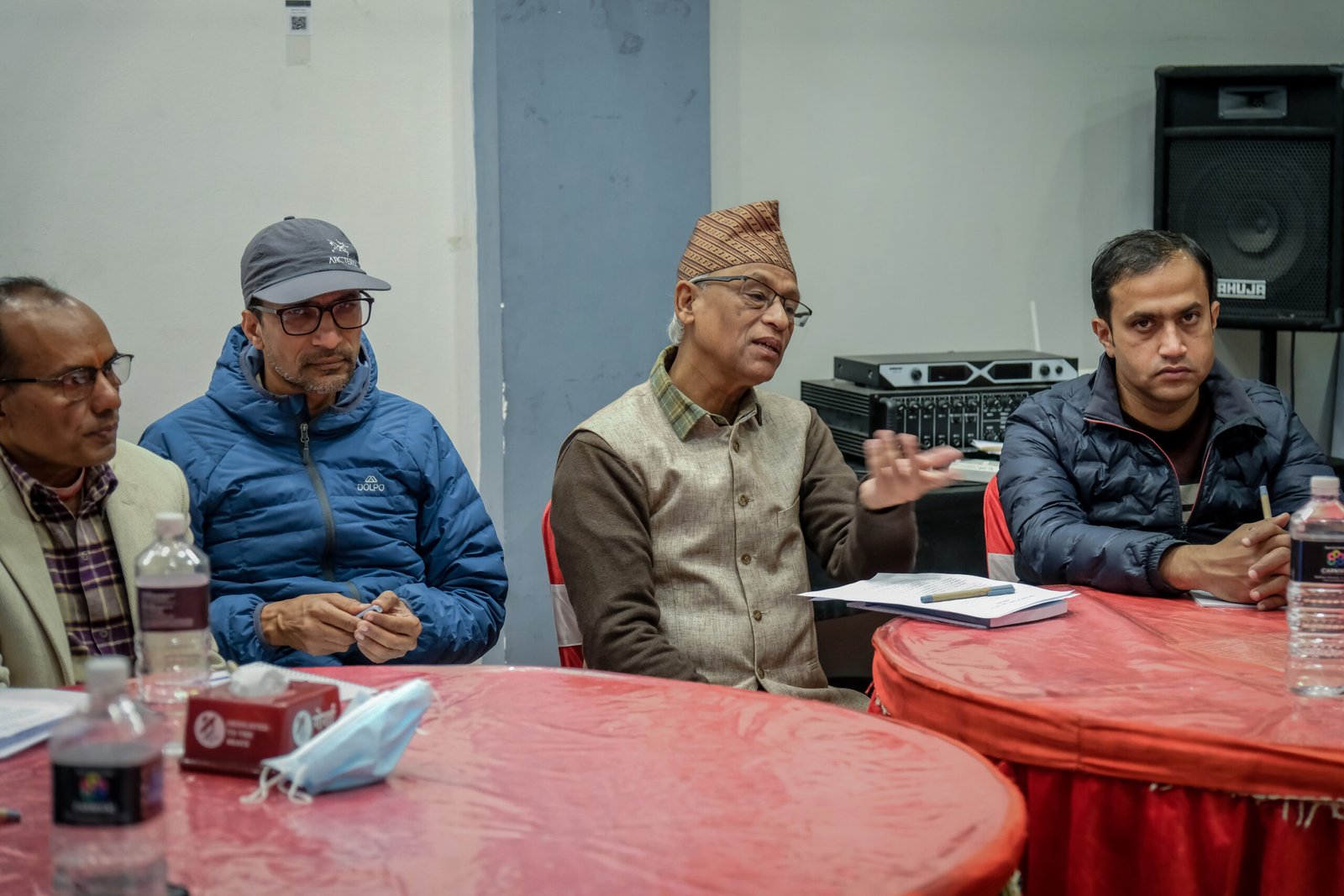
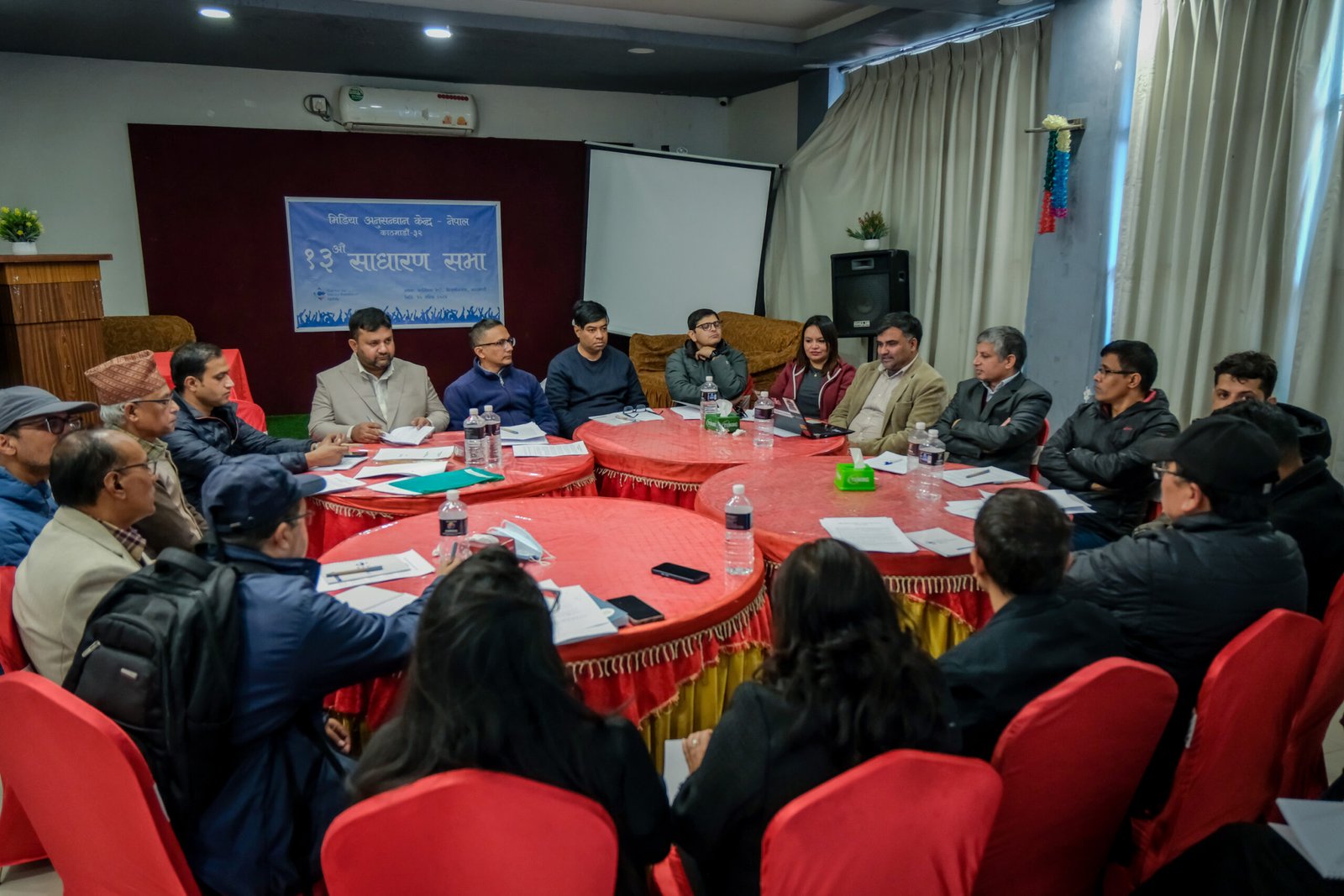
Navin Khatiwada Elected Chair at CMR-Nepal’s 13th AGM

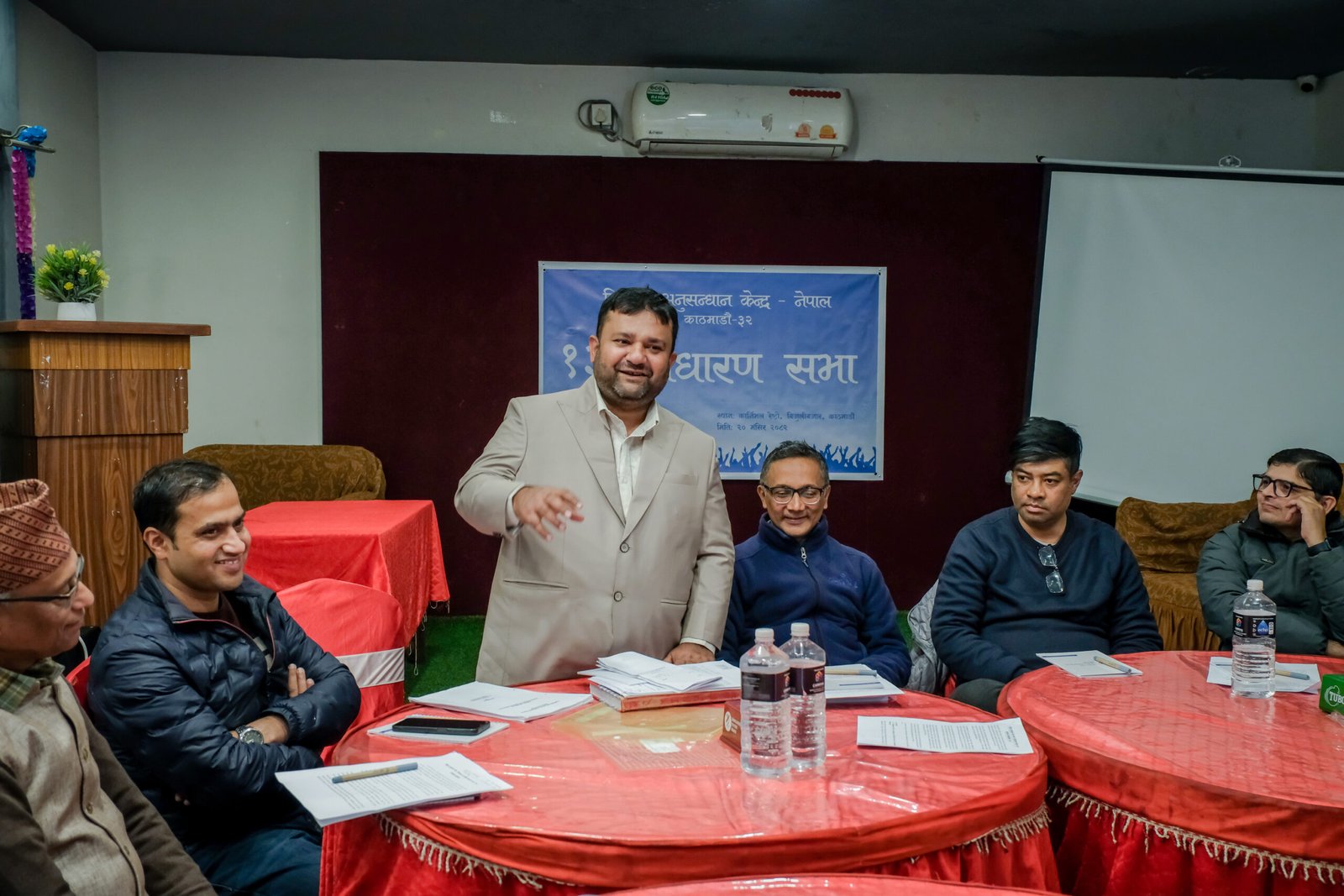
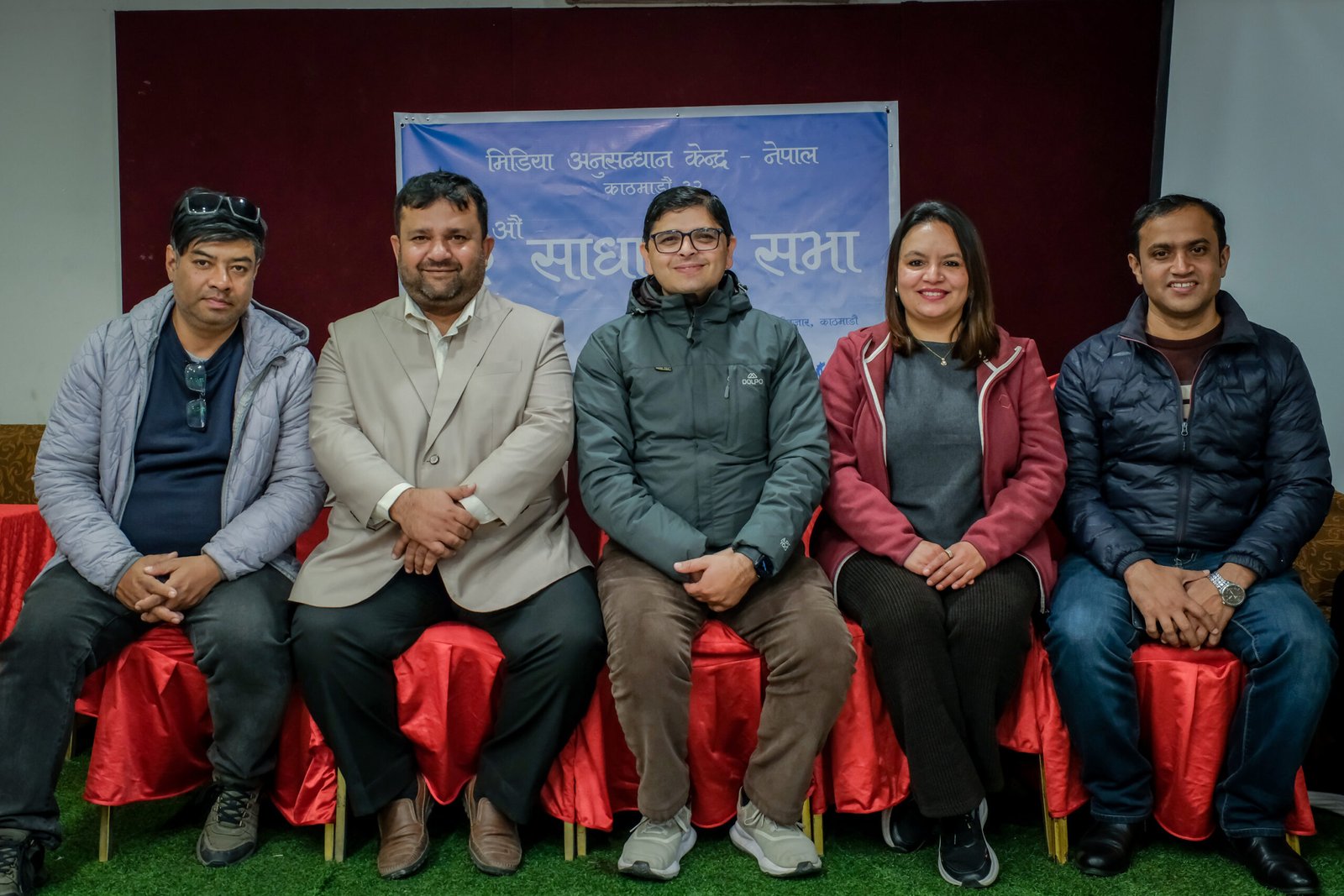
The 13th Annual General Assembly of the Center for Media Research – Nepal (CMR-Nepal) unanimously elected a new Executive Committee for the next two years. Navin Khatiwada will chair the Committee, which comprises Deputy Chair Shruti Shrestha, Secretary Kanchan Adhikari, Treasurer Himesh Ratna Bajracharya, and Members Sunita Karki, Aneeta Shah, and Durga Khanal. The new Board will serve for the term 2026–27.

Khatiwada succeeds Deepak Aryal, under whom he served as Secretary of the previous Executive Committee. A journalist-turned-book publisher, Khatiwada has previously worked with Radio Kantipur, Kantipur Television, and Republica daily.

Addressing members after his election, Chair Khatiwada reflected on how he had benefitted from CMR-Nepal’s research fellowship program, which supported his master’s research in journalism.

He said: “I now see that misinformation is slowly making its way into fiction and other books our children read. We need to strengthen our fight against misinformation, and I want to see CMR-Nepal expand its already strong work in combating it.”

During the AGM, outgoing Chair Aryal formally handed over responsibilities to Khatiwada and extended his best wishes.

Aryal said: “When I was elected four years ago, I emphasized the need to publish semi-academic books. I am happy to share that we published four quality books during my tenure.”

During Aryal’s leadership, CMR-Nepal published two edited anthologies of research articles—Media and Corruption (in Nepali, 2024) and Nepal’s Misinformation Landscapes (2025). It also published Digital Landscape by Dr. Rishikesh Dahal and the Nepali translation of the renowned German textbook Journalism Handbook.

The AGM opened with remarks from Prof. P. Kharel, Nepal’s first journalism professor and an advisor to CMR-Nepal, who expressed his hope for the continued advancement of media, journalism, and media research initiatives.

The AGM also approved new membership applications from Sabita Acharya, Nasana Bajracharya, Arun Karki, and Kiran Dahal. Acharya is a successful podcaster; Bajracharya, formerly with onlinekhabar.com, is a respected journalism trainer; Karki is a pioneering data journalist and trainer; and Dahal is a journalist with ukaalo.com. All four are currently journalism trainers at the CMR-Nepal Journalism Academy.

The 13th AGM was preceded by the 4th Social Audit Program.

Tilak Pathak re-appointed Executive Director

The newly elected Executive Committee, in its first meeting, re-appointed Tilak Pathak as the Executive Director for its term.

CMR-Nepal’s Executive Director’s term is tied with the term of the Executive Committee allowing the incoming committee to choose the head of secretariat.

Pathak has served as the Executive Director since 2018.

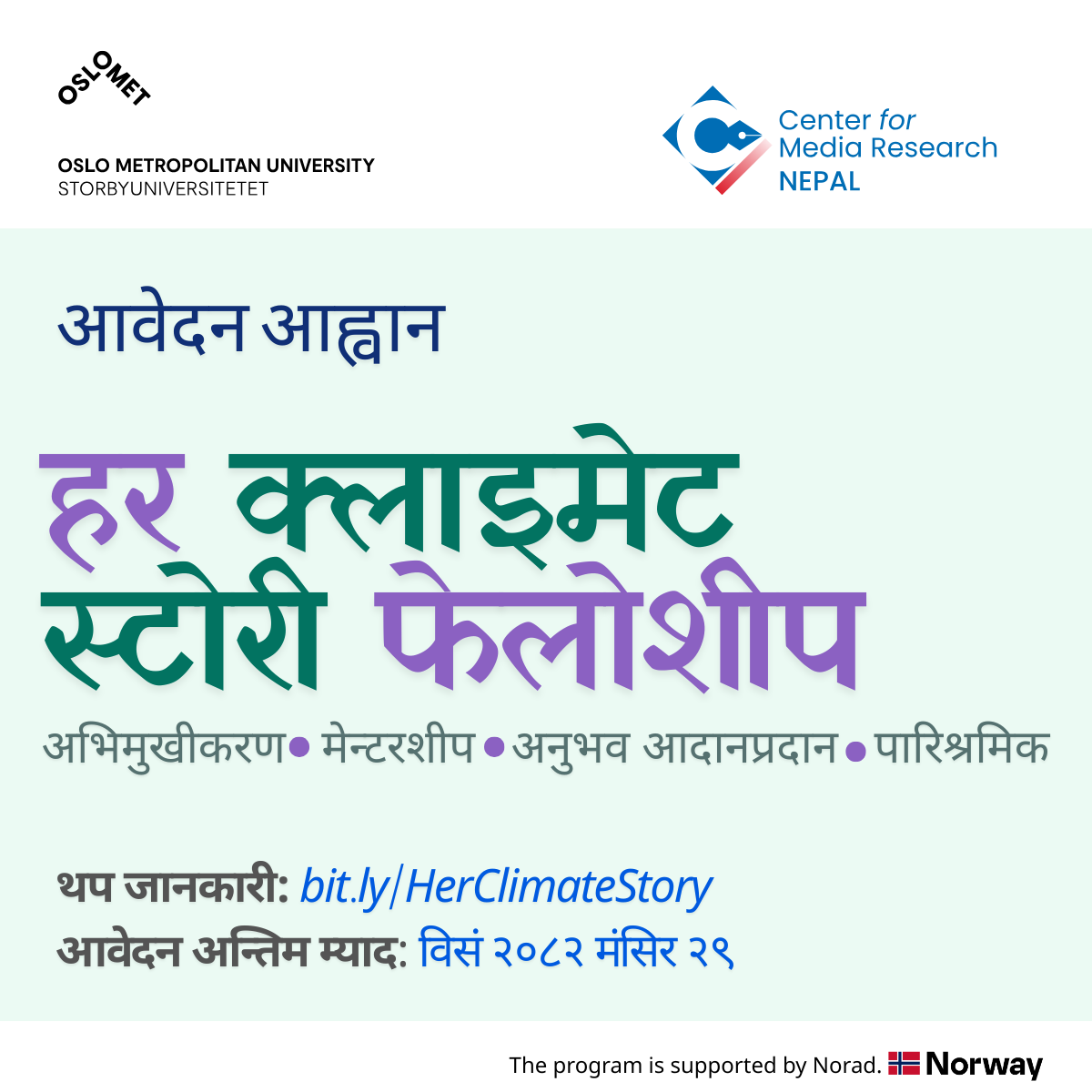
Applications Open for the “Her Climate Story Fellowship”

नेपाली भाषाका लागि तल स्क्रोल गर्नुहोस् ।

With an aim of empowering the presence of women journalists in environment and climate journalism, the Center for Media Research – Nepal (CMR-Nepal), with support from Oslo Metropolitan University, Norway, under the Norwegian Agency for International Development Aid (Norad) has opened applications for the Her Climate Story Fellowship.

This one-month fellowship will be awarded to 12 Nepali women journalists selected from the applications.

Women journalists receiving the fellowship will be required to:

  • Participate in a residential orientation in Kathmandu from December 25 to 28.
  • Produce and publish/broadcast at least one environment- or climate-related media content.
  • Participate in the Kathmandu Conference on Combating Misinformation on January 24 and 25. (optional for Kathmandu-based fellows)
  • Participate in a half-day experience-sharing program on January 26.

All expenses for the orientation, the Kathmandu Conference, and the experience-sharing program will be covered by CMR-Nepal.

Women journalists who complete the required fellowship activities will receive an incentive of NPR 25,000. In addition, they will be placed on a priority list for future capacity-building and environment/climate journalism programs organized by CMR-Nepal.

Click here to apply.

“हर क्लाइमेट स्टोरी फेलोशीप” का लागि आवेदन खुला

वातावरण / जलवायु पत्रकारितामा महिला पत्रकारहरूको उपस्थितिलाई सशक्त बनाउने उद्देश्यले सेन्टर फर मिडिया रिसर्च – नेपाल (सिएमआर-नेपाल) ले नर्वेको ओस्लो मेट्रोपोलीटन युनिभर्सिटीको सहयोगमा प्रदान गर्न लागेको हर क्लाइमेट स्टोरी फेलोशीपका लागि आवेदन खुला गरेको छ ।

एक महिनाको यो फेलोशीप प्राप्त आवेदनबाट छानिएका १२ नेपाली महिला पत्रकारहरूका लागि प्रदान गरिने छ ।

फेलोशीप प्राप्त गर्ने महिला पत्रकारहरूले निम्न जिम्मेवारी बहन गर्नुपर्नेछ:

  • काठमाण्डौँमा पुस १० देखि १३ सम्म आवसीय अभिमुखीकरणमा सहभागी हुनुपर्नेछ ।
  • कम्तीमा एउटा वातावरण / जलवायुसम्बन्धी मिडिया सामग्री उत्पादन र प्रकाशन/प्रसारण गर्नुपर्नेछ ।
  • माघ १० र ११ मा हुने काठमाण्डौँ कन्फ्रेन्स अन कम्ब्याटिङ् मिसइन्फर्मेसनमा सहभागी हुनुपर्नेछ । (काठमाण्डौँ उपत्यकाका सहभागीलाई स्वेच्छिक)
  • माघ १२ मा हुने आधा दिने अनुभव आदानप्रदान कार्यक्रममा सहभागी हुनुपर्नेछ ।

अभिमुखीकरण, काठमाण्डौँ कन्फ्रेन्स र अनुभव आदानप्रदान कार्यक्रमको सम्पूर्ण आर्थिक व्यवस्थापन सिएमआर-नेपालले गर्नेछ ।

फेलोशीपका आवश्यक कार्य पूरा गर्ने महिला पत्रकारले प्रोत्साहन बापत् रु २५,०००/- प्राप्त गर्नेछन् । साथै सिएमआर-नेपालले भविष्यमा गर्ने पत्रकारको क्षमता अभिवृद्धि र वातावरण/जलवायु पत्रकारितासम्बन्धी कार्यक्रममा सहभागिताका लागि प्राथमिकतासूचीमा रहने छन् ।

आवेदनका लागि यहाँ थिच्नुहोस्

VACANCY NOTICE: NepalFactCheck.org | Climate Desk

Position: Fact-Checker
Contract: 1-year (fixed-term)
Project: Nepal Climate Change Information Integrity Initiative
Funded by: UNESCO Global Initiative on Information Integrity on Climate Change (GIIICC)
Location: Kathmandu, Nepal

About the Role

NepalFactCheck.org is seeking a motivated and detail-oriented Fact-Checker for its Climate Desk under a one-year contract funded through UNESCO’s GIIICC project. The role focuses on identifying, investigating, and debunking climate-related misinformation circulating in Nepali media and online platforms.

Key Responsibilities

  • Monitor Nepali-language and English-language media for climate misinformation
  • Research and verify claims related to climate change, environment, and disaster risk
  • Produce clear, evidence-based fact-check articles in Nepali
  • Liaise with scientists, government sources, and international climate data repositories

Requirements

  • Bachelor’s degree in journalism, environmental science, or a related field
  • Strong research and writing skills in Nepali
  • Training on fact-checking methodologies and tools
  • Basic understanding of climate science and Nepal’s environmental context
  • Ability to work independently and meet deadlines

To Apply

Send your CV and a cover letter to editor@nepalfactcheck.org with the subject line: Application – Fact-Checker, Climate Desk

Deadline: Rolling [This position is open until filled, we are assessing applications as they come]

NepalFactCheck.org is an equal opportunity employer. Women and candidates from marginalized communities are strongly encouraged to apply.

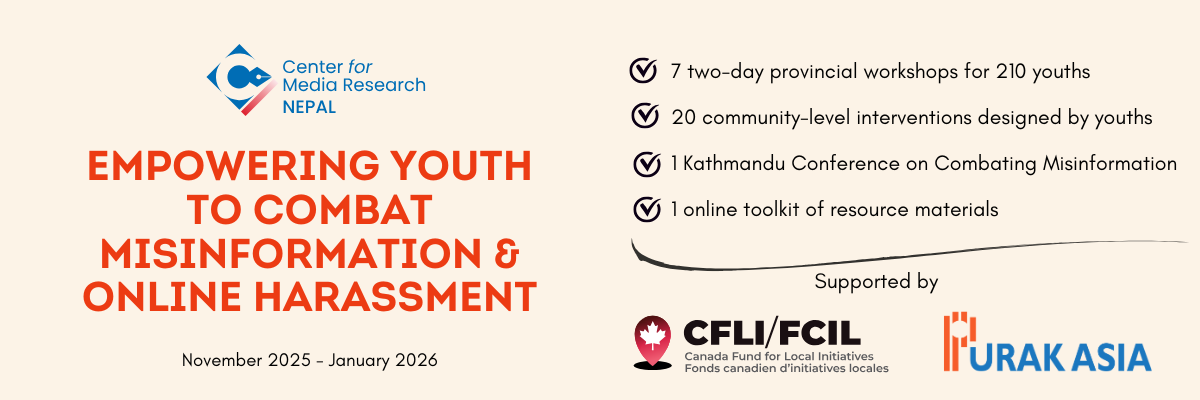
CMR-Nepal launches provincial activities to empower youth against misinformation and online harassment

The Center for Media Research – Nepal (CMR Nepal) announces the launch of provincial activities under an initiative aimed at combating misinformation and online harassment through provincial digital literacy training and community-level micro-interventions.

The activities, which runs from November 2025 to January 2026, is co-funded by the Canada Fund of Local Initiatives (CFLI) and Purak Asia..

This evidence-based intervention will equip 210 youth—at least 50 per cent of them female—across seven provinces with crucial media and information literacy skills through seven two-day workshops. The workshop will focus to training outstation youth, supporting women and marginalized communities, and facilitating local micro-interventions designed by participants themselves.

The initiative will support at least 20 local micro interventions designed by the participants of the workshops themselves. CMR-Nepal will provide resources for youth groups to organize awareness programs, including youth-targeted handbook ‘Let’s Be Aware: Correct Use of Information and Technology’. The micro interventions will reach an estimated 1,000 people directly.

The iniviative include with the third edition of Kathmandu Confernece on Combating Misinformation in January 2026 at the Central Department of Journalism and Mass Communication, Tribhuvan University in Kathmandu. The Confernece will include an exhibition on artificial intelligence, funded by RNW Media.

This phase of the initative is a part of CMR-Nepal’s #MILinitiative aimed at promoting MIL skills among youths throughtout Nepal and underscores CMR Nepal’s continued commitment to ethical media, press freedom, and advocacy for inclusive democratic participation.

CMR-Nepal’s chair Deepak Aryal said: “CMR-Nepal is happy to continue important activities under #MILinitative, launched in 2023 and appreciates the support of CFLI, Embassy of Canada in India, as Nepal celebrates 60 years of Canada-Nepal diplomatic relations in 2025–26. CMR-Nepal also appreciates Purak Asia and RNW Media for co-funding parts of the initiatives, and hope that this important work of empowing youth on MIL will continue.”

CFLI team said:  “Canada is proud to support CMR-Nepal through the Canada Fund for Local Initiatives (CFLI), reflecting our shared commitment to inclusive development, gender equality, and sustainable, community-led solutions. We are pleased to partner with this initiative and commend their efforts to strengthen community engagement and resilience. Canada remains committed to working alongside local leaders to help build a more equitable and just future for local communities.”

Let’s dismiss the term ‘fake news’ to combat misinformation

Author: Ujjwal Acharya

This article by our founder-chair is published in the “Nepali Media: Issues of Ethics and Sustainability” (A Press Council Nepal Journal, Vol. 5, No. 5, 2025, pp. 1-16).

Abstract

The term ‘fake news’ is often used to describe misinformation in the media. However, the term is also commonly used to describe all types of misleading content—from intentional fabrications to minor reporting errors. Despite its popularity, the term ‘fake news’ fails to adequately define the problem of information disorder because it provides a misguided understanding of a complex issue. This commentary argues that the term is ambiguous to the extent that it complicates the same problem it seeks to describe.

Drawing on academic research, media analysis, and case studies, this commentary takes the position that the use of ‘fake news’ displaces more functional definitions—such as misinformation, disinformation, malinformation, and propaganda. This obstructs public understanding of information disorder and effective policy responses. It has also become a politically weaponized term as politicians and political actors misuse it to delegitimize and dismiss journalism, thereby decreasing public trust in the media.

This is a serious concern as the majority of journalism upholds professional standards and principles of accuracy and ethics despite occasional misleading contents. News is the product of established journalistic processes, and it means verified and contextualized information. The term news thereby should, by nature, be accurate, making adjectives such as ‘fake’ or ‘correct’ unnecessary. Journalism is our most effective weapon in the fight against misinformation as it offers the strongest antidote to misleading contents: accurate information.

By framing the media as part of the problem rather than the solution, the ‘fake news’ narrative weakens the strongest weapon we have in our war against misinformation. This commentary concludes that abandoning the term ‘fake news’ in favor of clearer term misinformation is crucial for upholding public trust, supporting journalism, and helping citizens navigate often overwhelming and confusing contemporary information ecosystem.

Keywords: misinformation, fake news, media trust, journalism, information disorder

Introduction

Misinformation is a threat to contemporary society, politics and democracy. As everywhere else in the world, the amount of misinformation has increased in Nepal’s information ecosystem threatening to destabilize the state institutions, and the media system in recent years. Misinformation has evolved as a great problem in Nepal affecting trust agenda, health and even politics, and its seriousness continues to grow.1 With the advent of the internet and social media, misinformation has reached a large number of population in Nepal with an almost omnipresent status. A 2022 survey by the Center for Media Research Nepal showed that 92 percent of heavy social media users are exposed to misinformation whereas another survey in 2024 among the general population revealed that around 67 percent of people witnessed misinformation in the preceding week. Moreover, 81 percent of respondents said they were very concerned or concerned about the negative impacts of misinformation in society, whereas 97 percent believed misinformation was or would be a big problem for society and politics.2 Scholars have pointed out at Nepal’s geopolitical situation between India and China as well as social uniqueness makes it highly vulnerable for the impact of misinformation. Pathak and KC (2025) further state “two key elements make Nepal particularly vulnerable to threats of misinformation: diverse population groups and political instability”. They also noted that “there are other factors that contribute the spread and impacts of misinformation”.3

The other factors include low impact and trust in media, and general lack of media and information literacy among the public that equip them with the critical mindset to question the authenticity of the information they receive and skills to identify misinformation. Acharya (2025) adds “Nepal’s political instability, low public trust in media, and widespread uptake of social media have made the country a fertile ground for the proliferation of misinformation— much of it aggravated by election cycles and exacerbated by technological advances such as AI-generated deepfakes.”4

Dahal (2025) states there are various threat actors in Nepal’s misinformation landscape listing out political parties, extremist groups, government, foreign actors, commercial actors as well as non-independent and party-affiliated media as sources of misinformation.5 Scholars in Nepal agree that combating misinformation in Nepal is an uphill battle.

The battle is made more difficult by the non-accountability of social media platforms such as Facebook, TikTok and YouTube, because despite being ‘the main platforms in spreading misinformation’6, Nepal is a small market for them without proper and globally acceptable regulatory mechanism that allows social media platforms to largely ignore the country-specific issues. However, being a country of small size does not protect Nepal from harms of misinformation that range for wrong decisions to life-threatening behaviors. Dr. Nirmal Kandel (2020) even argues people have been suffering from a psychological disorder due to misinformation:

Many of us may be unknowingly suffering from information disorder syndrome. It is more prevalent due to the digitized world where the information flows to every individual’s phone, tablet and computer in no time. Information disorder syndrome is the sharing or developing of false information with or without the intent of harming and they are categorized as misinformation, disinformation and malinformation.7

This all calls for urgent actions to fight misinformation. But fighting misinformation is not an easy task. Bateman & Jackson (2024) state that there is no silver bullet or ‘best’ policy option and that none of the 10 interventions that they studied for the global report were simultaneously well-studied, very effective, and easy to scale.8 The uphill battle against misinformation is made more complex by a widespread use of a term: ‘fake news’. In the time of rapid information flows, the term ‘fake news’ has not only dominated the popular conversation on misinformation but has also become omnipresent in academic, journalistic, and political discourses. Almost a decade ago, when the impact of misinformation, especially in the politics and elections, became a global issue, Collins Dictionary designated the term as the Collins Word of the Year 2017 defining it as “false, often sensational, information disseminated under the guise of news reporting”.9

The term was originally used to describe fabricated stories published in the mainstream media and designed with the intent to deceive, however as the discourse around misinformation spread, the term gradually became a tool to attack journalism and media, even for their minor errors and critical opinions. The proliferation of ‘fake news’ as a label for all forms of misinformation has had a paradoxical effect: rather than clarifying the challenges of information disorder, it has clouded understanding and undermined trust in news media, the very institution best positioned to combat misinformation.10

In this commentary, I argue that abandoning the term ‘fake news’ in favor of clear and more functional terms such as misinformation, disinformation, malinformation, hate speech and propaganda not only helps in understanding the information disorder properly but also in design of interventions from policy to civil society responses. Further, I argue that despite its shortcomings and some role in spreading misinformation, mainstream journalism and media is the most effective defense mechanism that we have in the combat against misinformation. The established information ecosystem is largely built on today’s mainstream media ecosystem and that “eroding trust in the media by haphazardly branding it as ‘fake’ significantly weakens our collective capacity to counter falsehoods and confusion”.11

Despite widespread use, scholars have warned against using the term ‘fake news’ noting that it lacks the required meaning to become an analytical category. Wardle and Derakhshan (2017) stand for clearer distinctions between various forms of information disorder, such as misinformation, disinformation, and malinformation, and have argued against using fake news.12 Research finds that the ambiguity of term ‘fake news’ allows politicians and political actors to discredit journalism and criticism that further erodes the public confidence in news and media, while also misguiding policy and other responses which target journalism and media rather than the complexity of information disorder.

In Nepal, a society grappling with rapid digital transformation, political turmoil, and low reach of media therefore limited in public trust, misinformation and disinformation thrive especially during events such as elections, natural disasters and public health crises. The Nepali context shows that despite the media needing improvement to conduct journalism more ethically and professionally, the media also remains the single most powerful weapon for countering misinformation by spreading correct information, spreading critical thinking among public and fact-checking misinformation.

Acharya (2024) states why journalism and media are important in combating misinformation:

Correct information is the best antidote to misinformation, which is possible only in the presence of authentic media. However, there is a disturbing trend of discrediting and humiliating the media using misinformation. Political leaders, especially the ones using populist tactics and having a significant presence on social media, are on the frontline of such trends. Since our media system is already weak, humiliating the press rather than improving its functioning is equivalent to laying down our best weapon against misinformation.13

Why the term ‘fake news’ is problematic?

The origin of the term ‘fake news’ does not have a concrete root. It gained prominence as an emergency term to describe a phenomenon of false or misleading information spreading over media and social media, especially during the 2016 US Presidential Elections and immediately afterwards. The term ‘fake news’ was popularized during the 2016 US election, when Macedonians and others responded to the financial incentives of this attention economy by generating viral false news stories for US audiences.14 The term spread in a lightning speed around the world before it was properly analyzed or understood. By the time researchers studied the phenomena and understood that the term is not only misguiding but also problematic, it had already become a household word. And, despite pushback from researchers, the term continued to get traction because the politicians and those who wanted to criticize and humiliate the media, continued to use the term.

Today, for some, the term refers only to deliberate fabrications that are made to look like a legitimate news. For many others, it means overreaching from unintentional mistakes and poorly conducted reporting to biased commentary and even satire. Recent research highlights that fake news lacks the definitional rigor necessary for scholarly and policy-oriented use and is best replaced by terms like misinformation and disinformation.15

Misinformation is defined as “false, inaccurate, or misleading information, regardless of the intent to deceive,” while disinformation refers to “the deliberate creation, distribution, and/or amplification of false, inaccurate, or misleading information intended to deceive”.16 Some scholars, such as Claire Wardle who founded the First Draft News and was among the first to describe and distinguish misinformation, disinformation and malinformation argued against use of the term fake news “because of the way it has been co-opted by politicians around the world to discredit and attack professional journalism”.17

The term has been used by political actors worldwide to delegitimize accurate reporting, attack press freedom, and induce public skepticism toward credible journalism.18 Leaders in various countries, from US President Donald Trump of USA to former Syrian President Basher al-Assad, have used ‘fake news’ accusations against critical media coverage and reporting that are against them. During his first term in office, US President Donald Trump frequently employed the term ‘fake news’ to discredit and attack mainstream media outlets. This was taken as his strategy to undermine mainstream media’s legitimacy and erode public trust in critical journalism.19 He frequently used the term to dismiss negative or fact-based reporting, declaring the press “the enemy of the American people”.20 The scale is quantified in a news report in The Independent which states “Donald Trump has called journalists and news outlets ‘fake news’ nearly 2,000 times since the beginning of his presidency, averaging more than one daily broadside against the press over the last four years”.21 Leaders do it deliberately to blur the line between journalism and political accusation so as to confuse the citizens and shield themselves from scrutiny by the media and citizens. Bateman & Jackson (2024) state:

This risk is most obvious in authoritarian regimes and flawed democracies, where leaders may suppress dissent by labeling it disinformation. But the problem can manifest in other ways too… boomerang patterns have previously been seen with ‘fake news,’ a phrase that originally described unethical content farms but was quickly repurposed to delegitimize truthful journalism.22

This type of manipulation undermines media’s role as the watchdog, brings division among public, and sometimes can justify crackdowns on human rights and press freedoms under the guise of protecting citizens from fake content, even in Nepal.23 When leaders dismiss unfavorable contents as fake news and delegitimize media as fake news producers, it destabilizes the information ecosystem, public trust and therefore the democratic process. Loss of the public trust in media is dangerous at the times of social or political or national crisis, when citizens need reliable information.

Systematic study has shown that regular exposure to so-called ‘fake news’ undermines trust in professional journalism.24 The result is not merely avoiding of some specific outlet or media, but a generalized suspicion toward all news media. For example, research indicates that those who regularly encounter misinformation or are exposed to the ‘fake news’ label are significantly more likely to distrust even reputable sources.25

This skepticism is reinforced by spillover effects: efforts to spotlight or counter misinformation often prime individuals to become wary not just of falsehoods, but of accurate reporting as well.26 Recent evidence even questions whether the sheer volume of misinformation is as problematic as is often suggested; rather, the salience created by repeated alarms about ‘fake news’ may itself play a major role in undermining confidence in established news institutions.27

Journalism as the antidote to misinformation

Journalism is facing problems from multiple fronts. Today, the mainstream media has lost its readership due to audience moving to the internet and social media. They have also lost revenue as the circulation and readership/viewership went down. With low revenue, many of them are forced to let go human resources and compete with quickness of the internet-based information ecosystem which has often led to the decrease in the time a journalist spends on a story. Investigating, getting details and verifying as well as copy-editing in today’s media ecosystem has to be quicker.

Despite all this, a fundamental reality remains: the established media system is the best information ecosystem that exists in today’s world. The mainstream journalism remains mostly accurate, responsible and accountable. While it’s easy to accuse media and journalists from spreading sporadic misinformation, it’s also the truth that misinformation in media only constitutes a tiny portion of false or misleading information in the public. Similarly true is that misinformation in media also only constitutes a tiny proportion when compared with correct information that those media produce. A vast majority of contents in mainstream media meets standards of journalistic principles and ethics. While misinformation may command attention on social media, it constitutes only a tiny fraction of the content produced and disseminated by established news organizations.28

The interventions to combat misinformation are broadly divided into two types. Proactive interventions focus on building citizen resilience against misinformation through media and information literacy, strengthening local information ecosystem through media development and journalists’ skill development, pre-bunking, increased social media platforms accountability and regulatory measures by the state. Reactive interventions include fact-checking and correcting misinformation. Mainstream media has roles across many of these interventions and are in command of the already established information ecosystem which can be exploited for the flow of the correct information, either as pre-bunking or fact- checking, as well as the spread of knowledge and skills among public on media and information literacy. Mainstream media can also play a role in making social media platforms accountable by investigating their practices and researching their performance. Hoes et al. (2024) conclude that the presence of journalism as an organizing force for correct, contextualized information is vital for public resilience against misinformation…and the most effective antidote to the spread of misinformation is the proactive provision of accurate information, clarity, and transparency, core functions of journalism by design.29

Efforts to debunk falsehoods, educate the public, and foster civic engagement all depend on a strong, trusted journalistic infrastructure.30 It is without a question that correct information is the best antidote to misinformation and this makes journalism the best available weapon to spread correct information, also the best antidote in the combat against misinformation. Therefore, if the media’s legitimacy is degraded through blanket use of the term ‘fake news,’ society’s most effective defense against the negative effects of misinformation is weakened.

Rejection of “fake news”

The UK government in October 2018 banned the use of the term ‘fake news’ in official documents. The term is banned as it is a “poorly defined and misleading term that conflates a variety of false information, from genuine error through to foreign interference in democratic process”.31 The ban on the phrase was prompted by an inquiry into “fake news” led by the Digital, Culture, Media and Sports Committee to address the potential for social media to be misused to sway elections which in its interim report stated, as reported by The Telegraph newspaper:

“We recommend that the Government rejects the term ‘fake news’ and instead puts forward an agreed definition of the words ‘misinformation’ and ‘disinformation’. With such a shared definition, and clear guidelines for companies, organizations, and the Government to follow, there will be a shared consistency of meaning across the platforms, which can be used as the basis of regulation and enforcement.”32

The United Nations, particularly UNESCO, initially acknowledged the term ‘fake news’ but quickly moved away. By 2018, UNESCO began challenging the term ‘fake news’ for its potential for misuse. As UNESCO’s Director for Freedom of Expression, Guy Berger, stated, “If it is news, then it isn’t fake; and if it is false, then it can’t be news”.33 Julie Posetti, the co-author of the UNESCO report, states that the phrase had been weaponized to undermine legitimate journalism.34 As a response, UN and UNESCO adopted misinformation, disinformation and malinformation to replace the ambiguous term.

By 2020 and into the pandemic, UN Secretary-General António Guterres had largely abandoned the term, instead warning of a ‘dangerous epidemic of misinformation’. In June 2024 Guterres launched the ‘Global Principles for Information Integrity’, calling for protecting human rights and democracies against ‘false narratives, distortions and lies’.35

Recognizing the damage wrought by the indiscriminate use of ‘fake news,’ leading institutions and academic circles now advocate for abandoning the term in formal communication.36 Since then, governments, journalism schools, fact-checking networks, and information-literacy programs worldwide, recommend focusing instead on precise terminology. The Center for Media Research – Nepal, which has been researching misinformation in Nepal since 2017 and NepalFactCheck.org, the only International Fact-Checking Network certified initiative in Nepal, do not use the term fake news and instead promote use of precise terms such as misinformation, disinformation, malinformation, hate speech and propaganda. Leading experts and organizations recommend abandoning ‘fake news’ as a term, describing it as ‘problematic, inadequate and misleading,’ urging adoption of more nuanced alternatives such as misinformation and disinformation”.37 These terms are not merely jargons but are essential distinctions that allow for diagnosis, research, and remedy of information disorder.38

The European Union’s High Level Expert Group recommended abandoning ‘fake news’ as a term, describing it as ‘problematic, inadequate and misleading to explain the complexity of the situation,’ and urging the adoption of more nuanced alternatives.39

This is because without clear distinctions, researchers and policymakers are left with poor tools to diagnose causes, measure prevalence, and design effective interventions against misinformation; and weakened mainstream media system is a fertile ground for the spread and impact of misinformation.

Conclusion

The language shapes public perception and policy response. The term ‘fake news’ functions more as a political bludgeon than a conceptual tool.40 It has messed with research and policy, given politicians a weapon to dismiss critical media and eroded the public trust in the very institutions that are important and necessary for defending truth and combating misinformation. Despite its prevalence, the term ‘fake news’ doesn’t represent the reality correctly because a vast majority of news is accurate, ethical and good for public.

The complexity of information disorder and platforms that spread misinformation make the combating against them a difficult battle and use of the term that humiliates the best weapon we have in the combat only weaken our fight. The society must use the language and terms that are clear and precise for effective action and policy interventions. Abandoning ‘fake news’ in favor of more precise terms is a vital corrective step that needs to be adapted urgently by those supporting maintaining information integrity. Strengthening journalism’s reputation and restoring public trust in media should not only be media community’s concerns, but they are also prerequisites for successfully minimizing the harms of misinformation. In a fragmented and confusing information ecosystem, undermining the media with vague or politicized labels leaves everyone more vulnerable to deception and confusion.41 Journalism remains society’s best antidote to misinformation, and its role must be defended, not diminished, in the pursuit of truth.


References

1. Pahari, S. (2024). Tackling Misinformation: Struggle for Truth in the Digital Age, in Bhattarai, K. D. (Eds.) Media Year Book, 4 (4). Press Council Nepal.

2. CMR Nepal (2022). Nepal Social Media Users Survey 2021. Center for Media Research – Nepal.

3. Pathak, T. & KC, B. (2025) Misinformation: Shared Concern, Limited Interventions, in Acharya, U. (ed.) Nepal’s misinformation landscape. Center for Media Research – Nepal. DOI: 10.62657/cmr25a0

4. Acharya, U. (2025). Misinformation and Democracy, in Acharya, U. (ed.). Nepal’s misinformation landscape. Center for Media Research – Nepal. DOI: 10.62657/cmr25a0a

5. Dahal, R. (2025). Digital Paridrisya. Center for Media Research – Nepal. DOI: 10.62657/cmr25b

6. CMR Nepal (2022). Nepal Social Media Users Survey 2021. Center for Media Research – Nepal.

7. Kandel N. (2020). Information Disorder Syndrome and Its Management. JNMA; journal of the Nepal Medical Association, 58(224), 280–285. DOI: 10.31729/jnma.4968

8. Bateman, J., & Jackson, D. (2024, January 31). Countering disinformation effectively: An evidence-based policy guide. Carnegie Endowment for International Peace.

9. Associated Press. (2017, November 2). “Fake news” is Collins Dictionary’s word of the year 2017. AP News.

10. Broda, E., & Strömbäck, J. (2024). Misinformation, disinformation, and fake news: lessons from an interdisciplinary, systematic literature review. Annals of the International Communication Association, 48(2), 139–166. DOI: 10.1080/23808985.2024.2323736; Baptista, J. P., & Gradim, A. (2022). A Working Definition of Fake News. Encyclopedia, 2(1), 632-645. DOI: 10.3390/encyclopedia2010043

11. Ognyanova, K., Lazer, D., Robertson, R. E., & Wilson, C. (2020). Misinformation in action: Fake news exposure is linked to lower trust in media, higher trust in government when your side is in power. Harvard Kennedy School (HKS) Misinformation Review. DOI: 10.37016/mr-2020-024

12. Wardle, C. & Derakhshan, H. (2017). Information disorder: Toward an interdisciplinary framework for research and policy making. Council of Europe Report.

13. Acharya, U. (2024, January 23). Challenges of misinformation. The Kathmandu Post.

14. Bateman & Jackson, 2024.

15. Broda & Strömbäck, 2024; Wang, C. C. (2020). Fake News and Related Concepts: Definitions and Recent Research Development. Contemporary Management Research, 16(3), 145–174. DOI: 10.7903/cmr.20677

16. Ooi et al., 2021, as cited in Media Defence. (2024). Misinformation, Disinformation and Mal-information. In Modules on Litigating Freedom of Expression and Digital Rights in South and Southeast Asia.

17. Wardle, C. (2020), as cited in various public commentaries and UNESCO publications.

18. Broda & Strömbäck, 2024.

19. Jamieson, K.H. & Taussig, D. (2017). Disruption, Demonization, Deliverance, and Norm Destruction: The Rhetorical Signature of Donald J. Trump. Political Science Quarterly, 132(4), 619-650.

20. Trump, D. J. [@realDonaldTrump]. (2017, February 17). The FAKE NEWS media (failing @nytimes, @NBCNews, @ABC, @CBS, @CNN) is not my enemy, it is the enemy of the American People! [Tweet]. Twitter.

21. Savage, M. (2020, October 25). Trump says he is ‘not a fan of fiction’ as he rails against ‘fake news’ and rewrites counter history of his Covid response. The Independent.

22. Bateman & Jackson, 2024.

23. Bhandari, B. (2024). Weaponizing information: The rise of social media manipulation in Nepal. Journal of Durgalaxmi, 3(1), 1–18. DOI: 10.3126/jdl.v3i1.73833

24. Ognyanova et al., 2020.

25. Ognyanova et al., 2020.

26. Hoes, E., Aitken, B., Zhang, J., Gackowski, T., & Wojcieszak, M. (2024). Prominent misinformation interventions reduce misperceptions but increase skepticism. Nature human behaviour, 8(8), 1545–1553. DOI: 10.1038/s41562-024-01884-x

27. Hoes et al., 2024.
28. Hoes et al., 2024.
29. Hoes et al., 2024.
30. Dame Adjin-Tettey, T. (2022). Combating fake news, disinformation, and misinformation: Experimental evidence for media literacy education. Cogent Arts & Humanities, 9(1). DOI: 10.1080/23311983.2022.2037229

31. The Quint. (2018, October 23). UK govt bans use of term ‘fake news’ in official documents. The Quint.

32. Murphy, M. (2018, October 22). Government bans phrase “fake news”. The Telegraph.

33. UNESCO. (2018a, May 23). Solving ‘fake news’ starts with avoiding the term. UNESCO.

34. UNESCO. (2018b, December). Journalism, ‘Fake News’ and Disinformation handbook. UNESCO.

35. United Nations. (2024, June 24). Global principles for information integrity launched, to combat misinformation and hate speech [Press release].

36. Wang, 2020.

37. Wardle & Derakhshan, 2017.

38. Acharya, 2025; Kandel, 2020; Media Defence, 2024.
39. Kandel, 2020 (citing the EU HLEG report).

40. Broda & Strömbäck, 2024; Ognyanova et al., 2020.

41. Ognyanova et al., 2020; Hoes et al., 2024.