Let’s dismiss the term ‘fake news’ to combat misinformation

Author: Ujjwal Acharya

This article by our founder-chair is published in the “Nepali Media: Issues of Ethics and Sustainability” (A Press Council Nepal Journal, Vol. 5, No. 5, 2025, pp. 1-16).

Abstract

The term ‘fake news’ is often used to describe misinformation in the media. However, the term is also commonly used to describe all types of misleading content—from intentional fabrications to minor reporting errors. Despite its popularity, the term ‘fake news’ fails to adequately define the problem of information disorder because it provides a misguided understanding of a complex issue. This commentary argues that the term is ambiguous to the extent that it complicates the same problem it seeks to describe.

Drawing on academic research, media analysis, and case studies, this commentary takes the position that the use of ‘fake news’ displaces more functional definitions—such as misinformation, disinformation, malinformation, and propaganda. This obstructs public understanding of information disorder and effective policy responses. It has also become a politically weaponized term as politicians and political actors misuse it to delegitimize and dismiss journalism, thereby decreasing public trust in the media.

This is a serious concern as the majority of journalism upholds professional standards and principles of accuracy and ethics despite occasional misleading contents. News is the product of established journalistic processes, and it means verified and contextualized information. The term news thereby should, by nature, be accurate, making adjectives such as ‘fake’ or ‘correct’ unnecessary. Journalism is our most effective weapon in the fight against misinformation as it offers the strongest antidote to misleading contents: accurate information.

By framing the media as part of the problem rather than the solution, the ‘fake news’ narrative weakens the strongest weapon we have in our war against misinformation. This commentary concludes that abandoning the term ‘fake news’ in favor of clearer term misinformation is crucial for upholding public trust, supporting journalism, and helping citizens navigate often overwhelming and confusing contemporary information ecosystem.

Keywords: misinformation, fake news, media trust, journalism, information disorder

Introduction

Misinformation is a threat to contemporary society, politics and democracy. As everywhere else in the world, the amount of misinformation has increased in Nepal’s information ecosystem threatening to destabilize the state institutions, and the media system in recent years. Misinformation has evolved as a great problem in Nepal affecting trust agenda, health and even politics, and its seriousness continues to grow.1 With the advent of the internet and social media, misinformation has reached a large number of population in Nepal with an almost omnipresent status. A 2022 survey by the Center for Media Research Nepal showed that 92 percent of heavy social media users are exposed to misinformation whereas another survey in 2024 among the general population revealed that around 67 percent of people witnessed misinformation in the preceding week. Moreover, 81 percent of respondents said they were very concerned or concerned about the negative impacts of misinformation in society, whereas 97 percent believed misinformation was or would be a big problem for society and politics.2 Scholars have pointed out at Nepal’s geopolitical situation between India and China as well as social uniqueness makes it highly vulnerable for the impact of misinformation. Pathak and KC (2025) further state “two key elements make Nepal particularly vulnerable to threats of misinformation: diverse population groups and political instability”. They also noted that “there are other factors that contribute the spread and impacts of misinformation”.3

The other factors include low impact and trust in media, and general lack of media and information literacy among the public that equip them with the critical mindset to question the authenticity of the information they receive and skills to identify misinformation. Acharya (2025) adds “Nepal’s political instability, low public trust in media, and widespread uptake of social media have made the country a fertile ground for the proliferation of misinformation— much of it aggravated by election cycles and exacerbated by technological advances such as AI-generated deepfakes.”4

Dahal (2025) states there are various threat actors in Nepal’s misinformation landscape listing out political parties, extremist groups, government, foreign actors, commercial actors as well as non-independent and party-affiliated media as sources of misinformation.5 Scholars in Nepal agree that combating misinformation in Nepal is an uphill battle.

The battle is made more difficult by the non-accountability of social media platforms such as Facebook, TikTok and YouTube, because despite being ‘the main platforms in spreading misinformation’6, Nepal is a small market for them without proper and globally acceptable regulatory mechanism that allows social media platforms to largely ignore the country-specific issues. However, being a country of small size does not protect Nepal from harms of misinformation that range for wrong decisions to life-threatening behaviors. Dr. Nirmal Kandel (2020) even argues people have been suffering from a psychological disorder due to misinformation:

Many of us may be unknowingly suffering from information disorder syndrome. It is more prevalent due to the digitized world where the information flows to every individual’s phone, tablet and computer in no time. Information disorder syndrome is the sharing or developing of false information with or without the intent of harming and they are categorized as misinformation, disinformation and malinformation.7

This all calls for urgent actions to fight misinformation. But fighting misinformation is not an easy task. Bateman & Jackson (2024) state that there is no silver bullet or ‘best’ policy option and that none of the 10 interventions that they studied for the global report were simultaneously well-studied, very effective, and easy to scale.8 The uphill battle against misinformation is made more complex by a widespread use of a term: ‘fake news’. In the time of rapid information flows, the term ‘fake news’ has not only dominated the popular conversation on misinformation but has also become omnipresent in academic, journalistic, and political discourses. Almost a decade ago, when the impact of misinformation, especially in the politics and elections, became a global issue, Collins Dictionary designated the term as the Collins Word of the Year 2017 defining it as “false, often sensational, information disseminated under the guise of news reporting”.9

The term was originally used to describe fabricated stories published in the mainstream media and designed with the intent to deceive, however as the discourse around misinformation spread, the term gradually became a tool to attack journalism and media, even for their minor errors and critical opinions. The proliferation of ‘fake news’ as a label for all forms of misinformation has had a paradoxical effect: rather than clarifying the challenges of information disorder, it has clouded understanding and undermined trust in news media, the very institution best positioned to combat misinformation.10

In this commentary, I argue that abandoning the term ‘fake news’ in favor of clear and more functional terms such as misinformation, disinformation, malinformation, hate speech and propaganda not only helps in understanding the information disorder properly but also in design of interventions from policy to civil society responses. Further, I argue that despite its shortcomings and some role in spreading misinformation, mainstream journalism and media is the most effective defense mechanism that we have in the combat against misinformation. The established information ecosystem is largely built on today’s mainstream media ecosystem and that “eroding trust in the media by haphazardly branding it as ‘fake’ significantly weakens our collective capacity to counter falsehoods and confusion”.11

Despite widespread use, scholars have warned against using the term ‘fake news’ noting that it lacks the required meaning to become an analytical category. Wardle and Derakhshan (2017) stand for clearer distinctions between various forms of information disorder, such as misinformation, disinformation, and malinformation, and have argued against using fake news.12 Research finds that the ambiguity of term ‘fake news’ allows politicians and political actors to discredit journalism and criticism that further erodes the public confidence in news and media, while also misguiding policy and other responses which target journalism and media rather than the complexity of information disorder.

In Nepal, a society grappling with rapid digital transformation, political turmoil, and low reach of media therefore limited in public trust, misinformation and disinformation thrive especially during events such as elections, natural disasters and public health crises. The Nepali context shows that despite the media needing improvement to conduct journalism more ethically and professionally, the media also remains the single most powerful weapon for countering misinformation by spreading correct information, spreading critical thinking among public and fact-checking misinformation.

Acharya (2024) states why journalism and media are important in combating misinformation:

Correct information is the best antidote to misinformation, which is possible only in the presence of authentic media. However, there is a disturbing trend of discrediting and humiliating the media using misinformation. Political leaders, especially the ones using populist tactics and having a significant presence on social media, are on the frontline of such trends. Since our media system is already weak, humiliating the press rather than improving its functioning is equivalent to laying down our best weapon against misinformation.13

Why the term ‘fake news’ is problematic?

The origin of the term ‘fake news’ does not have a concrete root. It gained prominence as an emergency term to describe a phenomenon of false or misleading information spreading over media and social media, especially during the 2016 US Presidential Elections and immediately afterwards. The term ‘fake news’ was popularized during the 2016 US election, when Macedonians and others responded to the financial incentives of this attention economy by generating viral false news stories for US audiences.14 The term spread in a lightning speed around the world before it was properly analyzed or understood. By the time researchers studied the phenomena and understood that the term is not only misguiding but also problematic, it had already become a household word. And, despite pushback from researchers, the term continued to get traction because the politicians and those who wanted to criticize and humiliate the media, continued to use the term.

Today, for some, the term refers only to deliberate fabrications that are made to look like a legitimate news. For many others, it means overreaching from unintentional mistakes and poorly conducted reporting to biased commentary and even satire. Recent research highlights that fake news lacks the definitional rigor necessary for scholarly and policy-oriented use and is best replaced by terms like misinformation and disinformation.15

Misinformation is defined as “false, inaccurate, or misleading information, regardless of the intent to deceive,” while disinformation refers to “the deliberate creation, distribution, and/or amplification of false, inaccurate, or misleading information intended to deceive”.16 Some scholars, such as Claire Wardle who founded the First Draft News and was among the first to describe and distinguish misinformation, disinformation and malinformation argued against use of the term fake news “because of the way it has been co-opted by politicians around the world to discredit and attack professional journalism”.17

The term has been used by political actors worldwide to delegitimize accurate reporting, attack press freedom, and induce public skepticism toward credible journalism.18 Leaders in various countries, from US President Donald Trump of USA to former Syrian President Basher al-Assad, have used ‘fake news’ accusations against critical media coverage and reporting that are against them. During his first term in office, US President Donald Trump frequently employed the term ‘fake news’ to discredit and attack mainstream media outlets. This was taken as his strategy to undermine mainstream media’s legitimacy and erode public trust in critical journalism.19 He frequently used the term to dismiss negative or fact-based reporting, declaring the press “the enemy of the American people”.20 The scale is quantified in a news report in The Independent which states “Donald Trump has called journalists and news outlets ‘fake news’ nearly 2,000 times since the beginning of his presidency, averaging more than one daily broadside against the press over the last four years”.21 Leaders do it deliberately to blur the line between journalism and political accusation so as to confuse the citizens and shield themselves from scrutiny by the media and citizens. Bateman & Jackson (2024) state:

This risk is most obvious in authoritarian regimes and flawed democracies, where leaders may suppress dissent by labeling it disinformation. But the problem can manifest in other ways too… boomerang patterns have previously been seen with ‘fake news,’ a phrase that originally described unethical content farms but was quickly repurposed to delegitimize truthful journalism.22

This type of manipulation undermines media’s role as the watchdog, brings division among public, and sometimes can justify crackdowns on human rights and press freedoms under the guise of protecting citizens from fake content, even in Nepal.23 When leaders dismiss unfavorable contents as fake news and delegitimize media as fake news producers, it destabilizes the information ecosystem, public trust and therefore the democratic process. Loss of the public trust in media is dangerous at the times of social or political or national crisis, when citizens need reliable information.

Systematic study has shown that regular exposure to so-called ‘fake news’ undermines trust in professional journalism.24 The result is not merely avoiding of some specific outlet or media, but a generalized suspicion toward all news media. For example, research indicates that those who regularly encounter misinformation or are exposed to the ‘fake news’ label are significantly more likely to distrust even reputable sources.25

This skepticism is reinforced by spillover effects: efforts to spotlight or counter misinformation often prime individuals to become wary not just of falsehoods, but of accurate reporting as well.26 Recent evidence even questions whether the sheer volume of misinformation is as problematic as is often suggested; rather, the salience created by repeated alarms about ‘fake news’ may itself play a major role in undermining confidence in established news institutions.27

Journalism as the antidote to misinformation

Journalism is facing problems from multiple fronts. Today, the mainstream media has lost its readership due to audience moving to the internet and social media. They have also lost revenue as the circulation and readership/viewership went down. With low revenue, many of them are forced to let go human resources and compete with quickness of the internet-based information ecosystem which has often led to the decrease in the time a journalist spends on a story. Investigating, getting details and verifying as well as copy-editing in today’s media ecosystem has to be quicker.

Despite all this, a fundamental reality remains: the established media system is the best information ecosystem that exists in today’s world. The mainstream journalism remains mostly accurate, responsible and accountable. While it’s easy to accuse media and journalists from spreading sporadic misinformation, it’s also the truth that misinformation in media only constitutes a tiny portion of false or misleading information in the public. Similarly true is that misinformation in media also only constitutes a tiny proportion when compared with correct information that those media produce. A vast majority of contents in mainstream media meets standards of journalistic principles and ethics. While misinformation may command attention on social media, it constitutes only a tiny fraction of the content produced and disseminated by established news organizations.28

The interventions to combat misinformation are broadly divided into two types. Proactive interventions focus on building citizen resilience against misinformation through media and information literacy, strengthening local information ecosystem through media development and journalists’ skill development, pre-bunking, increased social media platforms accountability and regulatory measures by the state. Reactive interventions include fact-checking and correcting misinformation. Mainstream media has roles across many of these interventions and are in command of the already established information ecosystem which can be exploited for the flow of the correct information, either as pre-bunking or fact- checking, as well as the spread of knowledge and skills among public on media and information literacy. Mainstream media can also play a role in making social media platforms accountable by investigating their practices and researching their performance. Hoes et al. (2024) conclude that the presence of journalism as an organizing force for correct, contextualized information is vital for public resilience against misinformation…and the most effective antidote to the spread of misinformation is the proactive provision of accurate information, clarity, and transparency, core functions of journalism by design.29

Efforts to debunk falsehoods, educate the public, and foster civic engagement all depend on a strong, trusted journalistic infrastructure.30 It is without a question that correct information is the best antidote to misinformation and this makes journalism the best available weapon to spread correct information, also the best antidote in the combat against misinformation. Therefore, if the media’s legitimacy is degraded through blanket use of the term ‘fake news,’ society’s most effective defense against the negative effects of misinformation is weakened.

Rejection of “fake news”

The UK government in October 2018 banned the use of the term ‘fake news’ in official documents. The term is banned as it is a “poorly defined and misleading term that conflates a variety of false information, from genuine error through to foreign interference in democratic process”.31 The ban on the phrase was prompted by an inquiry into “fake news” led by the Digital, Culture, Media and Sports Committee to address the potential for social media to be misused to sway elections which in its interim report stated, as reported by The Telegraph newspaper:

“We recommend that the Government rejects the term ‘fake news’ and instead puts forward an agreed definition of the words ‘misinformation’ and ‘disinformation’. With such a shared definition, and clear guidelines for companies, organizations, and the Government to follow, there will be a shared consistency of meaning across the platforms, which can be used as the basis of regulation and enforcement.”32

The United Nations, particularly UNESCO, initially acknowledged the term ‘fake news’ but quickly moved away. By 2018, UNESCO began challenging the term ‘fake news’ for its potential for misuse. As UNESCO’s Director for Freedom of Expression, Guy Berger, stated, “If it is news, then it isn’t fake; and if it is false, then it can’t be news”.33 Julie Posetti, the co-author of the UNESCO report, states that the phrase had been weaponized to undermine legitimate journalism.34 As a response, UN and UNESCO adopted misinformation, disinformation and malinformation to replace the ambiguous term.

By 2020 and into the pandemic, UN Secretary-General António Guterres had largely abandoned the term, instead warning of a ‘dangerous epidemic of misinformation’. In June 2024 Guterres launched the ‘Global Principles for Information Integrity’, calling for protecting human rights and democracies against ‘false narratives, distortions and lies’.35

Recognizing the damage wrought by the indiscriminate use of ‘fake news,’ leading institutions and academic circles now advocate for abandoning the term in formal communication.36 Since then, governments, journalism schools, fact-checking networks, and information-literacy programs worldwide, recommend focusing instead on precise terminology. The Center for Media Research – Nepal, which has been researching misinformation in Nepal since 2017 and NepalFactCheck.org, the only International Fact-Checking Network certified initiative in Nepal, do not use the term fake news and instead promote use of precise terms such as misinformation, disinformation, malinformation, hate speech and propaganda. Leading experts and organizations recommend abandoning ‘fake news’ as a term, describing it as ‘problematic, inadequate and misleading,’ urging adoption of more nuanced alternatives such as misinformation and disinformation”.37 These terms are not merely jargons but are essential distinctions that allow for diagnosis, research, and remedy of information disorder.38

The European Union’s High Level Expert Group recommended abandoning ‘fake news’ as a term, describing it as ‘problematic, inadequate and misleading to explain the complexity of the situation,’ and urging the adoption of more nuanced alternatives.39

This is because without clear distinctions, researchers and policymakers are left with poor tools to diagnose causes, measure prevalence, and design effective interventions against misinformation; and weakened mainstream media system is a fertile ground for the spread and impact of misinformation.

Conclusion

The language shapes public perception and policy response. The term ‘fake news’ functions more as a political bludgeon than a conceptual tool.40 It has messed with research and policy, given politicians a weapon to dismiss critical media and eroded the public trust in the very institutions that are important and necessary for defending truth and combating misinformation. Despite its prevalence, the term ‘fake news’ doesn’t represent the reality correctly because a vast majority of news is accurate, ethical and good for public.

The complexity of information disorder and platforms that spread misinformation make the combating against them a difficult battle and use of the term that humiliates the best weapon we have in the combat only weaken our fight. The society must use the language and terms that are clear and precise for effective action and policy interventions. Abandoning ‘fake news’ in favor of more precise terms is a vital corrective step that needs to be adapted urgently by those supporting maintaining information integrity. Strengthening journalism’s reputation and restoring public trust in media should not only be media community’s concerns, but they are also prerequisites for successfully minimizing the harms of misinformation. In a fragmented and confusing information ecosystem, undermining the media with vague or politicized labels leaves everyone more vulnerable to deception and confusion.41 Journalism remains society’s best antidote to misinformation, and its role must be defended, not diminished, in the pursuit of truth.


References

1. Pahari, S. (2024). Tackling Misinformation: Struggle for Truth in the Digital Age, in Bhattarai, K. D. (Eds.) Media Year Book, 4 (4). Press Council Nepal.

2. CMR Nepal (2022). Nepal Social Media Users Survey 2021. Center for Media Research – Nepal.

3. Pathak, T. & KC, B. (2025) Misinformation: Shared Concern, Limited Interventions, in Acharya, U. (ed.) Nepal’s misinformation landscape. Center for Media Research – Nepal. DOI: 10.62657/cmr25a0

4. Acharya, U. (2025). Misinformation and Democracy, in Acharya, U. (ed.). Nepal’s misinformation landscape. Center for Media Research – Nepal. DOI: 10.62657/cmr25a0a

5. Dahal, R. (2025). Digital Paridrisya. Center for Media Research – Nepal. DOI: 10.62657/cmr25b

6. CMR Nepal (2022). Nepal Social Media Users Survey 2021. Center for Media Research – Nepal.

7. Kandel N. (2020). Information Disorder Syndrome and Its Management. JNMA; journal of the Nepal Medical Association, 58(224), 280–285. DOI: 10.31729/jnma.4968

8. Bateman, J., & Jackson, D. (2024, January 31). Countering disinformation effectively: An evidence-based policy guide. Carnegie Endowment for International Peace.

9. Associated Press. (2017, November 2). “Fake news” is Collins Dictionary’s word of the year 2017. AP News.

10. Broda, E., & Strömbäck, J. (2024). Misinformation, disinformation, and fake news: lessons from an interdisciplinary, systematic literature review. Annals of the International Communication Association, 48(2), 139–166. DOI: 10.1080/23808985.2024.2323736; Baptista, J. P., & Gradim, A. (2022). A Working Definition of Fake News. Encyclopedia, 2(1), 632-645. DOI: 10.3390/encyclopedia2010043

11. Ognyanova, K., Lazer, D., Robertson, R. E., & Wilson, C. (2020). Misinformation in action: Fake news exposure is linked to lower trust in media, higher trust in government when your side is in power. Harvard Kennedy School (HKS) Misinformation Review. DOI: 10.37016/mr-2020-024

12. Wardle, C. & Derakhshan, H. (2017). Information disorder: Toward an interdisciplinary framework for research and policy making. Council of Europe Report.

13. Acharya, U. (2024, January 23). Challenges of misinformation. The Kathmandu Post.

14. Bateman & Jackson, 2024.

15. Broda & Strömbäck, 2024; Wang, C. C. (2020). Fake News and Related Concepts: Definitions and Recent Research Development. Contemporary Management Research, 16(3), 145–174. DOI: 10.7903/cmr.20677

16. Ooi et al., 2021, as cited in Media Defence. (2024). Misinformation, Disinformation and Mal-information. In Modules on Litigating Freedom of Expression and Digital Rights in South and Southeast Asia.

17. Wardle, C. (2020), as cited in various public commentaries and UNESCO publications.

18. Broda & Strömbäck, 2024.

19. Jamieson, K.H. & Taussig, D. (2017). Disruption, Demonization, Deliverance, and Norm Destruction: The Rhetorical Signature of Donald J. Trump. Political Science Quarterly, 132(4), 619-650.

20. Trump, D. J. [@realDonaldTrump]. (2017, February 17). The FAKE NEWS media (failing @nytimes, @NBCNews, @ABC, @CBS, @CNN) is not my enemy, it is the enemy of the American People! [Tweet]. Twitter.

21. Savage, M. (2020, October 25). Trump says he is ‘not a fan of fiction’ as he rails against ‘fake news’ and rewrites counter history of his Covid response. The Independent.

22. Bateman & Jackson, 2024.

23. Bhandari, B. (2024). Weaponizing information: The rise of social media manipulation in Nepal. Journal of Durgalaxmi, 3(1), 1–18. DOI: 10.3126/jdl.v3i1.73833

24. Ognyanova et al., 2020.

25. Ognyanova et al., 2020.

26. Hoes, E., Aitken, B., Zhang, J., Gackowski, T., & Wojcieszak, M. (2024). Prominent misinformation interventions reduce misperceptions but increase skepticism. Nature human behaviour, 8(8), 1545–1553. DOI: 10.1038/s41562-024-01884-x

27. Hoes et al., 2024.

28. Hoes et al., 2024.

29. Hoes et al., 2024.

30. Dame Adjin-Tettey, T. (2022). Combating fake news, disinformation, and misinformation: Experimental evidence for media literacy education. Cogent Arts & Humanities, 9(1). DOI: 10.1080/23311983.2022.2037229

31. The Quint. (2018, October 23). UK govt bans use of term ‘fake news’ in official documents. The Quint.

32. Murphy, M. (2018, October 22). Government bans phrase “fake news”. The Telegraph.

33. UNESCO. (2018a, May 23). Solving ‘fake news’ starts with avoiding the term. UNESCO.

34. UNESCO. (2018b, December). Journalism, ‘Fake News’ and Disinformation handbook. UNESCO.

35. United Nations. (2024, June 24). Global principles for information integrity launched, to combat misinformation and hate speech [Press release].

36. Wang, 2020.

37. Wardle & Derakhshan, 2017.

38. Acharya, 2025; Kandel, 2020; Media Defence, 2024.

39. Kandel, 2020 (citing the EU HLEG report).

40. Broda & Strömbäck, 2024; Ognyanova et al., 2020.

41. Ognyanova et al., 2020; Hoes et al., 2024.

Misinformation during the Gen Z Uprising in Nepal: Trends and Lessons Learned for Interventions

Author: Ujjwal Acharya

With research support from Umesh Shrestha, Chetana Kunwar and Pravin Bhatta of NepalFactCheck.org and editorial support from Tilak Pathak of CMR-Nepal.

Abstract

The Gen Z demonstrations in Nepal, in September 2025, was an unprecedented uprising driven by youth anger over corruption and political exclusion, triggered by a social media ban. Peaceful demonstrations escalated into violent clashes, resulting in fall of the government and the formation of an interim citizens’ government. The crisis exposed risks of misinformation, which spread rapidly across social media, fueling panic and polarization. Misinformation ranged from exaggerated death tolls to religious and political falsehoods. Fact-checkers struggled to counter emotionally charged viral claims, with even educated individuals falling prey to rumors. Key lessons learned include the need for rapid, verified official communication, prioritization of debunking malinformation by fact-checkers, closer collaboration with social media platforms, and strengthened public resilience through media and information literacy campaigns. This report recommends establishing a government crisis communication unit, increasing law enforcement transparency, scaling up media capacity and partnerships, strengthening fact-checking and launching long-term media and information literacy initiatives to combat future information disorder.

Keywords: crisis communication, misinformation, fact-checking, Gen Z protest, Nepal,

Context

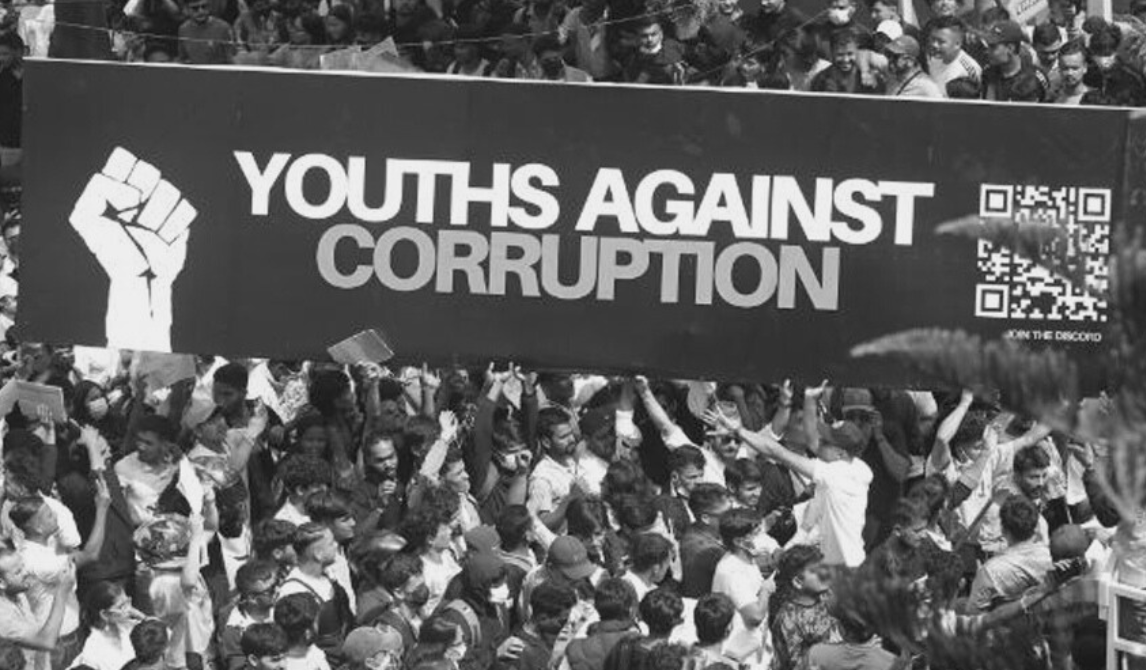
On September 8, 2025, youths identifying themselves as Gen Z gathered at Maitighar, Kathmandu for a peaceful anti-corruption demonstration. What began as a peaceful demonstration quickly escalated as a group of protesters stormed the Parliament compound in New Baneshwor.[1] Security forces used heavy handed measures including tear gas, rubber bullets, and real ammunitions indiscriminately. Seventeen people were killed in Kathmandu and two more outside the Kathmandu Valley, bringing the total death toll to 19 by end of the day.[2] Everyone was shocked and stunned as the news of state repression spread and Minister for Home Affairs Ramesh Lekhak resigned on the same evening, taking moral responsibility for the deaths.[3]

On September 9, 2025, despite imposing the curfew, the state was unable to stop protests all over the nation which now were joined by thousands others angry at the government for killing youths. The day saw widespread riots. Kathmandu and other cities experienced violence on an unprecedented scale. Demonstrators burned down the Parliament, the Prime Minister’s Office, the President’s Office, the Supreme Court, the Special Court, the District Court and dozens of government buildings as well as private properties and residences owned by the political leaders and businesses of people close to political parties.[4] The rage on the day forced Prime Minister KP Sharma Oli to resign, and he was airlifted to safety by the army.[5] The ministers’ quarters were also stormed and set on fire immediately after the sitting ministers present were also airlifted to safety. Five-time former PM Sher Bahadur Deuba and his wife, the Foreign Affairs Minister Arzu Rana Deuba, faced those who stormed their residence, and were physically assaulted before they were handed over to the army.[6]

The Nepal Army took over security from 10PM on September 9 as the country slowly returned to peace.[7] The army also mediated talks with the protesters and the President resulting in appointment of Sushila Karki, Nepal’s first female Chief Justice, as the Prime Minister of the caretaker interim citizens’ government on the evening of September 12.[8] The new government swiftly dissolved the House of Representatives and is scheduled to hold the general elections on March 5, 2026.[9]

The Gen Z protest, as it is popularly known, was an unprecedented and social-media-driven movement that became a cornerstone incident in Nepal’s democratic history. However, it was not as sudden as it seemed. It was the culmination of years of frustrations among Nepal’s Gen Z youth, who were largely othered by political and social leaderships as the generation not interested in political and social matters, and only interested in migrating abroad.[10] They had witnessed and experienced bad governance, political instability, hardship in dealing with state regulations for entrepreneurship.

Nepal’s political instability added to the public frustrations. Since 2015, either of three aging leaders – Sher Bahadur Deuba of Nepali Congress, KP Sharma Oli of CPN-UML and Pushpa Kamal Dahal of Maoist Center – led seven governments, forging different equations for coalitions among each other in a political musical chair. They also stuck to the leadership within their parties, leaving no space for generational change. For example, Deuba first joined the government as the home affairs minister on May 29, 1991, and became the Prime Minister on August 23, 1995, while Oli first joined government, also as home affairs minister, on November 30, 1994, and became Deputy PM on May 2, 2006, and the PM on October 12, 2015. Similarly, Dahal first became the PM on August 22, 2008.

Nepal in past three decades has witnessed bad governance and corruption to a level that almost every citizen who had any engagement with government agencies experienced it. This experience eroded public trust in the state’s ability and willingness to deliver services to the public. Successive governments, regardless of their ideology, failed to check corruption and were non-accountable to citizens’ growing concerns. Survey findings reveal that citizens are dissatisfied with the lack of economic opportunities, rampant institutional corruption, weak governance and mass youth migration. Ineffective political leadership and subpar performance of public institutions have eroded public trust and resulted in widespread frustration at frequent government changes, political patronage and disregard for citizen voices.[11]

Development projects, even those emphasized as projects of national pride, were delayed, were subject of allegations of misappropriation of funds. Nepal’s bureaucracy and public service remain burdensome often forcing ordinary people search for intermediaries and/or pay bribe even for routine services. Bureaucratic procedures and delays became a barrier, discouraging innovation and entrepreneurship. Youth entrepreneurs found themselves obstructed by unresponsive system despite rhetorics about promoting start-ups or innovation.

Within this context, the quality of education, particularly at the university level, lagged far behind global standards, with outdated curricula, inadequate infrastructure and politicized institutions. Higher education struggled to provide students relevant skills. Taken together, these overlapping crises painted a picture of a state ignoring the needs and aspirations of its people, especially youth. Whereas the leaders and their families continued to earn successes and display a lavish lifestyle, the ordinary citizens struggled and remained helpless.

These grievances had been “boiling under the surface” for years, waiting for a trigger.

Social Media Ban as the Trigger

On September 4, 2025, The government imposed a ban on 26 social media platforms.[12] The government justified this move under a controversial directive requiring platforms to register locally which required platforms to remove government-flagged content within 24 hours or face heavy fines. The government also pointed towards a Supreme Court ruling on a contempt of court case involving an online media which directed the government to ensure registration of online platforms.[13]

For many Nepalis, especially youth, this was a direct assault on their connectivity, entrepreneurship and freedoms. In the last decade, social media had become a platform of connectivity to majority of Nepali citizens and was central to their daily lives. Only a small number of people used social media as platform of self-expression, even less to criticize government and political leaders, while a majority used it as a communication platform to remain connected with family members residing outstation or abroad and friends as well as keeping oneself updated on them. There were a sizeable number of youths who had small business that they conducted and promoted through social media, ranging from teashops to retail selling to software and web development.[14] Then there are content creators, social media influencers and their audiences who were dependent upon social media platforms. The ban struck at the heart of their social, economic and cultural engagement.

The social media ban became a hot topic for discussion in various internet-based platforms not only in well-known Facebook, X and YouTube but also in lesser-known platforms such as Reddit where the youths found out that their individual experience and frustration with the government was actually a shared experience which encouraged them to do something to change it. Another aspect that played a role in the youth’s aspiration to do something is that they were othered by the political and social leadership as a generation deep into the internet and moving abroad that they avoided political and social issues. They were potentially in a lookout to reassign their identity as a generation caring for the state. When the discussion moved to need to do something, it needed a real-time discussion platform which they found in Discord, which they used to discuss, plan and delegate responsibilities for a peaceful demonstration against corruption and political dysfunction.[15]

So, on September 8, youth groups mobilized through online networks and took to the streets. After 48 hours, Nepal saw state repression and mob violence causing 74 deaths and over 2,000 injuries as well as the political leadership kneeling down paving a way for Gen Z supported interim citizen government.

Patterns of Misinformation

The political crisis, especially due to its leaderless structure and uncalled-for state repression, was a fertile period for misinformation, disinformation, malinformation, propaganda, and hate speech, especially spreading through social media platforms.[16] There was an overwhelming volume of information which meant that correct information often gets missed with misinformation to such an extent that people don’t have the time or clarity to reflect on what’s true and what’s false.[17] The crisis was used by all threat actors, including political groups, foreign actors, partisan media, social media influencers, and extremist groups to spread disinformation supportive of their agenda and/or interest.

The misinformation observed during this period fell broadly into five categories:

  1. Geographic misattribution of foreign videos (e.g., Maldives, Sikkim, Karnataka videos passed off as Nepal)
  2. Exaggerated violence and casualty claims (e.g., Bhatbhateni skeleton claim, Parliament building death claim)
  3. Miscontextualised military/security activity (e.g., army vehicles video and army coup)
  4. Religious/cultural misinformation (e.g., Pashupatinath video, Hindu nation narrative)
  5. False political/leadership claims (e.g., ex-PM’s wife death, Balen Shah as PM, videos of leaders being beatn)

There were also potential malinformation that played on sensitive topics such as religion (for example: a mob trying to vandalize the Pashupatinath temple, the most revered Hindu temple; and demonstrators chanting Hindutva slogans), nationalism (for example: demonstrators chanting pro-India slogans, and foreign governments’ role) and political extremism (for example: the protest being pro-monarchy; and the army coup). Such malinformation had potentials of inciting more violence and serious unrest.

The impacts of misinformation were also partly recorded, especially through how general public responded to the misinformation on social media. There were public panic and anger as exaggerated claims of deaths and military action created fear and anxiety. There were also confusions over incidents and what’s happening as questions regarding trustworthy sources were raised by many. The distortion of protest goals where narratives were reframed to pro-monarchy and pro-Hinduism risked polarization.

A trend that was seen was misinformation was not only being shared publicly on social media but also within the closed groups, even those including opinion leaders of society.[18] A few such closed groups were monitored which indicated that even those who are considered information-literate could not escape falling victim to misinformation and in many cases sharing it. The intent may be to help, but such unverified warnings can also spark intense panic.

Another trend observed was misinformation spread in India aiming at Indian citizens to promote local political agenda also has impact in Nepal as those social media contents were also consumed in Nepal. What seemingly was an attempt to promote political positioning and ideology of certain political group in India has a more dangerous nationalistic sentiments in Nepal.

It was also noted that due to such misinformation in India, Indian fact-checking initiatives also fact-checked several viral claims, especially those relevant to them, thereby aiding efforts of Nepali fact-checkers. At NepalFactCheck.org, with limited resources and fact-checkers, it was impossible to fact-check all potential misinformation quick and effectively. Therefore, the fact-checkers focused on misinformation that carry strong elements of malinformation, and deliberately misleading content designed to cause harm and incite violence.[19] Malinformation and such narratives posed the highest risk of escalating violence at the time of crisis.

Based on the analysis of misinformation patterns during Nepal’s Gen Z protests, several critical lessons emerge for managing information disorders during political crises.

Lessons Learned for Combating Misinformation

The high number and rapid spread of misinformation during the Gen Z protests in Nepal showed that timely verified information is essential to counter misinformation. At the time when government agencies and official sources fail to provide immediate and factual information about unfolding events, there is an information vacuums which is filled by speculation, rumors and deliberately misused by the malicious actors to spread false narratives of political and other agenda.

During Gen Z protests, the state’s failure to provide real-time official updates about casualty figures and military movements created fertile ground for exaggerated claims and conspiracy theories. Citizens seeking information turned to unverified social media posts and clickbait contents. This shows the need of establishing official communication system actively monitoring rumors and providing factual information on those rumors.

It also highlighted the need of fact-checking which prioritizes emotionally charged claims, particularly those involving religion, nationalist and political sensitives. During such events, misinformation with emotional resonance such as exaggerated death tolls, false claims about attacks on religious sites or fabricated stories about political leaders spread more rapidly and had the potential to escalate tensions.

These emotionally charged narratives are not only shared widely but also pose the dangerous risk of inciting violence or deepening social divisions. The showed that fact-checking should be promoted and their limited resources must be strategically deployed to address malinformation rather than trying to debunk all misinformation.

Another crucial learning was that fact-checkers need to create a pre-agreed emergency channel with social media platforms to flag dangerous contents, so that the resources of the platforms are also mobilized to check those contents to limit spread.

Finally, the widespread circulation of misinformation among even information-literate individuals showed that media and information literacy campaigns are crucial to strengthen public resilience and are needed in a bigger scale.

The observation that misinformation was shared not only publicly but also within closed groups containing opinion leaders and educated individuals showed that traditional assumptions about promoting information literacy among vulnerable population only may be insufficient during crisis situations. It was seen that even people normally capable of analyzing information critically became vulnerable to misinformation as emotions ran high and the desire to help or warn others overrode critical thinking.

Recommendations

The government should

  • establish a crisis communication unit to provide monitor rumors and provide verified updates through responsible agencies during crisis. Such unit should be responsible for disseminating accurate, timely information across multiple channels preventing information vacuums that allow misinformation.
  • ensure transparency of law enforcement operations to prevent speculation that fuels conspiracy theories and rumors.
  • initiate mass scale media and information literacy campaigns, including adding critical thinking and combating misinformation knowledge and skills in school curricula.

The media and fact-checkers should

  • scale up fact-checking capacity during crises and distribute debunks as widely as possible across multiple platforms and formats.
  • monitor misinformation narratives and focus on fact-checking malinformation.
  • build collaborative partnerships to use each other’s strength to fact-check and distribute debunks.
  • build relationship with social media platforms, especially their trust and safety teams, to establish direct communication channels to flag dangerous contents.

The social media platforms should

  • scale up content moderation during crisis period by adding friction to viral sharing by implementing temporary measures to slow the spread of unverified content.
  • display warnings about the rapidly changing situation and potential misinformation
  • reduce the algorithmic promotion of content from sources other than trusted sources. However, such measures should be designed to balance free expression with harm reduction and be temporary in nature during crisis periods when misinformation poses higher risks to public safety.
  • flag out of context and old media being shared through metadata and identification.
  • develop partnership with and support local fact-checking initiatives to flag, identify and label misinformation.

The civil society organizations and educational institutions should

  • design and implement media and information literacy interventions to all citizens.
  • train opinion leaders to serve as local sources of verified information during crises.
  • promote fact-checking and trusted sources of information.

Further Reading:

  1. Ray, Aarati (2025 September 15). How misinformation fulled panel during Gen Z uprising. The Kathmandu Post. https://kathmandupost.com/national/2025/09/15/how-misinformation-fuelled-panic-during-gen-z-uprising
  2. Gahatraj, Diwash & Sinha, Chandrani (2025 September 18). Nepal’s Gen Z protest: How Fake News Tried to Rewrite a Revolution. Inter Press Services. https://www.ipsnews.net/2025/09/nepals-gen-z-protest-how-fake-news-tried-to-rewrite-a-revolution/
  3. Adhikari, Deepak (2025 September 18). How Social Media Was Flooded With False News After Nepal’s Gen Z Protests. Nepal Check. https://nepalcheck.org/2025/09/18/how-social-media-was-flooded-with-false-news-after-nepals-gen-z-protests/

[1] The Himalayan Times. (2025, September 9). Gen Z protesters enter Federal Parliament Building. https://thehimalayantimes.com/kathmandu/gen-z-protesters-enter-federal-parliament-building

[2] BBC. (2025, September 8). Nepal lifts social media ban after 19 killed in protests. https://www.bbc.com/news/articles/cp98n1eg443o

[3] Nepal News. (2025, September 22). Home Minister Ramesh Lekhak resigns. https://english.nepalnews.com/s/politics/home-minister-ramesh-lekhak-resigns/

[4] BBC. (2025, September 9). Nepal parliament set on fire after PM resigns over anti-corruption protests. https://www.bbc.com/news/articles/c0m4vjwrdwgo

[5] Kathmandu Post. (2025, September 9). Prime Minister Oli resigns amid deadly protestshttps://kathmandupost.com/national/2025/09/09/prime-minister-oli-resigns-amid-deadly-protests

[6] CNN. (2025, September 10). Nepal protests: After toppling the prime minister, Gen-Z protesters face an uncertain future. https://edition.cnn.com/2025/09/10/asia/nepal-protests-gen-z-outcome-intl-hnk

[7] BBC. (2025, September 9). Nepal parliament set on fire after PM resigns over anti-corruption protests. https://www.bbc.com/news/articles/c0m4vjwrdwgo  

[8] BBC. (2025, September 14). Nepal’s interim PM to hand over power within six months. https://www.bbc.com/news/articles/cp8wjz90z4no

[9] Al Jazeera. (2025, September 17). Who is Sushila Karki, Nepal’s new 73-year-old interim prime minister. https://www.aljazeera.com/news/2025/9/17/who-is-sushila-karki-nepals-new-73-year-old-interim-prime-minister

[10] See Britannica. (2025, September 22). 2025 Nepalese Gen Z Protests. In Encyclopædia Britannica. https://www.britannica.com/event/2025-Nepalese-Gen-Z-Protests

[11] Sapkota, P., Adhikari, S. & Pathak, T. (2025, June 26). Frustrated by leaders, not democracy. The Kathmandu Post. https://kathmandupost.com/columns/2025/06/26/frustrated-by-leaders-not-democracy

[12] Kathmandu Post. (2025, September 4). Nepal bans Facebook and other major social media platforms over non-compliance. https://kathmandupost.com/national/2025/09/04/nepal-bans-facebook-and-other-major-social-media-platforms-over-non-compliance

[13] Anadolu Agency. (2025, August 16). Nepal’s top court orders all social media, online sites must register. https://www.aa.com.tr/en/asia-pacific/nepals-top-court-orders-all-social-media-online-sites-must-register/3661965

[14] See Kathmandu Post. (2025e, September 4). Nepal’s social media ban explained in six questions. https://kathmandupost.com/national/2025/09/04/nepal-s-social-media-ban-explained-in-six-questions

[15] See Al Jazeera. (2025, September 15). ‘More egalitarian’: How Nepal’s Gen Z used gaming app Discord to pick PM. https://www.aljazeera.com/news/2025/9/15/more-egalitarian-how-nepals-gen-z-used-gaming-app-discord-to-pick-pm

[16] [17] [18] [19] Kathmandu Post. (2025, September 15). How misinformation fuelled panic during Gen Z uprising. https://kathmandupost.com/national/2025/09/15/how-misinformation-fuelled-panic-during-gen-z-uprising

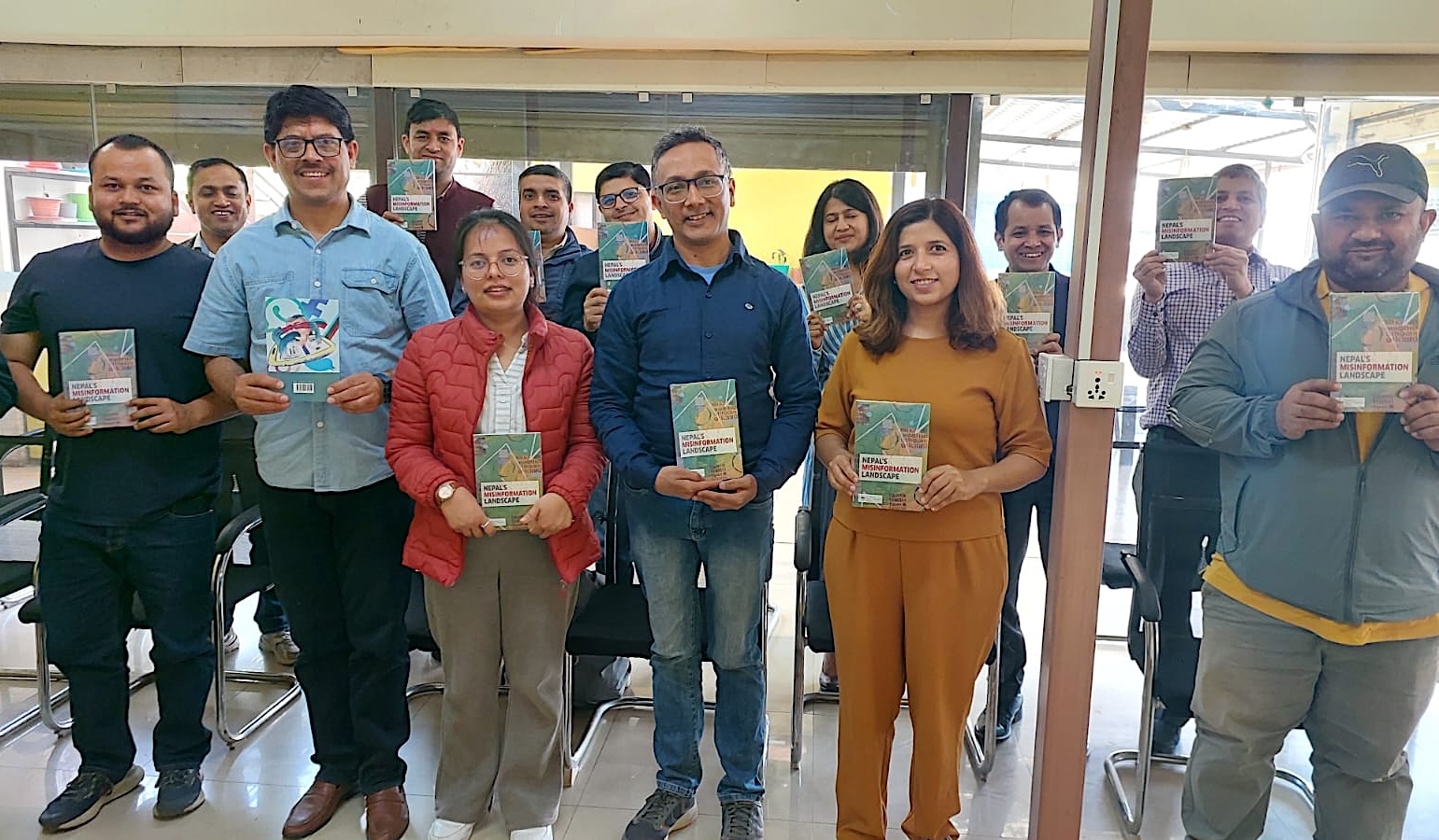
Nepal’s Misinformation Landscape launched to mark five years of NepalFactCheck.org

The Center for Media Research – Nepal (CMR-Nepal) launched Nepal’s Misinformation Landscape, an anthology of research articles, to mark the fifth anniversary of its fact-checking initiative on March 25, 2025.

NepalFactCheck.org was initiated in March 2020 as an urgent response to COVID-19 misinformation by CMR-Nepal and the first Nepali-language blog, MySansar. It has been a signatory of the International Fact-Checking Network (IFCN) since 2023.

Chetana Kunwar, assistant editor, said, “NepalFactCheck.org is a platform dedicated to verifying the authenticity of viral news, claims, and information circulating in Nepal.”

She noted that NepalFactCheck.org has published 381 fact-checks since March 2020, with three peak periods: early 2020 (COVID-related misinformation), late 2022 (political misinformation around elections), and early 2025 (surge in deepfake videos and manipulated content targeting public figures).

Nepal’s Misinformation Landscape, edited by Ujjwal Acharya, consists of six chapters, a foreword, an introduction, and a concluding chapter.

Deepak Aryal, chair of CMR-Nepal, said, “This anthology compiles key outputs of our initiative. The chapters examine misinformation and disinformation in Nepal through various theoretical frameworks—some complementary, others contradictory. Together, they provide a foundational understanding of Nepal’s misinformation landscape and offer multiple analytical lenses for further study.”

“This anthology will help researchers and policymakers design interventions to combat misinformation,” he added.

Contributing authors include Bhuwan KC, Chetana Kunwar, Lekhanath Pandey, Rishikesh Dahal, Tilak Pathak, Ujjwal Acharya, and Ujjwal Prajapati.

Hard copies of Nepal’s Misinformation Landscape are available for free to researchers, students, and journalists at the Readers’ Hub (Kaushaltar) or the CMR-Nepal office. A free digital version can also be downloaded here.

Role of political parties in combating misinformation and disinformation in Nepal

(This essay is the edited part of the working paper presented at CMR Nepal’s program – ‘Interparty Dialogue on Information Manipulation and Democracy’ organized on February 24 in Kathmandu.)

  • By Bhojraj Pokharel, former chief election commissioner

Well-informed people are the pillars of democracy; they are also its watchmen. Political parties have long played their role in raising awareness among the people. They had their own channels, mouthpieces, weekly newspapers, and a reliable line of sources to convey information. The leader of every communicative event would give meaning, making followers aware of its relevance in our society. Especially since the nineties, that channel gradually shifted to mass media and reached social media in the current decade. We all understand this reality.

The free flow of information has been encouraged as informed people are the pillars of democracy. However, looking at the speed of development of technology, there is no environment in which only good information, chosen by responsible people, can reach the people without causing harm.

Due to the diversity in the production and broadcasting of information, malinformation, and misinformation will enter the world of information, and the ranks of ill-informed people will be formed. When efforts, trends, characters, and means to misinform the people become stronger than informing the people, it is clear that the place of democratic methodology and democratic leadership development will be replaced by folk idealism or individual miracleism and the people’s attraction towards them will also increase.

Democracy, which had to be frightened by guns before, has now come to a situation where it has to be frightened by phones.

A common person can express what they see; the situation where they can become material producers themselves is within the advanced practice of democracy; they directly connect with the ruler, criticize the ruler, and make the ruler accountable. However, they also express the point that the fact that an organized group, a group that bakes its bread by destroying the reputation of democracy, is becoming a loyal consumer of the rotten dose, and that it is becoming a means of broadcasting the products of such corrupt individuals or groups, is a matter related to the future of democracy.

In an organized manner, producing and broadcasting information intended to destroy people’s loyalty to democracy is certainly not focused on strengthening democracy. To lead the people astray, their faith must first be manipulated. Only people whose faith is shaken can be turned against democracy and democratic leadership through bad information. The characters involved in information manipulation know this very well.

Nowadays, I have a feeling that the faith in democracy in Nepal is beginning to waver. Democracy has only done bad things, before this Nepal was a paradise, and if we can throw away this democracy, Nepal will become a paradise again. During democratic practice, some bad things have been seen, especially the narrowness of parties, self-centered decision-making processes, corruption, partisanization of democratic institutions, weak governance, etc.

But, is the country in decline in the present system than in the previous system? Of course not. However, those who are in a position to defend the good deeds done now are not defending them honestly. Because they are weak on their own ground, or because the seriousness of the subject matter is ignored, or because they see their future in creating such commentaries, they are usually silent against such organized campaigns to incite the people. Rather, it seems that those who have fought for democracy for 60-70 years by spreading mud for vested interests are getting shaken. Under the guise of mud, the comment that ‘everything is bad’ is becoming stronger in the Nepali public.

We have seen that there was a movement in favor of democracy when the power of information was in the hands of the people. Especially the ‘April Spring’ which started from December 2010 brought a wave of democracy to the politics of the Arab world. “Social media” remained as the messiah of that movement. However, social media not only empowered the common citizens but also gradually became stronger itself. Taking advantage of the weakness of the mainstream media, it gained the support of the people. It established itself as a means of expressing public anger and frustration caused by poor government delivery, rising unemployment and corruption, and political parties and especially satlipsa at their leadership level. Now, that frustration and the lack of access to social media has become a threat of being used against democracy. Organized campaigners are using ‘social media’ as a tool to undermine democracy, increase subversive thinking, increase violence and fulfill their political strategic ambitions by dominating the minds of people with mobile phones in their hands.

Apart from a few exceptions, the meeting between two Nepalis from any corner of the world, including Nepal, begins with the remark that ‘the country is in a state of ruin’. From the time you wake up in the morning until you go to bed, the news, thoughts, debates or reactions that come on the radio, magazines, TV or social media, variously comment that the country is doomed. If someone posts on social media that not only bad things have happened but also good things have happened, they will immediately be demonized, and they will try to expose them by making accusations that did not happen.

The question is which way are we going?

Looking at the World Democracy Report 2023 released by International IDA, based on the data of 173 countries in the world, it is seen that democracy is weakening and authoritarianism is dominating all over the world. Looking at Nepal’s surveys, the graph of credibility towards political parties and their leaders is on a downward journey. Where is the problem? The political circle does not seem to have taken it so seriously. Maybe we don’t understand. When public opinion turns against democracy, the one who will be the first strike does not seem to be hot. We gossip seriously outside, the food will not cook if the egg is heated more than the heat. The religion of the opposition was to warn the government and did nothing! However, it is surprising. The one who is in the government also talks about the end of the country.

Positive things don’t sell and don’t last in a society where negativity is sold. In social networks, there is a desire to increase likes and become viral by setting up an echo chamber. Recently, AI has entered it. By analyzing the age, geography, interests, and political affiliations of the users, the trend of automated messaging to touch the emotional side and increase excitement has become widespread. Even in developed countries, there are many examples of social media platforms producing false information and propaganda. In the run-up to the 2016 US presidential election, the false story that Pope Francis supported one candidate and another candidate sold weapons to the ISI was retweeted or forwarded thousands of times.

In our context, a quick look at the comments that are currently being made on social media shows these 7 types of trends:

  1. The biggest attack is against the Constitution of 2015 and its achievements. Moreover, when you have to sneer at anything or disagree with it, you are attacking the ‘republic’.
  2. There is an emphasis on discrediting the party or leadership that is taking place or has played a key role in bringing about this change,
  3. There is an attempt to undermine or discredit the pillars of the Republic,
  4. The 2072 constitution, which was considered as an achievement, is targeted at them.
  5. Tends to show that the government is incompetent to deliver and govern,
  6. It is tried to show that the citizen is in support of hero or populist leadership
  7. Insignificant space has been given to positive achievements and efforts in the society.

The question arises, why did this situation happen and who is responsible for creating this atmosphere?

Unknowingly, we are all trying to create such an atmosphere. I do not see that all of us gathered here should hesitate to admit that it is our collective failure to come to this situation. From party leaders to workers, it seems that they have pulled out all their might to expose the opposition. We see that all of them have been exposed by the practice of exposing each other by using the cyber army. This gave a dose to the media. The parties are on the same ship, they have not seen the need to think in the direction of what will be the result if the ship sinks. Unfulfilled dreams shared by themselves for popularity are the roots of despair and are also great weapons to overshadow some of the good works done. This ‘populism’ has increased under the guise of them, when people believe the gossip of Chattu and Ghafadi, the emotional public opinion of the people is relying on misinformation, false information and bad information.

Party activists and conscious citizens seem to be the leaders rather than ordinary citizens to create a toxic environment in the country by creating comments that nothing has happened in the country, the country is ruined, there is no future in this country, there is only loot, insecurity, nepotism, nepotism, corruption and bribery in the country. Of course, the dose is given by responsible leaders and conscious citizens. On that foundation, the cultivation of despair has flourished.

If we had been able to improve the governance and the flow of services in a way that the common people could understand, perhaps such a situation would not have come so soon. The behavior of some leaders for the sake of power and the corruption done by others have fallen on the republic and its achievements. The system did not run by itself, it depended on the hands of the operator. And social media gave space to the feeling of those who want to discredit the system by forcefully imposing it on the shortcomings of the driver. And whoever is looking for an opportunity, he will try to save the disappointment in cash. In the name of lack, caste, religion, sect, or anything else. Those who were displaced by yesterday’s changes or disagreed with the changes, such situations can surely give them joy as if they were taken away from Luto. This may be what you are looking for.

Social media is also becoming chaotic now. Especially, the destruction of truth and deep fake caused by this has become a matter of interest and concern for the world. During the hearing held by the US Senate recently with the heads of social networks, some senators said – you have blood on your hands. You have a product that kills people, platforms have become ‘information killing fields’. Where the user shows only one side of the issue.

In this process, the tech companies also not only said that they have their weaknesses and tried to improve them, but they also admitted that criminal tendencies played a role in it as the use of the Internet increased. Also, AI, mobile technology, Chat GPT, recently introduced AI source, Google Gemini, etc., which will make the world instantly audible and visual based on the word order (prompt) to make such a video, and where will it lead to the state of information movement or the state of propaganda? Will you deliver? There is a situation where you can’t do it. During the recent elections in Pakistan, the video message of Imran Khan, the former prime minister of Pakistan, who is in prison under tight security, was able to turn the tide of the election. Now, what will be done with the technology of Zhan AI Sound, it is beyond imagination.

Looking at the geopolitical situation of Nepal, it seems that information manipulation should be taken more seriously. If influential countries like the US or the EU find it difficult to protect their elections from international interference through social media, we need to take immediate concrete steps when looking at the control over the geography, population and technology of our neighbors. Ethnic, religious, geographical, and ideological diversity has increased the risk. If a critical mass is created, there is a lot of possibility to create trouble at any time. It cannot be denied that social media can be a powerful tool to cash in on the growing frustration in the country.

It is my request that the political forces should always be alert to the fact that the main pillars of democracy including parties are weakened by establishing the comment that democracy cannot deliver, along with various forms of extremism, and when extremism is widespread in the general public, extremism can destroy them and attack democracy.

Therefore, the discussions in such programs should not be seen as heating the eggs before they are heated. We have repeatedly done the practice of breaking the system and building a country through the miracles of a particular person. Even our nature, diversity, and external connections do not allow us to move the country forward in the singular vision of a miraculous person. Pushing the country to the path of extremism and establishing the heroism of an individual will again be nothing more than another test. However, fatal test. If the seriousness of the so-called mainstream parties remains the same, those sad paths can become our inevitable paths.

If the work is good, it takes time to manipulate and sabotage their information, if the work is a little good, it is possible to instill hope in the people through information and stop such extremism or miracleism. Even if the parties do a little good work, if they can promote the cleanliness of information, the attack on democracy can be avoided if not completely stopped.

For this, I would like to draw the attention of friends of political parties to the following five points:

  1. Make a common ground and strategy to deal with it by taking regular account of why frustration has increased in the country and where and what are the country’s political risks. This is everyone’s duty.
  2. Make the information flow mechanism of the parties and activists factual, responsible, and ethical.
  3. Emphasize the program to increase the digital knowledge of party workers and well-wishers. Also, issue a code of conduct for social media operation and ask party workers and supporters to use it accordingly.
  4. Prioritize fact-checking. Collaborate with traditional and new media in disseminating facts and disinformation.
  5. Collaborate with government, parties, civil society, media outlets, digital platforms on these issues. Let’s all become aware with the time, let’s all rise above our current selfishness and do what we can from our own level, break the current cloud of despair and show a positive way to ‘raise hope’.

(This working paper was presented in Nepali and is translated by Google Translate and edited for spelling and grammar by ChatGPT 3.5).

Experts Emphasize Policy Discourse and Media Literacy to Tackle Misinformation in Nepal

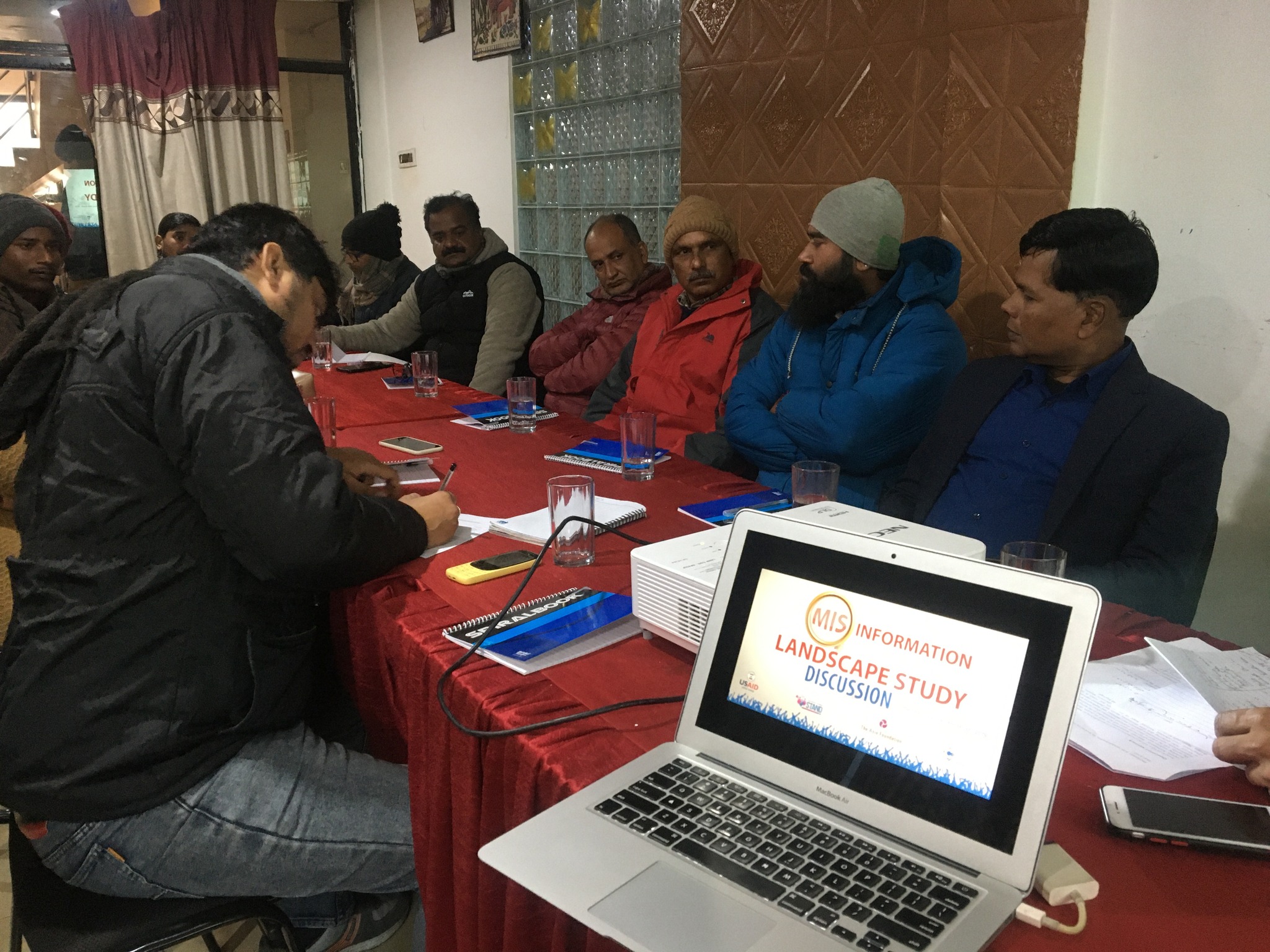
On March 24, 2023, a program titled “Misinformation Landscape: Interaction, Policy Concerns and Way Forward” was held in Kathmandu, Nepal, with the objective of addressing policy discourse on misinformation and mitigating the challenges of misinformation in Nepali society.

During the event, National Information Commissioner Mahendra Man Gurung emphasized the importance of timely dissemination of accurate information to combat misinformation.

Gurung recommended that policy interventions should assess whether existing policies can address concerns related to misinformation, rather than solely creating new legal mechanisms. He cautioned against targeting only those who engage in misinformation, as it may negatively impact the overall functioning of media and society. Gurung also recommended that self-regulation is a key mechanism to combat misinformation.

Communication Registrar of Bagmati Province Rewati Sapkota endorsed the notion of self-regulation and stressed that the emphasis should be on creating good content by journalists to ensure reliable information is disseminated widely through social media.

Sapkota suggested that strengthening the reliable media industry and promoting ethical reporting by mainstreaming media that rely on viral posts are major strategies to tackle misinformation.

Netra Prasad Subedi, Spokesperson and Joint Secretary at the Ministry of Communication and Information Technology, stated that the government is cautious about how laws will affect users. Subedi also informed that the drafting of a new law on media will cover digital media.

Media expert Raghu Mainali highlighted the importance of strengthening formal channels such as news media and community media for factual and objectively verifiable journalism. He also emphasized the need for media literacy and proactive disclosure of misinformation, considering regulation as the last option.

Shreejana Aryal, Secretary at Nepal Federation of Nepali Journalist, expressed that disregarding formal media channels is a major problem linked with misinformation. Journalists are often compelled to report based on the content disseminated by sources.

Jhabindra Bhusal, Chief Administrative Officer of Press Council Nepal, emphasized the need for digital literacy and suggested that changes in technology have resulted in confusion regarding calling YouTubers as content creators or journalists.


Indra Kumari Adhikari, Board Member of Nepal Policy Institute, believed that it is necessary to focus on public literacy about what to and what not to share online. She highlighted that political parties are engaged in developing cyber armies, which are considered major propagators of misinformation and disinformation.

Lekhanth Pandey, Assistant Professor of Tribhuvan University, presented the research paper on Misinformation Landscape Study. He identified social media as the primary source of misinformation, with Facebook being the most commonly cited platform. Pandey added that the widespread impact of misinformation in Nepali society, beyond politics and media, has the potential to exacerbate social tensions, violence, and delay in justice and infrastructure development.

Overall, 30 people from different sectors participated in the program and provided their insights on the need to tackle misinformation through policy discourse, media literacy, and self-regulation.

Misinformation Study Wraps Up with Discussion in Dhangadi

CMR-Nepal’s Misinformation Study wrapped up with a discussion in Dhangadi, the capital of Sudurpashchim Province, on January 26, 2023.

The objective of the program was to investigate the misinformation problems prevailing in the province.

The event witnessed the attendance of 30 participants, including representatives from political parties, youth, students, health workers, women’s groups, journalists, and civil society activists.

The discussion revealed that misinformation in the province is impacting diverse groups, including lower-caste communities, women, and people with disabilities. Sunita Rana, a representative of Nepal Student Wing, stated that the male-dominated society’s mindset and opinions created as a result are hindering women’s progress in the region.

Nandaraj Bhatt, a representative of the disabled community, emphasized that news media’s insensitive use of language is hurting the sentiments of the disabled community.

Bhuwan Bhandari, a journalism educator, highlighted the importance of media literacy from an early age and cautioned against sharing unverified information on social media.

Other participants identified politics as a significant cause of misinformation and stressed the need for self-restraint while sharing such information on social media.

Misinformation Landscape Discussion in Karnali Province

CMR-Nepal conducted the sixth phase of the Misinformation Landscape Study discussion in Surkhet, the capital of Karnali Province, on January 24, 2023.

The program aimed to deepen the understanding of misinformation issues in the province and was attended by 25 participants, including political party representatives, youth, students, health workers, women’s groups, journalists, and social media influencers.

During the event, participants highlighted the prevalence of misinformation in various domains in the province, including politics, youth issues, journalism, civil society, and social media.

Kamala Tiwari of Mid-Western University spoke about unregistered online news media as the main source of misinformation and the misrepresentation of women in such information. Dinesh Gautam of Riti Foundation pointed out that popular personalities and social media influencers were involved in spreading fake news and misinformation through social media.

A student shared her experience of encountering misinformation mainly on social media and called for media literacy programs in schools and universities. An agro-based entrepreneur also talked about the negative impact of misinformation on businesses, citing the example of bird flu in Kathmandu, which caused a decrease in chicken prices in Surkhet, affecting local farmers.

Kumar Thapa, a social media influencer from Motteygang, highlighted the importance of providing factual information about events in the province and holding governing agencies accountable through responsible reporting. He shared that their efforts in producing stories that bring about changes in the community have contributed to the popularity of their Facebook page in the province.

Misinformation Landscape Discussion in Bagmati Province

The fifth phase of the Misinformation Landscape Study discussion was organized by CMR-Nepal on January 17, 2023, in Hetauda, the capital of Bagmati Province.

The objective of the program was to enhance the comprehension of the problem of misinformation in the province.

The program was attended by 35 participants, including representatives from political parties, youth, students, health workers, women’s groups, journalists, and social media influencers.

During the event, Laxmi Jimba, the Ward Chair of Bakaiya Rural Municipality-5 in Makwanpur District, blamed “dirty politics” for the spread of misleading information across political and societal domains.

She shared how her affiliation with a political party prevented her from speaking freely about certain topics.

Jimba also pointed out that journalists and news media have failed to counter misinformation due to their affiliations with various political parties, but she held politicians responsible for this problem.


“If journalists are given the freedom to work independently, the spread of political misinformation would be largely controlled,” she added.

The discussion also highlighted the media’s role in spreading misinformation in the field of agriculture.

An agro-entrepreneur from Hetauda shared how news media present misleading data about profits from agriculture, often framing turnovers as profits.


A local journalist and educator, Suresh Shrestha, explained that he and others were engaged in media literacy campaigns in Hetauda to encourage students to read news media and develop an understanding of written texts.

Koshi Province Participants Highlight Impact of Misinformation on Politics, Women’s Health, and Education

The fourth phase of the Misinformation Landscape Study discussion program was held on January 12, 2023, in Biratnagar, Koshi Province, organized by CMR-Nepal with the objective of increasing awareness of misinformation in the region.

The program was attended by 30 participants, including representatives of political parties, youth, students, health workers, women’s groups, journalists, and social media influencers.

During the program, participants shared their experiences of encountering misinformation in different sectors of the province. Sagar Thapa, a UML leader from Biratnagar Metropolitan City, highlighted how politics and politicians are being misguided due to waves of misinformation during elections and beyond. He noted that misinformation and conspiracy theories in politics and political agendas can have a negative impact on every aspect of Nepali life and society.

A health official pointed out that women are facing significant problems due to misinformation in the province, particularly regarding gender-biased sex selection during pregnancy. Riju Poudel, a health officer, emphasized the importance of combating such misinformation to prevent such harmful practices.

The discussion also highlighted the role of language in spreading misinformation, with concerns raised about its impact on handicapped people. Additionally, a public educator from Biratnagar in Province 1 recalled how a former minister claimed in a television interview that school textbooks had already reached all schools across the country, but he was still waiting for them in his own school, highlighting the prevalence of misinformation even at the highest levels of government.

Finally, some participants emphasized that not all information on social media is fake, and that positive information can also be shared. However, they also stressed the importance of exercising self-control when sharing information on social media to prevent the spread of misinformation.

Discussions Held in Madhesh Province to Tackle Misinformation

The Misinformation Landscape Study program continued with its third phase, organized in Janakpurdham, the capital of Madhesh Province on January 10, 2023.

The objective of the discussion was to raise awareness about misinformation in the region and identify ways to counter it.

The program had 25 participants, including representatives from political parties, youth, students, farmers, women’s groups, journalists, and social media influencers.

Misleading narratives that discourage women from participating in the electoral system were identified as a prominent issue in Madhesh Province. A Dalit woman respondent stated that social media is often used to defame and discourage women in politics.

Women politicians also reported facing barriers in obtaining first-past-the-post (FPTP) tickets, with misinformation being circulated that they cannot compete with male or economically well-off candidates.

Another misguided narrative identified in the region is the notion of Madhesis vs Pahadis, which has reportedly arisen due to social media and unregistered portals. However, one participant noted that politicians and opinion makers may be behind its promotion for their electoral gains.

Misunderstanding about the country’s constitution and citizenship laws were also identified as issues in Madhesh Province. According to a government attorney who is from the Madhesi community and works in Janakpur District Court, a few influential opinion makers and writers are responsible for creating the narrative that the constitution is discriminatory towards the Madhesi community.

The attorney suggests that if the constitution had been translated into Maithili, distributed widely among the Madhesi communities, and explained clearly, the violent protests that occurred before and after the adoption of the constitution could have been avoided.

The flow of misinformation was also observed to be high during crisis situations, particularly political movements. Civil society representatives noted that such misinformation is often disseminated based on emotions, religion, and threats. Additionally, student participants identified the issue of sharing information without verifying it in the province.

Misinformation Landscape Discussion in Pokhara, Gandaki Province

On January 3, 2023, CMR-Nepal conducted the second phase of its Misinformation Landscape Study discussion in Pokhara, Gandaki Province. The program was attended by a diverse group of 30 participants, including Province Assembly members, political party representatives, youth, students, farmers, women’s groups, journalists, and social media influencers.

During the discussion, Province Assembly Member Saraswoti Gurung highlighted the harmful effects of stereotypes and victim-blaming tendencies towards women, Dalits, and minorities, and stressed the need to combat misinformation disguised as freedom of speech.

Bimala Bhandari, the Chairperson of the Federation of Nepali Journalists in Kaski District, emphasized the importance of fact-checking information to tackle misinformation, which she described as becoming a daily diet for mobile users.

Teachers and students in the province shared their experiences with social media and recognized the need to read and verify content before sharing it. A public health official based in Pokhara also noted the negative effects of giving personal advice to patients about medicines, treatment, and doctors, which has led to misinformation in the health sector.

Dharma Datta Paudel, an agro-entrepreneur based in Pokhara, highlighted the prevalence of misinformation about seeds, fertilizers, pesticides, and subsidies for farmers. He emphasized the need to dispel such misinformation and provide accurate information to farmers.

Overall, the discussion underscored the urgent need for increased awareness and fact-checking to combat the spread of misinformation in the province.

Discussion on Misinformation Landscape in Lumbini Province

On January 3, 2023, CMR-Nepal organized a discussion in Butwal, Lumbini Province, to address the issue of misinformation in the region.

The event was attended by 54 people, including Province Assembly members, political party representatives, youth, students, farmers, business community, women’s groups, journalists, and social media influencers. The participants shared their personal experiences with misinformation in various forms of media.

During the discussion, Province Assembly Member Bhoj Prasad Shrestha highlighted the challenges faced by the public in identifying accurate information in the information era.

He emphasized that misinformation and disinformation are especially prevalent during elections and can have negative impacts on civil society and political institutions. He called for action against those involved in disseminating misinformation.

Advocate Deepa Sunar pointed out that the law prohibits the dissemination of misinformation and called for its effective implementation to combat this problem.

Jamuna Nepali, the General Secretary of Feminist Dalit Organization (FEDO) in Rupandehi District, emphasized the need to tackle misinformation targeting lower castes in the area. She explained that the use of derogatory remarks and their representation in society also constitutes misinformation.

The student and youth participants in the program emphasized that social media is a common platform for the spread of misinformation, often taking the form of parody, humor, and satire. They stressed the need for media literacy at the school and college level to combat this issue.