Roundtables on ‘Misinformation & Its Impact on Democracy’ held in 7 provinces

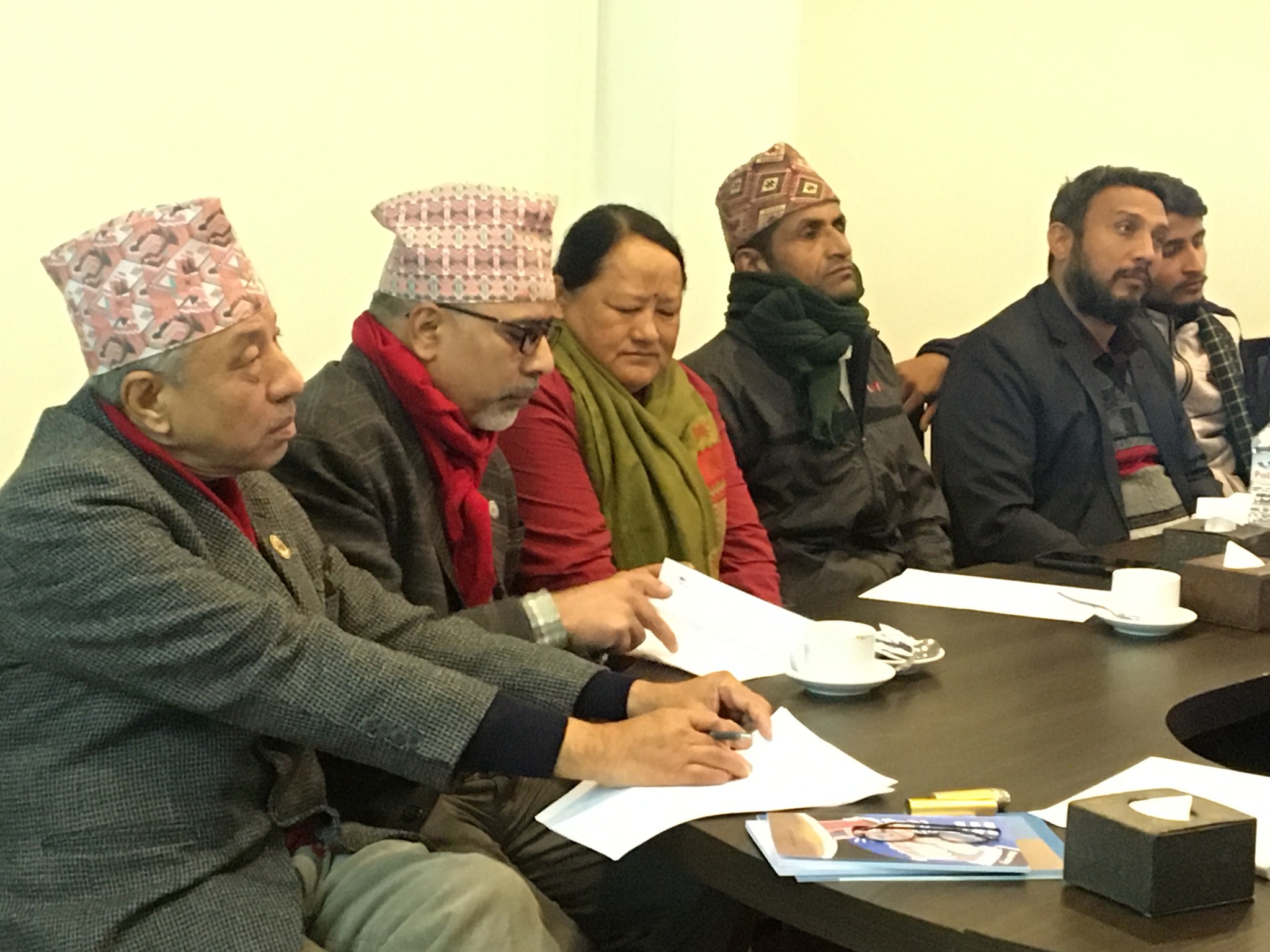
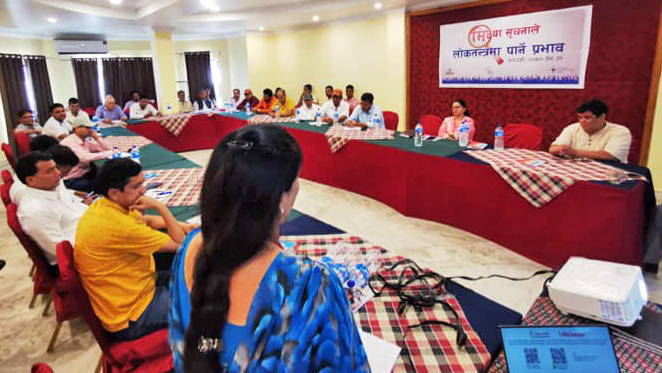
CMR-Nepal with support from the International Republican Insitute (IRI) Nepal organized provincial roundtables on ‘Misinformation and Its Impact on Democracy’ in all 7 provinces of Nepal in June 2022.

Nepal had held Local Level Elections on May 13, 2022 during which CMR-Nepal monitored the misinformation on social media and media through it’s regular monitoring system of Nepal Fact Check and also with seven provincial monitors for a month leading to the election date. The objectives of the roundtables were to sensitize stakeholders on misinformation, share monitoring report, share misinformation experience, and discuss on mitigation strategies.

A total of 266 people, 27.5% of them females, representating government (11.7%), parliament (9.4%), civil society (34.6%), and media (44.4%) participated in the roundtables held in Butwal, Pokhara, Surkhet, Dhangadi, Janakpur, Biratnagar and Hetauda from June 11 to 30.

CMR-Nepal’s Tilak Pathak, Bhuwan KC and Umesh Shrestha were resource people during the roundtables that included sessions on introduction to misinformation, its impact on democracy, preliminary report presentation on provincial misinformation and media monitoring during local elections, and ways to counter misinformation.

In the discussions, the representatives from different political parties in the provinces were of the view that misinformation had weakened the pillars of democracy. They said politicians were mostly targeted during the election, and misleading information is abundant in the press and social media.

Even the provincial ministers expressed their concern about misinformation. They pointed out the tendency to spread disinformation in a planned manner to oppose or to favour. The participants were of the view that democracy could only be strengthened if the information integrity is maintained.

Some politicians said that if the media can give information/news to the public in full compliance with the journalist code of conduct and political personalities exchange information in a self-disciplined manner, there will be no need to make a law on control of false information.

Civil society activists were of the opinion that the misinformation was spread by elite groups and high profiles. And general people receive such information in a distorted form. They emphasized the need to take action against those involved in dissemination of disinformation and launch a campaign on media literacy.

Participant journalists were of the opinion that social media posed a significant threat to misinformation. They pointed out that the general people could not differentiate between the information they received from news-media and social media.

Journalists working in the province also pointed out the problem of receiving directives to cover news stories from the central office based on misinformation through social media. They even outline some of the underlying issues in journalism where journalists are guided by the crowd and viral information. The participants in the discussion series were of the common understanding that media literacy could be a means to tackle misinformation.

It emerged that misinformation is already experienced and/or conceived as a big problem at the provincial levels. The participants shared personal experiences with misinformation and generally stressed on the need of action to mitigate misinformation.

There is high level of interest in understanding misinformation among stakeholders as the participants, including concerned ministers as well as MPs and others stressed need to take misinformation orientation further down to the grassroot levels.

Based on suggestions during the roundtables and observations from resource persons, CMR-Nepal identified following action for future:

  1. Take misinformation orientation to stakeholders (especially government, policymakers, media, and journalists) as well as citizens (especially youth and vulnerable population).
  2. Development and wide distribution of resource materials on misinformation.
  3. Programs on media and information literary (MIL) for the public.
  4. Continuous misinformation monitoring at national, provincial and local levels.
  5. Fact-checking initiatives to become wider and reach more population.
  6. Support provincial government to formulate policies to mitigate misinformation.

’95 percent Nepali internet users exposed to disinformation’

Most Nepali internet users are exposed to disinformation, a survey by the Center for Media Research – Nepal (CMR-Nepal) revealed.

The survey results show that 95.5 percent of internet users receive disinformation, largely through social media sites such as YouTube, Facebook and Twitter.

Nepal Twitter Users Survey 2019 was conducted by CMR-Nepal in November 2019 and results are based on 542 valid responses.

“The results have some fascinating, and probably not so surprising, results,” says CMR-Nepal chairperson Rishikesh Dahal. “This is very concerning as almost all internet users are exposed to some kind of disinformation.”

“This shows there is an urgent need for the stakeholders to devise an effective and multi-layered plan to help citizens distinguish disinformation from valid information.”

Social media major source of disinformation

A huge majority of the respondents, 95.5 percent, said they have seen disinformation online in the last seven days. Those who had not seen disinformation online in a week were just a handful.

And, for most of Nepalis, the main platform where they believe say saw disinformation is YouTube. A total of 85.6 percent said they saw disinformation on YouTube.

This validates claims that ‘YouTubers’ are not only sensationalizing issues but also feeding misguided and fake information to garner more views, thereby earn more.

Facebook and Twitter are not far behind as more than two-thirds said they also saw disinformation on Facebook and more than half saw disinformation on Twitter.

Only 17 percent saw the disinformation on other websites, many of them stating websites like news websites, and very few, less than half-a-percent saw it in newspapers.

There could be a trust factor playing in as people tend to trust newspapers more and probably believe what they see on newspaper are true.

“In Nepal’s context, many surveys conducted by various organizations in the past decade showed mainstream media as a most trustworthy institution, up to 90 percent public ranking media as a trustworthy institution,” says Tilak Pathak who studies public trust on media.

“It’s not that the media does not make mistake. They do make mistakes, but they also correct errors and apologize to the public, thus keeping in the public trust,” says Pathak.

“Therefore, even when there is disinformation in mainstream media, the general public trust it and may have not identified them as disinformation.”

Disinformation: a problem for society

The respondents were also asked whether disinformation is already a problem or will be a problem for our society.

More than two-third (73.6 percent) Twitter users believe that disinformation is already a problem for our society and politics.

A little more than 12 percent think it will create problems in the future and further 11 percent think it may already have been a problem.

In total, 96.5 percent of them think disinformation is or will be a problem for our society.

Only a very few, 1.6 percent, believe it not a problem now and 1.1 percent believe it will not create a problem in the future. Rest either did not reply to the question or blamed mainstream media for disinformation.

Most Nepali Twitter users (86.5 percent) said they are concerned about fake news, misinformation, and disinformation online. Only five percent said they are not concerned while 8.5 percent were neutral.

Government and media are responsible to tackle disinformation

Most Twitter users put media and government as the most responsible agencies to tackle disinformation online. About 40 percent of all respondents put media on the most responsible side whereas 38 percent put the government on the most responsible side.

About 32 percent considered users as most responsible, whereas 30 percent considered platforms as most responsible.

Those considering civil society as most responsible to tackle disinformation online were 22.5 percent. Some, about 9 percent, considered there are other agencies most responsible. Those also choosing others listed educational institutions, influencers, and fact-checkers.

“Fact-checking initiatives are very important in the infodemic era, but equally important are efforts from government, political parties, media, civil society, and society’s opinion leaders to spread critical thinking and information literacy among the citizens,” said Umesh Shrestha, the editor of NepalFactCheck.org, an initiative of CMR-Nepal.

CMR-Nepal’s former chairman Bhuwan KC says disinformation is set to pose a big threat to Nepal’s democracy as it could not only impact upcoming elections but also public debate and understanding of political and social issues.

“Unless we devise a concrete and effective plan to tackle disinformation without impacting people’s freedom, our democracy could suffer a big blow,” KC says.

***

To download the results of the Nepal Twitter Users Survey 2019, click here.

Announcing webinar series on disinformation and fact-checking

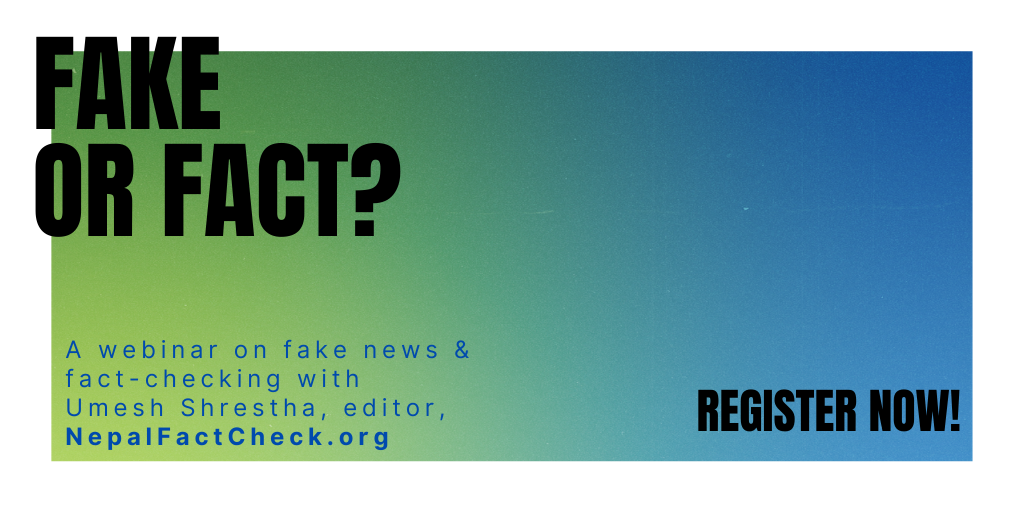
CMR-Nepal will host a series of webinars ‘fake or fact: disinformation and fact-checking’ to raise awareness among the general public on the issue.

The webinars, the first of which will be on September 6, are free to attend and are targeted to journalists and the general public. Continue reading “Announcing webinar series on disinformation and fact-checking”

के हो मिथ्या समाचार (फेक न्यूज) ?

मिथ्या समाचार (अङ्ग्रेजीमा फेक न्युज) भनेको मूलतः झुटो वा गलत वा भ्रमपूर्ण वा अनर्थरूपमा घटना, अभिव्यक्ति, तथ्याङ्क र तर्क प्रयोग गरेर वा व्याख्या गरेर समाचारका रूपमा प्रस्तुत आमसञ्चारका माध्यम वा इन्टरनेटका सामग्री हुन् । यस्ता सामग्रीको मूल उद्देश्य जनमत प्रभावित गर्नु हुन्छ ।  

सञ्चार गर्ने क्रममा मिथ्या खबरको प्रयोग पत्रकारिता सुरु हुनुभन्दा धेरै पहिलेदेखि नै भएको पाइन्छ । महाभारत युद्धमा द्रोणाचार्यलाई पराजित गर्न फैलाइएको अश्वत्थामा मृत्युको खबरदेखि पछिल्लो समयमा पीत पत्रकारिता वा प्रोपगन्डा भनिएका सबै सञ्चार सामग्रीलाई मिथ्या समाचारका रूपमा लिन सकिन्छ । आमसञ्चार साधनको विकासका कारण मिथ्या समाचार धेरै जनताबीच पुग्न सहज भएको हो । इन्टरनेटको विकास र विशेषगरी आममानिसले सहजरूपमा सामग्री प्रकाशन र वितरण गर्न सक्ने सोसल मिडियाको विस्तारका कारण मिथ्या समाचारको प्रयोग अझ बढी सहज र धेरैबीच पुग्न सक्ने भएको छ । आमनागरिक, समाज र राजनीतिमा विशेष प्रभाव देखिन थालेपछि यसको चर्चा एकाएक बढ्न पुगेको हो । अमेरिकामा सन् २०१६ को राष्ट्रपतीय निर्वाचनमा आमअपेक्षा विपरित अप्रत्याशितरूपमा डोनाल्ड ट्रम्प विजयी भएपछि त्यसको एक कारक मिथ्या समाचार र तिनको व्यापकतालाई लिइएको छ । जसमा फेसबुक, ट्विटर जस्ता सोसल मिडियाको विशेष भूमिका थियो । Continue reading “के हो मिथ्या समाचार (फेक न्यूज) ?”