Koshi Province Participants Highlight Impact of Misinformation on Politics, Women’s Health, and Education

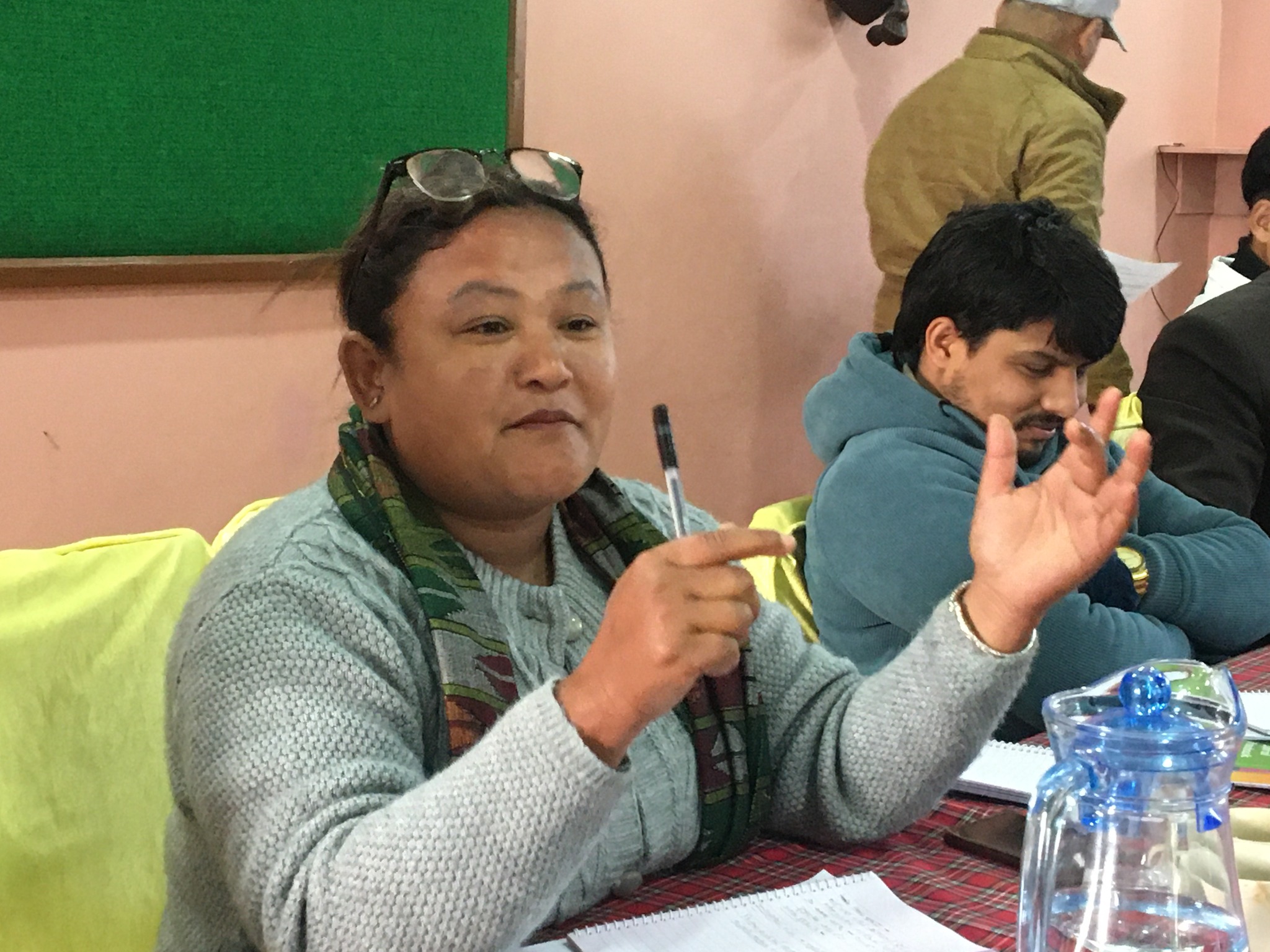
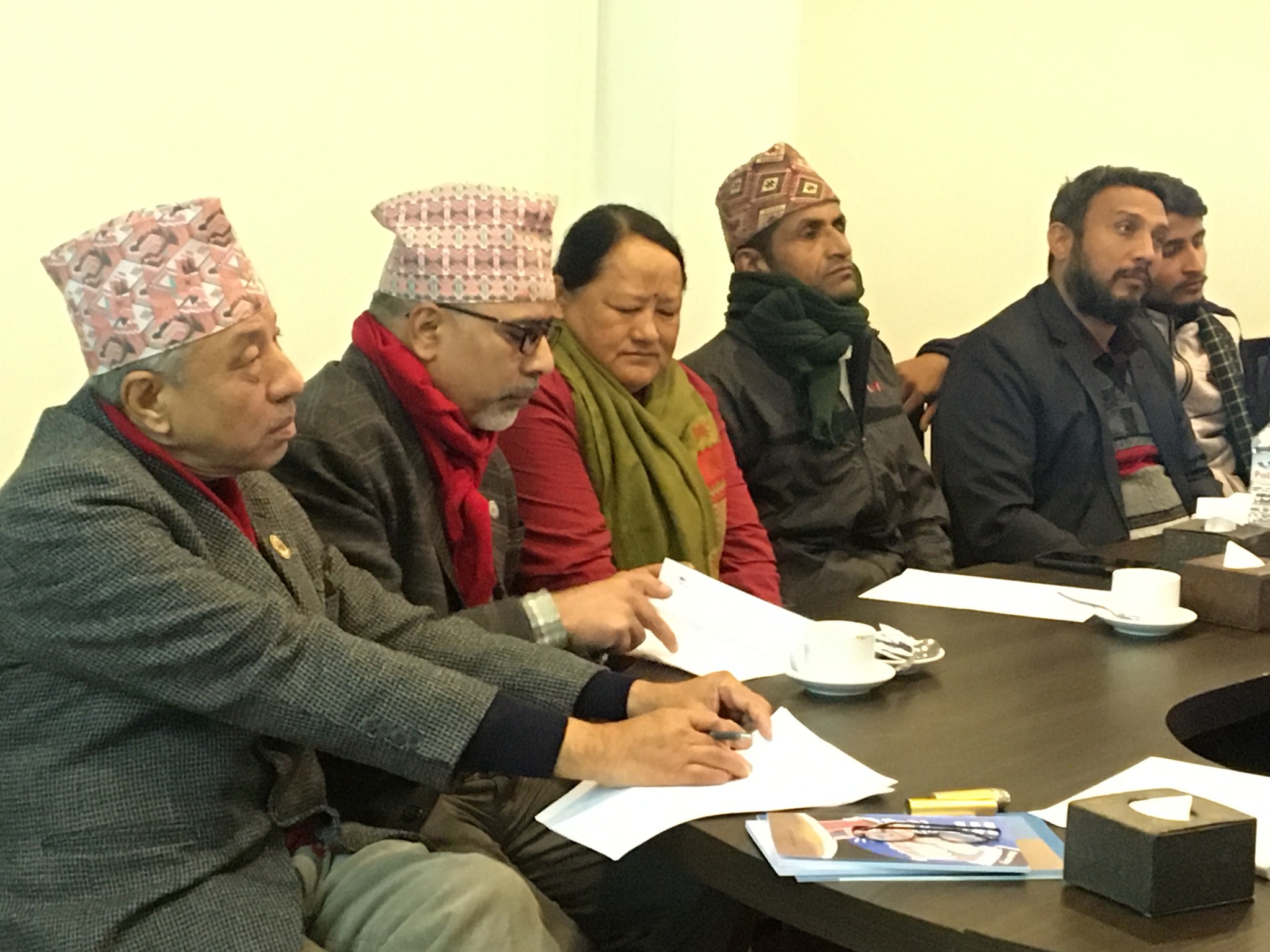
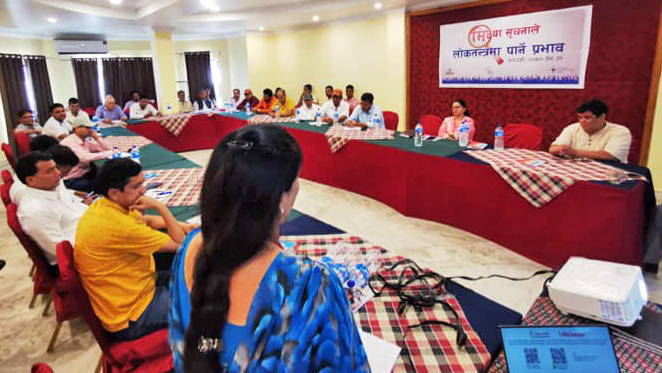
The fourth phase of the Misinformation Landscape Study discussion program was held on January 12, 2023, in Biratnagar, Koshi Province, organized by CMR-Nepal with the objective of increasing awareness of misinformation in the region.

The program was attended by 30 participants, including representatives of political parties, youth, students, health workers, women’s groups, journalists, and social media influencers.

During the program, participants shared their experiences of encountering misinformation in different sectors of the province. Sagar Thapa, a UML leader from Biratnagar Metropolitan City, highlighted how politics and politicians are being misguided due to waves of misinformation during elections and beyond. He noted that misinformation and conspiracy theories in politics and political agendas can have a negative impact on every aspect of Nepali life and society.

A health official pointed out that women are facing significant problems due to misinformation in the province, particularly regarding gender-biased sex selection during pregnancy. Riju Poudel, a health officer, emphasized the importance of combating such misinformation to prevent such harmful practices.

The discussion also highlighted the role of language in spreading misinformation, with concerns raised about its impact on handicapped people. Additionally, a public educator from Biratnagar in Province 1 recalled how a former minister claimed in a television interview that school textbooks had already reached all schools across the country, but he was still waiting for them in his own school, highlighting the prevalence of misinformation even at the highest levels of government.

Finally, some participants emphasized that not all information on social media is fake, and that positive information can also be shared. However, they also stressed the importance of exercising self-control when sharing information on social media to prevent the spread of misinformation.

Discussions Held in Madhesh Province to Tackle Misinformation

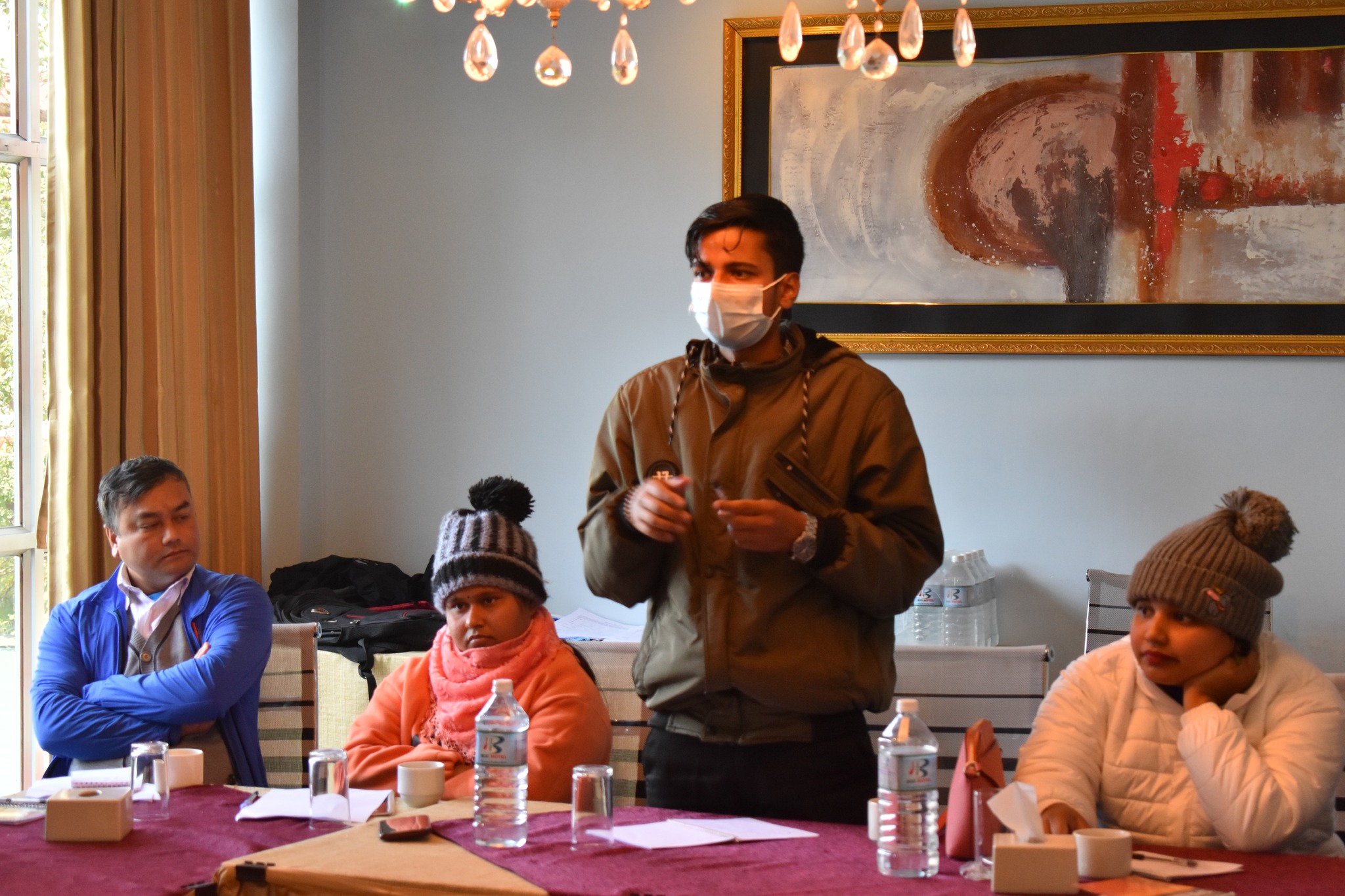
The Misinformation Landscape Study program continued with its third phase, organized in Janakpurdham, the capital of Madhesh Province on January 10, 2023.

The objective of the discussion was to raise awareness about misinformation in the region and identify ways to counter it.

The program had 25 participants, including representatives from political parties, youth, students, farmers, women’s groups, journalists, and social media influencers.

Misleading narratives that discourage women from participating in the electoral system were identified as a prominent issue in Madhesh Province. A Dalit woman respondent stated that social media is often used to defame and discourage women in politics.

Women politicians also reported facing barriers in obtaining first-past-the-post (FPTP) tickets, with misinformation being circulated that they cannot compete with male or economically well-off candidates.

Another misguided narrative identified in the region is the notion of Madhesis vs Pahadis, which has reportedly arisen due to social media and unregistered portals. However, one participant noted that politicians and opinion makers may be behind its promotion for their electoral gains.

Misunderstanding about the country’s constitution and citizenship laws were also identified as issues in Madhesh Province. According to a government attorney who is from the Madhesi community and works in Janakpur District Court, a few influential opinion makers and writers are responsible for creating the narrative that the constitution is discriminatory towards the Madhesi community.

The attorney suggests that if the constitution had been translated into Maithili, distributed widely among the Madhesi communities, and explained clearly, the violent protests that occurred before and after the adoption of the constitution could have been avoided.

The flow of misinformation was also observed to be high during crisis situations, particularly political movements. Civil society representatives noted that such misinformation is often disseminated based on emotions, religion, and threats. Additionally, student participants identified the issue of sharing information without verifying it in the province.

Misinformation Landscape Discussion in Pokhara, Gandaki Province

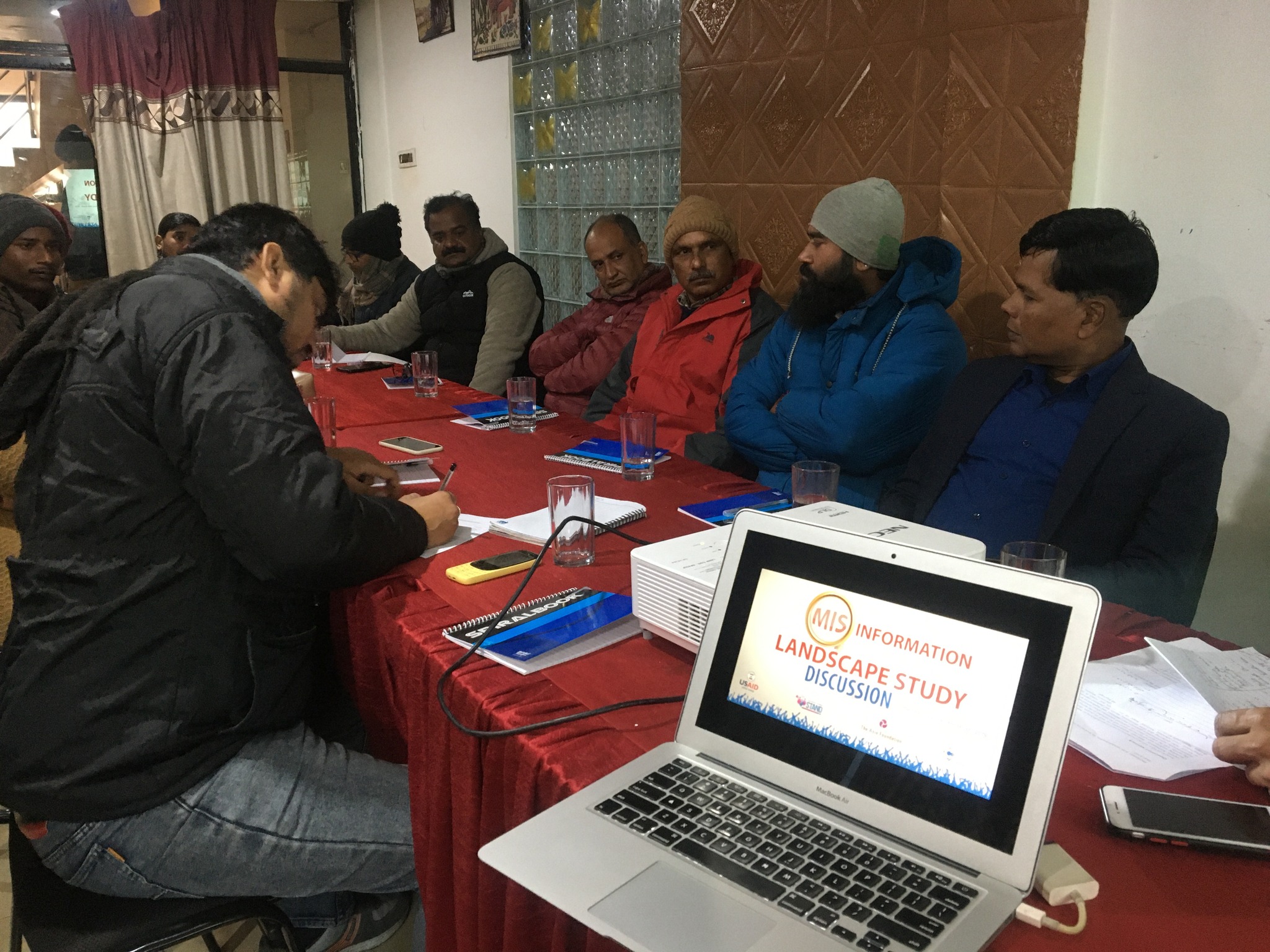
On January 3, 2023, CMR-Nepal conducted the second phase of its Misinformation Landscape Study discussion in Pokhara, Gandaki Province. The program was attended by a diverse group of 30 participants, including Province Assembly members, political party representatives, youth, students, farmers, women’s groups, journalists, and social media influencers.

During the discussion, Province Assembly Member Saraswoti Gurung highlighted the harmful effects of stereotypes and victim-blaming tendencies towards women, Dalits, and minorities, and stressed the need to combat misinformation disguised as freedom of speech.

Bimala Bhandari, the Chairperson of the Federation of Nepali Journalists in Kaski District, emphasized the importance of fact-checking information to tackle misinformation, which she described as becoming a daily diet for mobile users.

Teachers and students in the province shared their experiences with social media and recognized the need to read and verify content before sharing it. A public health official based in Pokhara also noted the negative effects of giving personal advice to patients about medicines, treatment, and doctors, which has led to misinformation in the health sector.

Dharma Datta Paudel, an agro-entrepreneur based in Pokhara, highlighted the prevalence of misinformation about seeds, fertilizers, pesticides, and subsidies for farmers. He emphasized the need to dispel such misinformation and provide accurate information to farmers.

Overall, the discussion underscored the urgent need for increased awareness and fact-checking to combat the spread of misinformation in the province.

Discussion on Misinformation Landscape in Lumbini Province

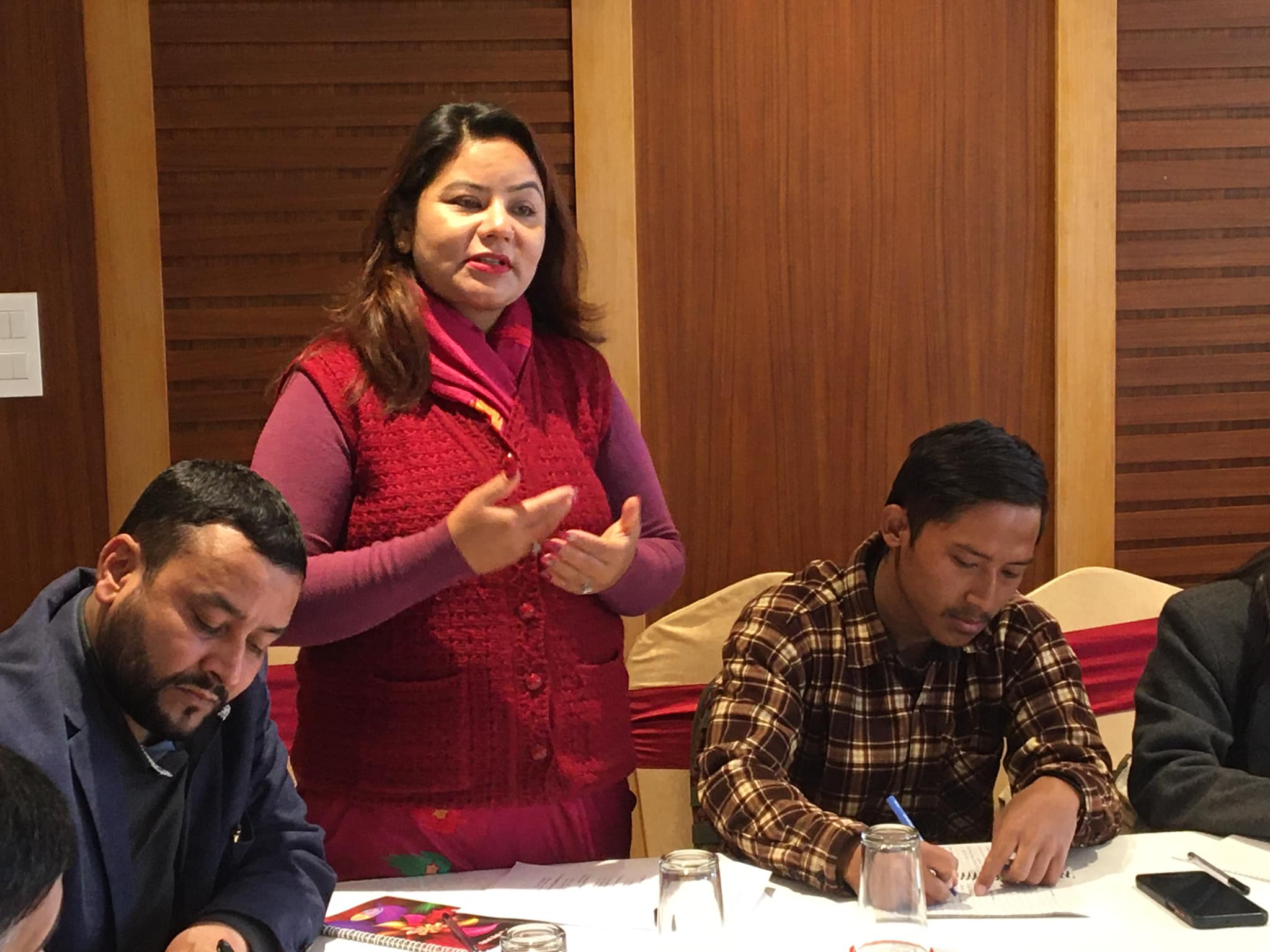
On January 3, 2023, CMR-Nepal organized a discussion in Butwal, Lumbini Province, to address the issue of misinformation in the region.

The event was attended by 54 people, including Province Assembly members, political party representatives, youth, students, farmers, business community, women’s groups, journalists, and social media influencers. The participants shared their personal experiences with misinformation in various forms of media.

During the discussion, Province Assembly Member Bhoj Prasad Shrestha highlighted the challenges faced by the public in identifying accurate information in the information era.

He emphasized that misinformation and disinformation are especially prevalent during elections and can have negative impacts on civil society and political institutions. He called for action against those involved in disseminating misinformation.

Advocate Deepa Sunar pointed out that the law prohibits the dissemination of misinformation and called for its effective implementation to combat this problem.

Jamuna Nepali, the General Secretary of Feminist Dalit Organization (FEDO) in Rupandehi District, emphasized the need to tackle misinformation targeting lower castes in the area. She explained that the use of derogatory remarks and their representation in society also constitutes misinformation.

The student and youth participants in the program emphasized that social media is a common platform for the spread of misinformation, often taking the form of parody, humor, and satire. They stressed the need for media literacy at the school and college level to combat this issue.

Interventions to Combat Misinformation in Nepal’s 2022 Elections

Background and Political Context

According to the 2021 census, 38 percent of households in Nepal have internet connections, while 52 percent of the population are internet users [1].

A large number of citizens use the internet via mobile phones. There are many citizens who don’t use browsers to access the internet but use social media. Facebook, YouTube, and TikTok are popular social media in Nepal. The number of people using social media is higher than those who watch TV (31 percent), listen to radio (26 percent), and read newspapers (four percent) for news [2], and they are more likely to be affected by misinformation.

Nine out of every 10 internet users encounter misinformation, and 98 percent of Nepal’s internet users are concerned about the flow of misinformation and its impact on society [3].

Due to the lack of information literacy, limited access to news media, and political instability seen in recent decades, there is a high likelihood of information manipulation in Nepal. Policies drafted by the government to regulate social media, citing the spread of misinformation and other negative trends, do not show respect for freedom of speech, internet freedom, and basic civil rights [4].

Information Manipulation in Nepal

Nepal had experienced information manipulation and its adverse effects even before social media became popular. In 2000, a misinformation about comment on Nepal by an Indian actor led to ethnic violence across the country and the death of some citizens. Around 2009, when misinformation about child kidnappers spread, innocent people were injured and killed in mob beatings in various locations [5].

Although a lot of misinformation spread during the 2001 Royal Massacre or the 2015 Gorkha Earthquake, it was more extensively seen during the 2017 elections. After the start of the COVID pandemic in 2020, misinformation increased dramatically, and due to the increasing use of misinformation during elections worldwide, it was anticipated that information manipulation could influence elections in Nepal as well.

In a 2021 CMR-Nepal survey, 92 percent of respondents reported seeing misinformation on the internet, and 98 percent believed that misinformation could be a problem for Nepali society and politics [6]. Experts were also concerned about the possibility of information manipulation during elections, and even more so about the potential involvement of foreign actors, especially neighboring countries [7].

Election Commission’s Intervention

In the Social Media Usage Policy [8] issued in 2020, Nepal’s Election Commission identified information manipulation as a challenge and put forward the concept of developing necessary policies, strategies, and programs against it, as well as collaborating with technology companies.

The Commission conducted orientations to enhance the capacity of election officers and its staff regarding misinformation. During the 2022 election, the Election Code of Conduct included provisions related to misinformation and propaganda, as well as policies regarding misinformation and hate speech.

The Commission established a monitoring unit, including the cyber bureaus of Nepal Police and Nepali Army, to monitor misinformation and hate speech transmitted through online media. Additionally, for public awareness, the Commission collaborated with some telecomm companies to provide information about misinformation in mobile ringtones.

In 2022, the Election Commission attempted to expand relationships with platforms like Facebook, TikTok, and Twitter to reduce the number and impact of misinformation that could spread on social media during elections. Stating that information manipulation on social media during elections would be the biggest challenge, the Commission made its first attempt to establish contact with major technology companies. Among them, Meta, the company of Facebook and Instagram, collaborated with the Commission, while TikTok and Twitter opened direct communication channels regarding harmful election-related misinformation [9].

Facebook announced on September 7, 2022, that Nepal’s data would be available in its Ad Library. In this library, data regarding political or other advertisements from Nepal on Facebook and Instagram can be viewed for up to seven years. Before the election, the Meta company held various meetings and discussions in Nepal, as well as separate programs to inform the Election Commission, representatives of political parties, and journalists about Meta’s election-related efforts and available tools.

Civil Society Programs Against Information Manipulation

Among the notable interventions from the civil society during Nepal’s 2022 election, the work done by the Center for Media Research — Nepal (CMR-Nepal) and Nepal Fact Check can be considered as examples. When Nepal held elections in 2017, CMR-Nepal published an flyer [10] to inform citizens and media about misinformation, as well as conducted general monitoring of information manipulation during the election.

The monitoring showed that there were extensive attempts to manipulate information on online media and social media for the benefit by political actors during the election. Since then, CMR-Nepal has been continuously monitoring information manipulation, and it started Nepal Fact Check in 2020 in collaboration with the popular blog MySansar to fight viral misinformation [11].

Before the 2022 election, with the support of the International Republican Institute (IRI), the organization held discussions with stakeholders about information manipulation and its impacts in all seven provinces of Nepal. The discussions concluded that there is a lot of information manipulation during elections, and such manipulation can affect democracy itself, so it needs to be addressed in a timely manner.

IRI’s support in placing monitors in all seven provinces of the country to monitor information manipulation during the election, and the training provided to them on fact-checking, developed Nepal Fact Check’s capacity to monitor misinformation across the country during the election, report potential harmful content to social media, and conduct fact-checks [12].

Additionally, Nepal Fact Check was able to reach millions of citizens by helping influential TikTok users create videos to spread awareness about misinformation, and even produced a song against misinformation in collaboration with a popular folk singer, which has been viewed more than three hundred thousand times on YouTube.

The National Democratic Institute (NDI), on the other hand, helped PANOS South Asia’s fact-checking effort called South Asia Check to monitor misinformation and hate speech targeting social media pages of women in politics for a year before the election. NDI provided support to develop the necessary skills and methods for this.

Similarly, it supported the Purple Foundation to study online hate speech against women in politics. According to NDI, the study, based on a survey of 492 people across the country, 80 interviews, and 42 discussions, is the first on this subject in Nepal.

IFES had been working with various NGOs since June 2020 to empower youth across Nepal to fight misinformation. Under this program, they trained 34 youths, who subsequently conducted 23 webinars, successfully passing on that learning to more than 500 youths. Based on complaints, the Nepal Press Council suspended seven online news portals on charges of violating the Election Code of Conduct. IFES had also provided media literacy training to 7,200 youths across the country.

Nepal’s Lessons on Combating Misinformation During Elections

A Whole-Society Response is Necessary

During Nepal’s 2022 general election, there was no evidence of information manipulation significantly influencing the election results or incite violence. There was more discussion about misinformation and other information manipulation in newspaper materials or public discussions than before. One factor in such increased discussion was the collaboration of the Election Commission and civil society with platforms. Such collaborations included proactive and reactive communication programs, from spreading public awareness and educating authorities to fact-checking and reporting.

Both Governmental and Non-governmental Efforts are Necessary

Efforts made only by the government or only by the non-governmental sector may not be effective in mitigating information manipulation. It is effective to have as many types of programs as possible against information manipulation, along with both proactive and reactive communication. The government can effectively work on policy development and implementation, collaboration with platforms, increasing public awareness, and monitoring, while the private sector can work on increasing public awareness, collaborating with and reporting to social media platforms, fact-checking, and studying potential impact assessment.

The Role of Platforms is Important

Meta company’s positive presence was evident in Nepal’s 2022 election. Meta not only showed its activity through discussions and meetings before the election but also provided training to stakeholders. In such training, Meta showcased its features and provided information about policies on Facebook. This increased access to their data. Additionally, by establishing direct contact points for the Election Commission and civil society, it accelerated the process of identifying misinformation in a timely manner and taking necessary action. TikTok and Twitter also established direct communication channels and committed to taking timely action regarding harmful information.

(English translation of the case study published in “सूचना चलखेलको मुकाबिला: निर्वाचन र त्यसको सेरोफेरोका लागि स्रोतपुस्तिका” published by NDI, IRI and Standford Internet Observatory in 2022. Download Nepali version here.)

References

[1] National Statistics Office (n.d.). National Population and Housing Census 2021. https://censusnepal.cbs.gov.np/results

[2] Dixit, Kunda (2022). Nepal’s interface with information. Nepali Times, 2022 May 28.

[3] Acharya, Ujjwal (2022). Nepal Social Media Users Survey 2021. Center for Media Research — Nepal.

[4] Digital Rights Nepal (n.d.). https://digitalrightsnepal.org/?page_id=1008

[5] Acharya, Ujjwal (2023). Nepal: Promoting digital literacy with scarce resources, in Worthington, Jane (eds.) Managing the Misinformation Effect : The State of Fact-Checking in Asia. International Federation of Journalists.

[6] Acharya, Ujjwal (2022). Nepal Social Media Users Survey 2021. Center for Media Research — Nepal.

[7] Shrestha, Umesh (2022). Misinformation During Election (in Nepali). Kantipur Daily, 2022 December 23.

[8] Election Commission of Nepal (2021). Policy on the use of social media in Electoral Management, 2077. https://election.gov.np/source/Resources%20Other/05_ECN_Social_Media_Policy_English_20210622_v1.pdf

[9] Ojha, Anup (2022). Election Commission joins hands with social media giants to rein in misinformation. The Kathmandu Post, 2022 October 15. https://kathmandupost.com/politics/2022/10/15/election-commission-joins-hands-with-social-media-giants-to-rein-in-misinformation

[10] CMR — Nepal (2017). What is misinformation? https://research.butmedia.org/fake-news-disinformation-misinformation/

[11] CMR — Nepal (2020). NepalFactCheck launched to fight fake news and disinformation. https://research.butmedia.org/nepal-fact-check-launched-to-fight-fake-news-and-disinformation/

[12] CMR — Nepal (2022). Roundtables on misinformation and its impact on democracy held in 7 provinces. https://research.butmedia.org/roundtables-on-misinformation-its-impact-on-democracy-in-all-7-provinces/

Roundtables on ‘Misinformation & Its Impact on Democracy’ held in 7 provinces

CMR-Nepal with support from the International Republican Insitute (IRI) Nepal organized provincial roundtables on ‘Misinformation and Its Impact on Democracy’ in all 7 provinces of Nepal in June 2022.

Nepal had held Local Level Elections on May 13, 2022 during which CMR-Nepal monitored the misinformation on social media and media through it’s regular monitoring system of Nepal Fact Check and also with seven provincial monitors for a month leading to the election date. The objectives of the roundtables were to sensitize stakeholders on misinformation, share monitoring report, share misinformation experience, and discuss on mitigation strategies.

A total of 266 people, 27.5% of them females, representating government (11.7%), parliament (9.4%), civil society (34.6%), and media (44.4%) participated in the roundtables held in Butwal, Pokhara, Surkhet, Dhangadi, Janakpur, Biratnagar and Hetauda from June 11 to 30.

CMR-Nepal’s Tilak Pathak, Bhuwan KC and Umesh Shrestha were resource people during the roundtables that included sessions on introduction to misinformation, its impact on democracy, preliminary report presentation on provincial misinformation and media monitoring during local elections, and ways to counter misinformation.

In the discussions, the representatives from different political parties in the provinces were of the view that misinformation had weakened the pillars of democracy. They said politicians were mostly targeted during the election, and misleading information is abundant in the press and social media.

Even the provincial ministers expressed their concern about misinformation. They pointed out the tendency to spread disinformation in a planned manner to oppose or to favour. The participants were of the view that democracy could only be strengthened if the information integrity is maintained.

Some politicians said that if the media can give information/news to the public in full compliance with the journalist code of conduct and political personalities exchange information in a self-disciplined manner, there will be no need to make a law on control of false information.

Civil society activists were of the opinion that the misinformation was spread by elite groups and high profiles. And general people receive such information in a distorted form. They emphasized the need to take action against those involved in dissemination of disinformation and launch a campaign on media literacy.

Participant journalists were of the opinion that social media posed a significant threat to misinformation. They pointed out that the general people could not differentiate between the information they received from news-media and social media.

Journalists working in the province also pointed out the problem of receiving directives to cover news stories from the central office based on misinformation through social media. They even outline some of the underlying issues in journalism where journalists are guided by the crowd and viral information. The participants in the discussion series were of the common understanding that media literacy could be a means to tackle misinformation.

It emerged that misinformation is already experienced and/or conceived as a big problem at the provincial levels. The participants shared personal experiences with misinformation and generally stressed on the need of action to mitigate misinformation.

There is high level of interest in understanding misinformation among stakeholders as the participants, including concerned ministers as well as MPs and others stressed need to take misinformation orientation further down to the grassroot levels.

Based on suggestions during the roundtables and observations from resource persons, CMR-Nepal identified following action for future:

  1. Take misinformation orientation to stakeholders (especially government, policymakers, media, and journalists) as well as citizens (especially youth and vulnerable population).
  2. Development and wide distribution of resource materials on misinformation.
  3. Programs on media and information literary (MIL) for the public.
  4. Continuous misinformation monitoring at national, provincial and local levels.
  5. Fact-checking initiatives to become wider and reach more population.
  6. Support provincial government to formulate policies to mitigate misinformation.

’95 percent Nepali internet users exposed to disinformation’

Most Nepali internet users are exposed to disinformation, a survey by the Center for Media Research – Nepal (CMR-Nepal) revealed.

The survey results show that 95.5 percent of internet users receive disinformation, largely through social media sites such as YouTube, Facebook and Twitter.

Nepal Twitter Users Survey 2019 was conducted by CMR-Nepal in November 2019 and results are based on 542 valid responses.

“The results have some fascinating, and probably not so surprising, results,” says CMR-Nepal chairperson Rishikesh Dahal. “This is very concerning as almost all internet users are exposed to some kind of disinformation.”

“This shows there is an urgent need for the stakeholders to devise an effective and multi-layered plan to help citizens distinguish disinformation from valid information.”

Social media major source of disinformation

A huge majority of the respondents, 95.5 percent, said they have seen disinformation online in the last seven days. Those who had not seen disinformation online in a week were just a handful.

And, for most of Nepalis, the main platform where they believe say saw disinformation is YouTube. A total of 85.6 percent said they saw disinformation on YouTube.

This validates claims that ‘YouTubers’ are not only sensationalizing issues but also feeding misguided and fake information to garner more views, thereby earn more.

Facebook and Twitter are not far behind as more than two-thirds said they also saw disinformation on Facebook and more than half saw disinformation on Twitter.

Only 17 percent saw the disinformation on other websites, many of them stating websites like news websites, and very few, less than half-a-percent saw it in newspapers.

There could be a trust factor playing in as people tend to trust newspapers more and probably believe what they see on newspaper are true.

“In Nepal’s context, many surveys conducted by various organizations in the past decade showed mainstream media as a most trustworthy institution, up to 90 percent public ranking media as a trustworthy institution,” says Tilak Pathak who studies public trust on media.

“It’s not that the media does not make mistake. They do make mistakes, but they also correct errors and apologize to the public, thus keeping in the public trust,” says Pathak.

“Therefore, even when there is disinformation in mainstream media, the general public trust it and may have not identified them as disinformation.”

Disinformation: a problem for society

The respondents were also asked whether disinformation is already a problem or will be a problem for our society.

More than two-third (73.6 percent) Twitter users believe that disinformation is already a problem for our society and politics.

A little more than 12 percent think it will create problems in the future and further 11 percent think it may already have been a problem.

In total, 96.5 percent of them think disinformation is or will be a problem for our society.

Only a very few, 1.6 percent, believe it not a problem now and 1.1 percent believe it will not create a problem in the future. Rest either did not reply to the question or blamed mainstream media for disinformation.

Most Nepali Twitter users (86.5 percent) said they are concerned about fake news, misinformation, and disinformation online. Only five percent said they are not concerned while 8.5 percent were neutral.

Government and media are responsible to tackle disinformation

Most Twitter users put media and government as the most responsible agencies to tackle disinformation online. About 40 percent of all respondents put media on the most responsible side whereas 38 percent put the government on the most responsible side.

About 32 percent considered users as most responsible, whereas 30 percent considered platforms as most responsible.

Those considering civil society as most responsible to tackle disinformation online were 22.5 percent. Some, about 9 percent, considered there are other agencies most responsible. Those also choosing others listed educational institutions, influencers, and fact-checkers.

“Fact-checking initiatives are very important in the infodemic era, but equally important are efforts from government, political parties, media, civil society, and society’s opinion leaders to spread critical thinking and information literacy among the citizens,” said Umesh Shrestha, the editor of NepalFactCheck.org, an initiative of CMR-Nepal.

CMR-Nepal’s former chairman Bhuwan KC says disinformation is set to pose a big threat to Nepal’s democracy as it could not only impact upcoming elections but also public debate and understanding of political and social issues.

“Unless we devise a concrete and effective plan to tackle disinformation without impacting people’s freedom, our democracy could suffer a big blow,” KC says.

***

To download the results of the Nepal Twitter Users Survey 2019, click here.

के हो मिथ्या समाचार (फेक न्यूज) ?

मिथ्या समाचार (अङ्ग्रेजीमा फेक न्युज) भनेको मूलतः झुटो वा गलत वा भ्रमपूर्ण वा अनर्थरूपमा घटना, अभिव्यक्ति, तथ्याङ्क र तर्क प्रयोग गरेर वा व्याख्या गरेर समाचारका रूपमा प्रस्तुत आमसञ्चारका माध्यम वा इन्टरनेटका सामग्री हुन् । यस्ता सामग्रीको मूल उद्देश्य जनमत प्रभावित गर्नु हुन्छ ।  

सञ्चार गर्ने क्रममा मिथ्या खबरको प्रयोग पत्रकारिता सुरु हुनुभन्दा धेरै पहिलेदेखि नै भएको पाइन्छ । महाभारत युद्धमा द्रोणाचार्यलाई पराजित गर्न फैलाइएको अश्वत्थामा मृत्युको खबरदेखि पछिल्लो समयमा पीत पत्रकारिता वा प्रोपगन्डा भनिएका सबै सञ्चार सामग्रीलाई मिथ्या समाचारका रूपमा लिन सकिन्छ । आमसञ्चार साधनको विकासका कारण मिथ्या समाचार धेरै जनताबीच पुग्न सहज भएको हो । इन्टरनेटको विकास र विशेषगरी आममानिसले सहजरूपमा सामग्री प्रकाशन र वितरण गर्न सक्ने सोसल मिडियाको विस्तारका कारण मिथ्या समाचारको प्रयोग अझ बढी सहज र धेरैबीच पुग्न सक्ने भएको छ । आमनागरिक, समाज र राजनीतिमा विशेष प्रभाव देखिन थालेपछि यसको चर्चा एकाएक बढ्न पुगेको हो । अमेरिकामा सन् २०१६ को राष्ट्रपतीय निर्वाचनमा आमअपेक्षा विपरित अप्रत्याशितरूपमा डोनाल्ड ट्रम्प विजयी भएपछि त्यसको एक कारक मिथ्या समाचार र तिनको व्यापकतालाई लिइएको छ । जसमा फेसबुक, ट्विटर जस्ता सोसल मिडियाको विशेष भूमिका थियो । Continue reading “के हो मिथ्या समाचार (फेक न्यूज) ?”