
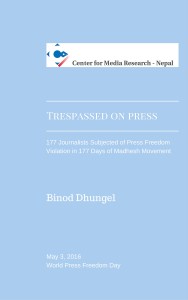
New research report ‘Trespassed on Press’ released

Trespassed on PressTo mark the World Press Freedom Day 2016, the CMR-Nepal released a new report titled ‘Trespassed on Press: 177 Journalists Subjected of Press Freedom Violation in 177 Days of Madhesh Movement‘ by senior research fellow Binod Dhungel.

The report enlists and analyzes incidents of press freedom violations in Terai and elsewhere during the protests from August 16, 2015 to February 12, 2016. During the period, there were mounted aggression agains the media and journalists. The 25-page report also outlines the authorities’ attempts to normalize the situation.

The researcher, Binod Dhungel, is a well-known name in Nepali journalism sector. A post-graduate in political science; and mass communication and journalism; and an M.Phil degree in English, Dhungel had a decade-long journalism career having served Radio Nepal, Nepal Samacharpatra daily, Nepal Television and Nepal FM. Since 2004, Dhungel is the Nepal correspondent for Reporters Without Borders (RSF). He has authored and edited various research-based books including “Independent Radio under Royal Regime: Stories of Suppression and Resistance” (2007, Nepali) and “Press Council in Nepal: A research-based Contemporary History” (2012, Nepali).

To download the report, go to the Downloads / Resources page.
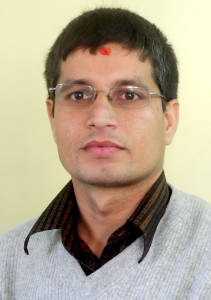
Consolidating democracy in Nepal through transparent campaign finance

Nepal’s democracy has struggled to deliver since its 2006 People’s Movement, which ended the decade long civil war and established Nepal as a republic. Plagued by corruption, nepotism, and an inability to execute basic duties of governance, the country’s leading political parties have often found themselves in a crisis of public trust that has strengthened the hand of ‘radical political parties and royalist forces seeking to destabilize the state.

During elections, the widespread practice of campaign spending at levels far exceeding legal limits through donations from undisclosed contributors has fueled popular frustration. Furthermore, this practice has distorted representative democracy through the sale of political office, thereby making financiers rather than ordinary citizens the key beneficiaries of the electoral process.

In his presentation at the National Endowment for Democracy, Washington DC, CMR-Nepal chairman Tilak Pathak explained why campaign finance must be reformed in order to consolidate democracy in Nepal. Drawing from case studies gathered throughout his career in journalism, he traced the money behind Nepal’s elections and proposed effective mechanisms that can help provide greater transparency and accountability. His presentation was followed by comments with Ivan Doherty.

Download the PDF of Pathak’s presentation here.

Nepal Twitter Users Survey report published

The Center for Media Research – Nepal has published the Nepal Twitter Users Survey 2015: Summary of the Findings. The survey, conducted in January 2015 among 625 respondents, is the continuation of the similar survey conducted in 2013.

The survey is on three broad areas: 1. demographics of Nepali Twitter users, 2. Twitter users’ opinions about the microblogging platform, and 3. psychology of Twitter users on use of Twitter.

To download the report, go to Resources / Download page.

CMR Chair Pathak Receives NED Fellowship

Tilak Pathak, the chairman of the Center for Media Research – Nepal (CMR-Nepal), has received the Reagan-Fascell Democracy Fellow Program 2015-16 offered by the National Endowment for Democracy (NED).

cmr-tilakPathak will spend 5 months (October 2015 to February 2016) in Washington, DC, USA working on a project “Promoting Financial Transparency within Political Parties in Nepal“. Pathak has worked as political correspondent and op-ed editors for top national daily newspapers and a magazine in Nepal throughout his journalistic career.
One of the founding vice-president of the CMR-Nepal, Pathak was unanimously elected chairman in 2013 and will continue the role until early 2016.

The Reagan-Fascell Democracy Fellows Program hosts democratic activists, scholars, and journalists for five-month fellowships, bringing fresh insights and perspectives to Washington, DC. The fellowship offers an important opportunity to explore new ideas in a comparative context, undertake individual research, and share best practices with one another.

CMR-Nepal family congratulates Pathak for the fellowship and wish him all the success in his project.

CMR joins GFMD, EJN & Web We Want

The Center for Media Research – Nepal (CMR-Nepal) has joined the Global Forum for Media Development (GFMD), the Ethical Journalism Network (EJN) and the Web We Want as a member.

CMR is an associated member of the GFMD. The GFMD is an international membership network of media assistance groups that highlights the importance of independent, pluralistic and sustainable media in social and economic development. GFMD members share a common goal: to foster free, professional and pluralistic media, leading to more open societies, greater transparency and enhanced freedom of expression.

The Ethical Journalism Network promotes ethics, good governance and independent regulation of media content. The EJN was formed in 2011 as a unifying professional campaign bringing together owners, editors and media staff to strengthen the craft of journalism. It works across all platforms and supports partnership at national and international level between media, journalism support groups and the public.

Web We Want is a global initiative of the World Wide Web Foundation. We help everyone to shape and claim the future of the Web.

CMR Marks #IMED2015

The CMR-Nepal organized a discussion program to mark the Int’l Media Ethics Day at its office.

The CMR-Nepal has been marking the day for last 4 years with the Center for Int’l Media Ethics (CIME).

Chairman Tilak Pathak led the discussion with a talk on ‘self-censorship and the limitations of freedom of expression in Nepali journalism’.

The participants shared their experiences and observations on self-censorship and limitations of freedom of expression. More here.

Nepal Twitter Users Survey 2015 launched

The Center for Media Research – Nepal launched the 2nd editor of the biannual Nepal Twitter Users Survey on December 25, 2014.

The Twitter Users Survey 2015, will build on the survey conducted in 2013, to find out the use of Twitter in Nepal. The survey consists of 20 questions.

Do feel free to spend five minutes for it if you are a Nepali using Twitter. The report of the survey is expected to be published by end of January, 2015.

Click here to access the survey! The survey is open for participation until 10 PM NST, January 5, 2015.

Media Research Fellowship Program Closed

The Center for Media Research – Nepal (CMR-Nepal) has decided to close its fellowship program.

The program was initiated in 2013 with an aim to fulfil one of CMR-Nepal’s core objectives to conduct, support and promote researches on various aspects of media. In two years of operation, the program granted fellowships to nine researchers in two categories: the CMR-Nepal Research Fellowship to young researchers and CMR-Nepal Media Research Partnership to senior researchers.

“The CMR-Nepal will continue to support media-related researches by providing resources, but has decided to close down it’s annual fellowship program due to poor interest among young media researchers,” chair Tilak Pathak said.

The CMR-Nepal thanks all fellows, mentors and staffs who were involved in the program.

Research Fellows 2013-14 Announced

Center for Media Research – Nepal announces the second batch of research fellows under the CMR-Nepal Research Support Program 2013-14.

The CMR Research Fellows for 2013-14 are: Umesh Pokhrel, Kanchan Adhikari and Ganesh Paudel (fellows) and Bhuwan KC (researcher fellow).

“We are excited to welcome new batch of fellows who I hope would find the fellowship highly supportive to complete the research projects they’ve undertaken,” Tilak Pathak, CMR-Nepal chair said on the occasion of announcement.

During the fellowship Umesh Pokhrel will look into the relationship between journalists and security agencies to analyze the information flow and consequences.

Similarly, Kanchan Adhikari will compare the editorials of national dailies while Ganesh Paudel will conduct research on journalists’ use of Wikipedia as research resource.

Bhuwan KC, CMR-Nepal vice-president, will analyze the political inclination and affiliation of journalists of daily newspaper and their impacts on the content.

Fellowship co-ordinator Ujjwal Prajapati welcomed all the fellows.

Asian Perspective and Network

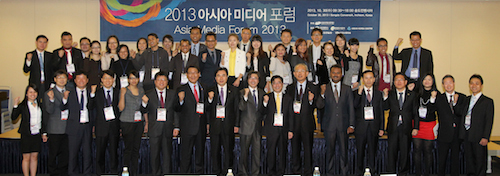
(CMR-Nepal vice-president Bhuwan KC participated in Asia Media Forum 2013 in Incheon, Korea. Here are his thoughts on the issues that was discussed in the Forum.)

AsiaMedia

The discourse about the need to shift from Western communication model, considered not befitting Asia, has been widely debated by scholars. Asian perspectives in communication have been sought in the academic circle, media practitioners and scholarly discussion over time. Taking into consideration the incompatibility of Western communication theories in the Asian context has become a driving force, where such need was further boosted with the economic success, cultural reassurance, and political independence of Asian countries. And still the discourse of the need to collaborate between the Asian countries in the sharing of information has been widely sought even today, but little progress towards application of such task is a challenge, which has been revived by conference, held in 30 October, 2013. Continue reading “Asian Perspective and Network”

Invitation to Apply for 2nd CMR-Nepal Media Fellowships

After successful completion of the first round of Center for Media Research – Nepal’s (CMR-Nepal) Media Research Support Program, we are inviting application for the second round of the program.

The program aims to be an integral part of CMR-Nepal’s objective to conduct, support and promote researches on various aspects of media.

Media students and scholars are invited to apply for the fellowships: 1. Media Research Partnership Program (Senior Fellow) and 2. Media Research Mentorship Program (Fellow). Those two fellowships aims to support the researches of fellows by providing them with resources and support during all phases of their researches and do not carry financial benefits.

Media Research Partnership Program (awardees to be called CMR-Nepal Senior Fellow)

A program designed to support media research to be or being pursued by independent researchers who has completed master’s degree preferably in journalism or mass communication or media studies.

CMR-Nepal will design regular discussion programs where the senior fellow will benefit from the knowledge, skills and experiences of CMR-Nepal researchers and other invited scholars.

The senior fellow may also seek support in conducting researches (including sampling, data collection, processing and report writing) from members of CMR Nepal and interns. The program is designed as a knowledge-sharing platform.

Duration: ideally up to six months
Financial benefits: none

Media Research Mentorship Program (awardees to be called CMR-Nepal Fellow)

A program designed to mentor student conducting research for Master’s level thesis.

CMR-Nepal will assign a mentor to support the research in all it’s phases; will invite fellows to participate in group discussions and facilitates sharing between fellows.

CMR-Nepal Fellow will also be able to use all resources, both online and offline, of the organization.

Duration: ideally for up to six months
Financial benefits: none

CMR-Nepal may publish the works, complete or partial, completed during the program in its publications.

Apply with symposia of the research, a bio-data and a page letter of intent explaining why are you interested in the program.

Apply to cmrnepal@butmedia.org (or use the form here) before Sunday, September 15, 2013. If you have any query, please let us know at the same email.

The details of the first fellows and their topics of research are here.

Please note that we may proceed with application as soon as it is received.