CMR-Nepal joins Media Influence Matrix project

The Center for Media Research-Nepal (CMR Nepal) has joined the Media and Power Consortium. The consortium runs the Media Influence Matrix, a project launched in 2017 by the Center for Media, Data and Society at the Central European University (CEU).

The CMDS launched the Media Influence Matrix Project to investigate the profound influence that rapid shifts in policy, sources of funding and technology companies in the public sphere are having on journalism today. The project emphasizes news media in particular, including newly emerged players. The study is neither aimed at exhaustively mapping the entire media industry nor is it intended to target specific media sectors. Instead, its goal is to map the most popular and most influential news media on a country-by-country basis and analyze their changing relations with politics, government and technology companies.

The CMR-Nepal will conduct the Media Influence Matrix research in Nepal in 2018 with an aim of launching the report in 2019. Continue reading “CMR-Nepal joins Media Influence Matrix project”
CMR-Nepal signs MoU with Dibyabhumi College for research collaboration

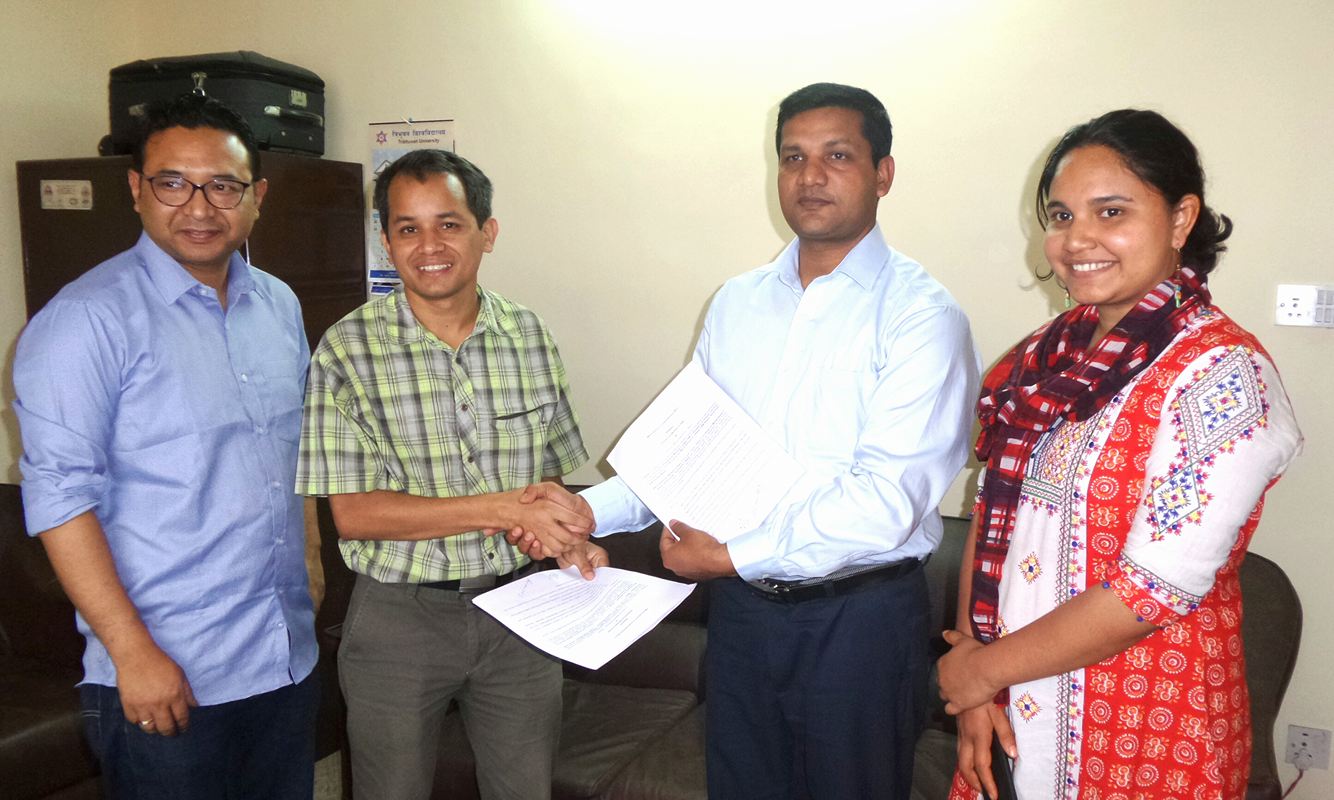
The Center for Media Research – Nepal (CMR-Nepal) signed a Memorandum of Understanding (MoU) with the Dibyabhumi Multiple College (DMC), an affiliate college of the Tribhuvan University, for the cooperation and support in academic growth and media research works.

CMR-Nepal chairman Bhuwan KC and DMC chairman Pramod Shah signed the MoU in presence of Programs Manager Ujjwal Prajapati and the Head at the Department of Journalism & Mass Communication at the DMC Trishna Acharya.

DMC runs the Bachelor’s Program in Journalism and Mass Communication, affiliated to Nepal’s oldest and largest university.

The MoU mentions that CMR-Nepal and DMC will share knowledge and expertise in media; and CMR-Nepal will provide DMC students opportunities to participate in its researches and activities as well as internships opportunities.

After signing the MoU, CMR-Nepal chair KC said: “The CMR-Nepal is always open to collaborate to support and advances media researches in Nepal. Such collaboration will definitely help to enhance the capacity of students in media researches and we are happy to initiate a new beginnings for the future prospects.”

DMC chair Shah commented: “Collaboration and cooperation is key to 21st century academic and research activities as it helps students to turn their potential into excellence through enriched practical research skills along with theoretical knowledge.”

Summary of the findings of the Nepal Twitter Users Survey 2017 released

The Center for Media Research – Nepal published the Nepal Twitter Users Survey 2017: Summary of the Findings.

The survey, conducted in December 2017 among 865 respondents, is the continuation of the similar survey conducted in 2013 and 2015.

The survey is on three broad areas: 1. demographics of Nepali Twitter users, 2. Twitter users’ opinions about the microblogging platform, and 3. psychology of Twitter users on use of Twitter.

To download the report, go to Resources / Download page.

“CMR fellowship laid foundation for my career”

(Sudeep Uprety, who currently works as Research Uptake and Impact Coordinator for Nepal, GAGE Programme, Overseas Development Institute (ODI), London, UK, was a CMR-Nepal Research Fellow 2012-13. On CMR-Nepal’s request, he sent us  his reflections and experience of the fellowship.)

It all started with a random discovery of call for fellowship from CMR-Nepal in the spring of 2013 which I got interested in. I had no high hopes for getting the fellowship as I had just completed by Masters level studies in Conflict, Peace and Development Studies (CPDS) and was on the course of writing my thesis for the accomplishment of the degree. Particularly the fellowship excited me with the reason that I was thinking of writing my thesis on linking security discourses in Nepal during the post-conflict situation from media lens.

Few days later, when I submitted the application, I got an email from CMR-Nepal that I was selected for the fellowship. It was a great news for me as I was excited to learn more about the art and craft of media research from seasoned experts and other fellowship colleagues. My acceptance of the fellowship also particularly showed the flexibility, openness and the spirit of empowerment that CMR-Nepal team had in terms of capacitating young students like me, who had no previous background as a journalist or a media researcher. Continue reading ““CMR fellowship laid foundation for my career””

Open Discussion on “Social Media, Youth and Political Participation”

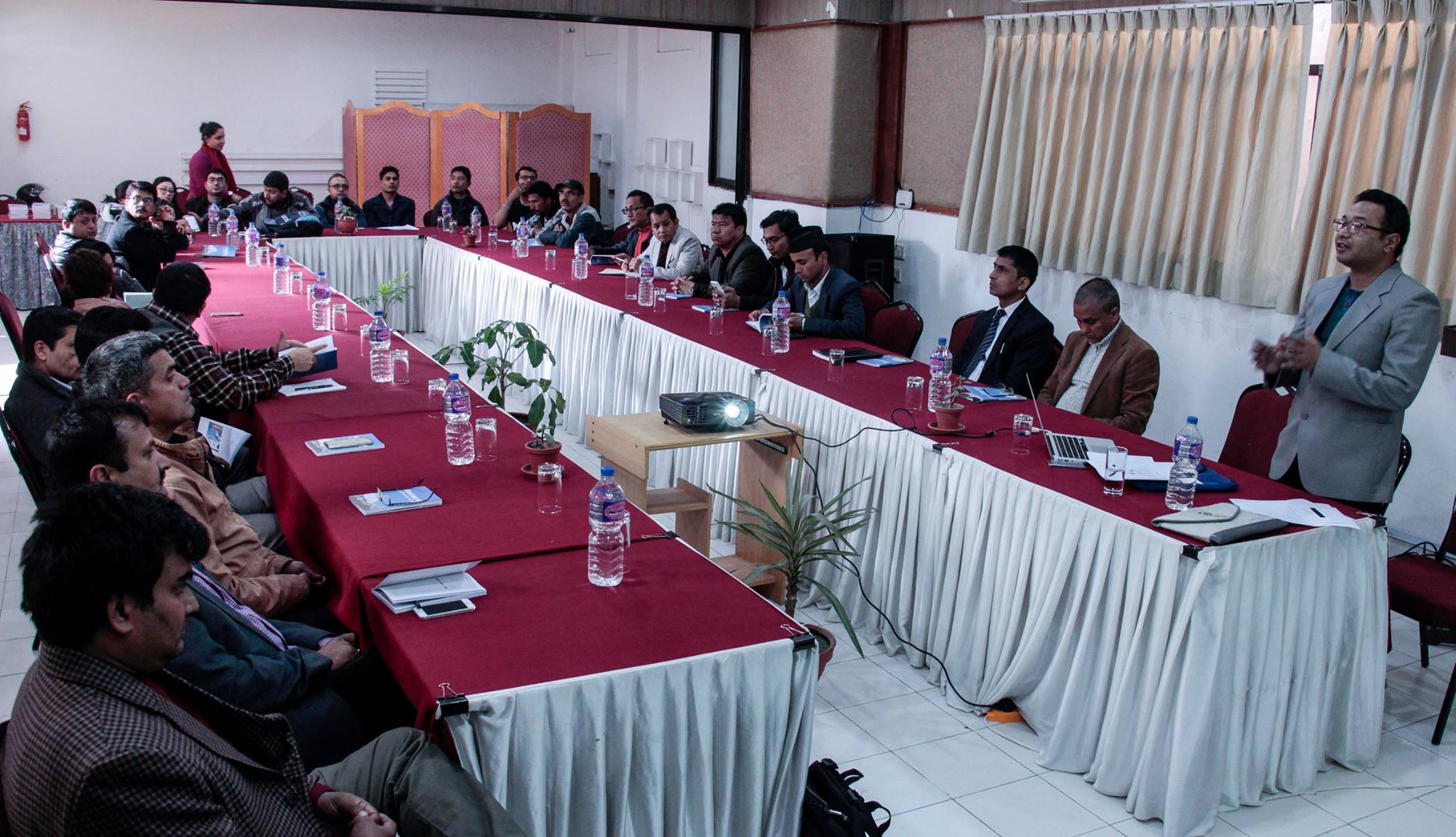
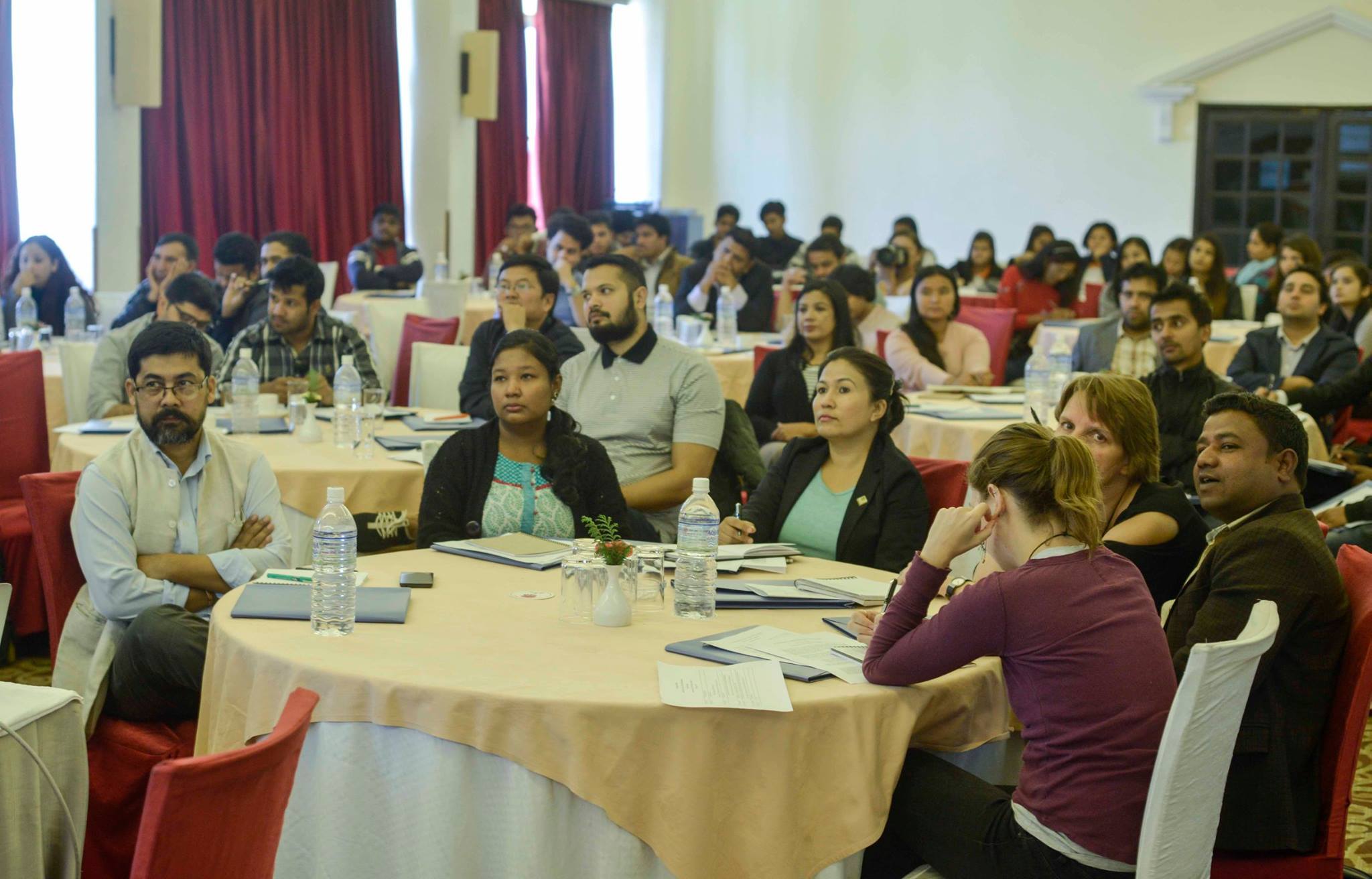
Center for Media Research Nepal (CMR-Nepal),, with support from FES-Nepal, organized a discussion program on Social Media, Youth and Political Participation on 29th October, 2017 in Lalitpur. The discussion program aimed to explore and identify issues and trends of youth using social media for political participation. It also aimed to exchange experiences of social media uses and discuss and identify strategies for effective use of social media by youths for their political engagement.

The program was participated by more than 70 youths from different sectors including youth politicians, activists, social media users, advocates, entrepreneurs, academics, and journalists. Continue reading “Open Discussion on “Social Media, Youth and Political Participation””

Need for Digital Safety Awareness & Skills for Nepali Journalists

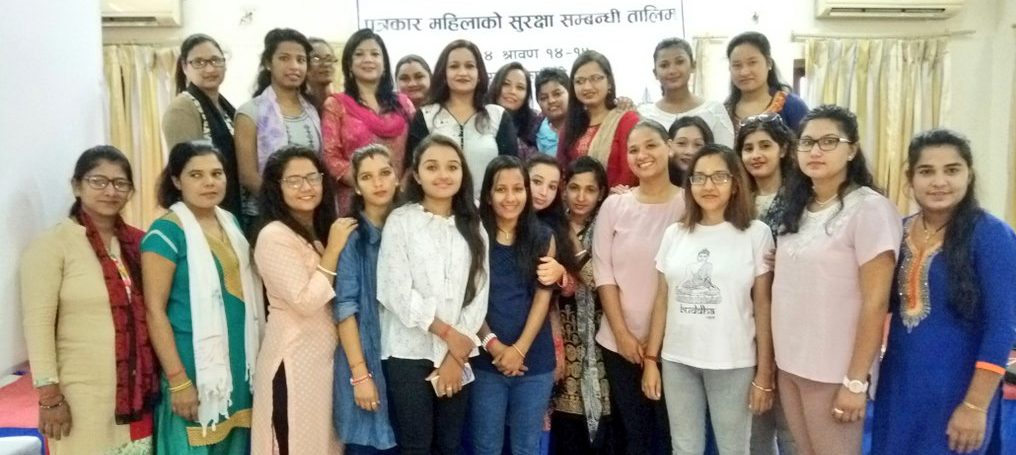
During last two weeks, CMR-Nepal conducted five digital safety sessions to more than 100 journalists (more than half of them journalist women) – at trainings organized by Nepal Forum for Environmental Journalists (NEFEJ), Radio Sagarmatha (the pioneer community radio in the region), Sancharika Samuha (one each at Nagarkot and Bhairahawa) and Center for Investigative Journalists (CIJ) Nepal. Here are three observations from these sessions: a. Nepali journalists are not fully aware of digital security risks; b. Nepali journalists are not practicing basic digital safety techniques; and c. Nepali journalists need awareness and skills of digital safety. Continue reading “Need for Digital Safety Awareness & Skills for Nepali Journalists”

‘Press Freedom in Nepal’ launched

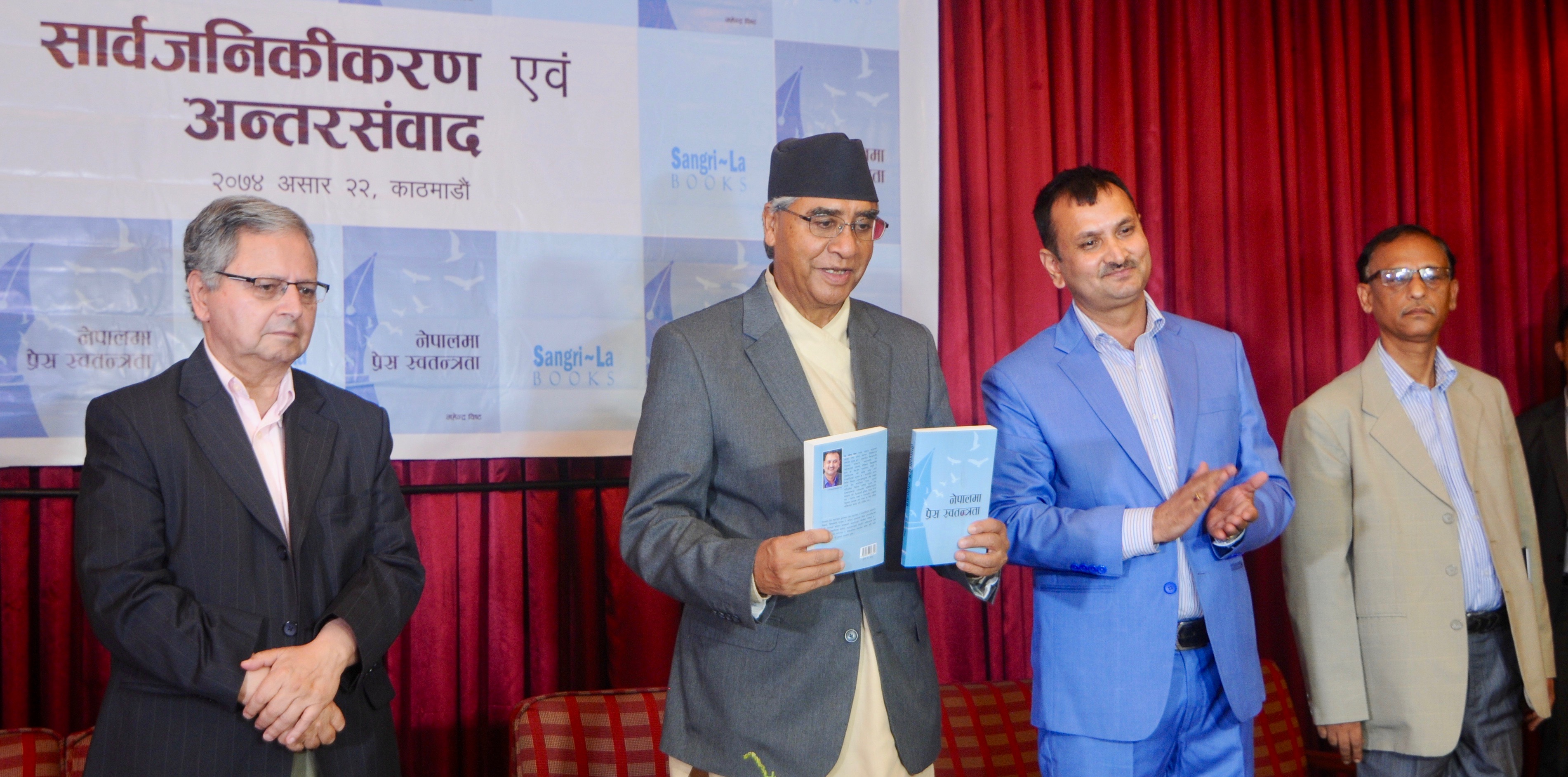
Prime Minister Sher Bahadur Deuba launched ‘Press Freedom in Nepal‘, a book by Dr. Mahendra Bista, amidst a ceremony at Nepal Tourism Board Auditorium, Kathmandu on July 6. Authored by Dr. Bista, the president of Federation of Nepali Journalists, the book is published by the Shangrila Books Pvt Ltd in cooperation with Center for Media Research – Nepal (CMR-Nepal).

The book outlines the historical development of the concept of press freedom, contemporary principles of press freedom, the relationship between press freedom and democracy as well as analyzes press freedom in Nepal vis-a-vis the development of media and legal system. Continue reading “‘Press Freedom in Nepal’ launched”

Media Mapping Report launched

The Center for Media Research – Nepal (CMR-Nepal) launched ‘Mediako Awastha ra Pahunch: Sudurpaschimanchal Bikash Chhetrako Adhyaan’ (Situation and Reach of Media: A Study of Far West Development Region) today. The book is the outcome of the media mapping conducted by CMR-Nepal in 9 districts of Far West Nepal (Province No 7) under the funding of the Alliance for Social Dialogue (ASD).

The book is freely downloadable here and the photos from the launching event are here.

CMR-Nepal elects new ExCom; Bhuwan KC elected chair

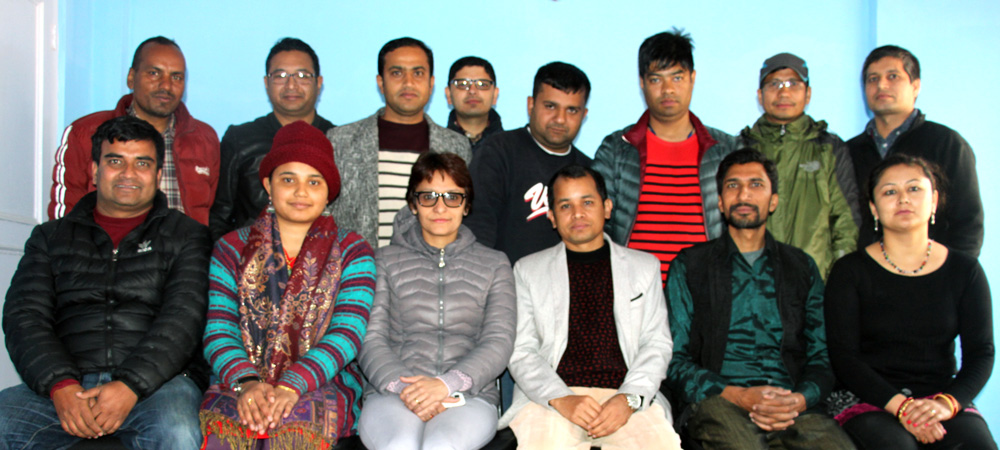
The Annual General Assembly (AGM) of the Center for Media Research – Nepal unanimously elected Bhuwan KC as its new chairman to lead a new executive committee for 2017-18.

Rishikesh Dahal was elected vice-chairman whereas Umesh Shrestha was elected secretary and Bikash Karki as treasurer. Rajneesh Bhandari, Trishna Acharya and Deepak Aryal were elected ExCom members in the AGM that also approved 12 new members as recommended by the outgoing ExCom. Continue reading “CMR-Nepal elects new ExCom; Bhuwan KC elected chair”

‘Press Freedom in Constitution of Nepal 2015’ released

PressFreedomTo mark the first year of the Consitution of Nepal 2015, the CMR-Nepal is releasing a new paper titled ‘Press Freedom in the Constitution of Nepal 2015‘ by Ujjwal Acharya and Santosh Sigdel.
The paper reviews the provisions related to the press freedom in the new constitution. It concludes that the reasonable restrictions to the right to the opinion and expression, and the right to communication, and the provisions of the state of emergency, are vague in terming thus open for misinterpretations.

The author Acharya is a journalist and media researcher; and also the founder-chairman of the CMR-Nepal. Sigdel is an advocate specializing in human rights and having special interest in the civil liberties. Both are well known for their works on press freedom.

Download the report here (PDF) or in the Download / Resource section.

Online Media Directives threatens press freedom & FoE online

The Online Media Operation Directives 2016 is a serious threat to press freedom and freedom of expression online in Nepal as the newly approved directives goes against the core principles of democracy and free press.

The Government of Nepal, on June 14, approved the ‘Online Media Operation Directives – 2016 (Nepali PDF link | Unofficial / draft English translation)’ aimed to ‘make online journalism responsible, respected and bring it within the jurisdiction of Press Council of Nepal’. However, the document gives an overall impression that the motive behind the Directives is not to facilitate the development of the online media but rather the authoritarian style control over the online media, and criminalization of freedom of expression online.

Legal Censorship

Clause 21 of the Directives gives the state right to disrupt the website if a) online media is found operated without registration or annual renewal, b) materials deemed unpublishable is published or broadcast, and c) any act deemed against the Directives or applicable laws. Clause 6 also states that if the online media failed to renew annually, the service of the online media shall be obstructed according to the existing laws.

This empowers the state’s agency arbitrary power of censorship. The Department of Information is stated as the agency to the register and renew the online media ‘if the documents presented are found satisfactory after necessary verification’. The blocking of website that are deemed to be censored will then be blocked without judicial process on the decision of the Department.

The censorship provision is against the constitutional rights of the citizens; and a violation of the Constitution. Continue reading “Online Media Directives threatens press freedom & FoE online”

CMR-Nepal joins #KeepItOn campaign to fight internet shutdowns

The Center for Media Research – Nepal (CMR-Nepal) joined nearly 70 organizations from five continents in launching the #KeepitOn campaign to fight internet shutdowns worldwide.

The #KeepitOn campaign aims to bring together voices from across the globe to push back on internet shutdowns at every level, from governments to telcos to tech companies to everyday internet users. It began with the adoption of an international definition of internet shutdowns at RightsCon Silicon Valley.

Among other targets, the campaign will challenge service providers to fight back against government shutdown requests; highlight the use of shutdowns during elections; and build consensus at the U.N. and other intergovernmental organizations that people have a basic right to access information and speak freely online. Continue reading “CMR-Nepal joins #KeepItOn campaign to fight internet shutdowns”