Announcing webinar series on disinformation and fact-checking

CMR-Nepal will host a series of webinars ‘fake or fact: disinformation and fact-checking’ to raise awareness among the general public on the issue.

The webinars, the first of which will be on September 6, are free to attend and are targeted to journalists and the general public. Continue reading “Announcing webinar series on disinformation and fact-checking”

‘Mobile journalism is a must-skill of journalists’

As journalism goes digital and mobile phones become ubiquitous, mobile journalism skills have become a must-have skill for journalists, say CMR-Nepal’s trainers Bikash Karki and Bijay Gajmer.

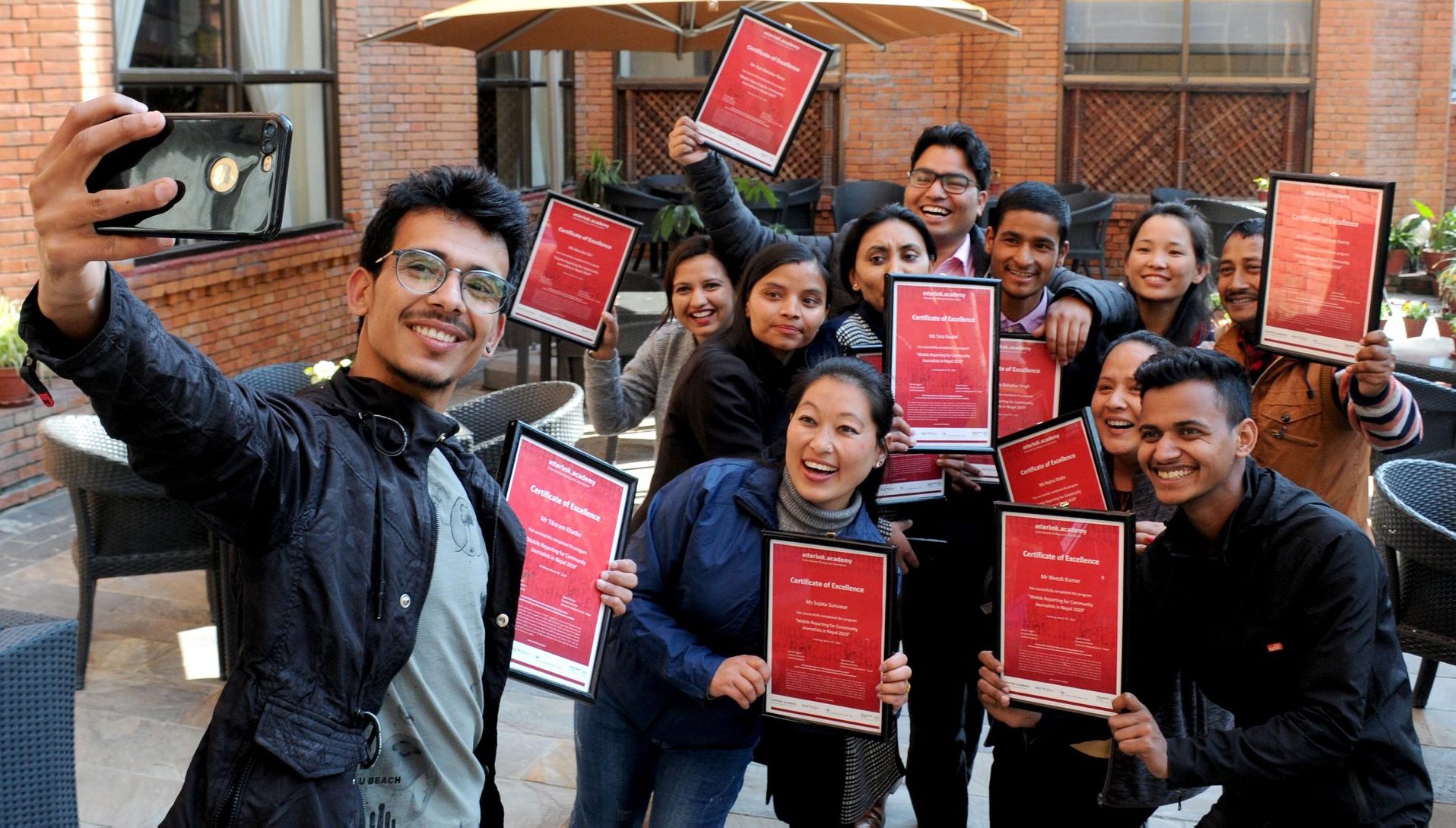
They were trained as mobile journalism trainers by Interlink Academy, Germany during three-month-long mobile journalism training to 12 Nepali journalists in 2018-19. Continue reading “‘Mobile journalism is a must-skill of journalists’”

CMR-Nepal holds 8th Annual General Meeting

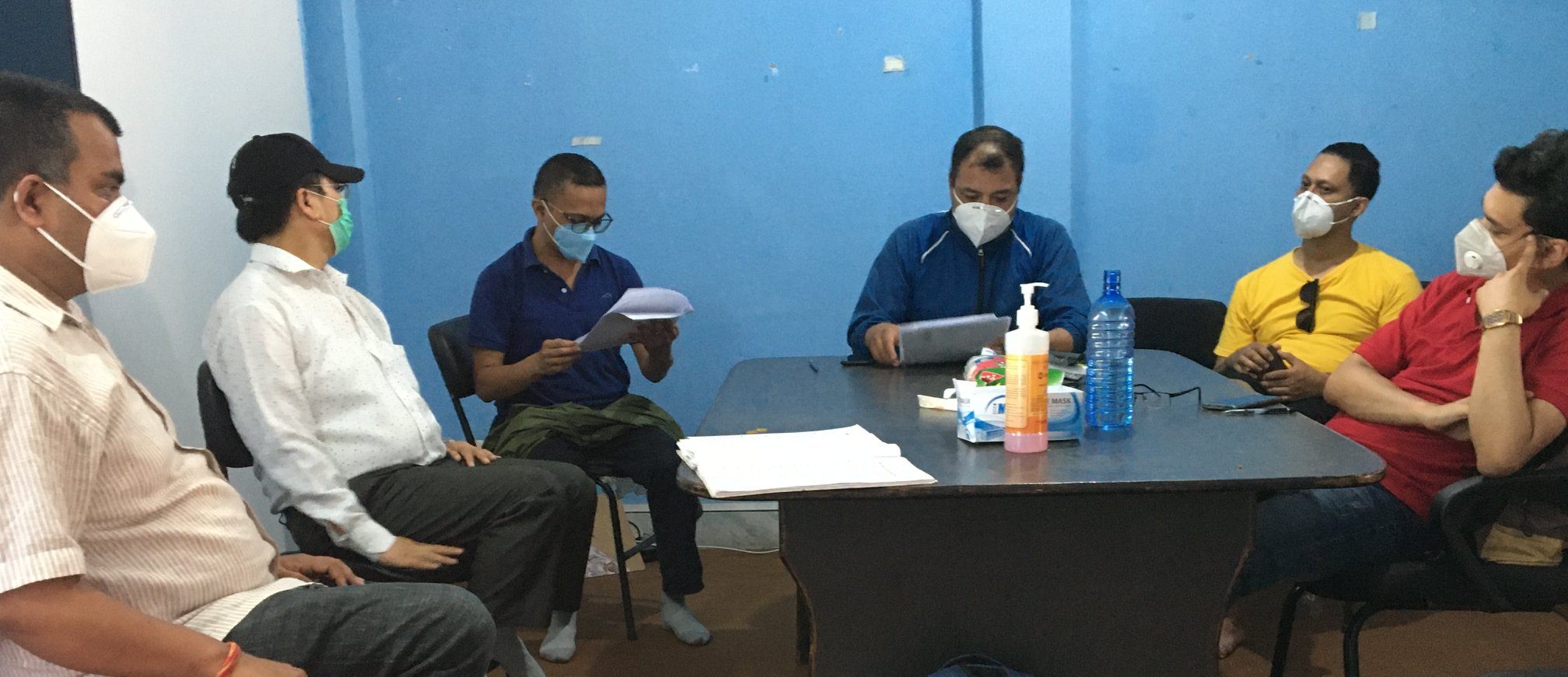
The Center for Media Research – Nepal held its 8th Annual General Meeting (AGM) on August 7, 2020 at the Secretariat office in Kathmandu.

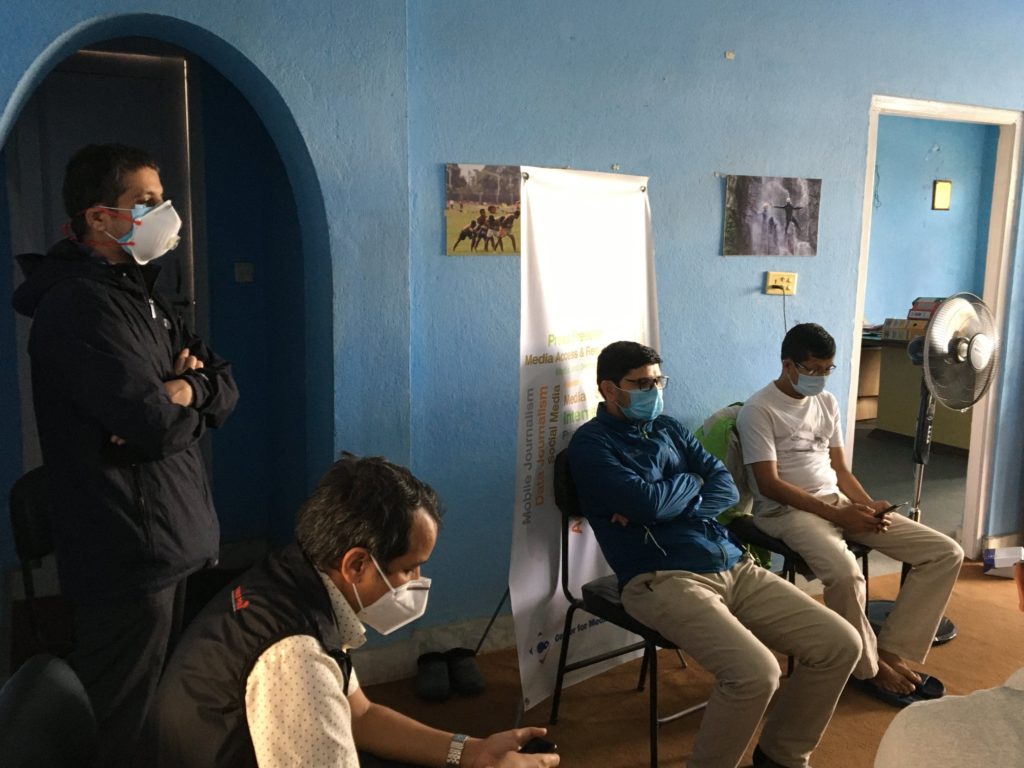
Amidst the risks of coronavirus infection, the meeting was organized with health precautions such as maintaining social distance, compulsory face masks, and hand sanitizations.

Executive Committee Secretary Deepak Aryal presented a report on activities of the past year. Aryal said that the CMR-Nepal is evolving into the media think tank by working on policy-related resources.

The CMR-Nepal has conducted different activities under three projects in the past two years. It has worked in media policy review and advocacy activities, capacity building to journalists, and internet freedom.

Treasurer Bikash Karki presented the financial report and the audit report of 2076/2077.

Both documents were unanimously passed by the AGM.

Executive Director Tilak P. Pathak informed about the future projects and activities that are in pipeline. Pathak said that the CMR-Nepal will focus on need-based programs and activities amid the effects of the COVID-19 crisis and its impact on journalists.

‘Nepal Fact Check’ launched to fight misinformation and disinformation

To mark the International Fact-Checking Day 2020, we are delighted to announce Nepal Fact Check (nepalfactcheck.org) – a joint initiative of the Center for Media Research – Nepal (CMR-Nepal) and the country’s most popular blog MySansar.com.

Umesh Shrestha, the founding member of CMR-Nepal, will lead the initiative and serve as the editor. He is a well-known digital journalist and blogger, who previously worked for PahiloPost.com (editor), Annapurna Post daily (assistant digital editor), Nagariknews.com (online coordinator) and Avenues TV.

Editor Shrestha said: “CMR-Nepal and MySansar preponed the launch of Nepal Fact Check and it went online on March 1, 2020, for we felt an urgent need to fact-check viral information circulating in media and social media about coronavirus.”  Continue reading “‘Nepal Fact Check’ launched to fight misinformation and disinformation”

Kathmandu Conference on Internet Freedom in Nepal

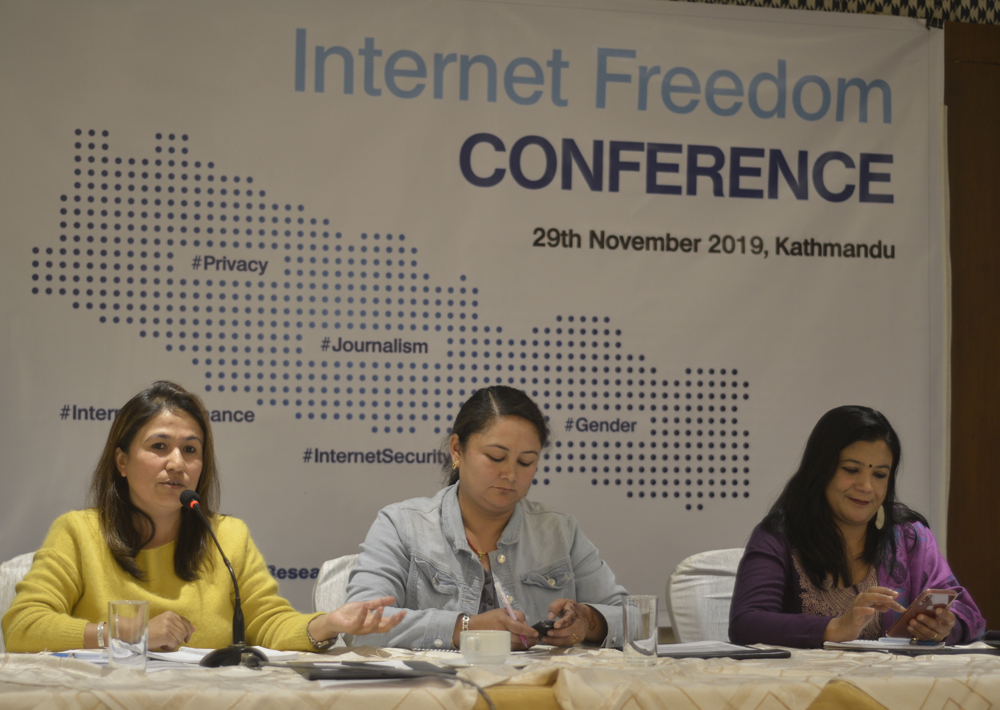
Experts, researchers, and academicians stressed the need of information literacy to ensure internet freedom in a national conference organized by the Center for Media Research – Nepal on November 30, 2019, in Kathmandu.

The conference brought together activists, journalists, users and other stakeholders of the internet for a discourse on fundamental issues on freedom of the internet in Nepal.

Papers on internet governance, internet security, privacy, gender and internet, and digital journalism were presented at the conference.

Opening the conference, CMR-Nepal’s senior research fellow Ujjwal Acharya observed the increasing trends of undemocratic measures to control and regulate the internet and said that any solution to problems brought by the internet should be citizen-centric to ensure the upholding the freedoms and fundamental human rights.
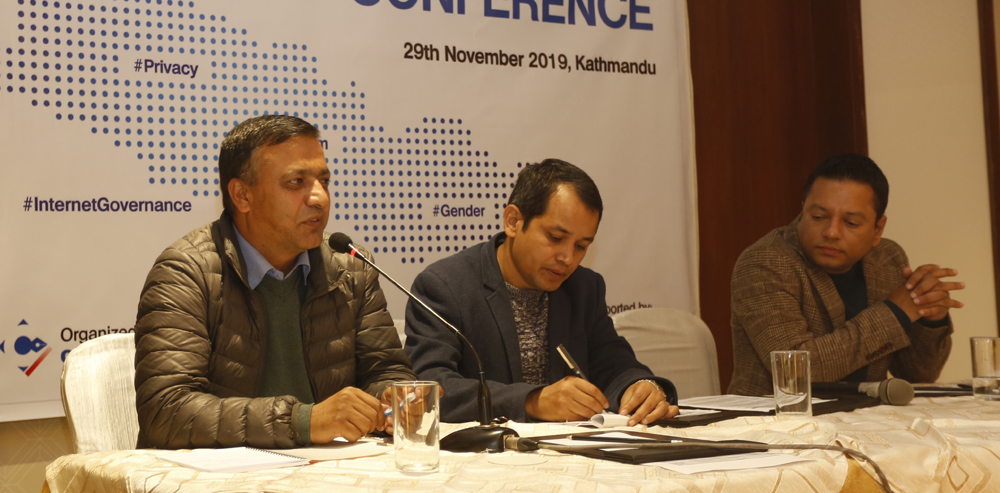
In the session on the internet governance, advocate Santosh Sidgel said that Nepal lacked informed discourse in understanding the internet governance issues that have affected the conceptual clarity on different issues that surrounds the internet.

“Limited participation in the international processes of internet governance has further affected in understanding the internet governance in Nepal,” he said.

Romkant Pandey, the president of Internet Society of Nepal, commented on Sigdel’s presentation in the session chaired by Bhuwan KC, IPP of CMR-Nepal.
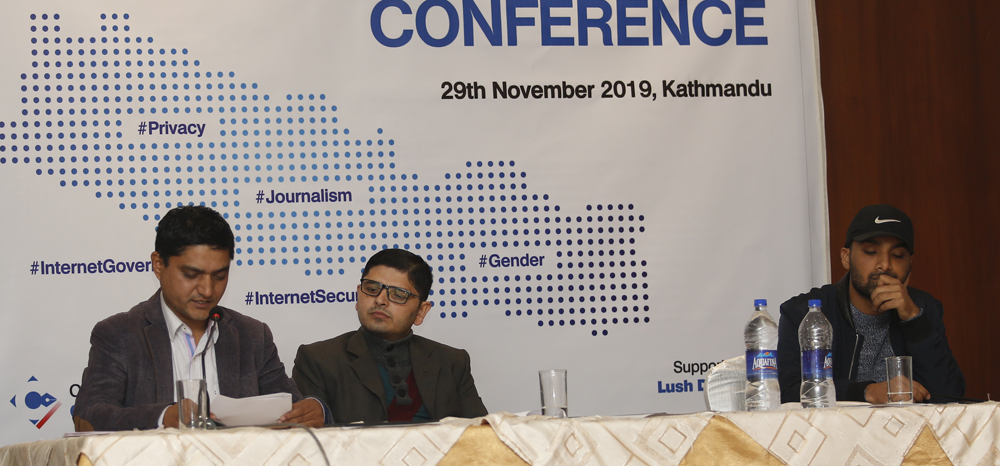
In the session on internet security, expert Sachin Thakuri said: “Lack of technical knowledge in the governing bodies and absence of collaboration with the private sector and authorities raised concerns about users’ data.”

“When there is breach in security, instead of taking responsibility, organizations often try to hide such issues from public and try to shift the blame elsewhere,” Thakuri added.

Internet Society Nepal’s vice-president Suraj Adhikari commented on the issue in the session chaired by CMR-Nepal’s Kanchan Adhikari.
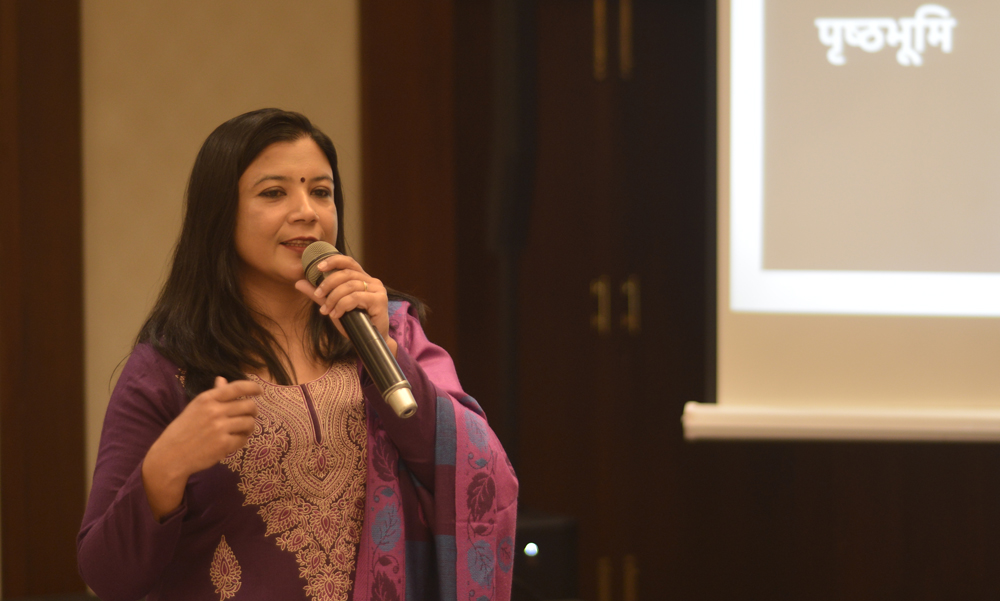
President of Sancharika Samuha, Nitu Pandit, highlighted the need to take into account the technological domain through gender lens in the session on gender and the internet.

She said that the participation of women in using the new technology is low compared to males, but those negatively affected by the technology are mostly female.

Pandit also highlighted the challenges in using the internet by women which have been marred by personal attacks and sexiest comments rather than the quality of her opinions.

Advocate Pabitra Raut commented on the paper in the session chaired by General Secretary of Photojournalists’ Club of Nepal Shruti Shrestha.
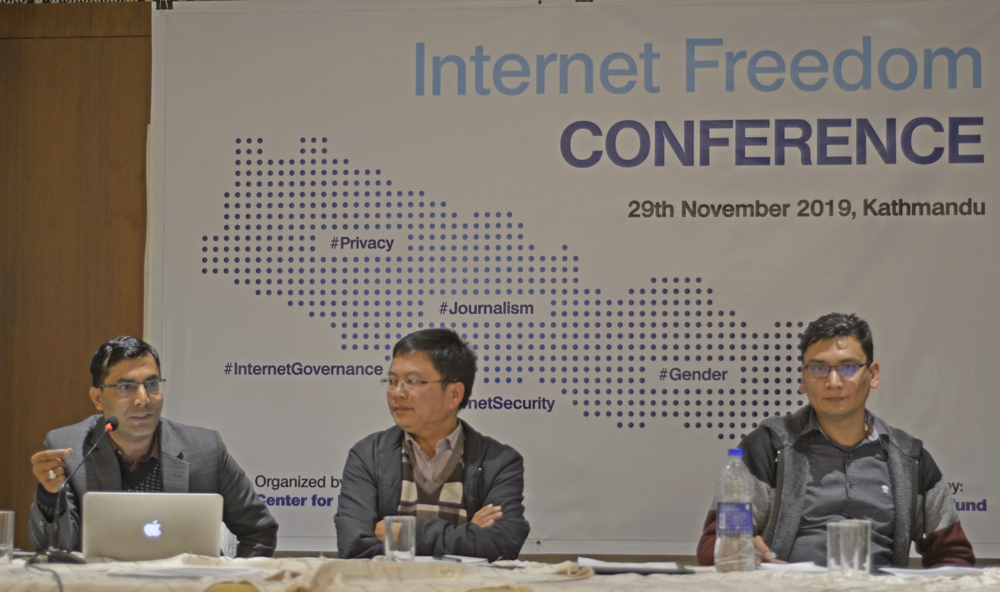
Digital journalist and blogger Umesh Shrestha said that the internet has posed both challenges and opportunities to journalists in the session on digital journalism.

He said: “Fake news has not only posed threat to journalism but has also opened avenues to reinforce the role and responsibility of journalists and journalism to bring in truth and objective journalism to inform public.”

Lecturer at the Tribhuvan University Lekhanath Pandey commented on the issue and the session was chaired by CMR-Nepal’s Yam Bahadur Dura.
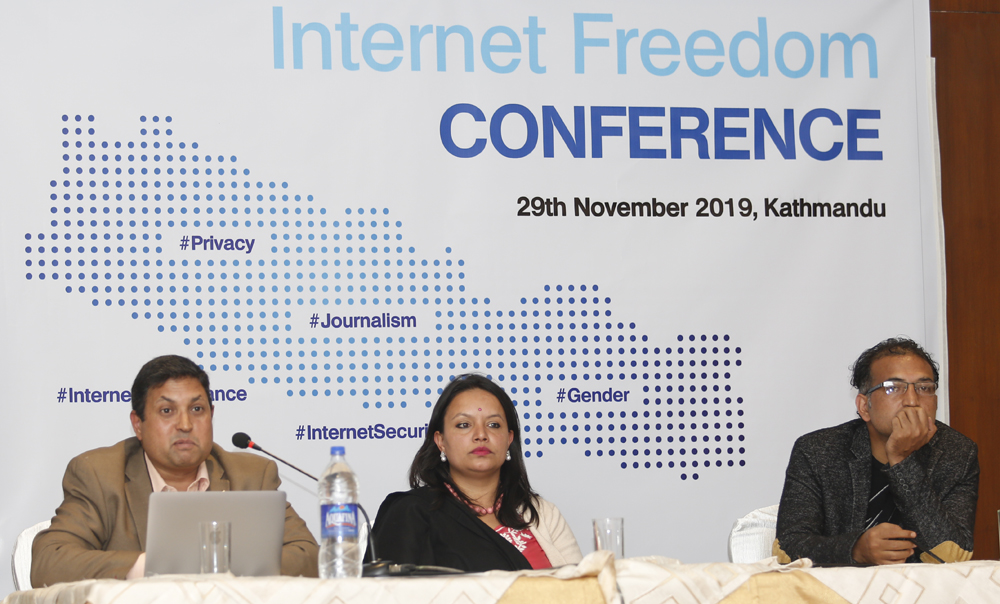
KP Dhungana, founding chair of the Online Journalists’ Association, talked about privacy on the internet.

Dhungana outlined that the issue of protecting privacy of individuals in the context of Nepal has been highly compromised by the use of social media.

Dhungana pointed out the issues of concerns with respect to data mining, laws about privacy, and its intricate issue with freedom of expression as major challenges.

Visiting lecturer of the Tribhuvan University Dr Sudhamshu Dahal commented on the paper in the session chaired by CMR-Nepal’s Sunita Karki.
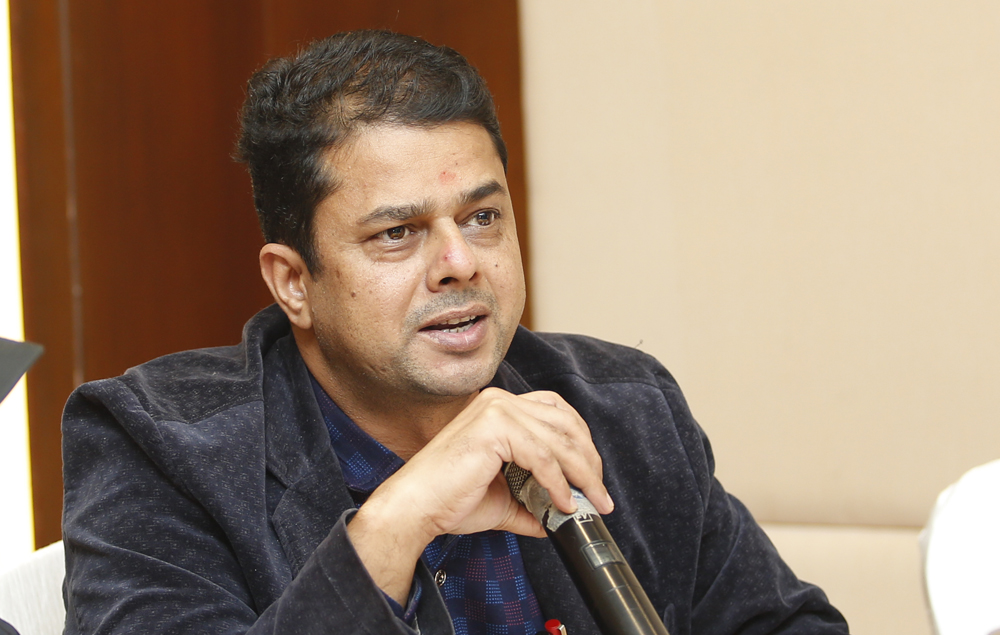
Press Registrar of Province 3 Rewati Sapkota said that such discourse are important for the policy makers to ensure right policies in the areas related to the internet freedom and freedom of expression.

The conference was opened by CMR-Nepal chair Rishikesh Dahal who outlined the need of multi-stakeholder approach and need to bring together non-conventional actors to a common understanding of issues related to the internet freedom.

CMR-Nepal Executive Director Tilak Pathak said that over the last few years, the use of the internet as a means to freedom of expression has gained attention and prominence as people share their experiences and ideas.

“It has become an increasingly important tool through which democracy and human rights activists mobilize and advocate for political, social, and economic reform,” he said. “But restriction through laws and threats of prosecution have affected the media and individual platforms of self-expression.”

The conference was organized with support from LUSH Digital Fund.

Two-day data literacy workshop

A two-day training on ‘Data Literacy’ was organized at Center for Media Research- Nepal’s office from 7 to 8 November 2019.

The training was provided by the CMR-Nepal’s Executive Director Tilak Pathak.

The training was participated by journalists, academic and NGO representatives.

The training was part of the course designed by the World Bank.

Here is a short video of the training and responses of the participants:

CMR-Nepal elects new Executive Committee with Rishikesh Dahal as the chair

The 7thAnnual General Assembly of the Center for Media Research – Nepal unanimously elected Mr. Rishikesh Dahal as its new Chairman to lead a new executive committee for 2019-20.

The Assembly also elected Ms. Trishna Acharya as the vice-chairman, Mr. Deepak Aryal as the secretary and Mr. Bikash Karki as treasurer. Ms. Shruti Shrestha, Mr. Yam Bahadur Dura and Mr. Navin Khatiwada were elected ExCom members.

The AGM also approved new membership as recommended by the outgoing ExCom.

Dahal, a founder member of CMR-Nepal, is a well-known journalist and academic in Nepal. He is currently the associate editor of Pahilopost.com, an online news portal, and heads the Department of Journalism and Mass Communication at Ratna Rajya Laxmi Campus, affiliated to Tribhuvan University.

Dahal has worked in several news media houses and was a Gold Medalist for securing highest marks in his batch of the Master’s Degree in Journalism and Mass Communication of Tribhuvan University.

Dahal takes over from Mr. Bhuwan KC who completed his extended tenure (2017-19).

The AGM was attended by founding chair and former executive director Ujjwal Acharya, outgoing chair KC, former Chair Tilak Pathak, honorary member Prof. P. Kharel, founding member and projects manager Ujjwal Prajapati, and members.

“Media in Disaster” unveiled

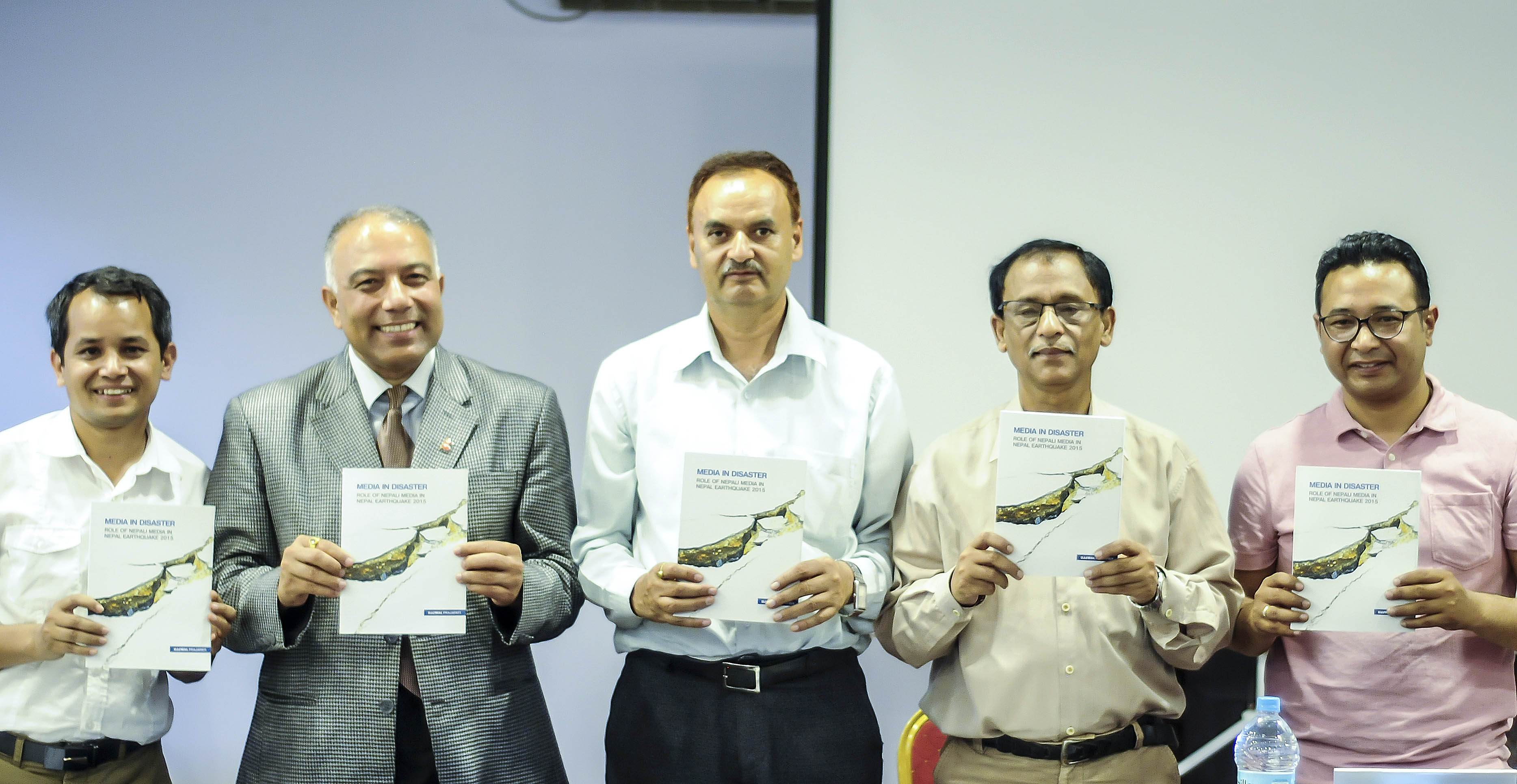
The Center for Media Research- Nepal launched ‘Media in Disaster- Role of Nepali Media in Nepal Earthquake 2015’ in a program in Kathmandu.

The book is based on the research conducted in the aftermath of Nepal Earthquake 2015 and studies the media’s role in disaster focusing on status and response of media, media’s contents and public perception of media.

Speaking at the program Chief Executive Officer of National Reconstruction Authority Sushil Gyewali highlighted the role of news media in the reconstruction phase. He said that the issues raised by the news media were taken positively which have resulted to address the problems in the recovery phase.

Gyewali said that the Authority is in the process of maintaining an archive of different aspects reported during the reconstruction phase, which will help in the learning process in the future.

Journalism Professor P. Kharel pointed out the need to follow the code of ethics not only in the times of disaster but also while reporting in other issues. He said conducting research about the media situation and content in different subject matters.

Similarly, Professor Chiranjivi Khanal, the head of the Central Department of Journalism and Mass Communication at the Tribhuvan University, pointed out that such research document could be a groundwork to conduct future research.

The study has assessed the role of media during the crisis and the level of preparedness among media to deal with unanticipated challenges and to look into the ways to improve media performance and preparedness in the future.

Researcher Ujjwal Prajapati said that the commitment showed by journalists for their tireless reporting and operating the news media to inform the public about the impact of the earthquake was ‘commendable.’

The study report has identified that news media in Nepal was unprepared for such scale of the disaster, that is reflected through damages faced by the media infrastructure.  Many news media had to halt their operation for days and some even for months. The weak infrastructure resulted in many of the FM stations to operate in the makeshift tents. Post Disaster Needs Assessment estimated the cost of damages to media houses to be around US$ 4.67 million.

The report also identified the unpreparedness of human resources with respect to the safety and security concerns faced by journalists during reporting. “Despite the continued aftershocks, journalists were reporting about rescue efforts, sometimes with a just a helmet on a protective measure,” said the report.

The unpreparedness of human resources in the news media was reflected in the news content. “Although news reporting was praised for presenting human angle stories and stories about humanitarian efforts it was also condemned for and criticized for presenting sensational views and not following the ethical code for journalists” identifies the report.

The study was conducted between August -December 2015 and was based on the analysis of media content, interviews with media managers and journalists and public survey.

The study has recommended the need to formulate media policy in disaster, clarity in government’s support policy to affected news media, preparedness initiatives by the media house, emergency media operation, use of new media, role of stakeholders and content policy media house.

For photos of the event, click here.

Book on Media Policy and Laws in Federalism launched

Center for Media Research- Nepal (CMR-Nepal) organized a discussion program and launched a book on Media Policy and Law in Federalism on 21 May 2019.

The book provides analysis and suggestions on 9 draft bills and 2 media policies, which were formulated by the provincal and the federal government.

The book incorporates analysis and suggestions on Mass Communication Bill, Advertising Bill and IT Bill at the federal level.

Likewise, it also contains analysis and suggestions with respect to the bills drafted at the province level: Province 1 Radio, FM and Television related bill, Province 2 Integrated Communication Bill, Province 3 Communication Management Bill, Gandaki Province Communication Policy,  Province 5 Communication Policy, Pres and Publication Bill, and Broadcasting Bill, and Karnali Province Public Broadcasting Bill.

At the program organized in Kathmandu, former Press Council chairperson Rajendra Dahal was of the view that the drafting of media laws in Nepal was based on the philosophy of control. ‘The philosophy and thoughts are based on controlling mindset. The philosophy has guided it to some extent. That philosophy is supported by the people’s mandate.”

In the context of Nepal, the bills may get passed forcibly, but the continuous struggle is inevitable, he added. “Ultimately, press freedom is undeniable.”

Professor P. Kharel observed that the prime minister and minister for communication’s public statement are not press-friendly, and in the context of divided society there are high possibilities of misuse of the provisions of fines and penalties. He suggested the government to amend the provisions of Press Council Bill but was of the view that the amendments made thereof should not be implied that the government has ‘kneel down.’
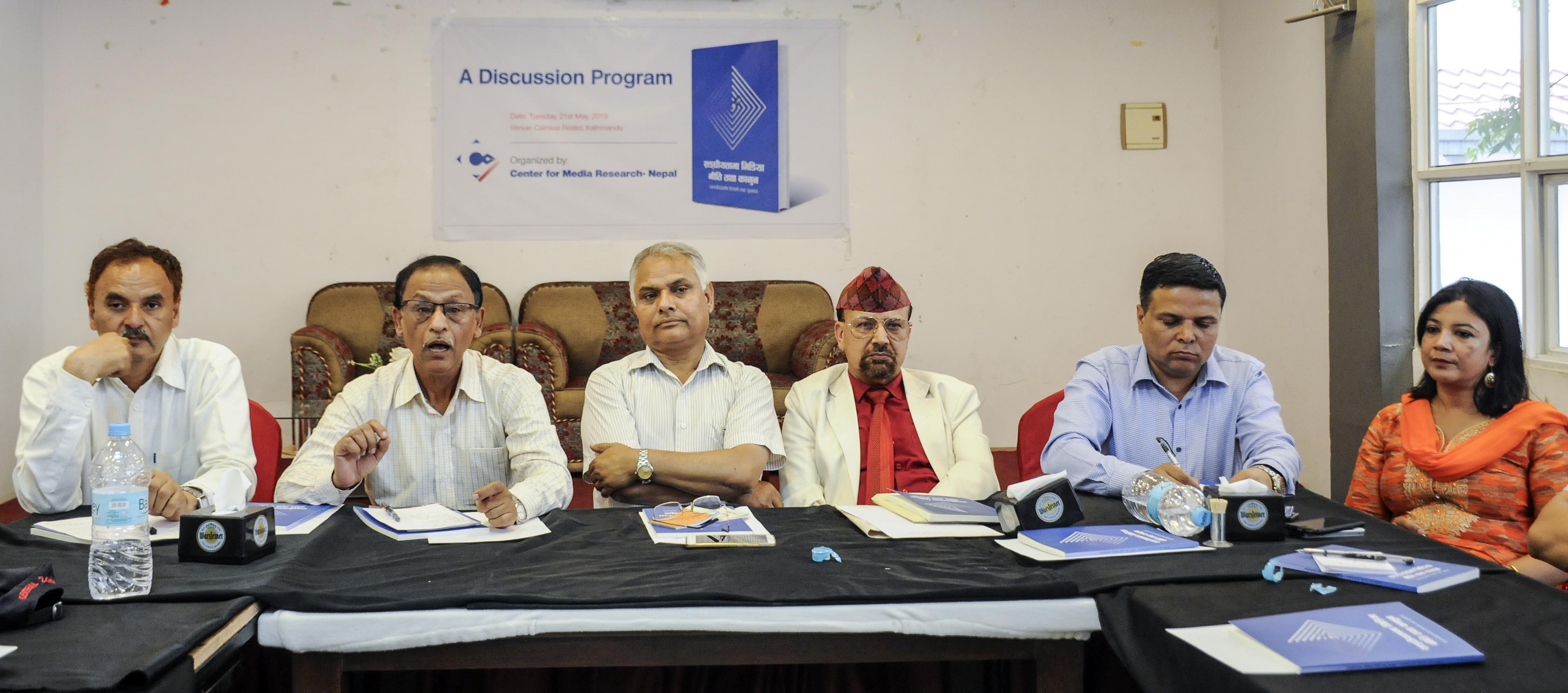
Speaking at the program, Chairperson of High-level Committee formed for Mass Communication Policy and Administrative Court Kashiraj Dahal said that no laws shall be made violating the basic principles set by the Constitution of Nepal and National Mass Communication Policy. Referring to Media Council Bill he believed that the parliament committee will make thorough discussions.

Media Expert Raghu Mainali said that there are fundamental problems in understanding the Bill that has been drafted. There is the wrong conception of understanding freedom vs responsibility which has resulted in flawed making of the media policies in Nepal.

He was also of the opinion that it is not necessary to make laws in all the province and local level with regards to media, the constitutional provisions on the fundamental rights should be guaranteed by the federal government, where laws regarding media fall under this jurisdiction.

Media Expert Binod Dhungel expressed his concerns about the tendency to seek government assistance which has resulted to shape the government perspectives, the result is a present form of formulation of Media policy laws.

President of Sancharika Samuha, Nita Pandit assessed the need to make gender friendly media laws. She was of the view that the laws formulated were not gender-friendly with respect to the participation of women in the proposed organizational structure.

Chairperson of CMR-Nepal Bhuwan KC suggested the need to discuss and interact with the stakeholders while to make amendments in the bills that has come in controversy. Executive Director of CMR-Nepal pointed out that the flaws in making of media policies were result of either bad motive or lack in understanding the gravity of the issue. “We need to pressure to amend the laws that has come up with a bad motive.”

The book is free to download here. Here are more photos from the program.

संघीयतामा मिडिया नीति तथा कानुन सम्बन्धी पुस्तक सार्वजनिक

संघ र प्रदेशहरूमा बन्दै गरेका मिडिया नीति तथा कानुनको मस्यौदामाथि टिप्पणी तथा सुझावहरू समावेश गरिएको सेन्टर फर मिडिया रिसर्च नेपालले प्रकाशित गरेको संघीयतामा मिडिया नीति तथा कानुन पुस्तक सार्वजनिक गरिएको छ ।

पुस्तकमा मिडिया नीति र कानुन सहित ११ वटा मस्यौदामाथि टिप्पणी तथा सुझाव दिइएको छ ।

पुस्तकमा २०७५ सालमा तयार पारिएको आमसञ्चारका सम्बन्धमा व्यवस्था गर्न बनेको मस्यौदा विधेयक, विज्ञापन नियमन गर्ने सम्बन्धमा व्यवस्था गर्न बनेको विधेयक, सूचना प्रविधिको सम्बन्धमा व्यवस्था गर्न बनेको विधेयकमाथि टिप्पणी तथा सुझाव दिइएको छ । नीति तथा विधेयकको मस्यौदामा समस्या के छन् र तिनीहरूको विकल्पमा राख्नुपर्ने प्रावधानहरू उल्लेख गरिएको छ । Continue reading “संघीयतामा मिडिया नीति तथा कानुन सम्बन्धी पुस्तक सार्वजनिक”

Second Mobile Reporting for Nepali Journalists training concludes

The second round of “Mobile Reporting for Nepali Journalists” training organized by the Center for Media Research – Nepal, with support from the Interlink Academy, Germany concluded on March 10, 2019.

Twelve participants from seven provinces of Nepal participated in the blended learning training. The blended learning model of training by the Interlink Academy consists of on-site learning and e-learning phases. Continue reading “Second Mobile Reporting for Nepali Journalists training concludes”

सामाजिक सञ्जाल प्रयोग संहिता सम्बन्धी दोस्रो अन्तरक्रिया सम्पन्न

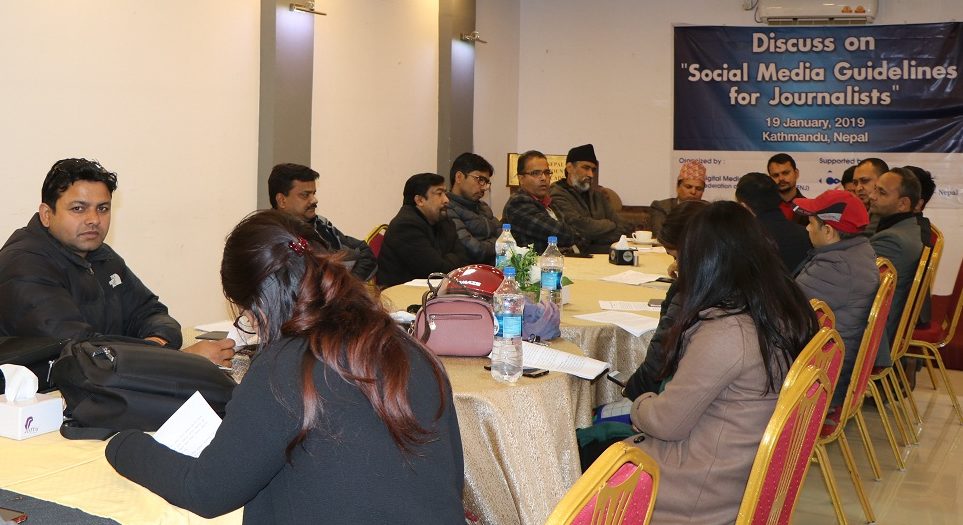
नेपाल पत्रकार महासंघ, डिजिटल मिडिया समिति र सेन्टर फर मिडिया रिसर्चको आयोजनामा पत्रकारका लागि सोसल मिडिया प्रयोग गर्दा ध्यान दिनुपर्ने विषयमा अन्तरक्र्रिया कार्यक्रम सम्पन्न भएको छ ।

कार्यक्रममा बोल्दै नेपाल पत्रकार महासंघका अध्यक्ष गोविन्द आचार्यले पत्रकारहरुको आग्रहमै पत्रकारले सामाजिक सञ्जाल प्रयोग सम्बन्धी संहिता निर्माण गर्न लागेको जानकारी गराउनु भयो । उहाँले यो विषय प्रेस सरोकारवालासंगको वृहत छलफलबाट मात्र ल्याउने बताउनु भयो ।  Continue reading “सामाजिक सञ्जाल प्रयोग संहिता सम्बन्धी दोस्रो अन्तरक्रिया सम्पन्न”